In this guide, we walk through the whole process of buying a home in Greece. That includes where to buy, the types of property you can choose from, the documents involved, the legal steps, the costs, and the questions buyers ask us most often. A few words on why you can rely on what follows.
Trustworthy. Elxis has been handling the legal and practical side of buying and selling property in Greece since 1991. The information here comes from our own lawyers and property consultants, so it reflects how the process actually works in practice.
Up to date. Many guides online still quote old tax rates and rules. We review this guide as the rules in Greece change, so the figures stay current.
Written for international buyers. This guide is written in clear English for buyers from across Europe and beyond, rather than translated from Greek.
Seeking a House in Greece?
Contact us!Part 1: Why Buy a Home in Greece
People choose Greece for many reasons: the climate, the coastline, the relative value of property, the pace of life, and the welcome they receive. Here are the ones buyers mention most.
The Greek Climate
The weather is one of the first things buyers notice, especially compared with the Netherlands, Germany, and Belgium. Summers are long, dry, and warm, and the evenings stay mild well into the season. That long, reliable summer is part of why coastal homes are so popular, and it is also what makes Greece well suited to renting out a holiday home. The climate varies by region, with the mainland and the southern islands holding their warmth longest.
A Coastline Like Few Others
Greece has one of the longest coastlines in Europe, stretching for thousands of kilometres across the mainland and the islands. Homes with sea views are found in almost every region, from the Peloponnese and Crete to the Aegean and Ionian coasts. Greece also consistently ranks second in the world for the number of Blue Flag beaches, the international mark for clean, safe swimming water. Buy near the coast and a good beach is rarely far away.
Thousands of Islands
Greece has thousands of islands, each with its own character, history, and food. Santorini and Mykonos may come to mind first, with their blue-domed churches and whitewashed houses, but they are a small part of the picture. The islands fall into several main groups: the Cyclades, the Sporades, the Dodecanese, the Saronic islands, the North Aegean islands, the Ionian islands, and the two largest, Crete and Evia. Well-known names include Rhodes and Kos in the Dodecanese, Corfu, Kefalonia, and Zakynthos in the Ionian, Paros and Naxos in the Cyclades, and Lesvos, Chios, and Samos in the North Aegean.
Diverse Landscapes
Greece packs a lot into one country: clean beaches, olive-covered hills, dramatic mountains, gorges, and quiet fishing villages. There is also a remarkable concentration of history. Among the best-known UNESCO World Heritage sites are the Acropolis in Athens, the archaeological site of Delphi, the Sanctuary of Asclepius at Epidaurus, and the Monastery of Saint John on Patmos. Wherever you buy, you are likely to be close to both nature and a piece of the ancient world.
The Value of Property
Compared with many European countries that offer a similar standard of living, property in Greece tends to cost less. Prices are generally lower than in other Mediterranean destinations such as Spain, France, Italy, and Croatia. For many buyers from northern Europe, the same budget buys considerably more space, land, and view in Greece than it would at home. That value is a large part of the appeal.
The Golden Visa
Greece runs a residency-by-investment programme, often called the Golden Visa. Buying property above a set investment level can make you eligible to apply for residency, with the right to travel within the Schengen area for up to 90 days in any 180 days, and the option to include close family members. The required investment level depends on the location and the type of property, and lower thresholds apply in certain cases, such as converting commercial buildings to residential use or restoring listed properties.
The figures change with the rules, so we confirm the current level for your situation rather than quoting a number that may be outdated. For most of our Western European clients, the Golden Visa is not the reason they buy, though it can be a real advantage for buyers from outside the EU.
A Straightforward Tax System
Property taxes in Greece are generally lower than in many other European countries, and the system is reasonably simple to deal with. When you buy, you obtain a Greek tax number, which gives you access to the online tax portal where property and other taxes are managed.
Strict Building Rules
Greek law limits large-scale development. Outside village boundaries, there are strict rules on what can be built, including a minimum plot size of at least 4,000 square metres and limits on the height and footprint of any house. You will not find sprawling estates of hundreds of identical units in the Greek countryside, which means more privacy and a better chance of an open view.
Homes must also meet Greece's earthquake-resistance standards. Building is not permitted on protected forest land or on Natura 2000 conservation areas, which helps keep the landscape intact.
The Greek Lifestyle
Greece is known for a relaxed, family-centred way of life built around good food, company, and the outdoors. People are welcoming, and in the smaller islands and villages it is easy to feel part of the community. Greece also has one of the highest proportions of English speakers in the Mediterranean, which makes settling in easier. The food is fresh, local, and central to daily life, with classics such as spanakopita, moussaka, pastitsio, and tzatziki. Buy a home here and that lifestyle is on your doorstep all year.
Part 2: Where to Buy a Home in Greece
So you want a home in Greece, but where?
Different regions suit different people, depending on what you want from the property, the climate, the access, and the feel of the place. Here are some of the most popular areas with international buyers.
Crete
Crete is the largest Greek island and one of the most popular places for international buyers. It has hot summers and mild winters, and one of the longest rental seasons in the country. The island has more beaches than any other in Greece, with Balos, Elafonissi, and Falasarna among the best known. Beyond the coast there are gorges, mountains, caves, and ancient sites. The towns of Chania and Heraklion offer history and Venetian architecture, while smaller places such as Vamos, Plakias, Elounda, and Agios Nikolaos suit those after a slower pace. We have two offices on Crete, so it is a region we know in depth.
The Peloponnese
The Peloponnese is one of the most popular mainland regions, helped by its good road access to Athens. It is rich in history, with important sites at Olympia, Epidaurus, Mycenae, Corinth, Nemea, and Mystras, several of which hold UNESCO status. The coastline is long and varied, with standout spots such as the small island of Elafonisos in the south and the long beach at Mavrovouni near Gythio. It remains competitively priced, and we are opening a new office in Kalamata in 2026.
The Ionian Islands
The Ionian islands lie in the sea west of the mainland. Their old name, Heptanisa, means "seven islands". The main ones are Corfu, Lefkada, Ithaki, Kefalonia, Paxos, Zakynthos, and Kythira.
Corfu sits west of the mainland, around 100 kilometres from Italy, and is strikingly green with wooded hills. Its highlight is Corfu Town, a UNESCO World Heritage site with forts, palaces, and mansions left by the Venetians, French, British, and Russians. Local specialities include pastitsada and sofrito, along with kumquat liqueur.
Lefkada, sometimes called the Caribbean of Greece, is reached by a short bridge from the mainland near Preveza. It is known for its clear waters and beaches, with Porto Katsiki among the most photographed in the country.
Zakynthos, the southernmost of the group, is one of the more exotic islands. Its beaches host nesting Caretta Caretta turtles, and it is home to the famous Navagio, or shipwreck, beach with its white cliffs and bright blue water.
The Aegean Islands
The Aegean islands span from the Turkish coast across to Athens. The main groups are the Sporades (Skiathos, Skopelos, Alonissos, Skyros), the Cyclades (Santorini, Mykonos, Naxos, Paros, Milos, Ios), the Dodecanese (Rhodes, Kos, Karpathos, Patmos, Symi, and others), and the Saronic islands (Aegina, Poros, Hydra, Spetses).
Chios, in the North Aegean, is known for its beaches and its mastic trees, whose prized resin is used in food, drink, and cosmetics. Its medieval mastic villages are remarkable, and the local food and wine are a draw in their own right.
The Cyclades are the most famous island group, visited by millions each year for their beaches, sunsets, and whitewashed villages. Santorini, Mykonos, Paros, Naxos, Milos, and Ios are the best known. Homes here can achieve strong rental returns thanks to the steady demand.
The Dodecanese sit in the southeastern Aegean. The name means "twelve islands". Rhodes is the largest and best known, famous for its medieval Old Town, beaches, and green interior. Smaller islands such as Samos, Kos, and Karpathos are popular for quieter, more relaxed stays.
Samos, in the eastern Aegean, is lush and green, with quiet villages and good beaches, and daily ferries to the Turkish coast. Rhodes suits a wide range of buyers, with a history stretching back over two thousand years and sites such as the Acropolis of Lindos and the Valley of the Butterflies. Karpathos, long and narrow, is wilder and less visited, with strong traditions and excellent beaches.
Central Greece
Central Greece offers villages, mountains, and good food away from the busier coasts. The archaeological site of Delphi is here, as is Meteora, with its monasteries perched on towering rock pillars. The Pelion peninsula is a particular favourite, where mountain villages sit above child-friendly beaches, and where you can swim in summer and ski at Agriolefkes in winter.
Northern Greece
Northern Greece is one of the most varied parts of the country in both landscape and culture, and home to Thessaloniki, the country's second city. Nearby Vergina holds the royal Macedonian tombs, and Kavala is a handsome coastal town with ferries to the island of Thassos. The Halkidiki peninsula, east of Thessaloniki, reaches into the sea with its three long "legs", offering beaches, sea views, good wine, and Byzantine monasteries.
Part 3: What Can You Buy in Greece?
You know the reasons to buy and the regions to consider. The next question is what kind of property to look for. Greece offers a range of styles and building types, and each suits a different buyer.
Existing Homes vs Off-Plan
Off-plan homes are sold before construction is complete. In Greece, most new holiday homes are sold this way. They tend to use modern, minimalist designs, sit on the edge of established villages, and offer the highest levels of energy efficiency. They also tend to rent well, as buyers and guests favour newer properties.
Existing homes suit those who like a more lived-in, traditional feel. They are often furnished and built in local styles, and they place you among neighbours and daily village life. Their price can usually be negotiated, which is rarely the case with off-plan. Because residency through the Golden Visa is granted on completed property, an existing home can also be the quicker route for buyers who need that.
Building Your Own Home
You can also build. On land inside a town or village plan there are relatively few restrictions, though you will still need an architect or civil engineer to confirm what is allowed. Land outside the plan is far more restricted: building is generally only possible on plots of at least 4,000 square metres. You will also need to confirm with the Archaeological Service that there is no protected site on the land, and with the Forestry Service that the plot is not classed as forest. Our legal team checks all of this as part of due diligence.
House, Villa, or Apartment?
There are three main types of home in Greece.
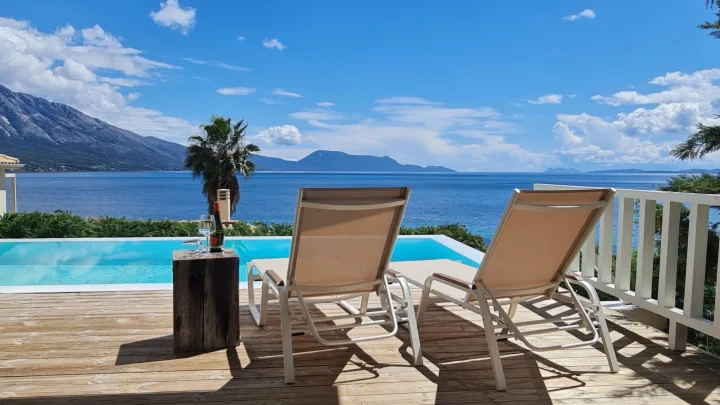
A villa is a detached luxury home, usually set in its own garden with enough space from neighbours for privacy. Villas tend to use high-quality materials and clean designs, often over one or two floors, sometimes with a pool, terrace, and parking.
A house is a stand-alone home on its own plot. Detached houses have one or two floors, sometimes with a basement for storage or parking. Semi-detached houses, often called maisonettes, share one wall with a similar unit.
An apartment is a home within a larger building. Apartments are common in Thessaloniki and Athens, and also on the islands and in some villages. Shared spaces such as hallways, lifts, and any pool are managed by an owners' association, and maintenance costs are usually split between the owners.
City vs Countryside
A city apartment in Athens or Thessaloniki puts you close to services and opportunities, often costs less than a detached country home, and is simpler and cheaper to maintain. It can also earn a steady income even when you are not there. The countryside offers the more traditional side of Greece: quieter, greener, with more privacy and closer ties to local life. Islands and villages also put nature on your doorstep, from hiking to swimming.
What Determines the Price?
Location matters most. Property near a beach, in a tourist area, or with a sea view will generally cost more. Age is the next factor, with older homes usually cheaper and newer ones dearer, off-plan aside. Other influences include the layout and architecture, the quality of the view, recent maintenance, and whether the home is furnished. Wider conditions play a part too, such as interest rates and the general state of the market, which affect both prices and how quickly homes sell.
Prices by Region
Prices vary widely across Greece. The highest are generally found in the most-visited areas, such as the Cyclades, parts of Athens, and Thessaloniki. More accessible prices are found in regions such as Crete, the Ionian islands, Rhodes, and Halkidiki, while some mainland and smaller-island areas remain lower still. These are broad patterns rather than fixed figures, and the right comparison is always between specific properties. We are happy to share realistic, current figures for any region you are considering.
Home Loans in Greece
Can you get a mortgage from a Greek bank?
It is possible, though rates and conditions vary by bank and change over time. Some banks require you to be a Greek tax resident, and you may need to be present in Greece to sign. For these reasons many international buyers fund the purchase another way, most commonly with available funds, by remortgaging a property at home, or with a loan in their own country.
Part 4: How to Buy a Home in Greece
You can picture the home already: coffee on the balcony, dinner on the terrace, the sea below. Then the practical questions arrive. What do you sign, and when? Do you negotiate yourself? How do you know the property is legally sound? Here is the process, step by step.
1. Search for a Property
Start by identifying what you want, based on your goals, budget, preferred region, and whether the home is mainly for your own use or for renting.
2. Visit on a Viewing Trip
Once you have a shortlist, visit in person to get a feel for the surroundings, the condition, and the local amenities.
3. Agree a Price
Negotiation can feel daunting, but it is a normal part of the process, so try not to take it personally. A good agent helps here, reading the market and the value realistically. After a few rounds you usually reach a price that works for both sides.
4. Legal Due Diligence
This is where a Greek lawyer is essential. The lawyer checks the ownership titles and searches the local Land Registry to confirm the property is in order and can be sold. Any mortgages, liens, or third-party claims come to light at this stage.
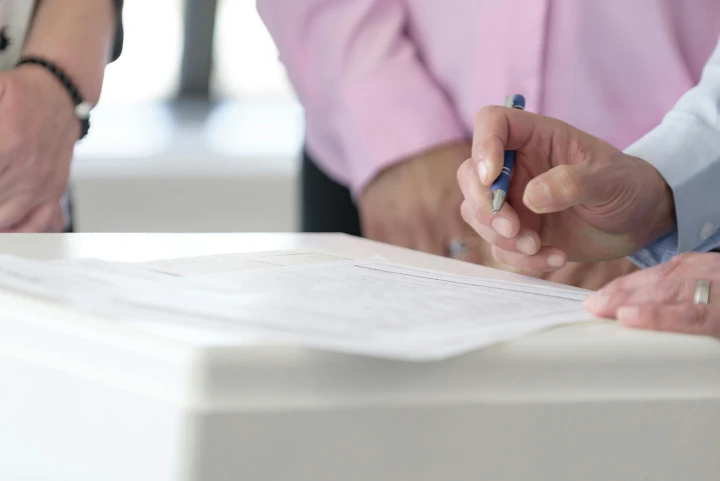
5. Sign a Private Purchase Agreement
A Private Purchase Agreement, or PPA, sets out the terms agreed between buyer and seller. Once signed, the property comes off the market, and the buyer pays a deposit to reserve it, typically between 5 and 10 percent of the price.
6. Sign a Power of Attorney
A Power of Attorney lets your lawyer act for you throughout the purchase, even when you are not in Greece. With it, your lawyer can represent you at the tax office for your tax number and sign the final contract, so the purchase continues while you are abroad.
7. Get a Greek Tax Number
You will need a Greek tax number, known as an AFM, to buy. It is issued free of charge on presentation of valid ID and a short application, and it gives you access to the online tax system. Our legal team handles this for you.
8. Both Parties Sign the Final Deed
The seller provides a set of documents for the notary, including energy certificates, topographical plans, tax clearances, and municipal certificates. The notary then prepares the transfer tax declaration. Once the buyer pays the transfer tax, the final deed can be signed. You can attend in person or have your lawyer sign for you under the Power of Attorney.
9. Complete the Payment
In most cases the buyer pays on the day of signing. Where both banks are in the same country, the funds usually reach the seller the same day. Once payment is received, a discharge deed is signed. The exact timing can vary with the circumstances and any terms agreed between the parties. With that, the home is yours.
The Real Estate Agent
A licensed agent helps buyers and sellers through the transaction. A good one holds a portfolio of properties, arranges viewings, and advises on the area, the type of property, taxes, and local procedures, then helps with the negotiation once you have found the right home.
The Accountant
It is worth having an accountant once you own in Greece, whether you live there or not. The accountant files your annual tax returns, guides you on income and property taxes, and declares the property in your records just after the purchase completes.
Part 5: The Costs of Buying a Home in Greece
Beyond the price of the property, set aside roughly 10 percent for the costs of buying, assuming you use both a lawyer and an agent. Here is what makes up that figure.
Transfer Tax
Paid by the buyer on existing homes, this is 3.09* percent of the purchase price or the taxable value, whichever is higher. New-build properties would normally carry VAT instead, but VAT on new builds is currently suspended, so transfer tax applies in its place. This suspension runs to the end of 2026 under Law 5246/2025.
*Important update: The Greek Prime Minister, Kyriakos Mitsotakis, has announced that the property transfer tax for purchases by non-EU citizens is set to rise to 15%, with the change expected to apply from 1 January 2027. The implementing legislation has not yet been published, so the final scope, including how it may treat plots of land and commercial property, is not yet confirmed.
Notary Fees
The notary prepares and oversees the deed. Fees are tiered and work out at around 1 percent of the price, plus VAT.
Land Registry Fees
After signing, the deed is registered locally. These fees come to about 0.5 percent of the price.
Lawyer's Fees
A lawyer is not strictly required, but is strongly recommended to check what you are buying and guide you through. Fees typically range from 1 to 2 percent, plus VAT, depending on the work involved.
Agent's Commission
This applies where an agent is involved. Elxis charges 3 percent plus VAT, payable on completion.
Utilities and Internet
As a rough guide, expect around 20 to 35 euros a month for internet, and for a mid-sized apartment somewhere between 150 and 300 euros for utilities such as electricity, water, and gas. The figure depends on the size of the home, the season, and your usage.
Home Insurance
Insurance is not required by law but is sensible, particularly once a developer's construction cover has ended. As a rough guide, a small home might cost around 130 to 200 euros a year to insure, a larger one rather more. Newer builds often work out better value.
Pool and Garden
Maintaining a pool and garden tends to fall somewhere between 150 and 350 euros a month, depending on size and style.
Annual Upkeep
Like any home, a Greek property needs occasional painting, repairs, and care, especially for woodwork exposed to the sun. Budget roughly 1,000 to 4,000 euros a year, depending on the property.
Part 6: Renting Out a Home in Greece
Many owners rent out their Greek home, either to cover costs or as an investment. This section covers what to expect on income, tax, and management.
Expected Income
Rental income varies a great deal by region and by the property itself. Key factors include the sea view, the distance to beaches, sights, and the airport, the age of the home, and the outdoor and pool area. As a rough rule of thumb, a well-presented home can achieve a high-season nightly rate of around 0.1 percent of its purchase price, though this is only a starting point. Rental management companies typically charge between 10 and 30 percent, depending on what they handle, such as housekeeping, guest communication, marketing, and tax registration.
Tax on Rental Income
Rental income is taxed on a progressive scale, calculated per owner on the gross rental income. From 2026, under Law 5246/2025, the scale is:
Up to 12,000 euros: 15%
12,001 to 24,000 euros: 25%
24,001 to 36,000 euros: 35%
Above 36,000 euros: 45%
Because the rates apply per owner, couples who buy in both names rather than one can often reduce the overall tax, as each owner has their own set of bands. There is also a current incentive worth knowing about: owners who move a previously vacant or short-term property onto a long-term lease, under the conditions set by the 2026 rules, may qualify for a three-year exemption on that rental income. As tax rules change, we confirm the current position for your situation before you rely on it.
Renting It Out Well
If you manage the rental yourself, a few principles help.
Price for profit, not occupancy. Set a realistic, quality-led price. Look at what comparable properties charge, then lean on what makes yours different, whether that is the finish, the linens, or added services.
Be specific in your listing. Describe not just the rooms but their condition, and answer the questions guests actually ask, about beaches, restaurants, and parking.
Visit regularly. A short visit every few weeks helps you catch small problems early, and keeps the home stocked to the standard guests now expect.
Invest in good photos. Strong photography is one of the best investments you can make, and well-shot homes tend to book faster than poorly shot ones.
Rental Management
Renting out a property is rewarding, but it is work: marketing, bookings, accounts, repairs, and guest communication all add up. A property manager takes that on, handling screening, inspections, and maintenance, which tends to improve both guest experience and returns. Elxis offers rental management for owners who would rather not handle it themselves, and can point you in the right direction for related services.
Part 7: Selling a Home in Greece
This section covers the basics of selling, from the documents needed to working with third parties and signing the agreement. It mirrors the buying process, seen this time from the seller's side.
Negotiate the Price
As with buying, negotiation is a normal part of selling, so try not to take it personally. It helps to understand the buyer's position: what else they are looking at, and what they want from the move. A good agent reads the market realistically and supports you through the back-and-forth.
Sign a Private Purchase Agreement
Once you accept an offer, you sign a Private Purchase Agreement. It sets out the agreed terms, takes the property off the market, and is accompanied by the buyer's deposit, typically 5 to 10 percent of the price. If the buyer withdraws, the deposit is usually forfeited. If the seller withdraws, the seller may have to return double the deposit.
A Note on Capital Gains Tax
Capital gains tax on the sale of property by individuals is currently suspended. This suspension runs to the end of 2026. As with all tax matters, we confirm the position that applies at the time of your sale.
Prepare the Notary Deed
For the deed, the seller hires an engineer to confirm that the permit and topographical plan match the deed and the property as built. The notary will also check whether the seller has any outstanding debts to the state. The documents usually required for signing are:
Title deed
ID copy and tax assessment
ENFIA certificate
Tax clearance certificate
Social insurance clearance certificate
Energy performance certificate
Electronic Building ID and topographical plan
Municipal property tax certificate (TAP)
Cadastral diagram extract and copy of the cadastral sheet
Both Parties Sign the Final Papers
The notary prepares the transfer tax declaration and submits it to the tax office. Once the buyer pays the transfer tax, the final contract can be signed. You can attend in person or have your lawyer sign for you under a Power of Attorney.
Collect Payment
The seller is usually entitled to be paid on the day of signing, which is the norm when both banks are in the same country. Where the banks are in different countries, the deed often allows the buyer to pay within ten working days of signing. If the buyer fails to pay within that time, and the clause is in the deed, the seller is entitled to take back ownership and keep the deposit. With payment received, the sale is complete.
Part 8: Inheritance Law
Have you inherited Greek property, or expect to in future? Here is what you need to know.
How Property Abroad Is Inherited
As a general rule, inheritance is governed by the law of the deceased's nationality or, in many cases, their last habitual residence. The first thing that matters is whether there is a will. Where there is one, it often specifies the applicable law, and most people choose the law of their own country. A Dutch will covering Greek property, drawn up by a Dutch citizen, is valid in Greece. The acceptance of the inheritance is handled by a Greek notary, but who inherits what is determined by the chosen national law.
If There Is No Will
Without a will, the applicable law is usually that of the country where the deceased last habitually lived. For example, for a Dutch resident, Dutch law would generally apply.
When the Heirs Live Abroad
In Greece, property passes to heirs through a notarial deed of inheritance acceptance. The heirs need a Greek tax number, and must provide the notary with a death certificate and a certificate of inheritance rights, usually drawn up in the deceased's home country, carrying an Apostille stamp, and officially translated into Greek. The notary then files an inheritance tax declaration, and the tax office calculates any tax due. In most cases, where property passes to close relatives, there is little or no inheritance tax.
Do You Need to Be in Greece?
No. You do not need to travel to Greece to accept an inheritance. A Power of Attorney can be signed authorising the Elxis lawyers to act for the heirs.
Is There Double Taxation?
Many European countries have signed treaties to prevent double taxation, which may mean you are exempt from inheritance tax in your country of residence on property held abroad. This depends on your own country's rules, so we recommend consulting a tax adviser there.
Part 9: About Elxis – At Home in Greece
We have been guiding international property buyers to find their ideal house in Greece since 1991. We help with viewings, valuations, the paperwork, and the full legal side of the transfer. With an in-house team of 10 lawyers, we have deep knowledge of Greek property law and a strong network across the mainland and the islands, built up over many years. Our team serves clients in their own language, in English, Dutch, German, French, and Greek. We carry out full due diligence, draft the contracts, and manage the transaction from start to finish, keeping you informed at every stage.
Our weekly newsletter reaches almost 40,000 readers with practical guidance on buying, owning, selling, and renting out a home in Greece. And for returning clients who originally bought through us and used our legal handling, our Elxis Loyalty Reward, introduced in January 2026, offers free legal handling when reselling through Elxis.
.jpg)