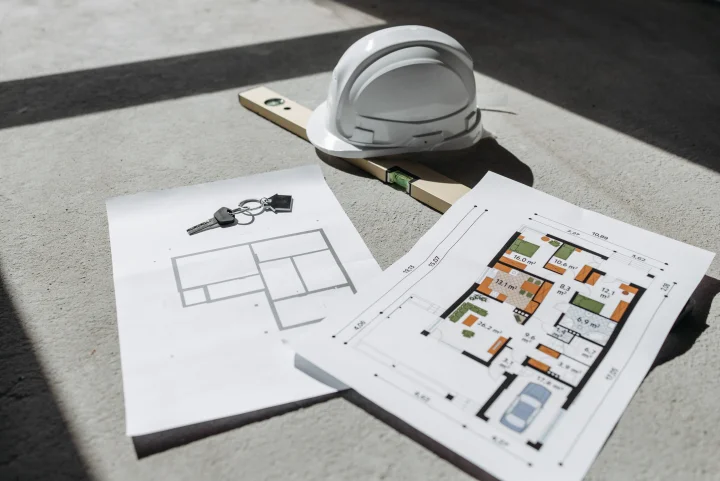
What Are the Costs of Buying a Home in Greece?
When buying a property in Greece, you need to allow for costs beyond the listing price. As a rough guide, the fixed buying costs come to around 5% of the purchase price. This can change depending on whether a real estate agent and a lawyer are involved. With both included, the all-in cost is usually around 10%.
1. Transfer tax
The buyer pays this, and it comes to 3.09% of the commercial value of the home or its taxable value, whichever is higher. It must be paid to the Ministry of Finance before the deed is signed, as the notary attaches proof of payment to the deed.
2. Notary fees
The notary prepares the deed, which is signed by the parties or their lawyers. The minimum notary fees are set by Greek law. Notaries normally charge around 1% of the price or taxable value, whichever is higher, plus VAT. The fee runs on a sliding scale, so the percentage is lower on higher-value properties.
3. Land registry fees
After the deed is signed, the notary prepares an application and a summary of the deed to be registered at the local land registry, which completes the transfer in law. The land registry fees come to about 0.5% of the property value.
Other Costs of Buying a Home in Greece
Beyond those, the buyer should also consider the following.
4. Lawyer's costs
You are not obliged to use a lawyer, but it is strongly recommended, both to check exactly what you are buying and to guide you through the process. Fees range between 1% and 2% (plus VAT), depending on the services.
5. Real estate agent's commission
Commission is due if an agent is involved. Most agencies charge between 2% and 4% of the agreed purchase price (plus VAT).
Note on VAT for newly built homes
If a completed new-build home is sold by a construction company, 24% VAT applies. To support the sector, the government lets construction companies apply for an exemption, and this VAT suspension is currently in force until the end of 2026. The 24% VAT is not due on new homes sold off-plan. In that case, the buyer first buys the building plot before construction starts, paying the 3.09% transfer tax on the price of the plot.
What Are the Costs of Owning a House in Greece?
1. Internet and utility fees
On average, expect to pay around 20 to 35 euros a month for internet. For an 85 sqm apartment, utilities such as electricity, gas, and water might run to between €150 and €300. This varies with the size of the home, the season, and your usage.
2. Vehicle tax
This is not strictly a home cost, but in many areas outside Athens and Thessaloniki, a car is a necessity. Annual road tax on a car or motorbike is paid online through the AADE myCar platform. Payment notices usually include a QR code so you can pay by mobile banking.
3. Home insurance
Greek law does not require home insurance, so it is not mandatory, but it is well worth having. If you own a new development, note that the construction company's insurance has probably expired on the date of delivery. There are insurance agencies throughout Greece, with plans for every budget.
How much does home insurance cost in Greece? It can range from 150 to 1,300 euros a year, depending on several factors:
The value of your home. Premiums depend on the risks you want to cover, the insured value of the house and contents, third-party liability, and the location. More expensive homes cost more to insure, based on current construction values.
Where your home is. Homes in quiet, safe areas usually cost less, and other geographic factors play a part too.
The cover you want. More cover costs more. Insuring your contents as well as the building costs more than the building alone.
The age and construction of your home. Newer, well-built homes generally cost less to insure. Older homes may need more repairs, so they often cost more.
Security. A security system can lower the premium, as the home is less likely to be broken into.
It is best to speak with a broker or insurer for an exact price, as they will need specific details about your property.


 Purchase Tips
.jpg)