The Ancient Greek Diet
The diet of the ancient Greeks was mostly sourced from local sources. The rocky landscape and the warmth of the Mediterranean sun allowed the Greeks to grow fruits and vegetables and also to keep livestock. Fish were naturally a part of the diet, since most Greeks lived near the coast.
Grains in Ancient Greece
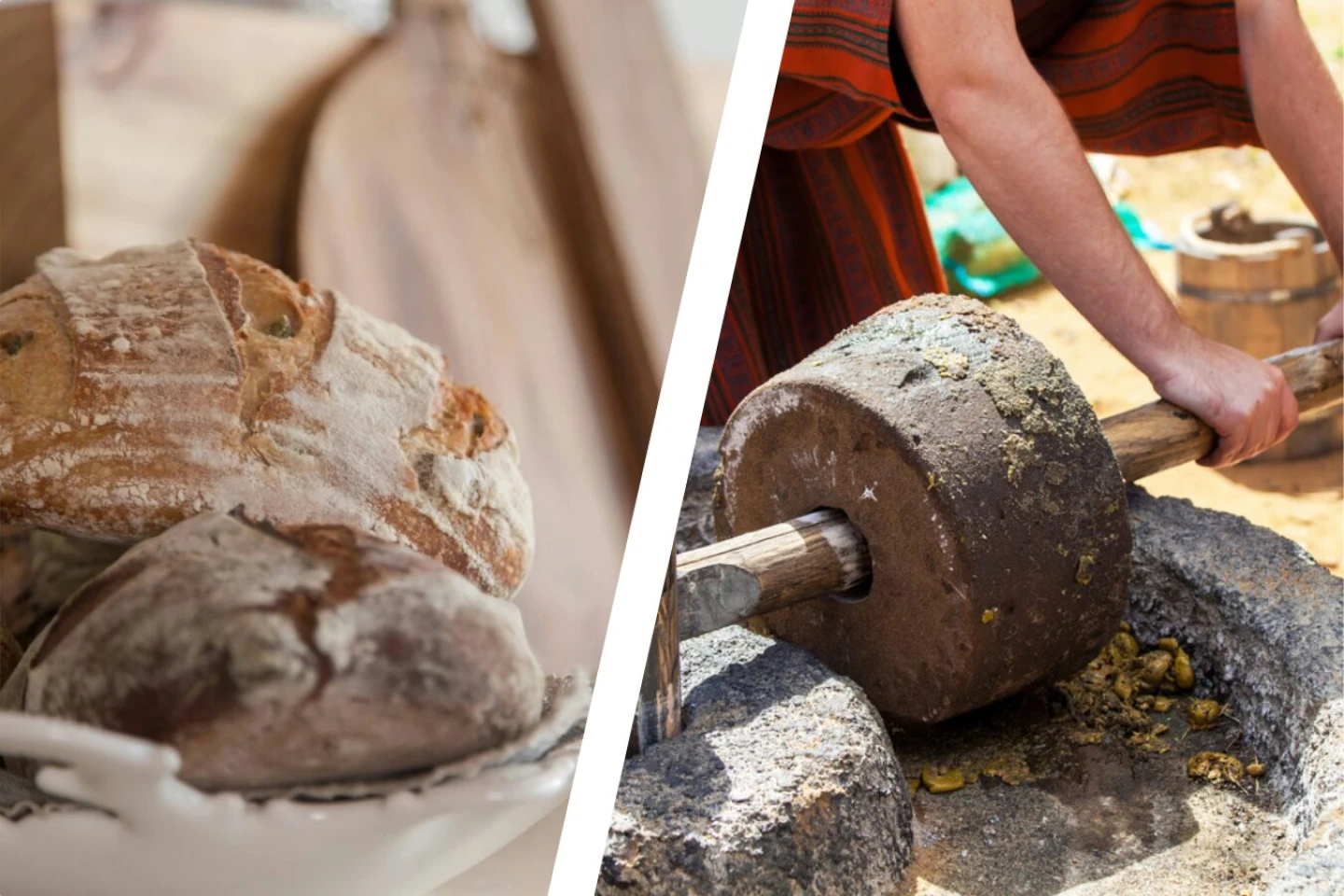
The terrain also made it possible to produce bread. Wheat and barley were the most common grains in the times of Ancient Greece. Grains were either eaten as bread, used in baked goods, porridge, or added to soups. Millet was also a common ingredient, and the Ancient Greeks used it to make unleavened bread.
Wine in Ancient Greece
Wine was usually consumed at meals, but always mixed with water. Drinking undiluted wine was uncivilized. Mixing wine with water in a three-to-one ratio had several benefits. You wouldn’t get drunk, and the diluted mixture gave hydration, calories, and great flavor. It was not considered good to be drunk in Ancient Greece. Also worth noting is another peculiar drink of the Ancient Greeks, known as “kykeon”. This beverage was a mix of barley gruel, water (or wine), herbs, and goat cheese, which resulted in a consistency something like a thick milkshake. We hope this opened your appetite, because now it’s time to explore mealtime in Ancient Greece.
Breakfast in Ancient Greece
Breakfast in the times of Ancient Greece was light. The most common breakfast was bread, usually made of barley, dipped into wine. This was considered ideal for starting the day of work. It was also possible, if they were bored of bread and wine, to eat something called “teganites”. This was like a pancake and was made of wheat flour, olive oil, honey, and curdled milk. Sounds delicious, right? It was also not uncommon to eat leftovers in the morning.
Lunch in Ancient Greece
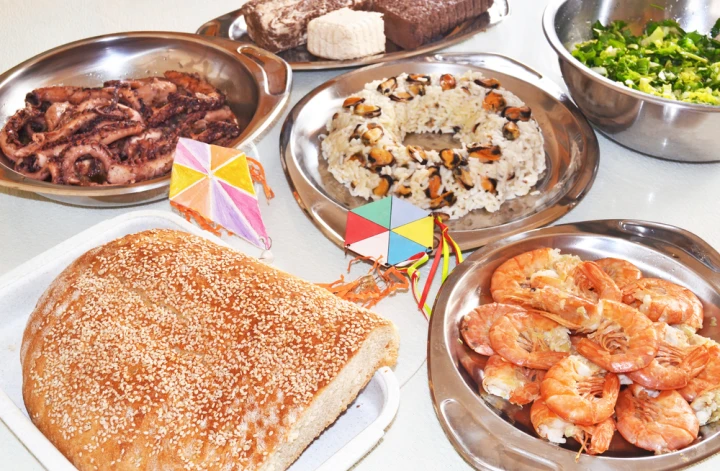
In Ancient Greece, the lunchtime meal was often light and included bread, cheese, olives, and occasionally fish. The light lunch was ideal for workers who didn’t want to be weighed down by a heavy meal. It’s possible that this tradition of multiple small plates of food became the “meze” tradition in Greece. In other areas of the Mediterranean and in the Middle East, it is possible to find similar traditions of small dishes or appetizers, like the Tapas culture in Spain.