20.10.2026
The Most Famous Homes in Greece
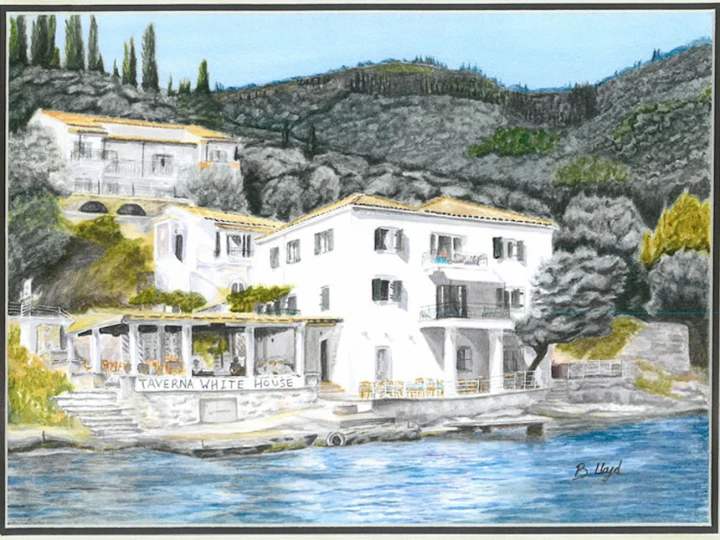
There are some houses in Greece that gain fame because of the people who lived in them, such as writers and musicians, or even... a king!
History & Culture
16.04.2026
Eva Karolidou
Greece is often associated with ancient history, island landscapes, and carefully preserved traditions. Less discussed, however, is another layer of its identity: its place names. Across the mainland and the islands, thousands of villages carry names that can sound unexpectedly funny or strikingly literal to a modern Greek speaker. These are not recent inventions or deliberate attempts at humor. Most date back centuries, shaped by geography, daily life, local dialects, and historical circumstances. What makes them stand out today is the shift in language over time. Words that once served as straightforward descriptions of land, resources, or communities can now feel unusually direct or unexpectedly humorous. Looking at these names more closely offers insight into how earlier generations observed their surroundings and chose to define them.
In northern Greece, many village names seem to follow the landscape and the rhythm of rural life. They often draw from what was right in front of people, which is why they feel so closely tied to the place.
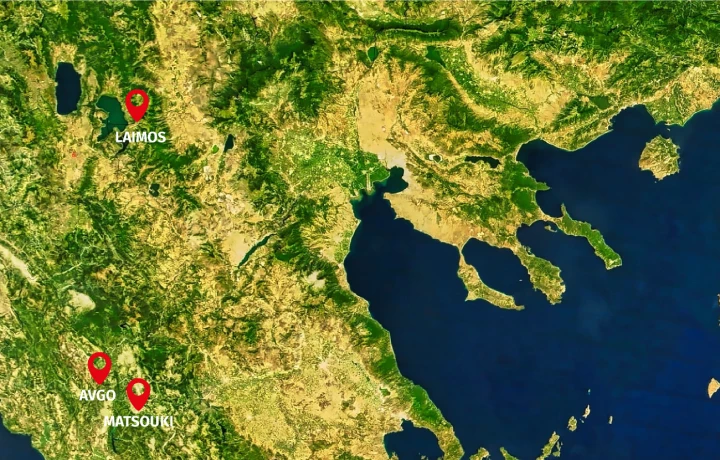
Laimos in Florina is a good example. The name means “throat,” which is not the most expected thing to see on a map. The village was previously known as Rampi and is now the seat of the Prespa municipality. It sits at around 900 meters altitude on the slopes above the Prespa lakes, close to the northern borders. The setting is open and elevated, with wide views across the area.
Avgo in Ioannina takes a different approach. The name means “egg,” and it was adopted in 1928, likely from a nearby hill with the same name. Before that, the village was known as Lesiana. It is a mountainous settlement at around 600 meters altitude, located about 20 kilometers from Ioannina. There is a clear logic behind the name, but it still reads less like a place name and more like an everyday word.
Matsouki in Ioannina is another example. The name refers to a “heavy stick,” which gives it a noticeably rough sound from the start. The village itself is a mountainous settlement, built at around 1,100 meters on the slopes of the Tzoumerka range. Traditionally, a place shaped by livestock and mountain life, it developed quite differently from nearby villages known for trade.
In central Greece, some village names stand out for how familiar they sound. They feel less like place names and more like words you would use in everyday conversation: simple, direct, and immediately recognizable. That familiarity is exactly what makes them so unexpected when they appear on a map.
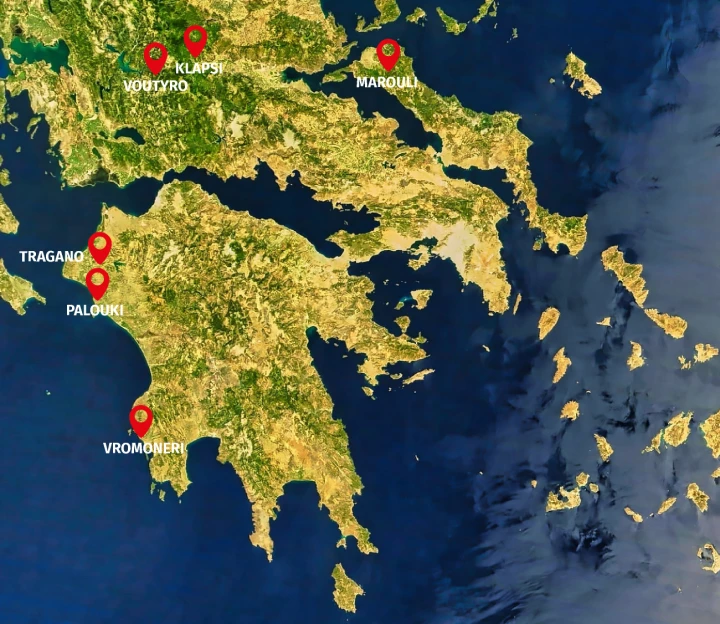
At 840 meters on the slopes of Mount Chelidona, just outside Karpenisi, Voutyro is a quiet mountain village overlooking the Potamia valley. It has stone houses, a large church, and the kind of setting you would expect from the region. The name, though, goes in a different direction. "Butter" feels oddly specific for a mountain village. It likely comes from a time when dairy was part of daily life.
Marouli means “lettuce,” which immediately sounds more like something on a menu than on a map. The village itself is a small, almost uninhabited settlement in northern Evia, built at around 400 meters on the slopes of Mount Kavallaris. Despite how it sounds, the name likely does not come from agriculture but from a historical figure, possibly a local ruler named Maroulis who controlled the area in earlier centuries.
Klapsi sounds like “crying,” and in this case, the connection is not accidental. The village, built at around 780 meters near the Karpenisiotis river, takes its name, according to local tradition, from the grief that followed a destructive attack in the area, possibly as far back as the Galatian invasions. Today, it is a quiet mountain village with views over the Potamia valley and a notable early Christian basilica dedicated to Saint Leonidas.
In the Peloponnese, some village names stand out for their simplicity. They are clear, direct, and just a little more expressive than expected, which gives them a distinct character.
Palouki is a coastal settlement in Ilia, built almost at sea level on the western shores of the Peloponnese, near Amaliada. It is a summer place: a small harbour, fishing boats, a campsite, and an easy connection to the nearby beach of Kourouta. The name, though, points somewhere else entirely. “Stake” suggests something fixed, upright, almost harsh — yet here it sits next to the sea, in a setting that is open and seasonal.
Vromoneri is a tiny seaside settlement near Gargalianoi, with just a few permanent residents, two small coves, and a thermal spring flowing underground into the sea. That spring is also where the name comes from. In other words, “dirty water” or “smelly water” is not a random insult that happened to become official; it is tied to an actual natural feature of the place. What makes the name memorable is the contrast. For a village with a beach, a fishing spot, and a recognised medicinal spring, the name is still stubbornly unglamorous. It also carries far more history than its size suggests: the wider area has produced Paleolithic stone tools and was once part of the kingdom of Nestor’s Pylos. So yes, the name is funny — but the place behind it is older and more layered than it first appears.
Tragano sounds playful from the start, especially because the word brings to mind something crisp or crunchy. According to local tradition, though, the name comes from the traganero quality of the soil in the area. The town lies in the fertile plain of Ilia, north of the Pineios river, and its economy is still closely tied to agriculture, from cereals and vegetables to watermelons, oranges, pomegranates, and greenhouse cultivation. That makes the name feel less random than it first appears. It may sound like it belongs in a bakery or a kitchen, but in fact, it is tied to the land itself.
In the Ionian Islands, some village names come straight from daily life. They are the kind of words you would expect to hear in conversation, not as destinations, which is exactly why they stand out.
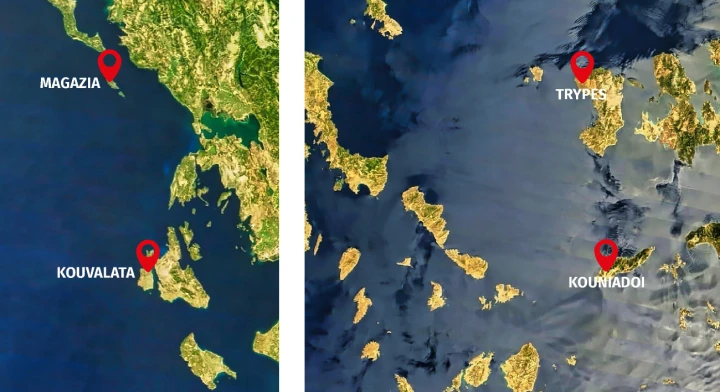
Magazia literally means “shops,” and in this case, the name is as straightforward as it sounds. The settlement lies inland on Paxos, arranged along the road that leads toward Lakka, with a few cafés, a bakery, a mini market, and tavernas. It does not quite resemble a typical village, which makes the name feel even more literal.
Kouvalata is a small settlement in Kefalonia, with just over a hundred residents and a modest elevation above the coast. The name brings to mind carrying or hauling, even if the exact origin is not fully confirmed.
Kouniadoi means “brothers-in-law,” which immediately gives the impression of something social rather than geographical. The village itself is a small settlement in Ikaria, set at around 500 meters altitude, with only a few dozen residents. There is nothing particularly unusual about its setting — quiet, elevated, and typical of the island’s interior. The name, however, points elsewhere. It likely refers to a family group or a local social structure, suggesting that at some point, relationships mattered more than landscape when it came to naming a place.
Trypes means “holes,” and in this case, the name is as literal as it sounds. The village lies in a remote part of Chios, with a small population and a landscape that includes caves and rock formations, such as the nearby “Kalogerotrypa.” The name does not try to soften or reinterpret the terrain; it simply reflects it. Beyond that, the village has its own rhythm: stone-built houses, agricultural activity, a working watermill until the 20th century, and a local festival dedicated to Saint Symeon. The directness of the name is what makes it memorable, but it is rooted in a landscape that still justifies it.
In Crete, some village names catch your attention simply because they sound unexpected. They are not always descriptive, but they are memorable — shaped over time by different languages, dialects, and habits that have left their mark.
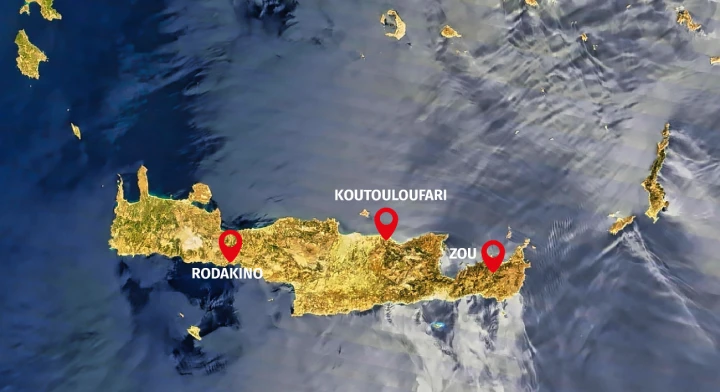
Zou is a tiny village near Sitia, with only a few dozen residents and a low elevation above the surrounding landscape. The name is so short that it barely registers as a word. In reality, it likely comes from older linguistic layers: One theory links it to an Arabic word for water, while another traces it back to a local spring that once defined the area. That connection becomes clearer when you learn that water from Zou was later channeled to supply Sitia. Despite its simplicity, the name carries a long history: Venetian records list it in different forms, and the site itself includes a Minoan farmhouse with dozens of rooms. What sounds like a stray syllable turns out to be tied to one of the oldest inhabited landscapes on the island.
Koutouloufari sits just above Hersonissos, on the lower slopes of a hill, with views toward the northern coast. The name is the opposite of Zou — long, layered, and slightly unwieldy. It appears in Venetian-era records under different variations, which hints at how its sound evolved. Today, the village balances two identities: It remains tied to agriculture, with greenhouse cultivation and flower production, but it has also shifted toward tourism, with restaurants, small hotels, and steady visitor traffic. The name itself does much of the work. It is memorable without explanation, the kind of word you repeat once just to get it right, and then again because it is hard to forget.
Rodakino reads immediately as “peach,” which gives it a softer, more familiar feel than most place names. It is the kind of word you recognize instantly, even if you do not expect to see it on a map. In southern Crete, where small settlements and cultivation still shape the landscape, the name does not feel out of place; it settles in quietly. Whether it comes from local produce, color, or something more specific, it stands out without trying to.
Taken together, these names bring a certain ease to the map. They don’t feel constructed or carefully chosen; they feel like they arrived naturally and stayed. There is something appealing in that lack of effort, in the way a place can be called exactly what it once needed to be called, and nothing more. They also carry a quiet continuity. Even when their meaning shifts or feels slightly out of place today, they still hold their original tone. That mix of clarity, familiarity, and slight surprise is what makes them enjoyable to come across and hard to forget.
20.10.2026
There are some houses in Greece that gain fame because of the people who lived in them, such as writers and musicians, or even... a king!
05.10.2026
In his poem, "Days of Kindness", from 1985, Leonard Cohen describes Greece as being a good place to read by moonlight on the terrace. He knew this from experience. Hydra was his home for much of the 1960s. He arrived in the spring of 1960, aged 25, and later bought a house on the island, where he wrote much of his early work. Many places on Hydra still carry traces of him, even now that Hydra has become far better known.
20.03.2026
Greece has long been more than a travel destination. For centuries, writers have been drawn to its history, natural beauty, and authenticity, finding in Greece not just a setting, but a source of inspiration that shapes narratives, characters, and perspectives.
19.02.2026
02.01.2026
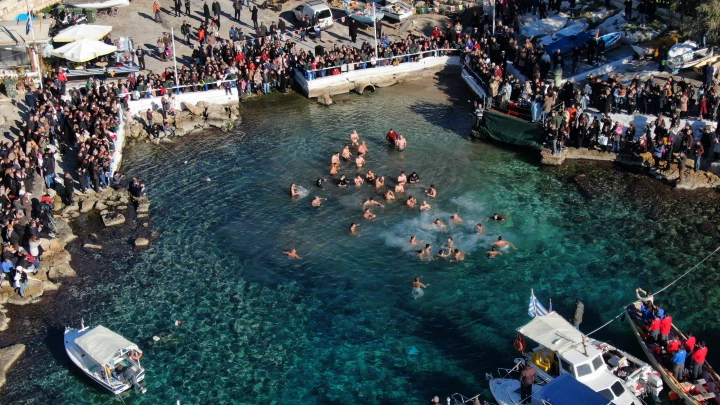
In Greece, the holiday season does not end on New Year’s Day. Instead, it culminates in one of the most symbolic celebrations of the year: Epiphany, known in Greek as Theofania. More than a religious holiday, Epiphany in Greece represents the triumph of light over darkness, a spiritual “new beginning” for individuals and communities. For anyone living in Greece, or dreaming of owning a home here, Epiphany offers one of the most authentic snapshots of local culture. From the blessing of the waters to ancient folk rituals, this day reveals the deep connection between the Greek people, nature, and tradition.
30.12.2025
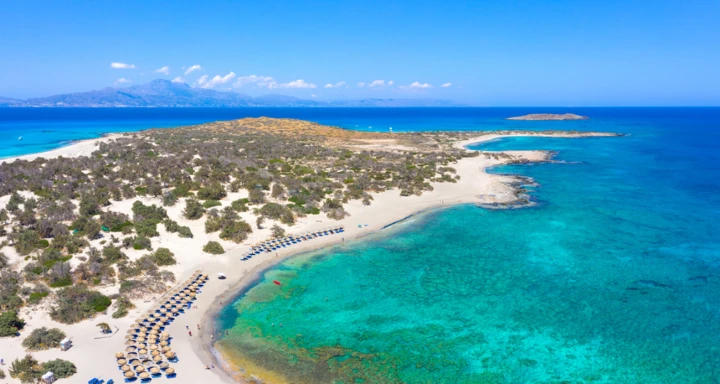
Crete is stepping into the global spotlight once again. According to Airbnb’s latest travel trend insights based on worldwide search data from Q3 2025, the island — and especially the iconic Samaria Gorge National Park — ranks among the most sought-after nature destinations for 2026. This surge reflects a broader shift in how people choose where to travel, live, and invest. Travellers are no longer looking only for beaches or city breaks. Instead, they are drawn to authentic natural environments, outdoor experiences, and destinations that offer both beauty and balance, qualities that Crete delivers effortlessly.
19.12.2025
Greece is known mostly for its pristine beaches and its endless summers. Also, Greek cuisine, with its unique Mediterranean dishes, is widely sought after. What might feel surprising is the magical beauty during Christmas in Greece. The country has a long festive season that runs from Christmas to Epiphany (the “Φώτα” on 6 January), full of local customs, food traditions, and small village rituals that still matter to people today. Winter destinations are also famous in Greece, as according to the latest Monitoring Sentiment for Intra-European Travel report (Wave 23) by the European Travel Commission (ETC), Greece ranks among the top 10 most desired European destinations for travel between October 2025 and March 2026, holding a solid 7th place.
19.12.2025
Spending New Year’s Eve on Greek islands is about much more than fireworks, food and champagne. It’s about little family rituals, centuries-old customs and the warm feeling of being part of a close community. For anyone dreaming of a holiday home or a new life in Greece, New Year's Eve is one of the unique moments to experience the soul of island life, when most tourists aren’t there, and you can experience authentic community moments with locals. As we’ve mentioned in an older blog post, cutting the famous Vasilopita, a special bread to honour the Greek Santa Claus, is the most important custom happening in almost every house in Greece at the turn of the year. A lucky coin is baked into the cake, and whoever finds it will have good luck for the next year or may even take a gift. But let’s explore a bit more of Greece’s rich traditions and local communities, from its enchanting islands to the unique customs celebrated on New Year’s Eve and New Year’s Day.