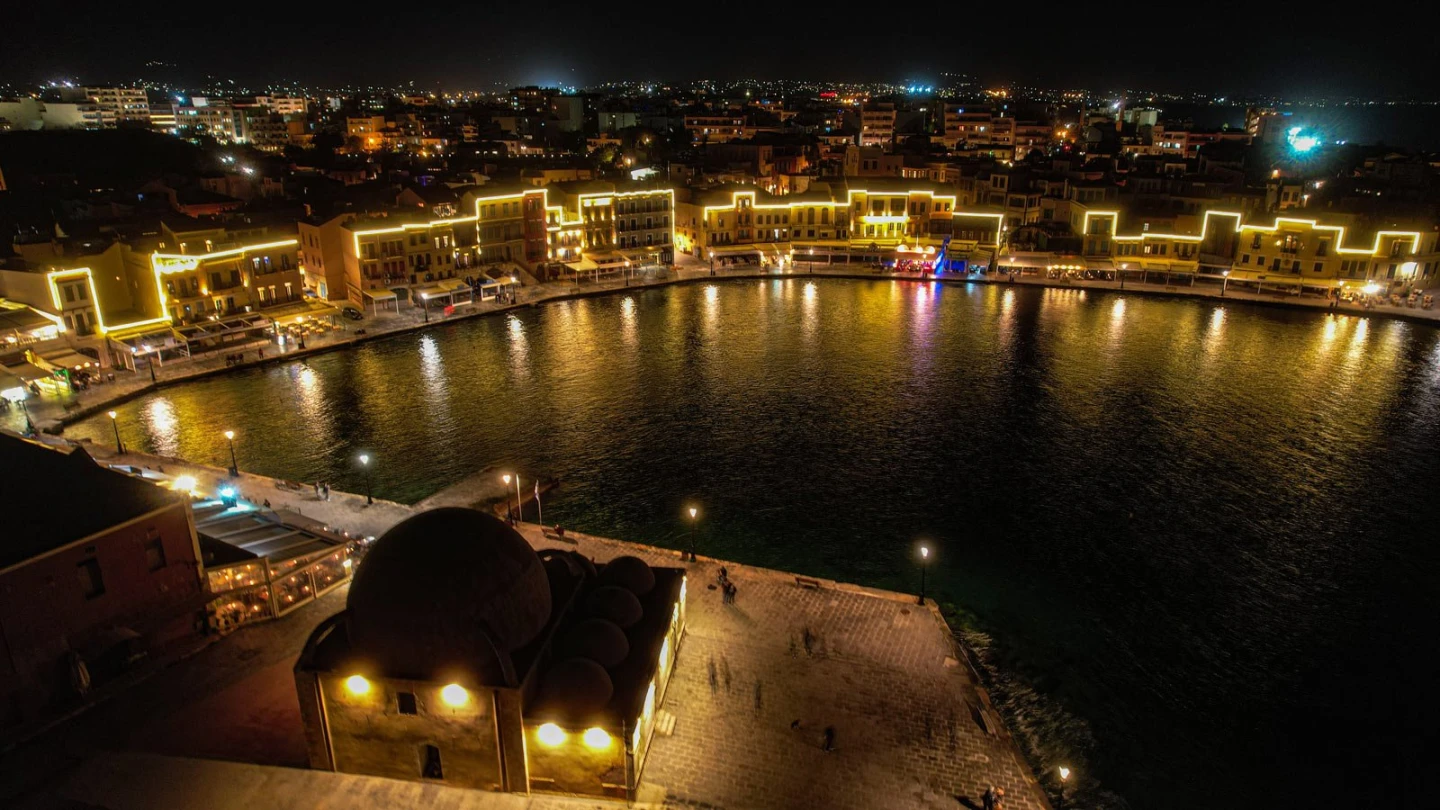
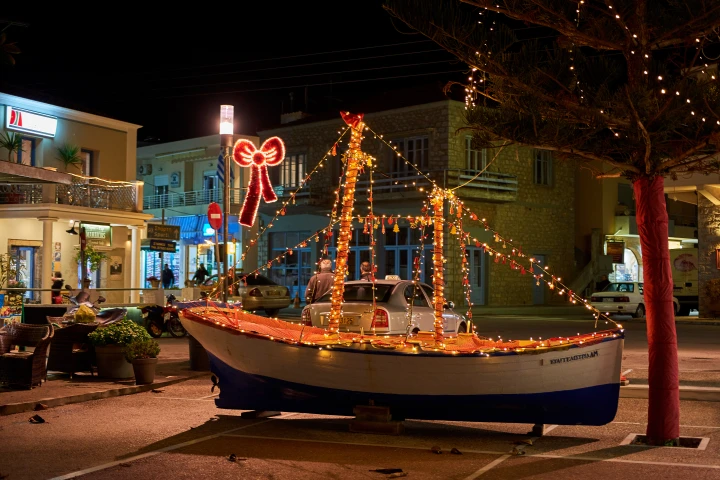
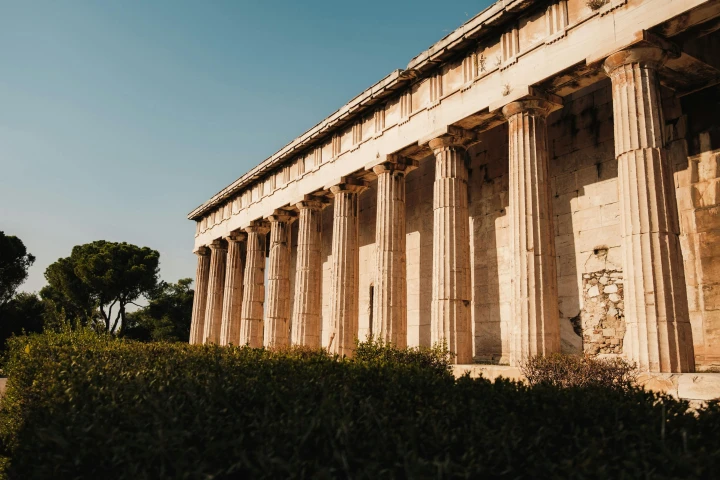
Greece is known mostly for its pristine beaches and its endless summers. Also, Greek cuisine, with its unique Mediterranean dishes, is widely sought after. What might feel surprising is the magical beauty during Christmas in Greece. The country has a long festive season that runs from Christmas to Epiphany (the “Φώτα” on 6 January), full of local customs, food traditions, and small village rituals that still matter to people today.
Winter destinations are also famous in Greece, as according to the latest Monitoring Sentiment for Intra-European Travel report (Wave 23) by the European Travel Commission (ETC), Greece ranks among the top 10 most desired European destinations for travel between October 2025 and March 2026, holding a solid 7th place.
A Different Kind of European Christmas
Christmas in Greece is less about markets and shopping streets and more about family tables, church bells and village squares.
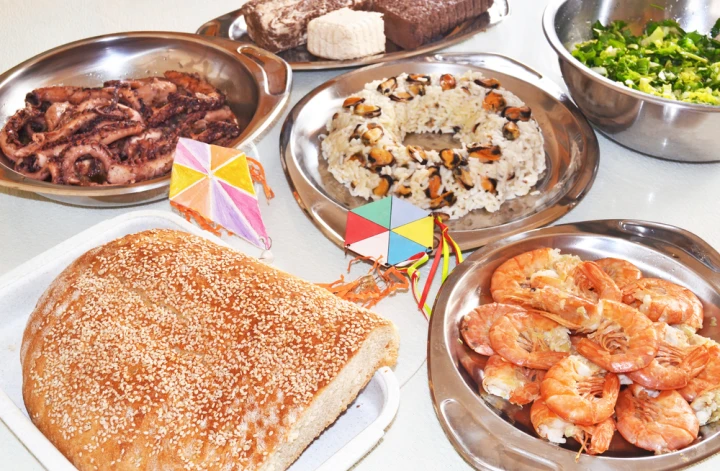
Homes are cleaned and whitewashed inside and out, “melomakarona” (Greek Christmas honey cookies) and “christopsomo” (Christmas bread) are baked, and the whole house smells of cinnamon, cloves, honey, and orange. In many places, people still bake two Christmas loaves – one for the family and one for the animals, as a wish for health and abundance for all.
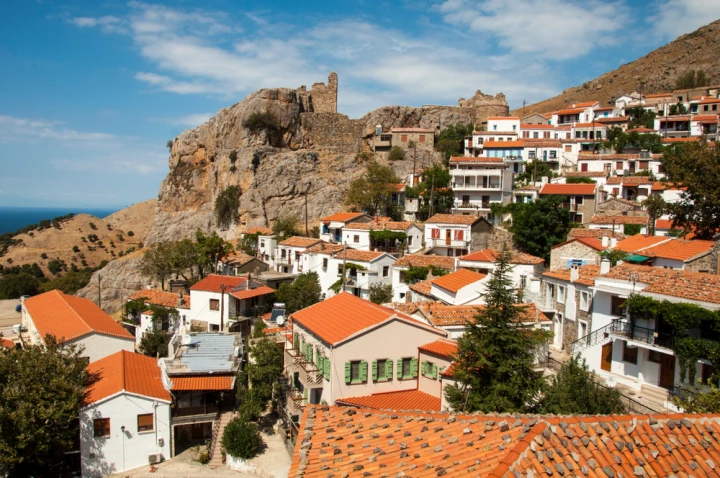
The festive spirit is stronger in smaller towns and islands, where traditions aren’t “recreated ”just to attract tourists – they’re simply how people live.
Christmas Traditions in the Greek Islands
From the Cyclades to the Dodecanese and the Ionian Sea, each island adds its own flavour to Greek Christmas:
Tinos – The Brotherhood Table
In the village of Tripotamos, a “Brotherhood Table” on Christmas Day brings together the men of the village. One family takes on the role of “κάβος” (host), caring for the church and offering a big feast with soup, stews, and wine. It’s a beautiful example of how community and generosity are woven into daily life.
Naxos – Fire, Bread and Protection
On Naxos, the famous christokoutsouro – a large log – burns in the fireplace for all twelve days from Christmas to Epiphany, to keep the mischievous goblins (kallikantzaroi) away. The ashes later bless crops and animals. Christmas bread is decorated with crosses, nuts, and symbols of fertility. It’s rural island life at its most authentic.
Santorini, Paros, Sifnos & Others
Each island has its specialty:
Santorini: fava, tomato fritters, and the custom of schoolchildren offering a Christmas “Καληχέρα” (something like a gift) to their teacher.
Paros: They bake the well-known “σταυρόψωμο” (a special blessed bread with a dough cross and a walnut in the centre) for Epiphany, as a symbol of family unity.
Sifnos & Serifos: Teasing, improvised carols, and all-night singing on Christmas Eve. On Christmas Day, the feast of Christ is celebrated on Serifos, but what makes the difference is the traditional carols. They are sung by the men of the island on Christmas Eve as they make their way to the priest’s house to give him a gift.
Crete & the Dodecanese: Feasts and Long Memories
In Crete, Christmas is deeply connected with the old custom of hog slaughter. The family pig becomes smoked meats, sausages, stews, and the famous “τσιγαρίδες”. Nothing is wasted. Christmas bread is rich with honey, spices, and nuts, carefully decorated and shared by the head of the family, like a small ceremony.
Across the Dodecanese islands – Rhodes, Kos, Symi, Astypalaia, and others – Christmas tables are loaded with pork, cumin-scented dolmadakia, local sweets, and breads. Traditions there often mix island life with stories brought from Asia Minor a century ago, especially in villages founded by refugees.
Although Greece is known for its summer, winter provides the opportunity to explore mountain destinations and experience the magic of the Christmas season. There is always a feast somewhere, a local ritual, a reason for a gathering.
Epiphany: When the Sea Becomes Sacred
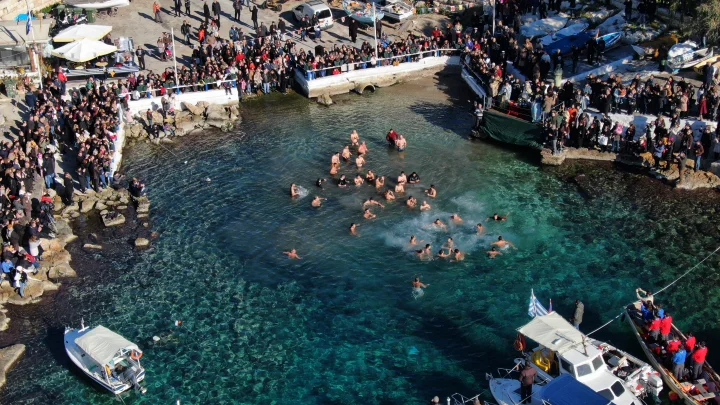
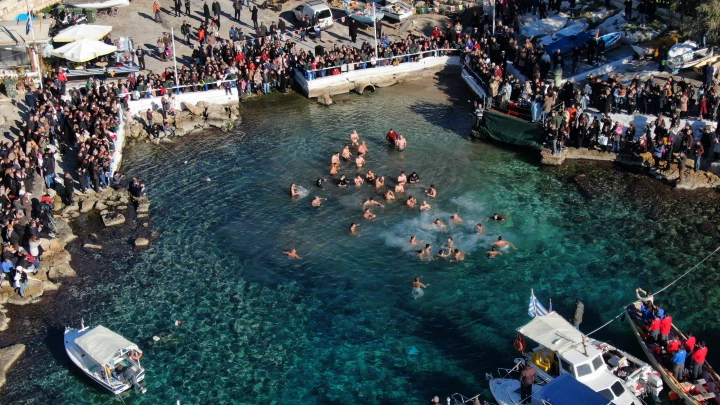
The festive period closes on 6 January, Epiphany (Theofania / “Φώτα”), with one of the most striking Greek customs: the Blessing of the Waters.
From island ports to lakes and rivers on the mainland, a priest throws a cross into the water and young men dive in to retrieve it, even in the cold. In some places, like island harbours, boats gather around, horns sound, and the entire community watches.
On Lefkada, blessed oranges are thrown into the sea along with the cross and later hung near icons. In many villages, holy water is brought home to bless houses, fields and animals
For anyone living near the sea in Greece, this day captures something essential: the bond between people, faith and the water that defines the country.
Christmas in Greece: An Alternative Choice Worth Experiencing
If you’re considering a holiday home or a permanent move, winter in Greece – and especially Christmas – is the perfect time to picture your stay in Greece, not just for a short trip, but as a place that can capture your heart all year long. For more Christmas traditions and food in Greece, click here and here.