Spending New Year’s Eve on Greek islands is about much more than fireworks, food and champagne. It’s about little family rituals, centuries-old customs and the warm feeling of being part of a close community.
For anyone dreaming of a holiday home or a new life in Greece, New Year’s Eve is one of the unique moments to experience the soul of island life, when most tourists aren’t there and you can experience authentic community moments with locals.
As we’ve mentioned in an older blog post, cutting the famous Vasilopita as a special bread to honour the Greek Santa Claus, is the most important custom happening in almost every house in Greece at the turn of the year. A lucky coin is baked into the cake, and whoever finds it will have good luck for the next year or may even take a gift. But let’s explore a bit more of Greece’s rich traditions and local communities, from its enchanting islands to the unique customs celebrated on New Year’s Eve and New Year’s Day.
Rhodes: Gifts of Good Luck – “Bouloustrina”
On the island of Rhodes, New Year’s Day begins with smiles at the door. Children visit their grandparents, godparents and relatives to receive a small money gift called “bouloustrina”, which is a symbol of luck and prosperity for the year ahead.
Many families also leave, from the night before, a glass of water and a plate with three small pieces of baklava or Vasilopita (New Year’s cake) near the icon corner of the house: one piece for Christ, one for Santa Claus, and one for “the poor man”.
It’s a simple gesture that connects faith, generosity, and everyday life. Also, it is a beloved tradition that captures the hearts of guests when they spend New Year’s Eve on the island.
Kos: Carols, Church-Shaped Lanterns & Sweet Baklava
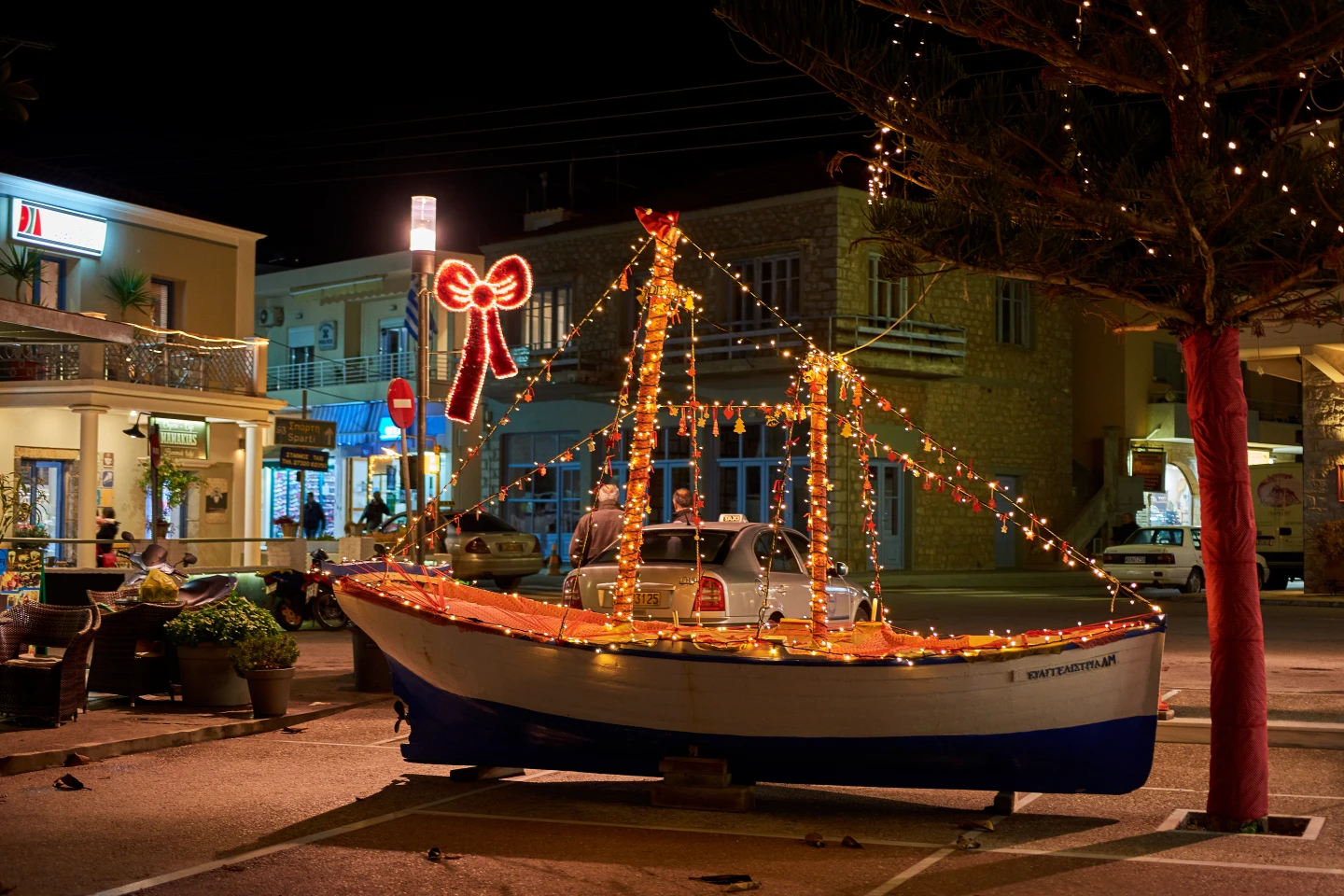
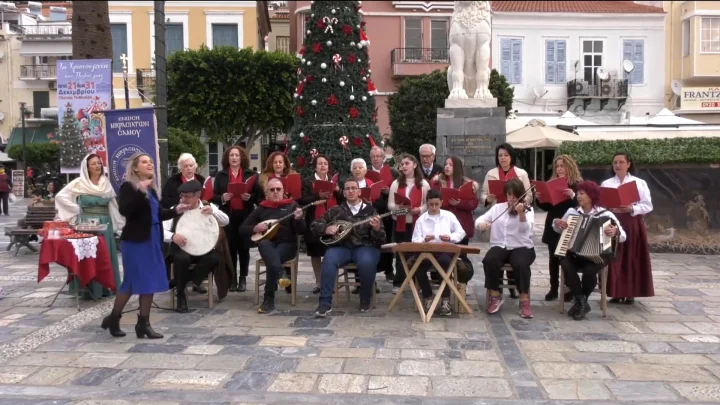
In Kos, New Year’s Eve is full of music. Groups of young people walk through the streets carrying large, decorated models of churches or little ships, beautifully lit from inside. They sing the well-known Greek carols as well as their own local verses, wishing health, happiness, and a sweet year ahead.
On New Year’s Day, the whole island smells of homemade baklava. Families roll out thin pastry sheets by hand, fill them with toasted sesame, walnuts or almonds, and bake large trays for relatives and guests.
Leros: First-Footing, Silent Water & the Black Rooster
On Leros, the New Year begins with a ritual that mixes nature, faith and family.
As soon as the year changes, someone who has been waiting outside enters the house holding a jug of fresh water and a stone. This is the “first-foot” of the home. With the water, they sprinkle the four corners of the house, saying wishes so that “good things and wealth will flow like the water”. The stone symbolises health and stability for the family.
The family then breaks a pomegranate at the door, stepping three times inside and outside while wishing that good things enter and bad things leave. Traditionally, early in the morning, families also cooked a black rooster, kept all year for this day.

Samos: “Proventa” & the Joy of Good Fortune
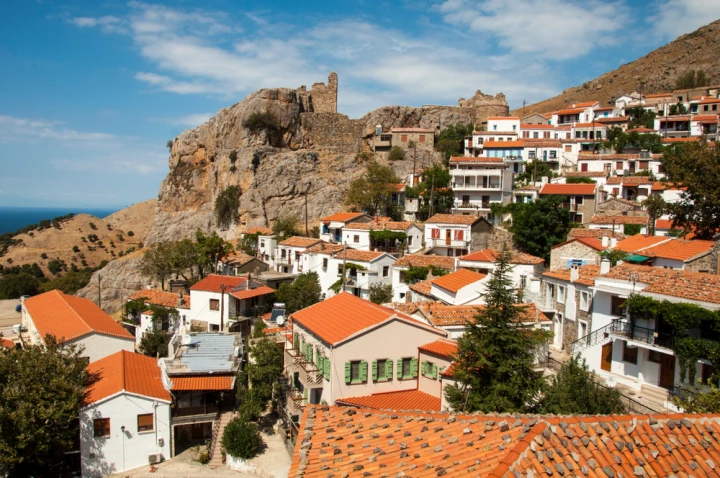
The island of Samos adds its own unique flavour to New Year celebrations. Alongside the Vasilopita, local women prepare the “proventa”, a special dessert platter meant to showcase the hostess’s skill and generosity. It includes various sweets arranged beautifully and served to guests throughout the festive days.
Every household also performs the pomegranate ritual, breaking the fruit at the entrance so that its seeds scatter, symbolising prosperity, health and protection. Children bringing good luck by entering the home first receive their “boulistirina”, the local version of the New Year’s gift. These small customs bring warmth and meaning to family gatherings, especially in the traditional stone houses that make Samos so appealing to new homeowners.
Heading to Cyclades, on the island of Syros, Christmas Eve is marked by a charming tradition. Members of the Lyceum of Greek Women, dressed in the island’s traditional attire, walk through the streets of Ermoupoli carrying a beautifully decorated wooden boat. As they make their rounds, they sing the local Syros and Tinos carols. The boat symbolises the journey of each person toward a renewed life following the birth of Christ.
Last but not least, in Crete, people hang wild onions (αγριοκρέμμυδα) on doors on New Year’s Day, along with other plants, for good luck, prosperity, and rebirth, as it is a hardy plant that does not need water and symbolises the endurance of the home and family. This custom is widespread in many parts of Greece (where it is called agiobasilitsa) and Crete maintains it with the askeletoura, which is the bulb of the plant, reinforcing the tradition for a good and strong new year.
Island Traditions & The Meaning Behind Them
From the bouloustrina of Rhodes to the proventa of Samos and the pomegranate blessings of Leros, each island offers its own beautiful way of welcoming the year. These customs aren’t staged for visitors; they are living traditions that strengthen family ties and connect the past with the present, while expressing the unique character of each place.