20.10.2026
The Most Famous Homes in Greece
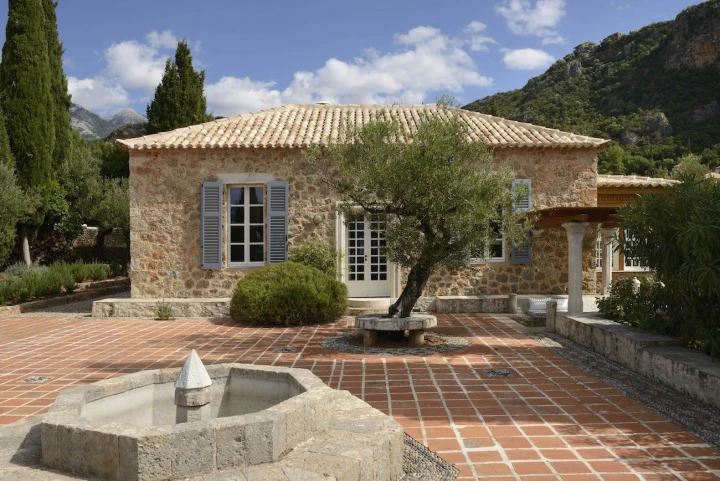
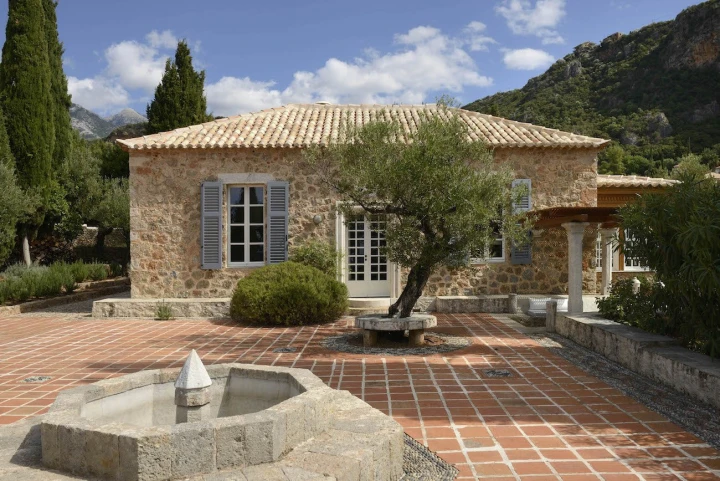
There are some houses in Greece that gain fame because of the people who lived in them, such as writers and musicians, or even... a king!
History & Culture
20.03.2026
Greece has long been more than a travel destination. For centuries, writers have been drawn to its history, natural beauty, and authenticity, finding in Greece not just a setting, but a source of inspiration that shapes narratives, characters, and perspectives.
Below is a selection of some writers whose connection to Greece left a lasting mark on both their work and the country itself.
Lord Byron is perhaps the most iconic example. First visiting Greece at 21, he began Childe Harold's Pilgrimage in Greece, the poem that made him famous overnight. But his connection to Greece went far beyond poetry. In 1823 he returned to fight in the Greek War of Independence, and ultimately died of fever in Mesolongi on 19 April 1824, aged just 36.
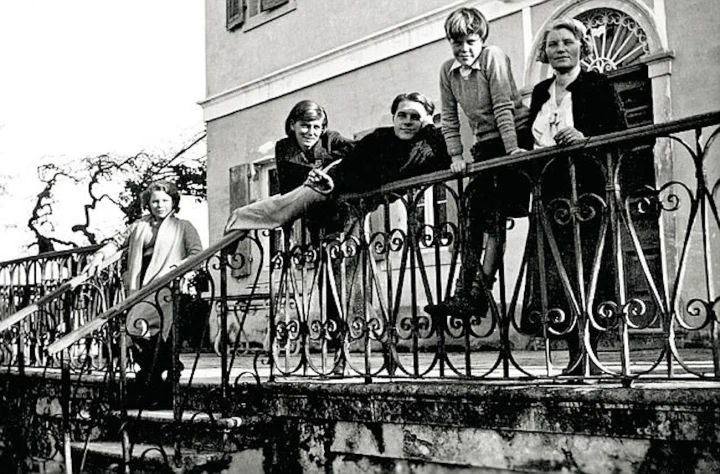
In 1935, the widowed Louisa Durrell took her four children from the English town of Bournemouth and relocated them to Corfu, largely at the urging of her eldest son Lawrence, who had already fallen under the island's spell.
Gerald Durrell the youngest of the siblings, was just ten years old when the family arrived. He spent the next years roaming Corfu's hills and shores, exploring wildlife, and making friends with the locals. The result was My Family and Other Animals (1956), the first volume of his celebrated Corfu Trilogy, which sold millions of copies and decades later inspired the hit TV television series The Durrells, which brought a new generation of readers to the books and a new wave of visitors to Corfu.
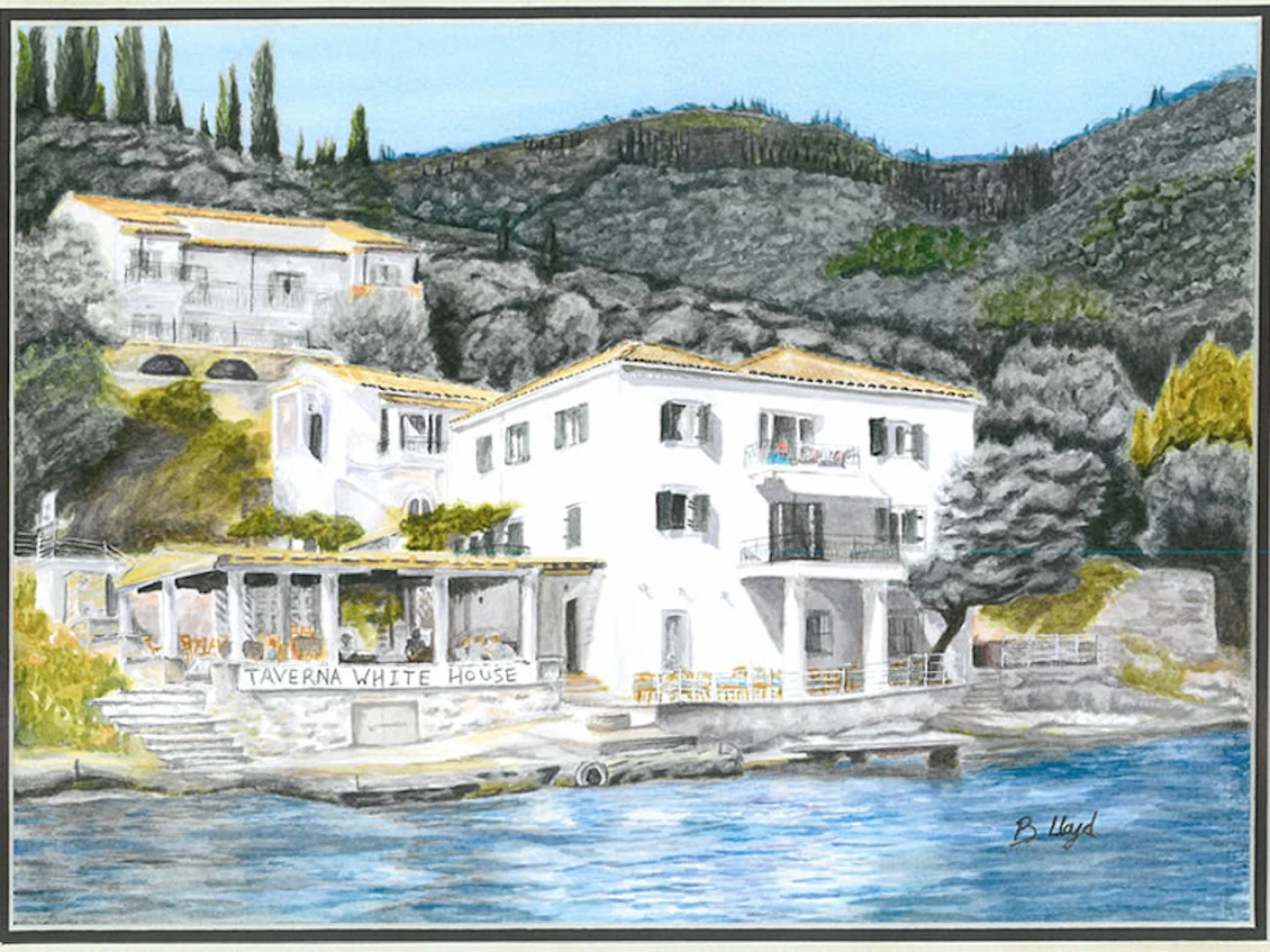
His brother Lawrence Durrell, meanwhile, settled at the White House in Kalami with his first wife Nancy. In Prospero's Cell (1945) he writes about Corfu not just as a location, but as something almost dreamlike. Later, in Reflections on a Marine Venus, inspired by Rhodes, he continues this meditative approach, blending travel writing with introspection and creating a vivid portrait of Greece.
American novelist Henry Miller arrived in Greece in 1939 at the invitation of Lawrence Durrell, who was then living on Corfu. Having already spent nine years in Paris, he was, in his own words, in need of rejuvenation. Greece gave him something far greater. He spent nine months travelling across Athens, Crete, Hydra, Poros, Delphi, and Corfu, and the country transformed him completely.
What followed was The Colossus of Maroussi (1941), widely considered one of the greatest travel books about Greece, describing it as a place of spiritual awakening but also the writer’s own transformative journey.
In his own words, “the light of Greece opened my eyes, penetrated my pores, extended to my whole being. I went back to the world having found the true center and the true meaning of cosmic rotation”.
Famous for his wartime exploits in Crete, Patrick Leigh Fermor, fell so deeply in love with Greece that he eventually settled here for good, building a house in the village of Kardamyli in the Mani, in Peloponnese, where he lived for the rest of his life.
His two great books about Greece, Mani: Travels in the Southern Peloponnese (1958) and Roumeli: Travels in Northern Greece (1966), are records of a vanishing world, full of remote villages, eccentric priests, ancient dialects, and landscapes that felt untouched by the modern age.
British author Louis de Bernières was captivated by Kefalonia and its complex wartime history. His 1994 novel Captain Corelli's Mandolin is set on the island during the Italian and German occupation of World War II. The novel weaves together romance, history, and tragedy, depicting the Italian occupation and its impact on local communities.
The book became a global bestseller, and its success had a lasting effect on Kefalonia as a tourist destination. The 2001 film adaptation, starring Nicolas Cage and Penélope Cruz, was shot there, bringing its stunning landscapes to audiences worldwide.
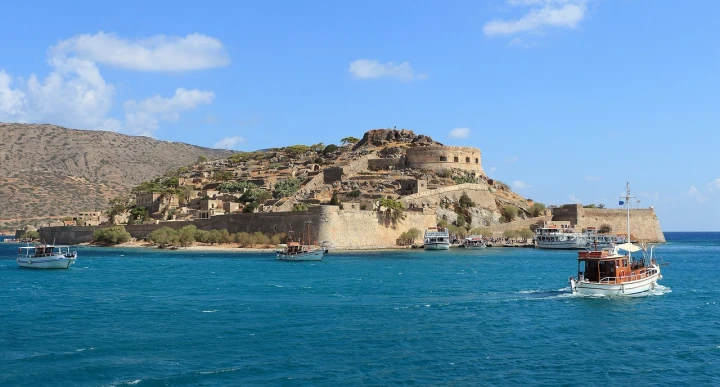
If one contemporary writer has done more than any other to introduce to the world Greece's modern history, it is Victoria Hislop. She first visited the abandoned Venetian leper colony of Spinalonga off the coast of Crete and was so moved by what she saw that she felt compelled to give it a story. The result was The Island (2005).
The novel became an international phenomenon, translated into more than 40 languages, with over six million copies sold worldwide, and was adapted into a Greek television series. Other works like The Thread, The Return and Those Who Are Loved, explore themes of family, resilience, and the country’s turbulent 20th-century history.
Hislop's connection to Greece runs deeper than inspiration. In 2020, she was granted honorary Greek citizenship for promoting the country's history and culture. In March 2025, she became the first female Honorary Member of the National Society of Greek Writers.
As these works continue to reach readers around the world, they have quietly helped shape a growing form of travel: literary tourism. According to Skyscanner’s Annual Trends Report for 2026, 49% of travelers have either booked or considered a trip inspired by literature, highlighting the powerful role storytelling now plays in shaping travel decisions. More and more visitors arrive in Greece not just with guidebooks, but with stories in mind, eager to wander through places they first encountered on the page.
This growing trend is a testament that the works of these writers offer more than just stories. They showcase Greece’s enduring appeal in ways that resonate across cultures and generations, not only as a destination, but also as a source of creative inspiration and creation.
20.10.2026
There are some houses in Greece that gain fame because of the people who lived in them, such as writers and musicians, or even... a king!
05.10.2026
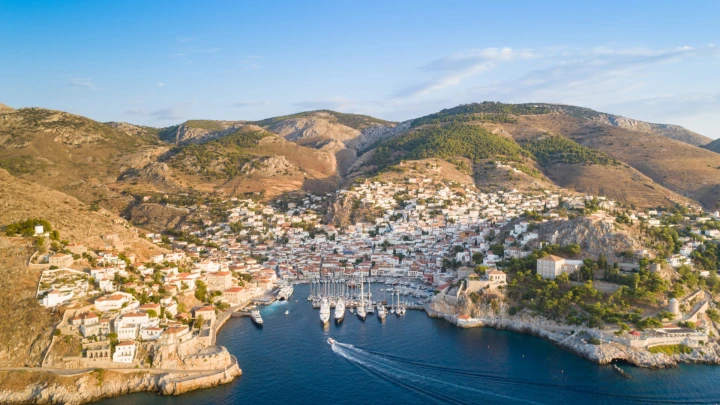
In his poem, "Days of Kindness", from 1985, Leonard Cohen describes Greece as being a good place to read by moonlight on the terrace. He knew this from experience. Hydra was his home for much of the 1960s. He arrived in the spring of 1960, aged 25, and later bought a house on the island, where he wrote much of his early work. Many places on Hydra still carry traces of him, even now that Hydra has become far better known.
16.04.2026
Greece is often associated with ancient history, island landscapes, and carefully preserved traditions. Less discussed, however, is another layer of its identity: its place names. Across the mainland and the islands, thousands of villages carry names that can sound unexpectedly funny or strikingly literal to a modern Greek speaker. These are not recent inventions or deliberate attempts at humor. Most date back centuries, shaped by geography, daily life, local dialects, and historical circumstances. What makes them stand out today is the shift in language over time. Words that once served as straightforward descriptions of land, resources, or communities can now feel unusually direct or unexpectedly humorous. Looking at these names more closely offers insight into how earlier generations observed their surroundings and chose to define them.
19.02.2026
02.01.2026
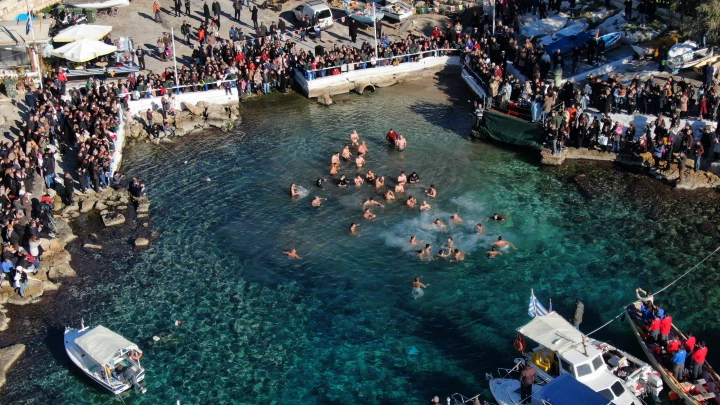
In Greece, the holiday season does not end on New Year’s Day. Instead, it culminates in one of the most symbolic celebrations of the year: Epiphany, known in Greek as Theofania. More than a religious holiday, Epiphany in Greece represents the triumph of light over darkness, a spiritual “new beginning” for individuals and communities. For anyone living in Greece, or dreaming of owning a home here, Epiphany offers one of the most authentic snapshots of local culture. From the blessing of the waters to ancient folk rituals, this day reveals the deep connection between the Greek people, nature, and tradition.
30.12.2025
Crete is stepping into the global spotlight once again. According to Airbnb’s latest travel trend insights based on worldwide search data from Q3 2025, the island — and especially the iconic Samaria Gorge National Park — ranks among the most sought-after nature destinations for 2026. This surge reflects a broader shift in how people choose where to travel, live, and invest. Travellers are no longer looking only for beaches or city breaks. Instead, they are drawn to authentic natural environments, outdoor experiences, and destinations that offer both beauty and balance, qualities that Crete delivers effortlessly.
19.12.2025
Greece is known mostly for its pristine beaches and its endless summers. Also, Greek cuisine, with its unique Mediterranean dishes, is widely sought after. What might feel surprising is the magical beauty during Christmas in Greece. The country has a long festive season that runs from Christmas to Epiphany (the “Φώτα” on 6 January), full of local customs, food traditions, and small village rituals that still matter to people today. Winter destinations are also famous in Greece, as according to the latest Monitoring Sentiment for Intra-European Travel report (Wave 23) by the European Travel Commission (ETC), Greece ranks among the top 10 most desired European destinations for travel between October 2025 and March 2026, holding a solid 7th place.
19.12.2025
Spending New Year’s Eve on Greek islands is about much more than fireworks, food and champagne. It’s about little family rituals, centuries-old customs and the warm feeling of being part of a close community. For anyone dreaming of a holiday home or a new life in Greece, New Year's Eve is one of the unique moments to experience the soul of island life, when most tourists aren’t there, and you can experience authentic community moments with locals. As we’ve mentioned in an older blog post, cutting the famous Vasilopita, a special bread to honour the Greek Santa Claus, is the most important custom happening in almost every house in Greece at the turn of the year. A lucky coin is baked into the cake, and whoever finds it will have good luck for the next year or may even take a gift. But let’s explore a bit more of Greece’s rich traditions and local communities, from its enchanting islands to the unique customs celebrated on New Year’s Eve and New Year’s Day.