

03.09.2026
Buying an Off-Plan House in Greece from Abroad Explained
“How can I buy a house in Greece that is not built yet from abroad?”
That’s a very common question we receive from clients interested in buying an off-plan house.

Purchase Tips
13.02.2025
You have made your dream come true: you own a beautiful home in Greece. Now it is time to keep your investment safe. Think of home insurance as a shield for your house and everything in it. This guide explains how to get home insurance in Greece, what it might cost, and answers some common questions. The information in this article has been reviewed by Hella Kounio-Matalon, a trusted insurance broker who has helped many first-time homeowners in Greece find the right insurance for their new home.
Home insurance in Greece usually covers a few important things.
This typically pays for repairing or rebuilding your house if it is damaged by fire, earthquake, flood, or other risks such as storms or vandalism. A common option for foreigners buying a home in Greece is an "all-risk" plan, which offers the most complete coverage: the insurance company pays the cost of restoring the building to the condition it was in before the damage occurred. It does not cover the foundations of the building. The compensation depends on the construction value you declare, which has to be accurate. A declared value lower than the actual one will result in proportionally lower compensation. A value higher than the actual one brings no benefit either, so accuracy is what matters.
This covers your furniture, appliances, electronics, clothes, and other personal items against risks such as fire, water, and theft. As with the building, an all-risk plan offers the broadest protection. If you want your contents covered, be sure to request it, since this is not included automatically.
If someone is hurt or their belongings are damaged because of your house or your ownership of it (a guest tripping on a step, faulty wiring, water damage to a neighbour), this coverage helps pay any claim raised against you. It is not offered automatically either, so request it if you want it. It becomes even more important if you intend to rent out your property, whether long-term or short-term.
You may hear brokers refer to "Airbnb insurance plans." These are designed for owners who rent out their Greek home to holiday guests. They cover the property against many risks, including certain damage caused by guests, and include third-party liability for the use of the house.
Some plans do not include burglary coverage if you do not live permanently in your Greek home. Request this coverage from your insurance provider, and if they cannot offer it, look for an all-risk plan. Even then, the insurance company may require specific security measures before covering theft and burglary.
Many companies sell home insurance in Greece. You can search online, ask friends for recommendations, or ask locals. Compare what each offers and what it costs rather than choosing the first one you see. Our suggestion is to work with a broker or agent located in Greece. A local, experienced representative who works with several different insurance companies is valuable for a foreigner buying a home in Greece. They can advise you on what suits your needs, both when you first buy insurance and later at the claim stage, when it helps to have a local partner with your best interests in mind. Buying directly from an insurance company or through a website can mean dealing with someone you have never spoken to, or with several different people at once.
You can approach insurance companies directly, or you can speak with an insurance broker. A broker works with many different companies and can help you find the right insurance for you, explained in plain terms. Choose someone who speaks fluent English or another language you are comfortable with, check their experience, and make sure they work with several companies rather than just one.
Several established and trustworthy insurance companies operate in Greece. Some are international names you may know from your own country, such as NN (Nationale-Nederlanden), Ergo, Generali, Allianz, and Interamerican, the Greek subsidiary of the Dutch group Achmea.
You will need to give the insurer information about your home: its location (near the sea? in a city?), its size, its age, what it is made of, and any special features such as a swimming pool or a security system.
The broker or insurance company will give you a quote based on the information you provide. This is an estimate of what you will pay.
Before you buy any insurance, read all the documents carefully and make sure you understand them. Pay attention to the small print, and ask questions where anything is unclear.
Once you choose the policy that suits your needs, you pay for it, usually once a year or sometimes in instalments, and receive your insurance policy. We recommend having your broker walk you through exactly how it works, what it covers, and what it does not cover.
The cost of home insurance depends on a few things.
How much your home is worth. Premiums depend on the risks you wish to cover, the insured value of the house and contents, the third-party liability amount, the location, and other factors. More valuable homes cost more to insure, and the insured value should reflect current construction costs.
Where your home is. Homes in quiet, safe areas usually cost less to insure. Other geographic factors also play a role, depending on the part of Greece.
What kind of coverage you want. More coverage costs more. Insuring everything you own inside the home costs more than insuring the building alone.
How old your home is and what it is made of. Newer, well-built homes generally cost less to insure. Older homes may need more repairs, so they generally cost more.
Security. A security system can lower your premium, because the home is less likely to be broken into.
Talk to your broker or insurance company for an exact price. They will need specific details about your property.
Your insurance provider should be experienced and trustworthy, with years in the field and a good reputation. They should be fluent in English or another language you understand well, work with several different insurance companies, and be able to offer you more than one option. Just as important, they should build a relationship with you, so that you feel comfortable reaching out at any time.
All-risk coverage vs. other plans. For non-permanent residents of Greece, all-risk coverage is usually the best fit. It costs a bit more, but it gives you peace of mind while you are far away. Plans covering specific named risks are also good products; they simply cannot cover as broadly.
Deductibles. Compare each offer and its deductibles. A deductible is the amount you pay out of pocket before your coverage kicks in: the portion of a damage you are responsible for, with the insurance company covering the rest up to your policy limits. The higher the deductible, the lower the premium. Every company structures its offers differently, and comparing them can be tricky. This is where a good broker earns their keep.
Third-party liability. Consider this for every property. A neighbour's home can be damaged by something that started in yours, such as a water leak or fire, and visitors or tenants can be hurt on your property. If you plan to rent out your house, whether long-term or short-term, consider a high liability amount.
No, it is not required by law for homeowners, but it is a very good idea. It is a safety net for your home. There is also a financial incentive: if your home is insured against fire, flood, and earthquake, you are entitled to a discount on ENFIA, the annual Greek property tax. As of 2026, the discount is up to 20% for homes with a taxable value up to 500,000 euros, and up to 10% above that, provided the policy covers all three risks and runs for at least three months of the year (a full year earns the full discount, shorter periods a proportional one). The exact conditions are set each year by the tax authority, so ask your broker what currently applies.
Insuring your Greek home through a provider in your home country is technically possible, but it will likely cost more. On a practical note, when you make a claim you will usually get faster and more knowledgeable service from a local agent who knows the Greek market and speaks the language. Also, many village homes in Greece do not have street addresses. Greek insurers are used to this; a foreign insurer might struggle without an exact address.
If something happens to your home and you have no insurance, you pay for everything yourself. The good news is that in Greece, premiums are relatively low for the amount of coverage they provide. A good policy means you can keep enjoying your Greek home even if damage occurs, knowing you will be compensated by a reliable insurer.
If something happens to your home, call your broker or insurance company right away, even if you are not sure whether the specific damage is covered. They will tell you what to do. Usually they ask you to send photos and a technical report with estimated repair costs. If the damage is significant, a surveyor will visit your house to assess it. Do not repair anything, and do not throw anything away, until the surveyor, your broker, or the insurance company tells you to.
Most companies let you pay monthly or every few months, which can make the cost easier to manage. Payment plans vary between providers.
Insurance policies in Greece are usually renewed automatically, unless you or the insurance company decide otherwise. If the insurer chooses not to renew, they are obliged to inform you in writing at least one month in advance. In practice, your broker or insurer will usually contact you before your policy expires so you can renew in time. Review your policy every year or two, as the insured values may need adjusting to current construction costs.
Unlike in many other countries, earthquake coverage is genuinely important in Greece. It is not included automatically and has to be requested separately. If you want to be certain you are covered, all-risk coverage is the best option. Note that some areas cannot be insured against earthquakes at all.
If your home in Greece was built before 1960, or without a building licence, it may not be possible to insure it against earthquakes. In some cases the insurance company will ask for an additional inspection report from a civil engineer. Ask your broker or provider for the details that apply to your home.
Home insurance can be extremely valuable for foreigners buying a home in Greece. Find a local, trustworthy expert who has your best interests in mind.
03.09.2026
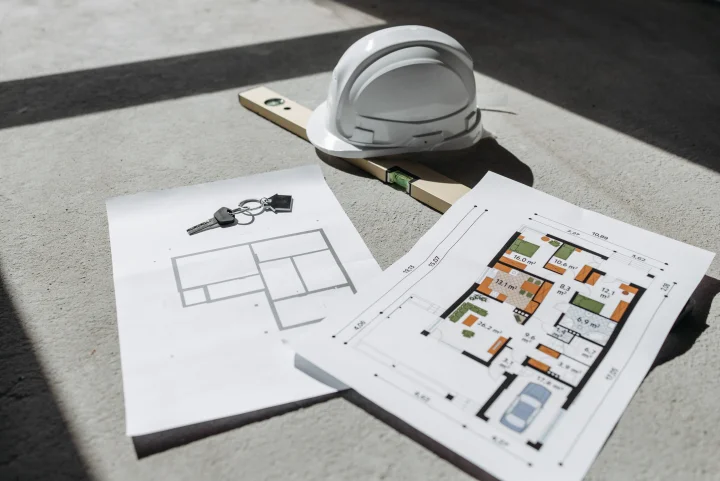
“How can I buy a house in Greece that is not built yet from abroad?”
That’s a very common question we receive from clients interested in buying an off-plan house.
28.08.2026
A power of attorney represents a crucial legal tool for international property buyers and sellers. This legal document grants another person the authority to act on your behalf in property transactions, eliminating the need for personal presence during the sale process. Whether you're a German retiree buying a holiday home in Crete or a Dutch family looking to sell your property in Corfu, a power of attorney allows you to complete a property sale whilst remaining in your home country.
10.08.2026
For many people, the idea of owning a home in Greece starts with a feeling. The sunny days, the sea, a slower pace of life. What often follows is a more practical question: “How does buying a house here actually work?”
For this very reason, we created the following guide so that you can have a clear overview of how the process of buying a house in Greece works.
07.08.2026
Buying a home in Greece from abroad raises a fair question. Can the paperwork be handled with a digital signature, so you never have to fly in to sign in person? For some documents, the answer is yes. For the ones that actually transfer ownership, it is not. A Greek purchase deed is signed before a notary, and that step cannot be done digitally. Therefore, digital signatures are accepted in Greece for private documents, such as certain agreements and declarations. They are not accepted for public documents. That includes the notarial purchase deed and the power of attorney. You cannot become the owner of a Greek property by signing a document digitally. The transfer is always completed before a notary, either with you present or through a power of attorney that was signed in person.
03.08.2026
If you plan to buy a home in Greece, you have probably given some thought to how you will pay for it. Depending on your home country, a mortgage may be one option. Getting a mortgage in Greece as a non-resident is not always straightforward, so it helps to understand how the process works before you begin. The general process is broadly similar from bank to bank, though the details differ and can change from year to year. Rates depend on the bank you approach and on your own profile. As a rule, non-resident buyers pay a little more than residents. The sections below walk through what to expect. You do not need to be a Greek resident to apply for a mortgage. Most Greek banks do apply stricter rules to people living abroad. For some banks, though not all, you will need to be a Greek taxpayer, meaning your tax residency must be in Greece to be eligible for a loan.
22.06.2026
Every home in Greece is now meant to have its own digital file. It is called the Electronic Building Identity, or E-ID (Ηλεκτρονική Ταυτότητα Κτιρίου). The Electronic Building Identity gathers the key facts about a property in one secure online record. It sets out the building's current condition, its permits and plans, and any changes made to it over the years. For anyone buying or selling a home in Greece, it has become one of the most important documents to understand. This guide explains what the E-ID is, what it contains, who prepares it, and why it matters at the moment a property changes hands.
10.06.2026
If you own a property in Greece and are thinking about selling, one of the first things on your mind is probably a practical one: what do I pay to the estate agent? It's a sensible question to ask early, and the answer shapes how you budget for the sale and what you can expect from the agency representing you.
10.06.2026
If you have bought or sold property in the Netherlands, Germany, the UK, or most other Western European countries, you are probably used to a clear setup: the seller has their agent, the buyer has theirs, and each represents their respective client. In Greece, things work differently, and it is very important to have a clear overview before you decide to move forward with a property transaction.
.jpg)