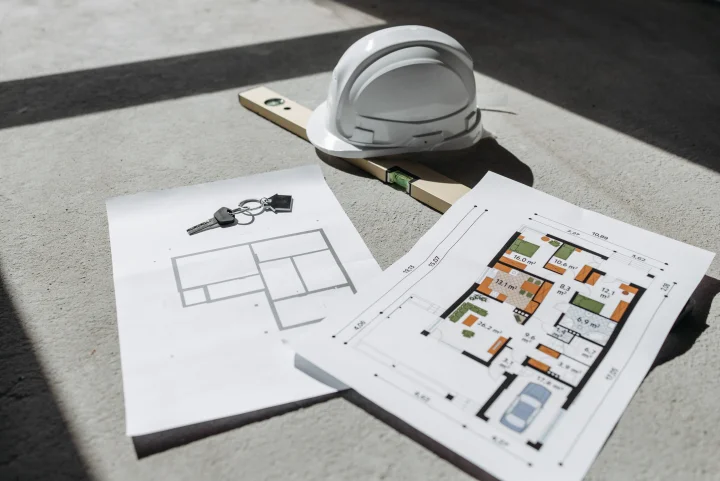


03.09.2026
Buying an Off-Plan House in Greece from Abroad Explained
“How can I buy a house in Greece that is not built yet from abroad?”
That’s a very common question we receive from clients interested in buying an off-plan house.

Purchase Tips
07.08.2026
Buying a home in Greece from abroad raises a fair question. Can the paperwork be handled with a digital signature, so you never have to fly in to sign in person? For some documents, the answer is yes. For the ones that actually transfer ownership, it is not. A Greek purchase deed is signed before a notary, and that step cannot be done digitally. Therefore, digital signatures are accepted in Greece for private documents, such as certain agreements and declarations. They are not accepted for public documents. That includes the notarial purchase deed and the power of attorney. You cannot become the owner of a Greek property by signing a document digitally. The transfer is always completed before a notary, either with you present or through a power of attorney that was signed in person.
In Greece, a property transfer is a public act. The notary acts as a representative of the state, and the deed is completed at the notary's office. A notarial deed is a public document, and public documents cannot be signed with a digital signature. This holds regardless of where the buyer lives or which signing platform they use. There is no digital route to the final deed. The signing happens at the notary, in person or by proxy.
No. A power of attorney for a property purchase is also a public document. It cannot be signed digitally, not even from within Greece. Signing a power of attorney requires physical presence. This can take place before a notary in Greece. It can also be done at a notary or a Greek embassy or consulate in the country where you live.
Not necessarily. Your presence at the deed itself is not required if you appoint someone to act for you. With a power of attorney, your lawyer can represent you and complete the purchase on your behalf. This is how many international buyers complete a purchase without travelling to Greece. The one step that stays with the person is signing the power of attorney. Once that is in place, the rest of the transfer can be handled for you. At Elxis, our in-house legal team commonly completes the purchase this way, so clients who cannot travel can still buy safely.
Digital signatures do have a place in Greek transactions. They are accepted for private documents. This can include private agreements between parties and various declarations. What they cannot cover is any document that passes through a notary. So, the private side of a transaction may be handled digitally, while the transfer itself stays with the notary. The distinction is between private documents and public ones, not between "preliminary" and "final".
Digital signing in Greece is not a single process. The method depends on the type of document, so it helps to separate the two situations. Private agreements can usually be signed through an e-signature platform. These tools are commonly accepted for documents of this kind, and a buyer abroad can often sign them without any special registration.
Official documents and formal declarations work differently. These typically need to be signed through the state platform, Gov.gr. To use it, a foreign national needs to register with the platform first. This registration can often be arranged through a Greek embassy or consulate in the country of residence. For anyone already in Greece, the same can be done in person at a so-called KEP, a Citizens' Service Centre, which can be found in almost every town. Once it is in place, eligible documents can be signed through Gov.gr.
Digital signatures are useful in Greece, but they have clear limits in property transactions. They work for private documents. They do not work for the notarial deed or the power of attorney. Ownership of a Greek property cannot pass through a digital signature alone. For buyers abroad, the reliable route stays the same. A power of attorney, signed in person, with the purchase completed at the notary.
Disclaimer: This content is for informational purposes only and does NOT constitute legal or tax advice. For any issues relating to specific cases, it is highly recommended to consult a lawyer, an accountant, or a notary depending on your needs.
03.09.2026
“How can I buy a house in Greece that is not built yet from abroad?”
That’s a very common question we receive from clients interested in buying an off-plan house.
28.08.2026
A power of attorney represents a crucial legal tool for international property buyers and sellers. This legal document grants another person the authority to act on your behalf in property transactions, eliminating the need for personal presence during the sale process. Whether you're a German retiree buying a holiday home in Crete or a Dutch family looking to sell your property in Corfu, a power of attorney allows you to complete a property sale whilst remaining in your home country.
10.08.2026
For many people, the idea of owning a home in Greece starts with a feeling. The sunny days, the sea, a slower pace of life. What often follows is a more practical question: “How does buying a house here actually work?”
For this very reason, we created the following guide so that you can have a clear overview of how the process of buying a house in Greece works.
03.08.2026
If you plan to buy a home in Greece, you have probably given some thought to how you will pay for it. Depending on your home country, a mortgage may be one option. Getting a mortgage in Greece as a non-resident is not always straightforward, so it helps to understand how the process works before you begin. The general process is broadly similar from bank to bank, though the details differ and can change from year to year. Rates depend on the bank you approach and on your own profile. As a rule, non-resident buyers pay a little more than residents. The sections below walk through what to expect. You do not need to be a Greek resident to apply for a mortgage. Most Greek banks do apply stricter rules to people living abroad. For some banks, though not all, you will need to be a Greek taxpayer, meaning your tax residency must be in Greece to be eligible for a loan.
22.06.2026
Every home in Greece is now meant to have its own digital file. It is called the Electronic Building Identity, or E-ID (Ηλεκτρονική Ταυτότητα Κτιρίου). The Electronic Building Identity gathers the key facts about a property in one secure online record. It sets out the building's current condition, its permits and plans, and any changes made to it over the years. For anyone buying or selling a home in Greece, it has become one of the most important documents to understand. This guide explains what the E-ID is, what it contains, who prepares it, and why it matters at the moment a property changes hands.
10.06.2026
If you own a property in Greece and are thinking about selling, one of the first things on your mind is probably a practical one: what do I pay to the estate agent? It's a sensible question to ask early, and the answer shapes how you budget for the sale and what you can expect from the agency representing you.
10.06.2026
If you have bought or sold property in the Netherlands, Germany, the UK, or most other Western European countries, you are probably used to a clear setup: the seller has their agent, the buyer has theirs, and each represents their respective client. In Greece, things work differently, and it is very important to have a clear overview before you decide to move forward with a property transaction.
04.06.2026
In Greece, the inheritance tax on an inherited property usually has to be paid in full before the property can be sold. How much is owed depends on how closely the heir was related to the deceased, and on the value of the share inherited. Close family members fall into the most favourable category and benefit from a significant tax-free allowance. The tax is calculated on the official objective value set by the tax authorities, not the market price. Because payment usually comes before the sale is completed, the timing is worth planning for in advance.

.jpg)