Beaches in the Peloponnese
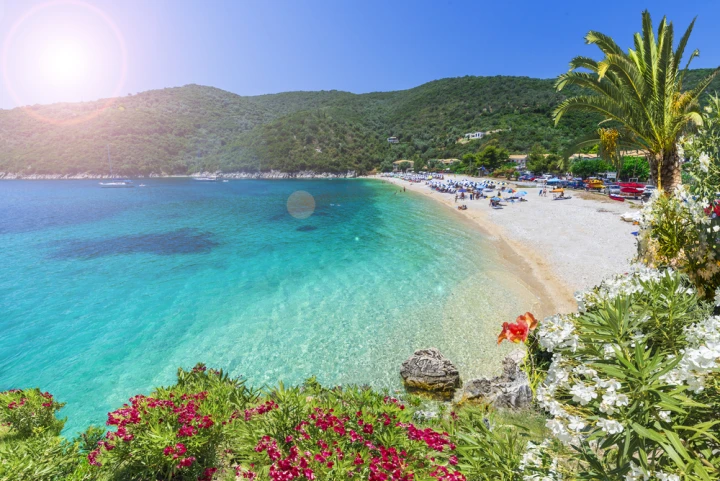
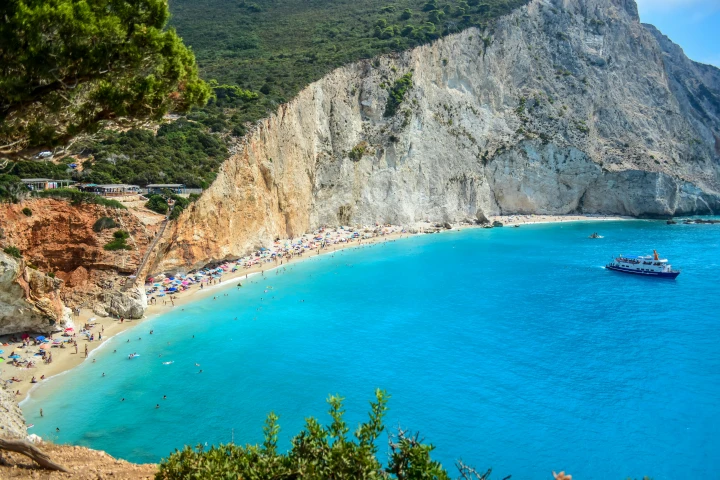
One of the best parts of the Peloponnese is its beautiful beaches. The center of the region has mountains that are ideal for winter holidays, but the coast of the Peloponnese is best for the summer because of its seaside villages and long golden beaches. The most exotic beaches in the Peloponnese are Elafonissos, a tiny island south of Laconia, with sandy beaches and pristine water. Mavrovouni beach in Gythio is also popular because of its long coastline and extensive facilities. In the south of the Peloponnese, you will find beaches that are some of the best in all of Greece. Voidokilia in Pylos, Methoni, Koroni and the beautiful coves in Messenia (Messinia) are just a few examples.
UNESCO Heritage Sites in the Peloponnese
Due to its rich history, the Peloponnese is full of ancient, historic monuments. Five of these have UNESCO World Heritage status. Some of the most important places to see in the Peloponnese include Mycenae, Olympia, Epidaurus, Corinth, Nemea, Messene, Mystras, Monemvasia, Kalamata, Patras, Methoni and Koroni castles, and Nestor’s palace. More about these important places can be found in our complete UNESCO Greece guide.
Regions in the Peloponnese
Laconia
Sparta
The capital of the Laconia region is Sparta, the legendary town with a history closely related to ancient Athens. Sparta today has a few different monuments that you can visit - the remains of Ancient Sparta, the Ancient Acropolis, parts of an Ancient Theater, the Agora, and the Temple of Artemis. A visit to the Archaeological Museum of Sparta is also worth it when in Sparta.
Mystras
Only five kilometers from Sparta is Mystras, one of the best places to see Greece’s past in the Peloponnese. This small village is mostly unknown to tourists, but it was the most important Byzantine capital in Greece in the past. Many different cultures and civilizations ruled Mystras, including the Franks, the Venetians, and the Turks. It has a rich history and offers incredible views of the Peloponnese landscape.
Elafonisos
Elafonisos is a tiny island in the southern Peloponnese known for its complete relaxation. The name means “island of the deer.” It has Caribbean-like beaches with gold sand and clear waters. Simos and Lefki beach are well-known as the top beaches of the island. The evening time is a great time to head to town for a taverna dinner and a drink as you watch the sunset. The island should not be confused with Elafonisi, which is an even smaller island off the west coast of Crete.
Arcadia
Mountain Villages
Arcadia is a mountainous region in the Peloponnese, with the Lousios River, ancient temples, and old monasteries. The region is famous for its historical villages and local architecture. Stemnitsa, Dimitsana, Karytaina, and Ancient Gortyna are just a few of the options. Each village has its own unique beauty. For example, Dimitsana is known for its impressive library and the Water-Power Museum. In Stemnitsa, you can visit St George’s Orthodox Church and the Bournazos mansion. In Karytaina, you can visit the castle known as the Greek Toledo.
Tripoli
The capital of the Arcadia region is the hub of Tripoli. The city was founded at the beginning of the 14th century and it is a crossroads of the Peloponnese. Tripoli is full of neoclassical buildings and Orthodox churches,squares, and parks. A few places worth visiting in the city of Tripoli are the War Museum, Cultural Centre, Matzouneio Public Library, and the Archaeological Museum. The museum was built by Ernst Ziller, an architect who loved Greece so much that he got Greek nationality.
Prodromos and Philosophos Monasteries
The tradition for visitors to these monasteries in the Peloponnese is that the monks treat you to a Turkish delight when you visit. The monasteries are both built on either end of a gorge and feature a 10th-century Catholic church. The view from the monasteries of the Peloponnese countryside is breathtaking.
Argolis
The Argolis region is an underrated region of Greece, and it is only two hours drive from Athens. Argolis has many historical sights and cultural events for tourists.
Argos
Argos is the largest city in this region of the Peloponnese and is said to be the longest continually inhabited city in Europe. Argos is full of ancient ruins and theaters which show that Argos was the base of the Mycenaean civilization which ruled over Greece for 500 years. Further south from Argos, you will find Porto Heli, one of the most popular resort towns in southern Greece.
Epidaurus
The Sanctuary of Asklepius is found in Epidaurus in the eastern Peloponnese. This was a place of healing during times of antiquity because Epidaurus was thought to be the birthplace of the god Asklepius. Pilgrims came to Epidaurus to ask for a cure for their illnesses, and the answer was given to them in their dreams. The next day, they told their dream to the priest, who would tell them the best way to be healed. A large theater with excellent acoustics is located nearby, which was used to honor the god and is today called the Ancient Theater of Epidaurus. Today, concerts and festivals are held here, and it holds 14,000 people.
Nafplio
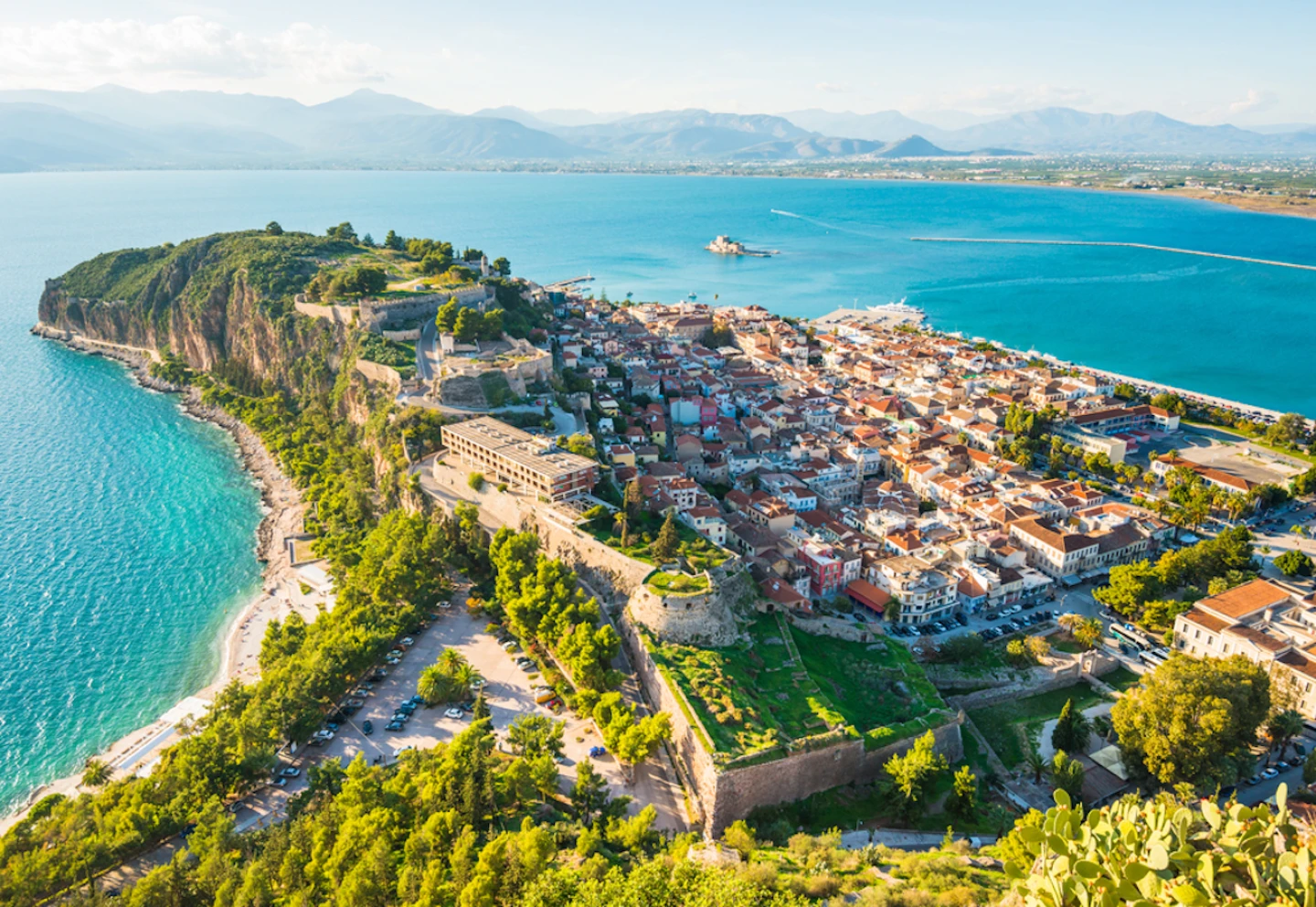
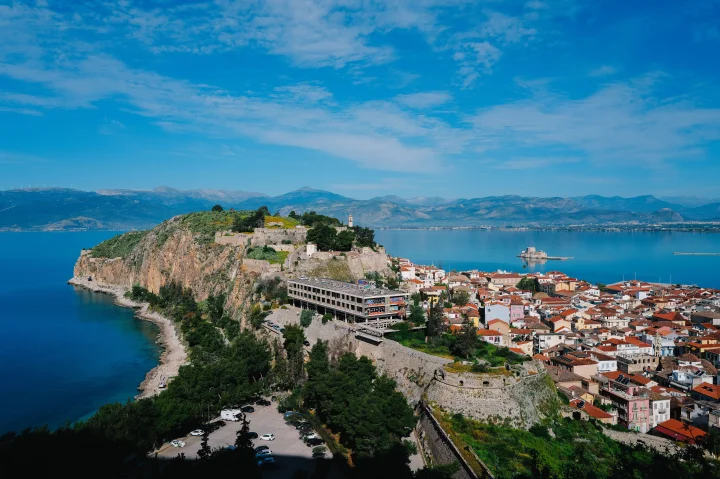
We will cover Nafplio in more detail later in the article. Nafplio is one of the prettiest towns in southern Greece, and it was the first capital of modern Greece. It is known for its old town, narrow alleyways, delicious Greek food, and its seafront promenade. One of the best sights in town is the Palamidi Castle on the hill overlooking the old town. It takes 999 stairs to reach the top of the Palamidi Castle.
Corinth Canal
The Corinth Canal is definitely the most impressive sight in Corinthia. It is worth visiting the Bridge of Isthmia. There are even some tables and chairs nearby with a view of the canal where it is nice to sit. This is a famous shipping passage in Greece and one of the key passages from Athens into the Peloponnese.
Vineyards of Nemea
Nemea in the Corinthia region is one of the most incredible wine regions of Greece. The cellars here are one of the most important regions in Greece for winemaking. The Agiorgitiko variety is the best-known grape in the area, and the Nemea PDO wine is the most famous from the area. Finally, travel into the countryside through the vineyards to see the mountain ranges of Zireia, Oligyrtos, Mavrovouni, and Gravias.
Achaia
Patra
Patra is the capital of the Peloponnese, and it is the largest city in the Peloponnese - also the second busiest port in Greece, second only to Piraeus in Athens. Patra is a main hub for travelers in mainland Greece and connects not just to all of the Peloponnese, but also to other areas of mainland Greece and to Italy. Patra has several interesting museums and sights in town, and also several parks and squares where you can relax. For a day trip, you can visit the Achaia Clauss Factory – a Bavarian-style castle that is the headquarters of the oldest winery in Greece.
Kalavryta
The historic town of Kalavryta is especially significant for Greeks because it is where Archbishop Germanos signaled the beginning of the War of Independence in 1821. The Monastery of Ayia Lavra is nearby and also was a place of political rebellion during the Second World War. It was burnt down by the Nazis because they thought it held resistance fighters. The monastery now has an impressive historical museum.
Messinia
Olive Groves
November is the time for picking olives in Kalamata. At this time, the olives are picked, and the oil is pressed. If you plan on making a visit, keep in mind that some olive groves do not produce olives every year. So be prepared to visit the next town over if you were hoping to join the harvest!
The town of Methoni is one of the most incredible sights in the Peloponnese, with a 13th-century fortress and entire medieval town where you can spend hours wandering around. The small castle in Methoni is called the Bourtzi, and it protected Methoni in the past. Methoni is also a family-friendly town with plenty of beaches with shallow waters and nice tavernas around several city squares.
Voidokilia
North of Pylos is the famous Voidokilia beach, which is a heaven on earth. It is unique because it is shaped like the Greek letter Omega and features white sand, warm blue water, and some green vegetation. This is a wildlife area and also historically is the location of Nestor’s cave. Voidokilia is a popular beach for families because, unlike some of the beaches of the Greek islands, Voidokilia is quieter.

 Regional Guides