In The News
21.04.2026
Greece to Exempt British Tourists from Biometric Entry Checks This Summer
Read more

Practical insights and inspiration for buying and owning a home in Greece. Our articles cover everything from regional guides and market trends to legal tips, tax updates and Greek lifestyle and culture. Whether you are just exploring the idea or already own a property, our blog is written to help you make informed decisions and get the most out of life in Greece.
21.04.2026
Read more
21.04.2026
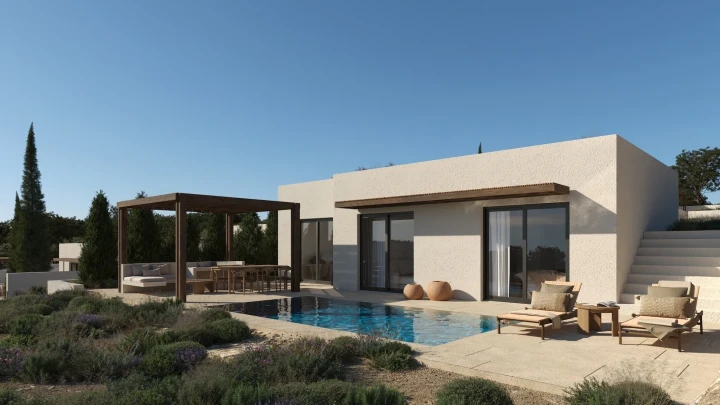
The Greek holiday home market in 2026 is no longer defined by a single trend. What is emerging instead is a rising demand for smaller, more affordable holiday homes. This shift reflects broader changes in international buyer behavior. Foreign purchasers are no longer simply searching for a beautiful house near the sea. They are looking more strategically at value, rental potential, construction quality, lifestyle convenience, and future resale opportunities. Greece continues to attract strong overseas interest, but the profile of demand is becoming sharper and more selective.
20.04.2026
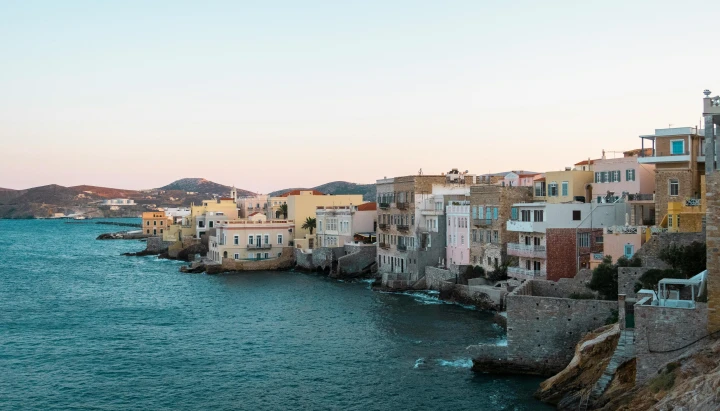
Syros, in the central Aegean, is being highlighted by international media as a compelling alternative to the more crowded Greek islands. British outlets, in particular, are presenting it as a destination that combines culture, architecture, and nature without the intensity of mass tourism.
17.04.2026
Trying to figure out what a property in Greece is really worth has become surprisingly difficult. Not because there’s no demand, on the contrary, the market has been rising steadily, but because “value” in Greece is no longer a single, stable concept. Overall, the market looks healthy. According to the Bank of Greece, apartment prices increased by 7.8% on average in 2025, based on provisional data published in its Q4 2025 residential property price index. However, this overall figure masks important regional differences. In the fourth quarter of 2025 alone, prices rose by 5.9% in Athens, 8.0% in Thessaloniki, 10.5% in other cities, and 8.6% in other areas of Greece, highlighting how uneven price dynamics can be across the country.
16.04.2026
In this guide, we walk through the whole process of buying a home in Greece. That includes where to buy, the types of property you can choose from, the documents involved, the legal steps, the costs, and the questions buyers ask us most often. A few words on why you can rely on what follows.
16.04.2026
Greece is often associated with ancient history, island landscapes, and carefully preserved traditions. Less discussed, however, is another layer of its identity: its place names. Across the mainland and the islands, thousands of villages carry names that can sound unexpectedly funny or strikingly literal to a modern Greek speaker. These are not recent inventions or deliberate attempts at humor. Most date back centuries, shaped by geography, daily life, local dialects, and historical circumstances. What makes them stand out today is the shift in language over time. Words that once served as straightforward descriptions of land, resources, or communities can now feel unusually direct or unexpectedly humorous. Looking at these names more closely offers insight into how earlier generations observed their surroundings and chose to define them.
15.04.2026
HGTV’s new series World’s Bargain Dream Homes taps into a familiar idea: what if starting over somewhere new didn’t require an unlimited budget?
The show follows Americans searching for affordable homes overseas, typically working with a ceiling of around $150,000 — an amount that, depending on location, can stretch further than many expect. Premiered on April 14, the series spans a range of destinations across Central America and Europe, including Costa Rica, Panama, France, Italy, and Greece. Each episode pairs buyers with local real estate professionals, offering insights not only into the properties themselves but also into what everyday life might look like in each location. In the Crete episode, the property search is guided by Dion Gavriilidis, Managing Partner of Elxis.
14.04.2026
If you still think of Greece as a strictly summer fling — sunburn, sandals, and Santorini sunsets — it might be time to update your mental itinerary. According to a recent story by journalist Ilias Bellos in Kathimerini, the country is steadily, and rather cleverly, reshaping itself into a year-round destination.
Let’s start with the data. According to Visa, foreign visitors in Greece increased their card usage by 12% in 2025, while the number of tourists using Visa cards rose by 13%. These figures point to steady growth in both arrivals and spending, as well as a broader shift toward digital payments. Beyond convenience, this trend offers a clearer picture of how visitors engage with the Greek tourism economy throughout the year.
A notable shift is also taking place beyond the peak summer months. Growth is no longer concentrated in July and August, as spending during the off-season continues to rise. February 2025, in particular, recorded the highest percentage increase, highlighting a gradual reduction in seasonality. This trend suggests that Greece is steadily expanding its appeal as a year-round destination, rather than relying primarily on summer tourism.
08.04.2026
The Greek government is preparing to introduce a major reform in the way property values are calculated. A new automated system for determining “objective values”, the official property prices used for tax calculations, is expected to launch in early 2027.
07.04.2026
For decades, property ownership and transactions in Greece operated within a framework that, while formally legal, often failed to reflect reality. Until around 2010, notaries were generally required to describe properties in contracts strictly according to the approved building permit (oikodomiki adeia). In theory, this ensured legal consistency and documentary certainty. In practice, however, it created a system in which the official description of a property could diverge significantly from its actual physical condition.
This gap between documentation and reality became one of the defining weaknesses of the Greek property system. It affected not only legal certainty, but also taxation, urban planning, and the reliability of real estate transactions. In recent years, Greece has responded through a dual transformation: first, by creating a legislative framework for the declaration and legalization of unauthorized constructions; and second, by introducing a series of digital reforms intended to produce a more accurate, transparent, and immediately accessible record of property ownership and status. Although these reforms have, for the time being, introduced new layers of procedural complexity and what many describe as a form of “digital bureaucracy,” they are also laying the foundation for a more coherent and efficient system in the future.