The Value of Historical Continuity
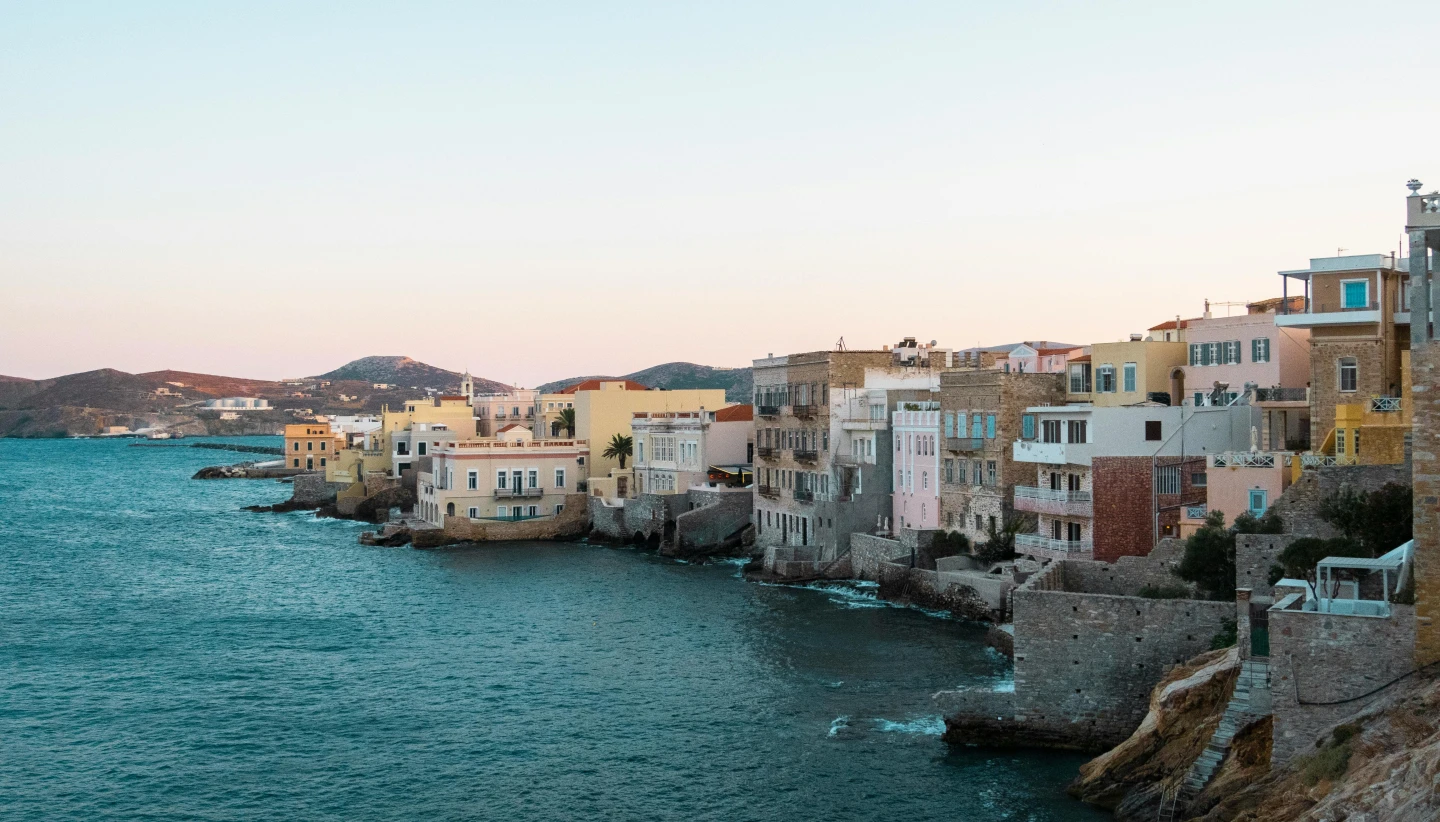
Syros also benefits from a history that is still legible in the present. In the 19th century, it developed into a major commercial and shipping hub, and that period of prosperity left lasting marks on the island’s urban fabric and institutions. In many resort destinations, history is treated as background. In Syros, it remains part of the main experience.
This continuity matters because it changes how the island is understood. Syros is not compelling only because it is pleasant, scenic, or less crowded. It is compelling because its present identity is anchored in a past that has not been erased. Travelers can read that continuity in the streets of Ermoupoli, in the island’s built environment, and in the fact that Syros still feels like a functioning place rather than a seasonal performance.
Landscape Without Overstatement
None of this means the natural side of Syros is secondary. The island offers beaches, walking routes, quieter northern landscapes, and access to more isolated coves. But one of its strengths is that these features do not need to be exaggerated. Syros does not depend on claims of untouched perfection or spectacular exclusivity. Its landscape complements the rest of the experience rather than carrying the entire burden of its appeal.
That balance is important. For many travelers, the value of an island lies in the relationship between the built environment and natural setting. Syros works precisely because it offers both. One can spend time in a historically rich town, then move toward quieter beaches or hiking routes without feeling that the island has split into separate identities.
Food as Part of Place
The same restrained quality appears in the discussion of food. Local cuisine in Syros is not presented as a luxury product detached from everyday life, but as an extension of the island’s character. Fresh seafood, regional cheeses, and traditional products such as loukoumi remain part of its lived identity. This matters because food on islands often becomes over-symbolized in travel writing. In the case of Syros, it makes more sense to see gastronomy as one more expression of continuity between local culture and visitor experience.
Syros In The Spotlight
The current international attention around Syros reflects a wider fatigue with destinations defined by overexposure. Travelers are increasingly skeptical of places that have become too polished, too expensive, or too dependent on a narrow tourist image. Syros answers that skepticism in a credible way. It is not being praised for being obscure, but for being complete: historically grounded, architecturally distinctive, culturally specific, and still capable of receiving visitors without being overwhelmed by them.
This island offers a version of the Cyclades that feels less simplified. Its strengths are not hard to identify, but they are also not reducible to a slogan. It combines an unusually strong capital, visible historical depth, a distinctive cultural identity, and a more measured tourism profile. That makes it appealing not to travelers chasing the next “undiscovered” place, but to those looking for a destination with form, history, and internal coherence. In that sense, the growing attention from foreign media is understandable. Syros does not need embellishment to make its case.