What is Rebetiko?
There are few things more Greek than rebetiko music. Rebetiko is the urban popular song of the Greeks, especially the poorest, starting in the early 20th century. It is a basis for many other types of popular Greek music which you hear today in Greece.
What Instruments Are Used in Rebetiko?
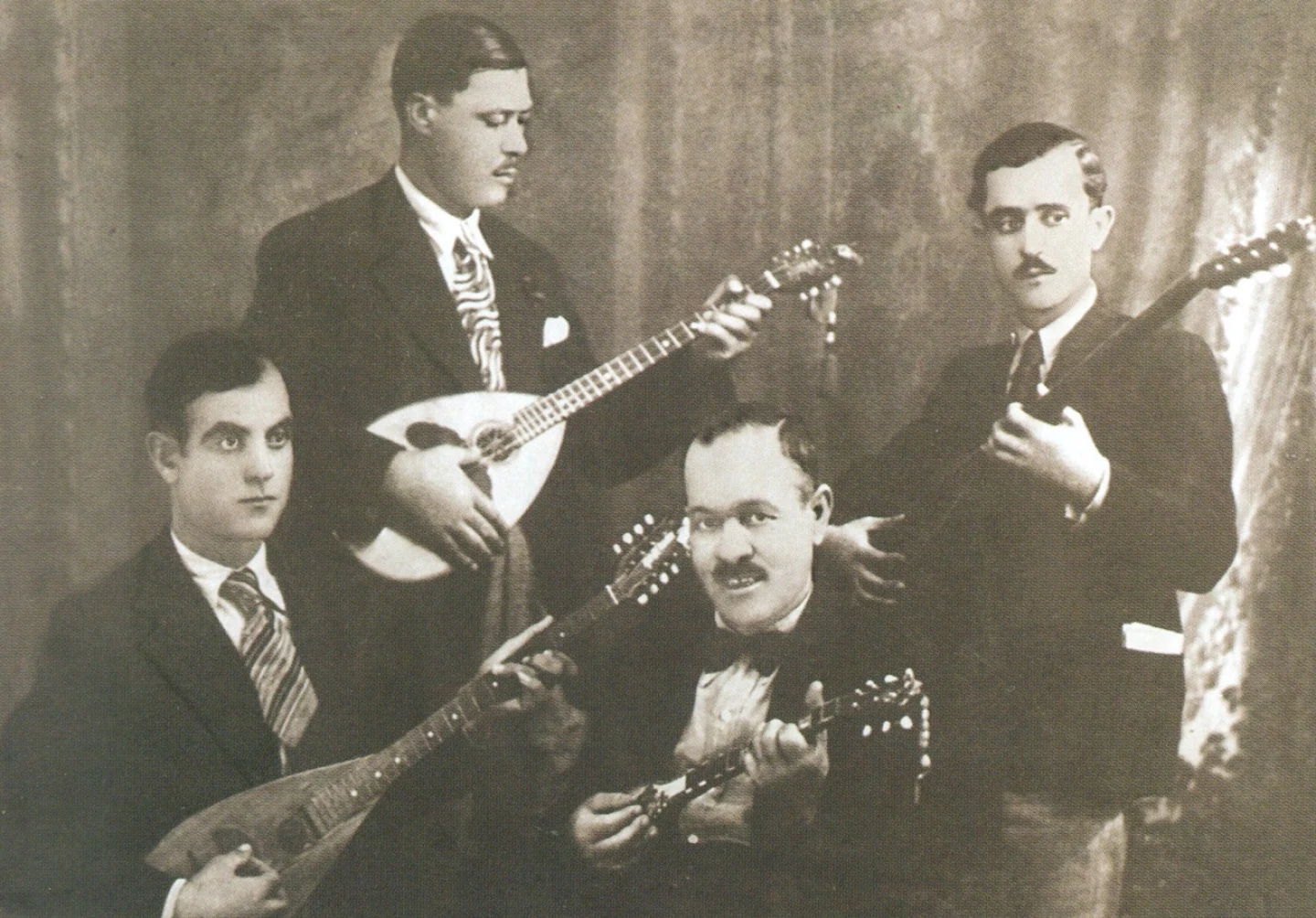
The main instruments of rebetiko are the bouzouki, the baglamas (a small version of the bouzouki), and the guitar. The bouzouki is the most recognizable and emblematic rebetiko instrument.
What is the Bouzouki?
The bouzouki is shaped a bit like a guitar, but the shape of the body is round. The bouzouki typically has three or four sets of strings, and most rebetiko songs follow one or more scales called “dromoi”. In Greek, “dromoi” translates to “roads” or “routes”. The dromoi are derived from the “makam” – melody types which have roots in Byzantium. This is why the bouzouki has a distinctly “Eastern” sound. However, westernized music can also be played on the bouzouki. This is especially true for the bouzouki with four sets of strings, which is more popular today, and was designed to mimic the playing style of the western guitar. Other instruments in rebetiko include the clarinet, kanonaki, oud, santur, violin, and finger-cymbals.
When Did Rebetiko Start?
The rebetiko movement in Greece started in the 1920s when Greek refugees came from Turkey after fleeing the catastrophes in Smyrna and Asia Minor (modern-day Izmir and Istanbul). This was a time of hardship, poverty, and pain for the newcomers in Greece, who lost family members, homes, and possessions. Their only refuge was in music and dance. It provided an outlet to express their anguish.
The Early Years of Rebetiko
In the beginning of the rebetiko movement, rebetiko was mainly played in underground bars called “tekedes”, which were found mainly in Piraeus in the 1930’s. Greek refugees gathered together with other “manges” (young, virtuous, manly men from this time), got drunk or stoned, and undertook the ultimate outing of expressing their sorrow, sadness, love, and other intense emotions through dancing the zebekiko dance.
What is the Zebekiko?
This is probably one of the Greek dances you’ve seen in the movies or at a Greek wedding. During the zebekiko dance, one man alone, turning slowly, drunk, is the center of the universe for a few minutes, talking slowly through his movements. For him, it is his psychological cleansing — a therapy which he found nowhere else. To interrupt him or stand up and interfere with his dance was the ultimate insult. At the end of the dance, after this intense expression of emotion, the world is too small. It is unable to give the dancer or his best friend who is watching a solution to their many pains. To release this tension, a nearby plate was smashed. Sometimes a glass, cutlery, a chair, or even the whole table were thrown.
Famous Rebetiko Musicians of the Early 1900s
Some of the most important rebetiko musicians of the early 1900s include Markos Vamvakaris and Giannis Papayioannou. Vamvakaris is perhaps the most famous and is known as the “patriarch of rebetiko,” because many of the most well-known rebetiko players were inspired by Vamvakaris.
Period of Rebetiko Censorship
In 1936, the Regime of Ioannis Metaxas came into power, and censored rebetiko music because it was considered disreputable and featured lyrics about drugs and criminal activities. Rebetiko composers were forced to change the lyrics of their own songs in some cases. Also, all the tekedes, where rebetes traditionally gathered to play music, were closed. This is one reason for the rise in popularity of the “baglamas” – a smaller, more portable version of the bouzouki which could be hidden from the police and was small enough to hide under a coat.