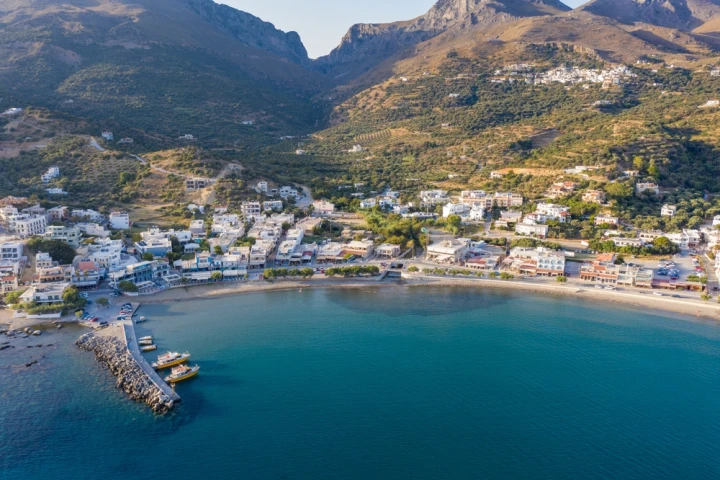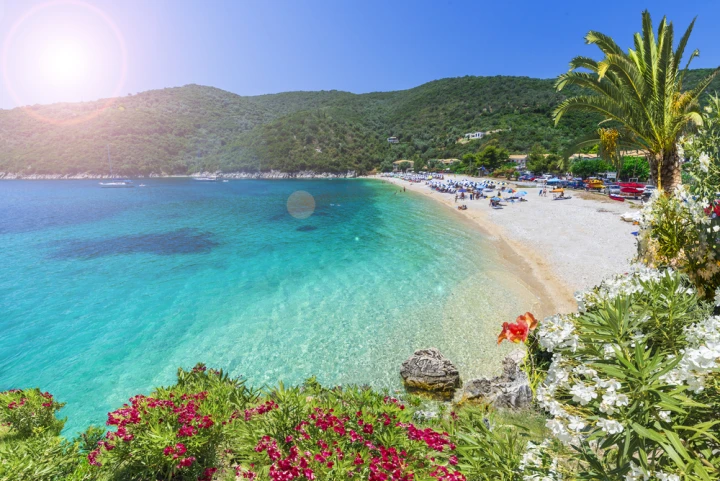
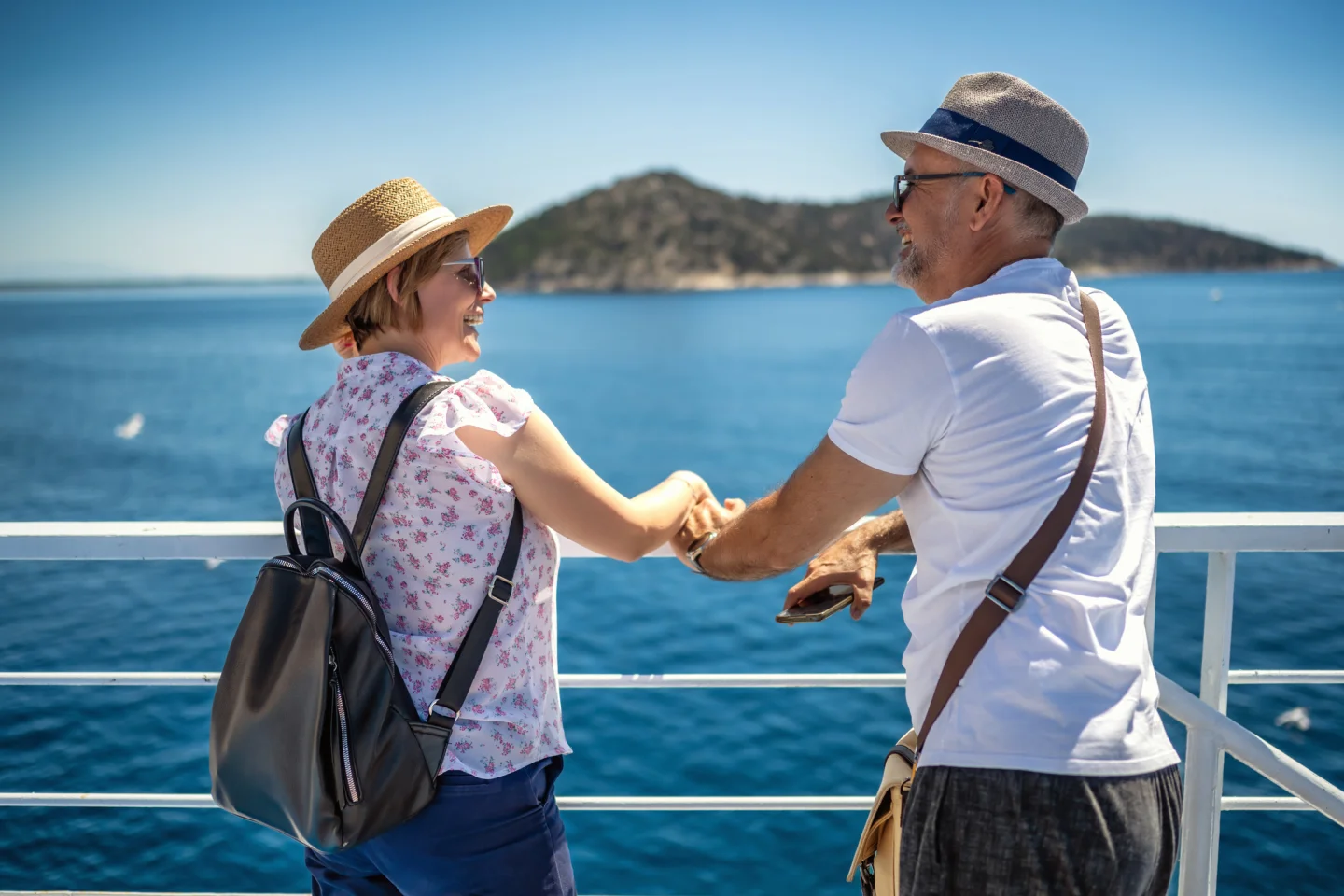
Based on recent data of ours, almost one in three buyers (30.8%), mainly retirees, from abroad are looking for a property in Greece for a permanent residence.
Greece is one of the most compelling retirement destinations, and this is backed up by data. According to the Annual Global Retirement Index 2026 for international living, Greece ranked the No.1 country in the world to retire to, surpassing long-time favourites like Portugal, Costa Rica, and Spain.
A significant factor behind this increased demand is probably the tax incentive offered by the state of Greece to retirees from abroad. More specifically, they can, under certain rules, transfer their tax residence to Greece and pay income tax at a rate of just 7% on their foreign-source income.
Given this background, the purpose of this article is to go through the islands of Greece that are recommended for retirees, and to cover the practical side of retirement overseas: locations, healthcare, and the property-buying process.
At Elxis, we have been providing real estate and legal services since 1991, with operating offices in Thessaloniki, Crete, Utrecht, and an upcoming one in Kalamata.
Why Greece is One of the Top Retirement Destinations
Or, why should you pick Greece for an overseas retirement plan?
Overall, Greece offers plenty of advantages in comparison to other European countries when it comes to permanent living. First of all, it has a mild climate, over 2,500 hours of sunshine annually, and natural beauty with many sunny days to enjoy. With that, of course, comes a very long shoreline, and plenty of turquoise beaches for anyone drawn to coastal living.
Moreover, in Greece it's easier to find a relaxed lifestyle and a slower pace of life, which is full of family, music, dance, and delicious cuisine. The Mediterranean diet is built around fresh and locally grown food.
As Greek people are welcoming by nature, it is easy to make friends in the country. The locals are outgoing, and it is common for Greeks to warmly greet or even give small gifts to foreigners when passing by. Especially in the smaller Greek islands and in Greece’s villages, you will feel like a part of the community. In popular regions, there is also an established expat community.
Finally, the cost of living and property prices in Greece still remain quite competitive in comparison to other southern countries and to Northern Europe. This is why buying a house in Greece can be a good choice for permanent living, or a smart real estate investment.
Here are the islands that are recommended for retirement in Greece, each with its own island lifestyle.
Which Greek Islands Are Better to Retire In
Crete
Greece's largest island and one of the most popular regions for permanent living, Crete is among Greece’s strongest island options and one of Europe’s best retirement destinations, while Crete, Corfu, Rhodes, Lefkada and Evia are considered to be appealing Greek islands for a retirement plan.
The history of Crete goes back thousands of years, as it was the centre of the Minoan civilisation. Later, the Venetians and the Ottomans took over, with the architectural influence of these periods being visible.
Another key factor that makes Crete stand out, is its diverse landscape. So, if you are an outdoor lover, then you would probably be fascinated to discover ancient ruins, gorges with cliffs, a network of caves, and activities like scuba diving.
Regarding everyday amenities, in general, there are markets, cafes, and restaurants within easy reach, depending, of course, on the very specific location of the house.
Retirement-friendly islands also need year-round infrastructure, such as hospitals, supermarkets, and transport links, while long-term rental costs and day-to-day expenses can vary significantly by island and season. In bigger cities, like Heraklion, Chania, and Rethymno, you can find pretty much whatever you are looking for.
Heraklion is the capital of Crete and its business centre, with government offices, bigger hospitals, larger shops, and a modern vibe.
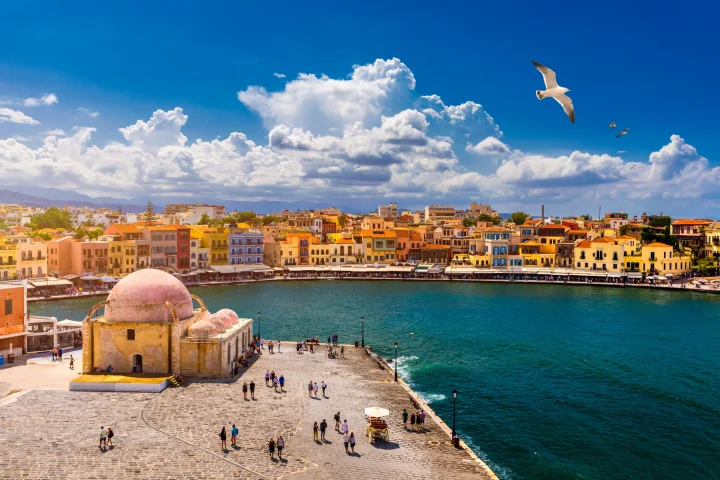
Chania has a more romantic vibe, with its old town, the Venetian harbor, traditional tavernas, and the strong sense of local identity.
As for Rethymno, its old town can easily capture your heart. Wandering around the cobblestone alleys featuring Venetian architecture and arched doors, and exploring local shops with rich history, can literally become your favourite activity.
If a peaceful lifestyle is part of your plan, villages or smaller towns like Elounda or Agios Nikolaos, may be a wiser choice.
As for healthcare access, which is important for many retirees, each main town has a general hospital, while in Heraklion there is the University General Hospital. This is the largest on Crete, so most medical needs can be treated without needing to leave the island.
Accessibility-wise, Crete has two international airports, one in Heraklion and one in Chania. The Heraklion International Airport is the second-busiest in Greece by passenger volume, following Athens International Airport, offering many international flights over the year.
What is more, the new Kastelli Airport in Crete, a major infrastructure project, is still in the works, and is expected to significantly improve connectivity and provide better access to and from other countries.
Corfu
If you look at the map of Greece, Corfu lies in the Ionian Sea, off the northwest coast of mainland Greece. Once ruled by the Venetians, that era can still be recognised in the architecture of the island, which also reflects its fascinating history.
Many international residents have been picking Corfu for many decades, meaning you will easily find an international community that is already in place and ready to welcome you.
The climate and the weather are similar to Crete, with warm summers, mild winters, and a few rainy days in some regions, which helps maintain the green color of the island all year, covered with olive groves and cypress trees.
In Corfu, you can find some well-known beaches, like Paleokastritsa, Glyfada, and Porto Timoni. But there are also smaller, calmer coves, if you would like to enjoy a morning swim away from the crowds.
If you vote for outdoor activities, there are many routes for walking and hiking, from Mount Pantokrator to Korission Lagoon, among them.
Generally, in larger villages of Corfu, you can easily find markets, bakeries, pharmacies, cafes, and tavernas that are open year-round. But again, each region and neighbourhood has something different to offer, so it's worth looking into the exact property location before deciding if a certain rhythm matches your preferences.
In terms of healthcare, there is the General Hospital of Corfu along with some private clinics in the area. In addition to that, if a special treatment is required, the city of Ioannina (which is on the mainland of Greece) has a large university hospital. It is about two hours away, and to get there you need to take the ferry to Igoumenitsa, and then drive to Ioannina for about 45 minutes.
The villages of Kontokali, Gouvia and Dassia, only a short drive away from the centre of Corfu Town, can offer a more relaxed daily life, along with villages like Kassiopi and Nissaki. If you are seeking a house for permanent living in Corfu, a general suggestion is to choose a property close to amenities and shops that work year-round, and not only during the summer season.
Regarding connectivity to other countries, the Corfu International Airport offers direct flights to many European countries mainly between spring and autumn. During winter months, there are fewer direct flights, so the common alternative is to fly through Athens.
Lefkada
One of the Ionian Islands, located off the western coast of mainland Greece, Lefkada stands between Corfu and Kefalonia.
One of the best islands to retire in Greece due to its unique advantage: it is connected to the mainland by a bridge, so you can drive to and from Lefkada whenever it's convenient for you, without needing a ferry.
The west coast of the island is set towards the open sea with dramatic white cliffs and long, turquoise beaches, like Porto Katsiki and Kathisma. The east coast, on the other hand, is calmer, with small beaches and quiet bays, a very good suggestion for a relaxed swim.
If you are an outdoor lover, mountain villages, like Karya, provide walking paths through greenery that lead to impressive hills. Then, near the Nidri (or Nydri) region, you can walk to the Dimosari waterfalls. For those who are interested in sailing, the marina of Lefkada is a solid option, as it is one of the largest in the Ionian Sea.
To cover daily needs, Lefkada Town is the island's capital and main centre for shopping, services, and socializing. If you notice the houses in the region, many of them have upper floors that are made of wood or metal sheets, and they are painted in bright colours. It's, basically, a traditional building method with a goal to withstand earthquakes.
The villages of Lygia and Nikiana are a good recommendation if you are seeking a permanent house in Lefkada, as they are only a short drive away from the city centre. The Vasiliki village falls under the same category, so it's up to you to pick the option that matches your needs.
Aktion is the nearest airport, near Preveza (which is on the mainland of Greece), and is only a short drive from Lefkada Town. International flights are more frequent between spring and autumn, as there is a higher volume of travelers and tourists, but since you can drive to Lefkada, connectivity is really simplified.
Rhodes
If we are talking about the Dodecanese, Rhodes is the largest island of this group.
During ancient times, it was famous for the Colossus of Rhodes, which is still known as one of the Seven Wonders of the Ancient World.
As for the climate, it's generally aligned with what was previously mentioned for other Greek islands.
When it comes to the beaches, there is a variety, depending on which side of the island you are on. For example, the east coast is calmer and more sheltered, with clean, sandy beaches and clear water, like Tsambika, or the small bay of St. Paul's, just below the Lindos village. On the other hand, the west coast has more winds and, as a result, it's cooler during the summer months.
Regarding outdoor activities, the Valley of Butterflies and the Seven Springs are two peaceful spots that are definitely recommended for their walking paths. Additionally, if you are into ancient history, the Acropolis of Lindos is a very good suggestion for a quick trip back in time.
Rhodes Town is the capital of the island, while its medieval old town (a UNESCO World Heritage Site) is surrounded by massive stone walls, inside of which you can spot the Street of the Knights, the Palace of the Grand Master, and narrow streets with small shops, cafes, and tavernas.
Accessibility-wise, the International Airport of Rhodes offers direct flights to many European destinations, again mainly during the summer season. During winter, it is possible to fly through Athens, as the flight lasts approximately an hour. There are also ferries that connect Rhodes with Piraeus, the port of Athens, so that option is valid as well, especially if you are planning to travel with a car.
Evia
Evia is a less popular, yet very smart option.
It lies just off the east coast of mainland Greece and is connected to the mainland by two bridges at the town of Chalkida, meaning you can easily drive from and to Evia at any time.
Other than that, Athens is only about an hour away. Some retirees may also compare Evia with the Peloponnese, which offers coastal living, local history, everyday amenities, and easy mainland access. So, if you are seeking an island life with the security of being close to the capital city of Greece, Evia would be a super practical choice.
This island is characterised by its long coastline, which comes with the benefit of variety in beaches. More specifically, on the western side, the sea is usually calm and sheltered, with seaside villages like Eretria and Amarynthos.
The eastern side, though, looks towards the Aegean Sea, including long sandy beaches, like Agia Anna. Finally, in the north, the areas around Pefki and Limni are particularly popular for families or retirees who are after a quiet atmosphere.
As for outdoor activities, Mount Dirfys, the highest of Evia, has many walking paths, while Dimosari Gorge, in the south, is a great option for hiking, ending at the sea. Furthermore, the town of Loutra Edipsou is well-known for its natural thermal springs.
When it comes to healthcare, including more complicated health issues, since Athens is close, the large city hospitals are only about an hour away.
The capital and the main town of Evia is Chalkida, which covers pretty much all the daily needs of the residents, with banks, bakeries, pharmacies, cafes, etc.
Last but not least, Evia might not have an airport of its own, but the Athens International Airport is approximately an hour to an hour and a half drive away. This translates into easy access to direct flights from Athens to almost everywhere inside and outside Europe year-round.
Greece's 7% Flat Tax for Foreign Pensioners
Let's go through the tax incentive for pensioners.
So, Greece offers a special tax regime for pensioners who move their tax residence to the country. Under this, foreign-source pension income can be taxed at a flat rate of 7%, which usually applies regardless of the pension amount, and can last up to 15 years.
Other types of foreign income may also qualify for the 7% rate, but this is not automatic and must be assessed individually based on your income sources and applicable treaty provisions.
It's important to note that the 7% regime is only available to pensioners coming from countries that have a tax treaty with Greece, which includes provisions for the exchange of tax information.
For example, the Dutch-Greek tax treaty grants Greece exclusive authority to tax pension income once a Dutch pensioner has relocated and transferred tax residency. In that case, the Netherlands will not tax that income, and the result is a clean arrangement: one country, one rate, no double taxation.
But, again, not every country works this way, meaning that it's essential to seek specialist services from a tax advisor in your home country who understands both your local tax law and how it interacts with Greek treaties.
Eligibility Requirements
Beyond the tax treaty requirement, the following conditions must be met to qualify for the regime:
You must not have been a Greek tax resident for at least 5 of the 6 calendar years immediately preceding your application.
You must be willing to establish genuine, full tax residency in Greece, including deregistering as a tax resident in your home country.
You must spend more than 183 days per year in Greece to maintain the regime each year.
EU citizens do not need a residence permit. As free movement applies, you are entitled to reside in Greece without additional documentation beyond standard registration.
Non-EU citizens must obtain a valid Greek residence permit before applying. Several pathways exist depending on your situation, including the Golden Visa (for those making a qualifying investment), retirement-specific permits, and others. The right permit depends on your nationality and personal circumstances, and should be discussed with your Greek advisor early in the process.
You can check our detailed article about this tax rule here.
Disclaimer: This section is for general information only and does not constitute legal or tax advice. Tax rules and treaty provisions may change and can apply differently depending on individual circumstances. Please consult a qualified tax advisor before making any decisions.
Can I Buy a House in Greece?
Well, the short answer to that is: Anyone can buy a property in Greece.
In general, buyers from the EU and from outside the EU can purchase freely across most of the country. Some areas close to national borders or military installations may require an extra permit before a purchase can go ahead. This is usually a formality, and it is the kind of thing a legal team commonly checks and handles during due diligence.
The 9 Steps of Buying a House in Greece, Simplified
1. Search For Your Dream Home
Everything starts with the property. You decide on the region, the type of home, and your budget. From there, the search can go two ways. You can browse the properties on our website and see what appeals to you. You can also share your criteria with us and let our team look on your behalf. Most buyers do a little of both. We then put forward the homes that match, so you are not working through it all on your own.
2. Viewings, Viewings, and Viewings
Once a few properties stand out, visit them in person. Seeing a home for yourself tells you what photos cannot: the feel of the area, the real condition, and what is nearby. This step matters. When you find the one that fits, the next stage is preparing for negotiation.
3. How Much?
Negotiation can feel kind of unpleasant, but it is a normal part of the process, so try not to take it personally. At this phase, a good real estate agent may assist you a lot, as they can often read the market and each property’s value realistically.
4. Legal Due Diligence
This is where a Greek lawyer is needed, as they check the ownership titles and search the local Land Registry to confirm the property is in order and can be sold. Any mortgages, liens, or third-party claims come to light at this stage.
5. Private Purchase Agreement
A Private Purchase Agreement sets out the terms agreed between buyer and seller. Once signed, the property comes off the market, and the buyer pays a deposit to reserve it, typically between 5 and 10% of the price. Now, both parties can start preparing the paperwork for the notary purchase deed.
6. Power of Attorney (POA)
A Power of Attorney lets your lawyer act for you throughout the purchase, even when you are not in Greece. With it, your lawyer can represent you at the tax office for your tax number and sign the final contract, so the purchase process continues while you are abroad.
7. Get a Greek Tax Number (AFM)
You will need a Greek tax number, known as an AFM, to buy. It is issued free of charge on presentation of valid ID and an application form, and it gives you access to the Greek online tax system. Our legal team can fill in the necessary forms on your behalf.
8. Both Parties Sign the Final Deed
The seller provides a set of documents for the notary, including an energy certificate, a civil engineer’s certificate that the property has no building violations, a topographical plan, tax clearance, and municipal certificates.
The notary then prepares the transfer tax declaration. Once the buyer pays the transfer tax, the final deed can be signed. You can attend in person or have your lawyer sign for you under the Power of Attorney.
9. Complete the Payment
In most cases, the buyer pays on the day of signing. Where both banks are in the same country, the funds usually reach the seller the same day.
Once payment is received, a discharge deed is signed as proof that the purchase price was paid in full. The exact timing can vary with the circumstances and any terms agreed between the parties. With that, the home is yours.
What Are the Additional Costs?
That’s another question we often receive from our prospects. And a fair one. As a rule of thumb, the additional costs are approximately 10% on top of the purchase price when it comes to buying a house in Greece. Let’s break these costs down:
Transfer Tax
It is paid by the buyer on existing homes; this is 3.09%* of the purchase price or the taxable value, whichever is higher. New-build properties would normally carry VAT instead, but VAT on new builds is currently suspended, so transfer tax applies in its place.
*Important update: The Greek Prime Minister, Kyriakos Mitsotakis, has announced that the property transfer tax for purchases by non-EU citizens is set to rise to 15%, with the change expected to apply from 1 January 2027. The implementing legislation has not yet been published, so the final scope, including how it may treat plots of land and commercial property, is not yet confirmed.
Notary Fees
The notary prepares and oversees the deed. Fees are tiered and work out at around 2% of the price, plus VAT.
Land Registry Fees
After signing, the deed is registered locally. These fees come to about 0.5% of the price.
Lawyer's Fees
A lawyer is not strictly required but is strongly recommended to check the legal status of the house you are buying and guide you through the purchase process. Fees typically range from 1 to 2% plus VAT.
Real Estate Agent Fees
This applies where a real estate agent is involved. Elxis charges 3% plus VAT, payable on completion of the purchase.
Feel free to check our detailed property buying guide here.
Why Elxis?
Elxis is not a traditional real estate agency. We are a legal-first, internationally oriented property company with 35 years of experience guiding foreign buyers and sellers through the complexities of the Greek market. Our structure, services, and expertise are built specifically for international transactions.