
06.04.2026
Greece’s PDO Products: A Taste of Authenticity
Greece is a country where history, landscape, and culture intertwine to produce some of the most unique foods in the world.
 Lifestyle
02.12.2023
One of the amazing parts of eating in Greece is the delicious dessert. Greece has a great variety, from baklava, to halva, to frozen custards and spoon sweets. Coming from western European countries like the UK or the Netherlands, some visitors find Greek desserts to be overly sweet. Let’s just say that they are as sweet as the people are hospitable - which means the Greeks do not hold back on the sugar!
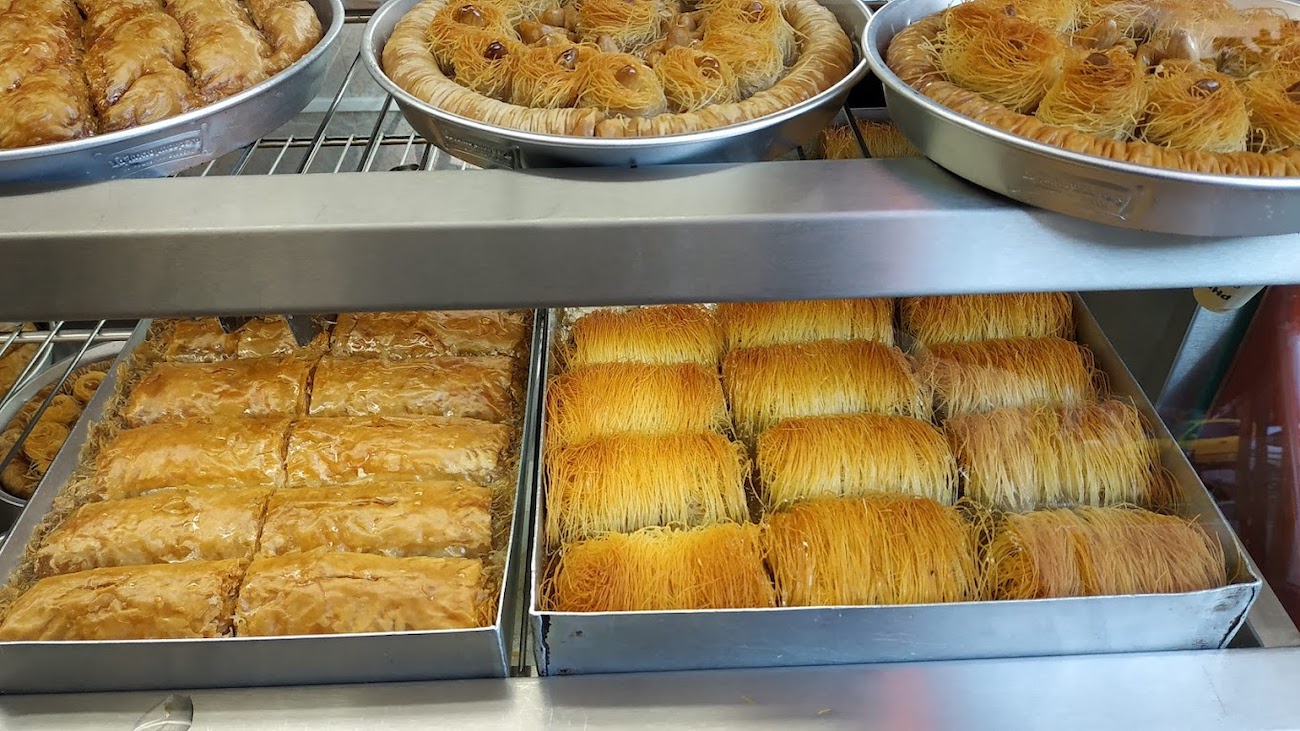
Many of the sweets in Greece have been around since the Ottoman or Byzantine Empires, and some are even from ancient Greece. As we share with you the top sweets in Greece, we will tell you some of their famous history too. The most important ingredients for Greek desserts are flour, honey or sugar, vegetable or olive oil, nuts, cinnamon, and cloves. In other desserts, there are eggs, milk, or yogurt.
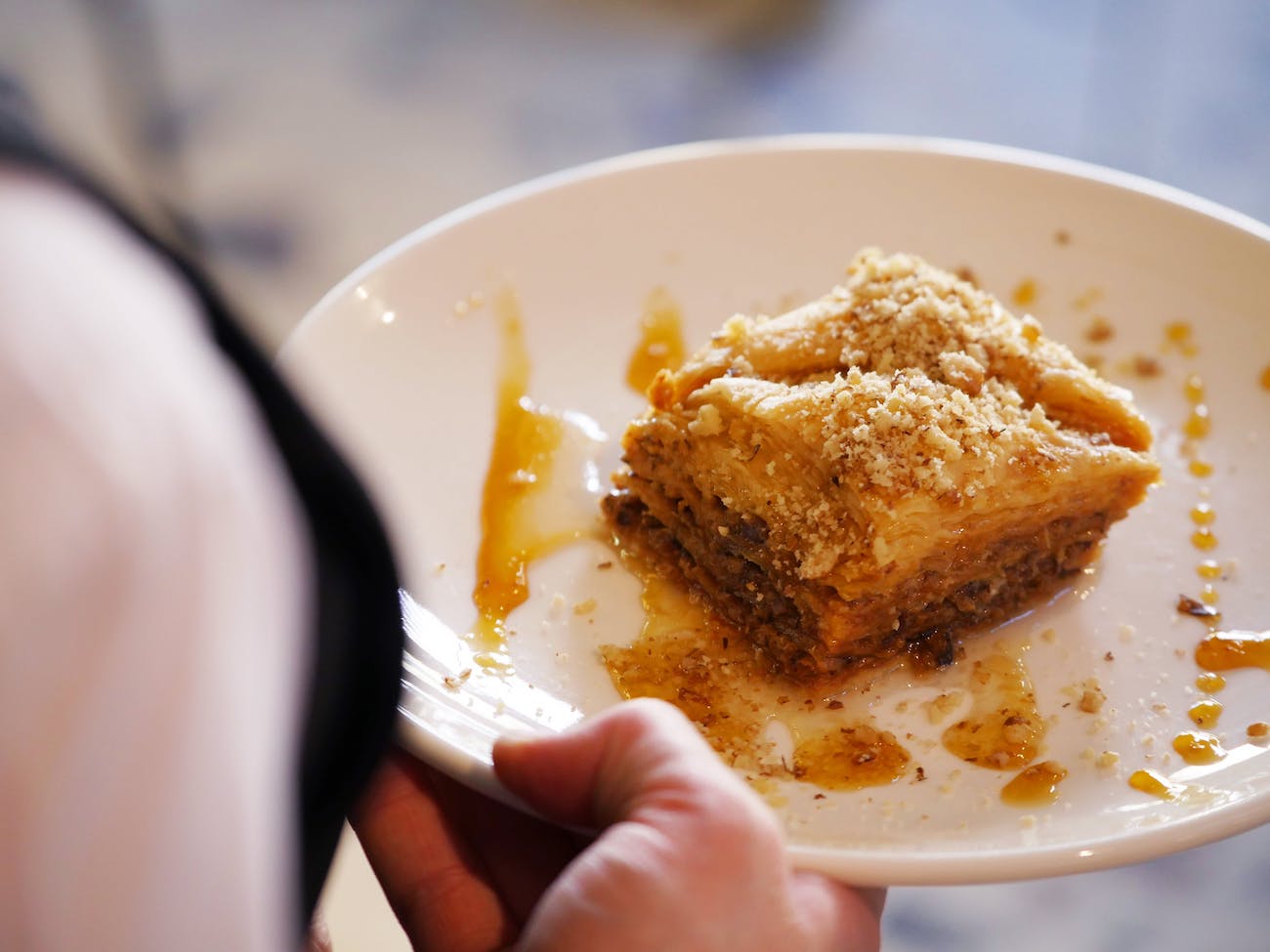
Baklava is definitely one of the first desserts we think of when we think about Greece. It contains phyllo pastry, butter, walnuts or pistachios, and a simple syrup. Sometimes, flavorings like orange zest, lemon zest, cinnamon and cloves are added. Some historians claim that Baklava was once made as far back as Ancient Assyria, in the 8th century BC. The dessert was very popular in the days of the Ottoman Empire and during the 15th century. The Greek version can be distinguished from the Turkish version because it is shaped like a triangle, while the Turkish version is square.
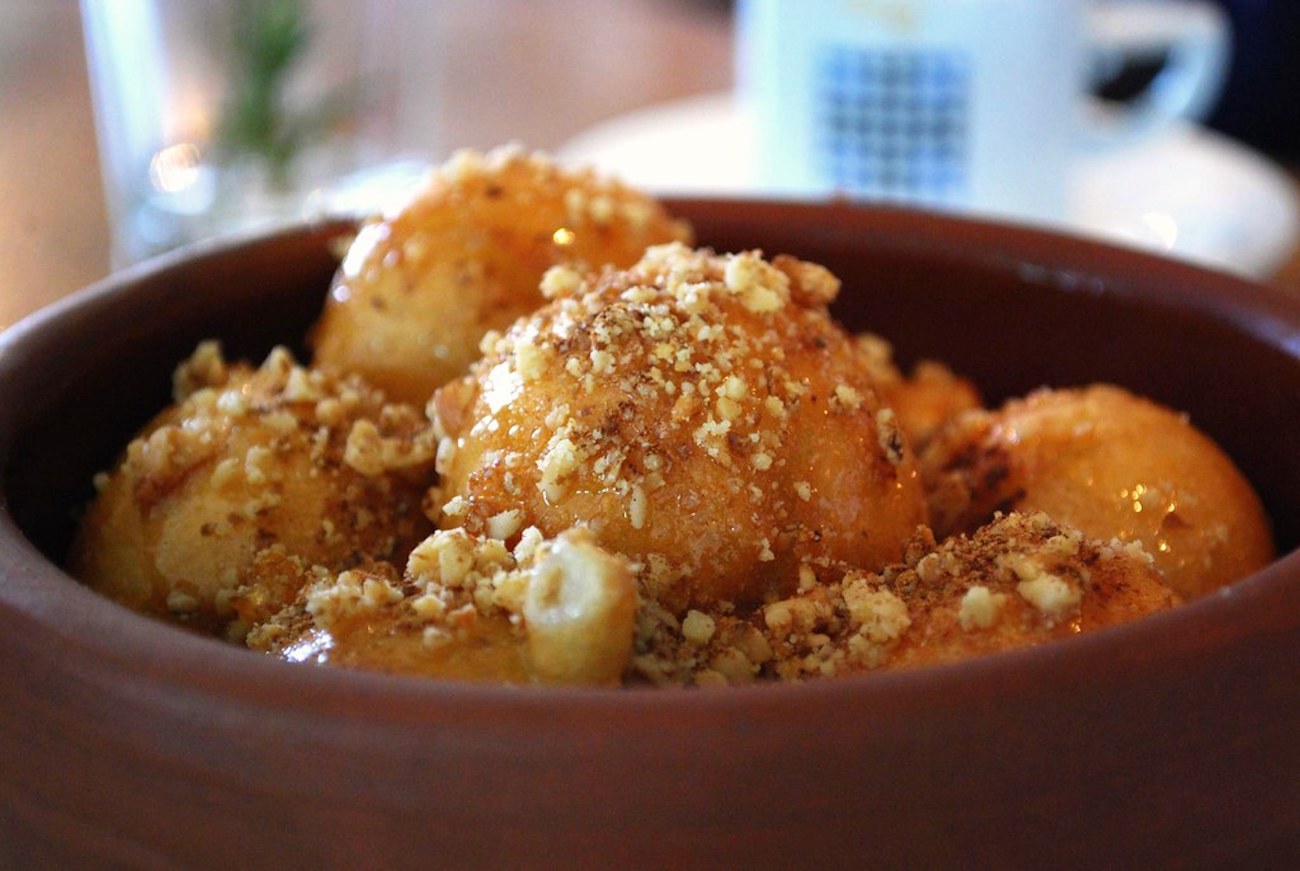
Loukoumades are deep-friend honey doughnuts, and are also popular in other countries. The Greek version of loukoumades usually is covered in sugar syrup, honey, cinnamon, and sesame seeds. Some reports say that loukoumades as a dessert was enjoyed as far back as Ancient Greece. During the Olympic Games in 776 BC, they were offered to the winners of the games, in addition to an olive wreath.
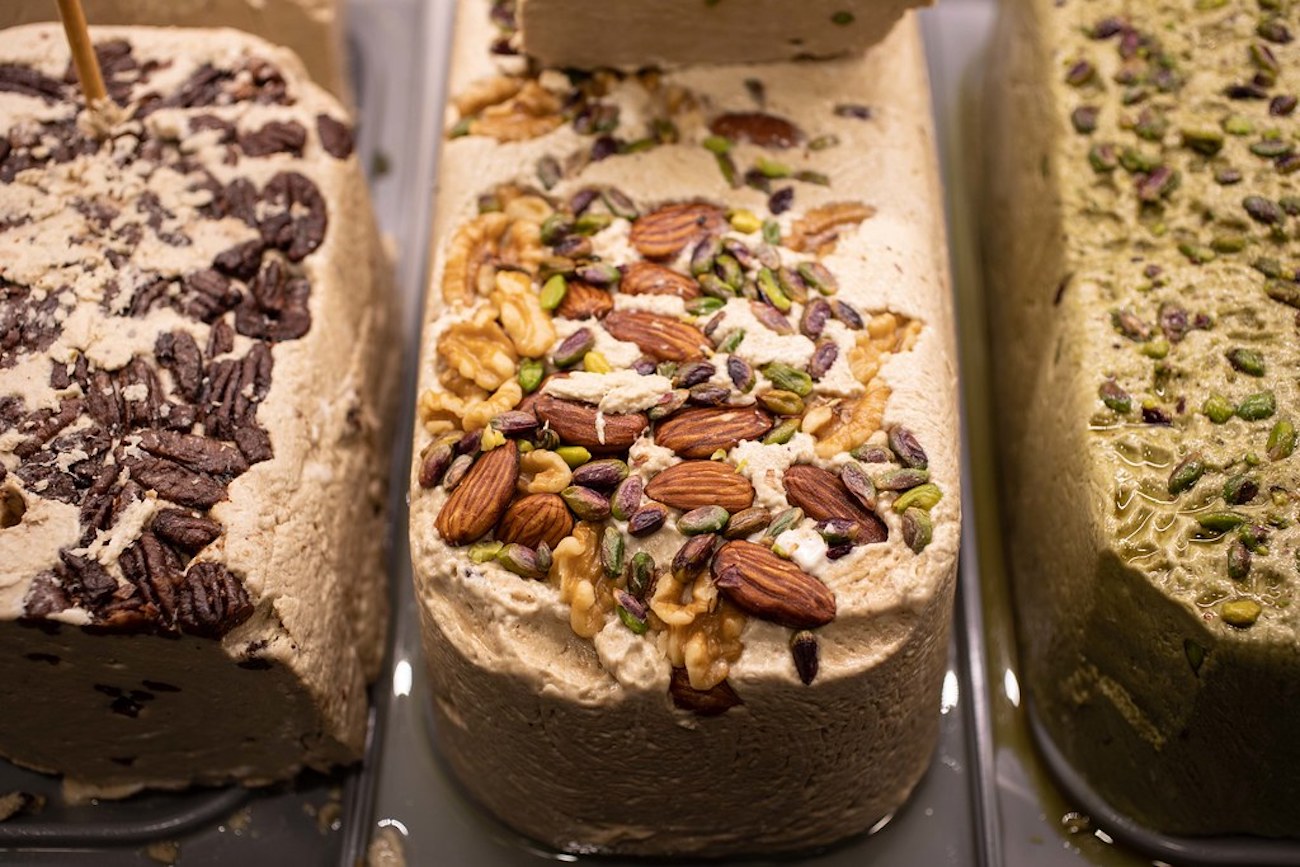
Halva is another famous dessert in Greece. Although it seems confusing, there are three desserts in Greece with the name halva. The most popular kind is the halva with tahini (sesame paste), sugar, and honey. Some other kinds feature nuts or raisins. Second, semolina halva includes semolina, vegetable oil, and simple syrup. Finally, the least common version of halva is made in the Farsala area of Thessaly, near Meteora. This version is made with vegetable oil, sugar, corn flour and almonds, and it resembles a jelly.
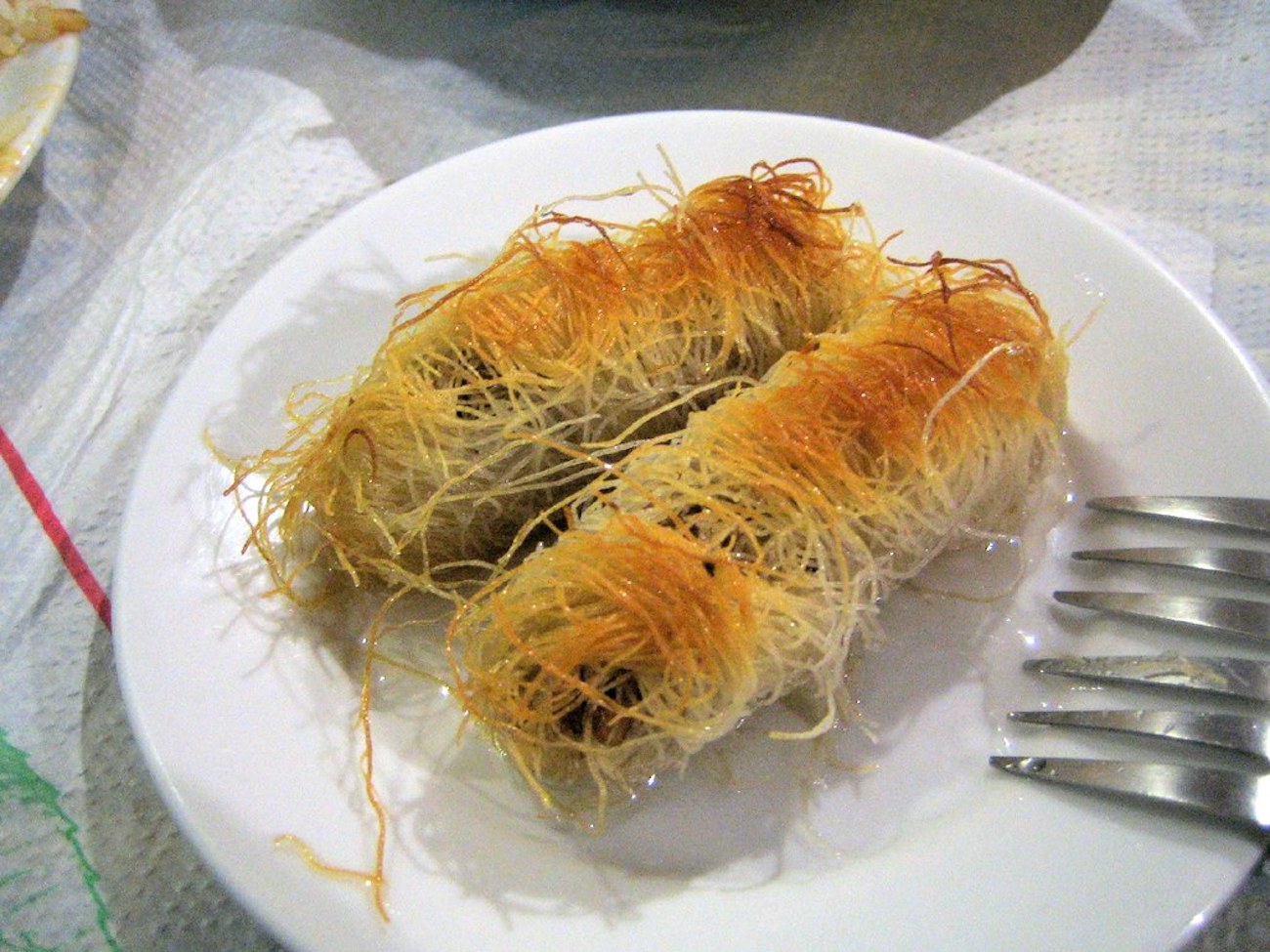
Kataifi is a famous sweet treat that is also enjoyed in other areas of the Middle East. It is made of shredded phyllo pastry, honey, sugar syrup, and nuts. The kataifi is then baked to make it crispy, and its unique texture makes it a much-loved dessert. Kataifi in Turkish is known as kadaif and kanafeh if you are in the Balkans. Kaitafi is usually made with walnuts, which add a nice crunch.
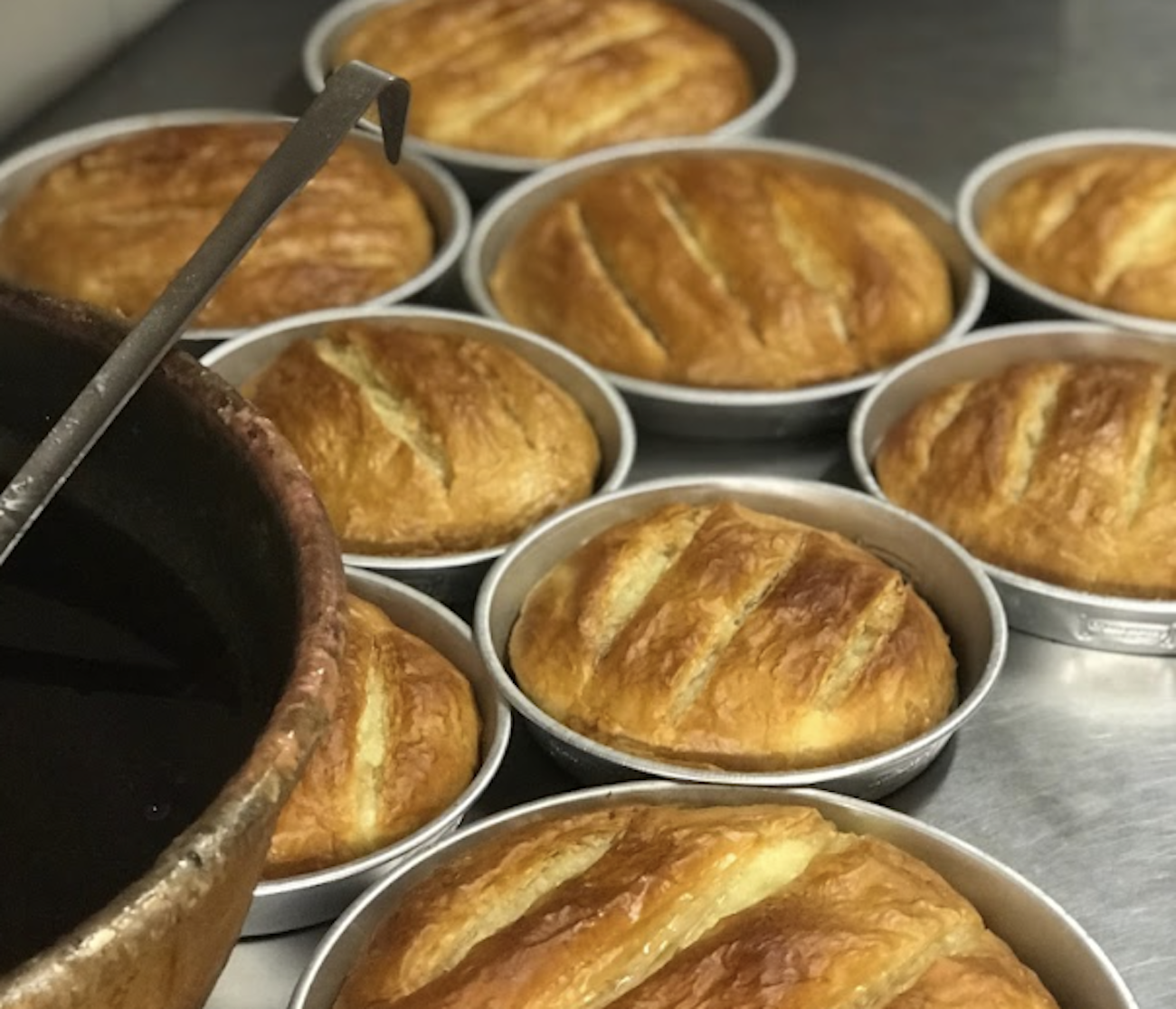
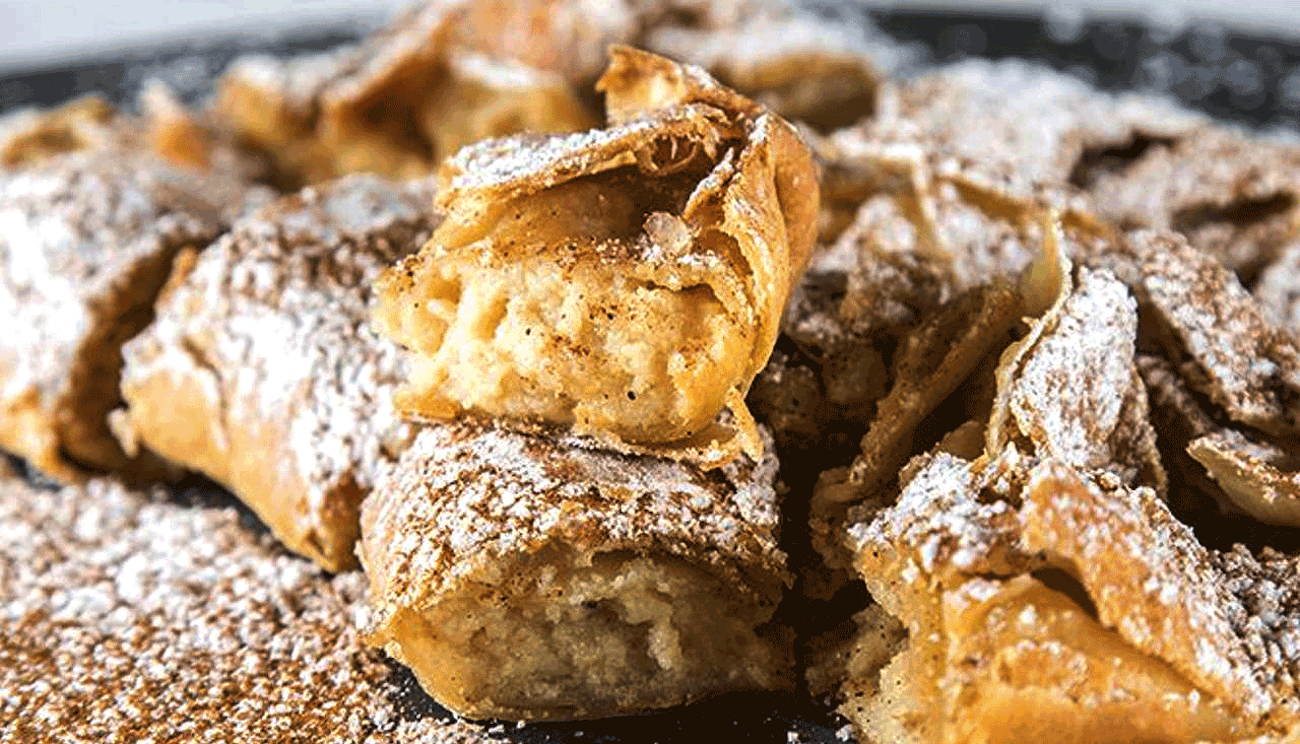
Bougatsa is a sweet or savory dessert, sometimes filled either with cheese or a sweet custard. It is most popular in northern Greece, but in general you can find it in bakeries all over Greece. Bougatsa is made with a phyllo dough that is wrapped around a custard filling. The dessert is baked and powdered with sugar and served warm. It is said that bougatsa was brought to the region after the Greek-Turkish War of 1922, when Greek immigrants moved to the Macedonia region in northern Greece after being exhiled from Turkey.
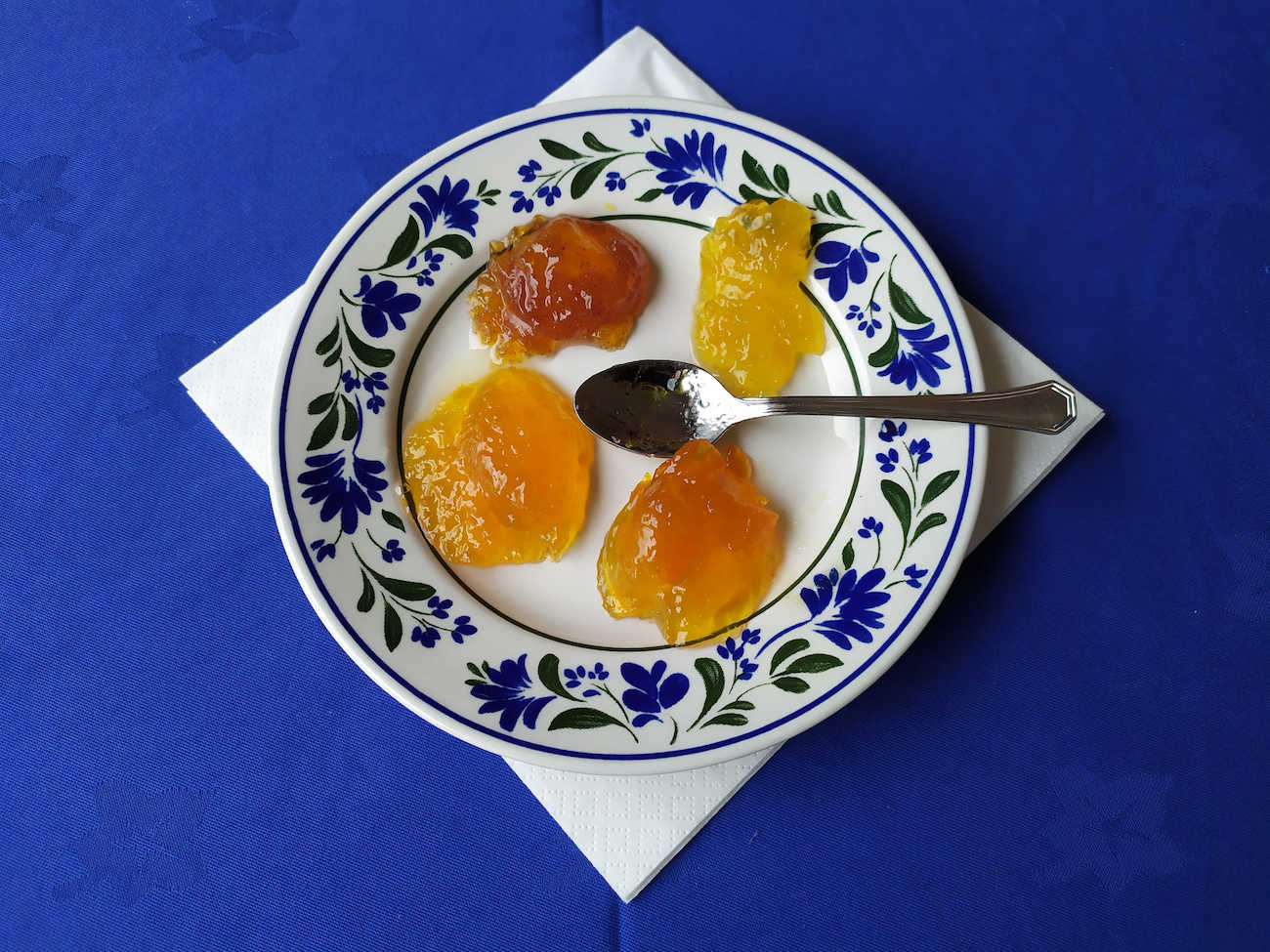
Spoon sweets are a simple dessert, featuring preserved fruit in sweet syrup. This tradition has its roots in the fourteenth century, when the Byzantines adopted the custom from Arab traders of offering a spoon sweet to visitors. There are many types of spoon sweets in Greece, because you can make it with many types of fruits. Cherry, fig, or orange rind are common varieties. Sometimes, spoon sweets are paired with Greek yogurt.
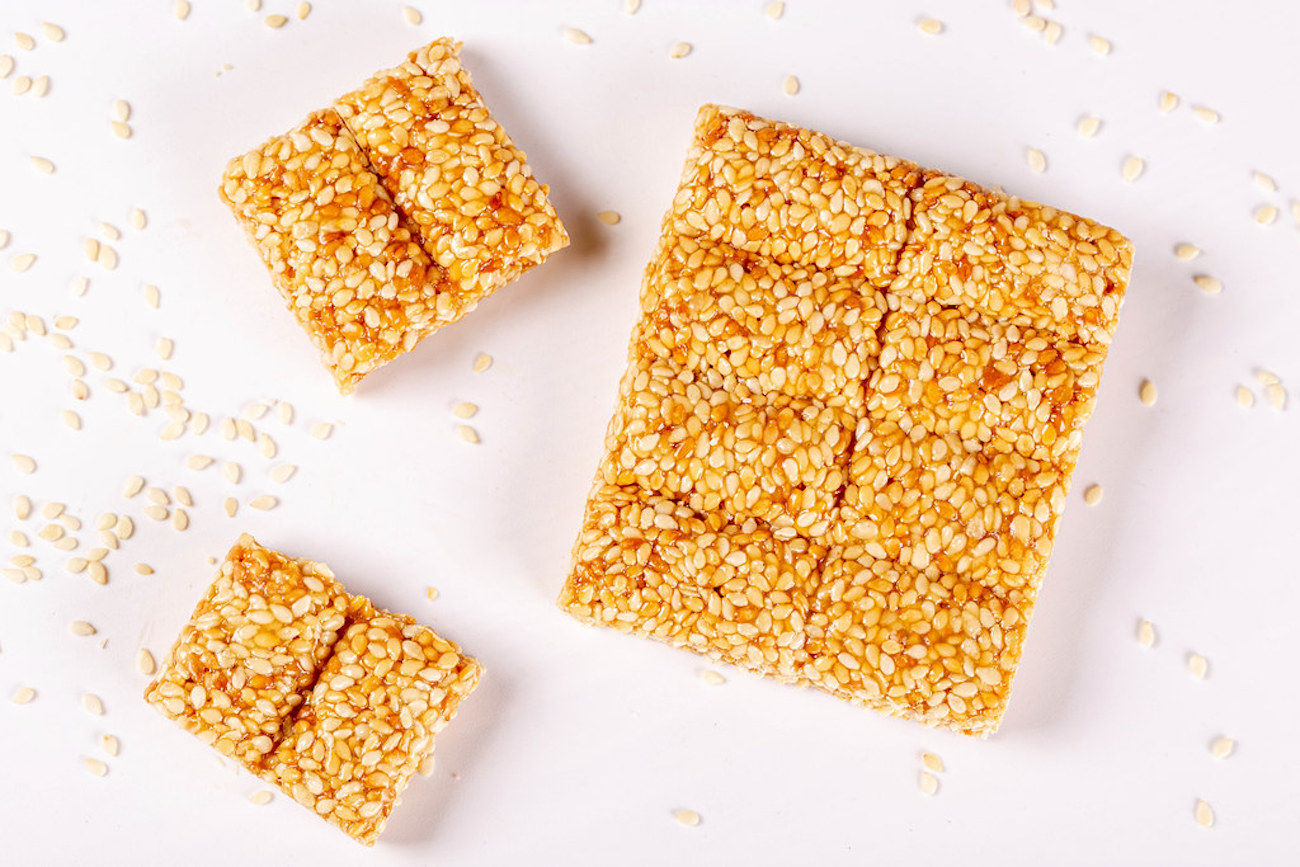
There are few desserts more simple than pasteli. The most simple recipes feature just two ingredients: honey and sesame. This dessert dates to the Homeric era - in the Odyssey and in the Iliad, we read about a dessert known as “itrion” made of honey and sesame which was given to warriors getting ready for battle in the Trojan War. Herodotus, known as “The Father of History,” spoke in the 15th century about a honey and sesame dessert that was eaten by young people at parties.
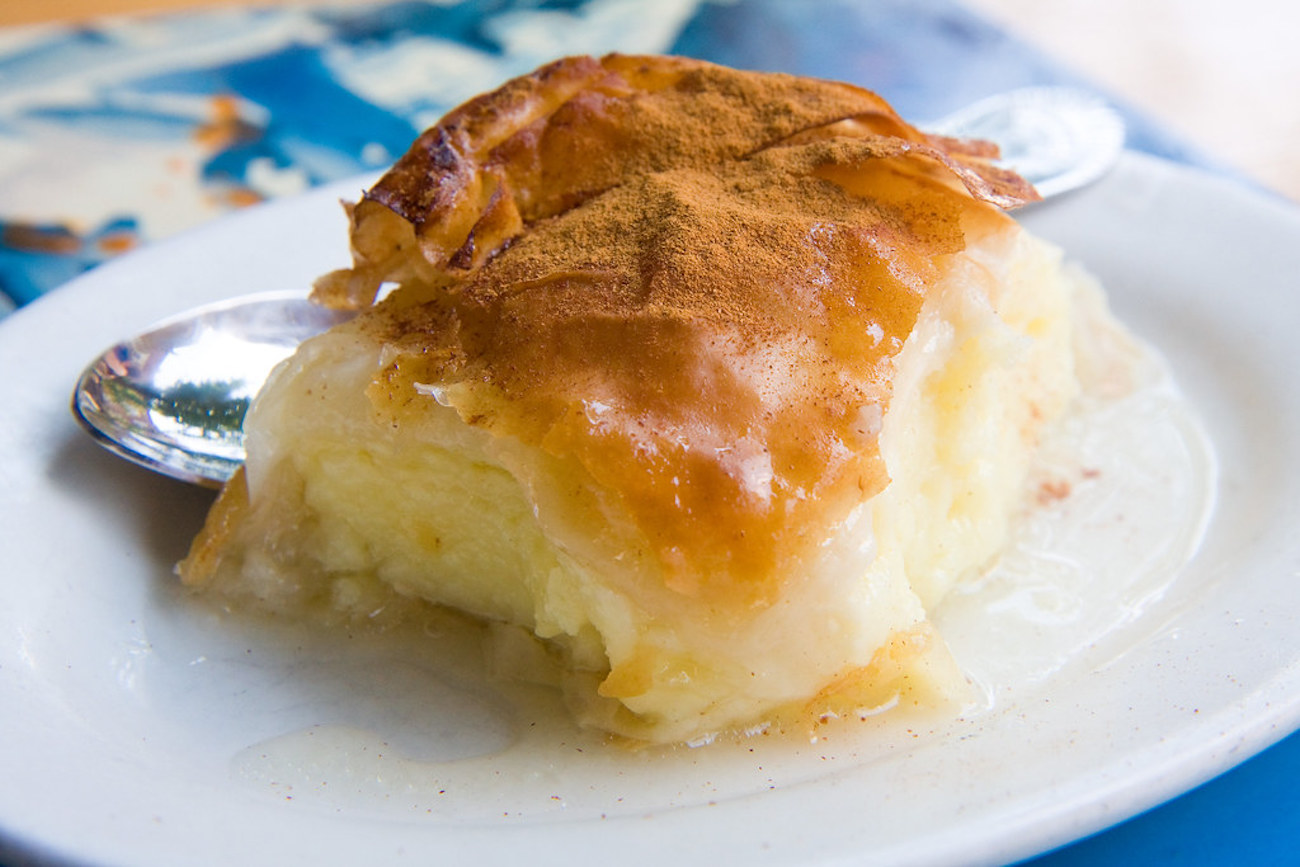
Galaktoboureko is a slightly more complicated Greek dessert, and it is popular all over Greece. “Galaktos” means milk and “boureko” means phyllo pastry. Some say that the dessert came from the Byzantine empire’s capital, Constantinople, and that its popularity slowly grew over time. The dessert is creamy and smooth and features a custard that is wrapped in phyllo pastry and often served cold with a simple syrup. The best place for Galaktoboureko in Greece is the "Galyfianakis" galaktoboureko shop, which has a shop in both Athens and in Thessaloniki.
06.04.2026
Greece is a country where history, landscape, and culture intertwine to produce some of the most unique foods in the world.
27.03.2026
Greece is best known for its islands, history, and food— but it is increasingly becoming a strong contender in the world of cycling travel. With its varied terrain, mild climate, and mix of coastal and mountainous landscapes, the country offers routes for every type of rider, from casual cyclists to experienced adventurers.
Below are six of the most bike-friendly destinations in Greece, each offering a distinct experience on two wheels.
06.02.2026
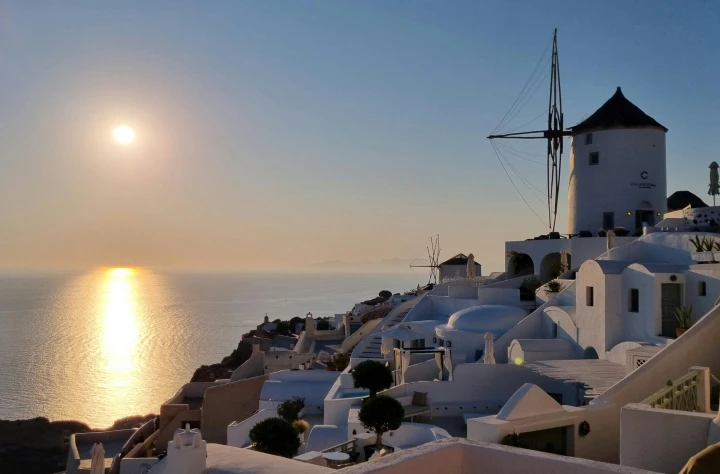
Santorini has long been synonymous with romance, and in 2026, that reputation feels stronger than ever. Recently ranked among the top three most romantic destinations in the world by Condé Nast Traveller, the iconic Greek island once again finds itself in the global spotlight, alongside the Amalfi Coast and the Maldives. For couples around the world, Santorini is a must-see place to slow down, disconnect, and experience beauty at its most effortless.
02.02.2026
Greek wedding traditions are famous around the world for their music, energy, and unforgettable celebrations. Many Greek wedding traditions come from Greek Orthodox customs and local regional practices, and they create a wedding day that feels both sacred and unforgettable. If you’ve ever attended a Greek wedding (or watched one in a film), you may have noticed rituals that seem unusual at first. Crowns, candles, shared wine, or even money placed inside the bride’s shoes. Here’s what they mean, explained simply.
26.01.2026
Greece is rapidly evolving from a historically modest digital landscape to a modern, high-speed internet hub. For decades, slower connections and limited broadband access made reliable internet a challenge, especially outside major cities and on the islands. In 2026, strategic investments in connectivity infrastructure are reshaping Greece’s digital reality and influencing everything, from property values and remote work trends to tourism appeal and everyday life. Today, strong internet connectivity is no longer a luxury; it’s a must-have for global buyers, digital nomads, and local professionals. Whether you’re considering Greek real estate as an investment or a place to live, understanding the connectivity landscape in Greece is essential.
15.01.2026
09.01.2026
16.12.2025