Extension Until the End of 2026 for Capital Gains Tax Suspension
Yes, that’s a lot of fancy words. What exactly does this mean? This will apply to you if you are planning to sell your property soon. The capital gains tax (you might also hear it called the “goodwill” tax) is a tax calculated based on the difference between a property’s purchase price and sale price. In Greece, it was established for a very short time in 2013 but was suspended later that same year, and this suspension has been extended ever since. Not surprisingly, the Greek government proposed to extend its suspension for another two years. With the suspension, if you plan to transfer property by the end of 2026, you will not be subject to this tax. This means that as an individual seller, you won’t be taxed in Greece for any profit you make on the sale of your property. Keep in mind that if you are a resident of another country, you may have capital gains taxes in your home country. However, Greece has treaties to avoid double taxation with many nations. Be sure to consult a tax professional for more details on capital gains tax in Greece. To read about other tax exemptions for foreign homeowners in Greece, click here.
Greece Vs. Spain: Why Choose Greece?
Low Property Prices
Compared to home prices Spain and in many European countries with similar standards of living, a home in Greece is less expensive. For example, in the centre of Amsterdam, a single parking space is now worth up to 250,000 euros—the same price as some beachfront homes in Greece. In fact, home prices in Greece are lower than most other European Mediterranean countries. Other popular destinations like Spain, France, Italy, and Croatia all have higher average home prices than Greece. A container-type holiday house in the Netherlands can reach up to 300,000 euros, while properties with similar characteristics to those bought in Greece are selling for 600,000 euros, about twice as much. So, buying a home in Greece is a worthwhile investment.
Long Coastline
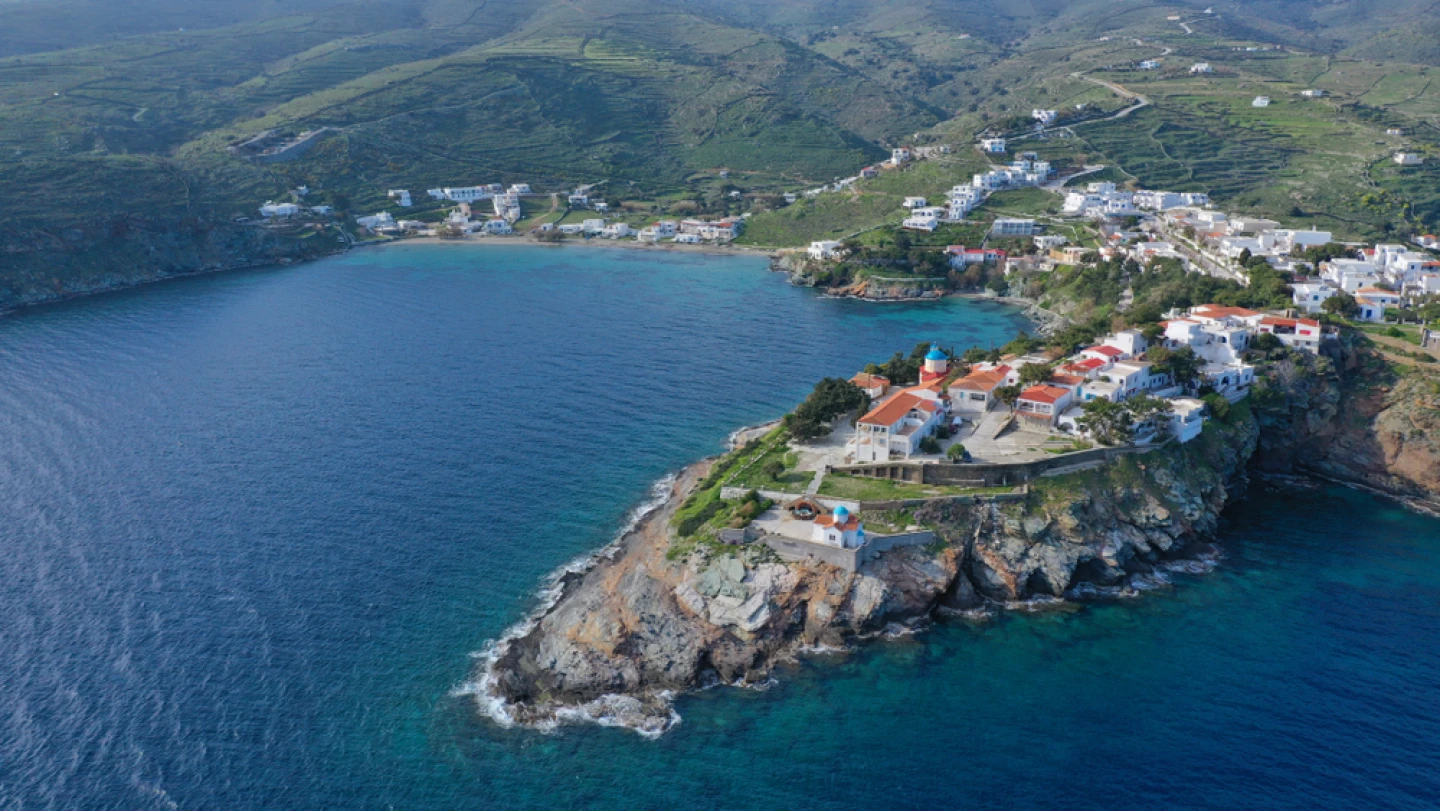
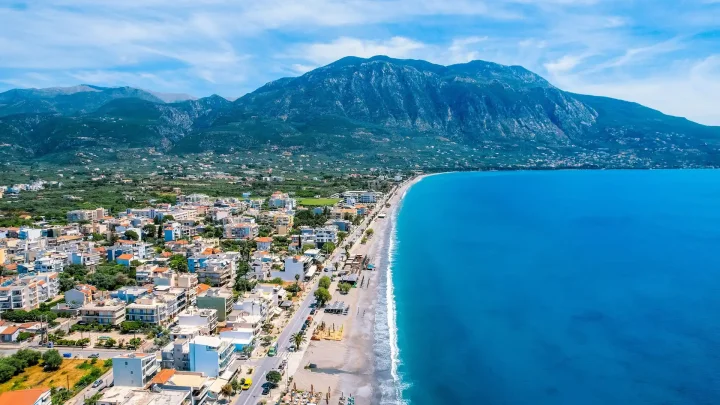
Greece has a coastline of 13,676 km, which is more than the coastlines of Spain, Portugal and France combined. Even larger nations, like India and Turkey, don’t have a coast as large as Greece. There are beachfront homes in Greece and homes with a sea view in Greece in almost every region and corner of the country. Some of the best places to have a sea view in Greece are the Peloponnese, Crete, the Aegean islands, and the Ionian coast. In many areas of Greece, if you knew where to look, you would have all the water to yourself. In contrast, in Spain, the whole coastline has been filled to the brim with flats and very large scale projects. Increased tourism and development have led to overcrowding in many coastal areas, and a loss of the "traditional" feeling. In contrast, a total of 581 Blue Flags certifying the quality of beaches have been awarded to Greece, ranking the country in second place globally when it comes to the amount of crystal-clear swimming waters it offers.
Strict Building Codes
Unlike countries such as Spain and Turkey, Greek law prohibits the construction of mega-projects. Outside the village limits, a maximum of 200 sqm can be built on a plot that needs to be at least 4,000 sqm. In the Greek countryside, a house may not be higher than 7.5 meters. As a result, there are no projects with hundreds of houses or flats in Greece, so you are more likely to have privacy and a beautiful view of the Mediterranean Sea. Greek homes also must follow earthquake regulations, and Greece has strict safety requirements, which are defined by the Greek Seismic Regulation. You can be sure of your safety in your home in Greece. In Greece, you cannot build on Natura 2000 land (where you will find endemic animals and plants) or on forest land. So, you can enjoy all of Greece’s natural beauty if you buy a home in Greece.
Low Cost of Living
The cost of living in Greece is fairly low compared to Spain and the rest of Europe. Even major cities, like Athens and Thessaloniki, are affordable compared to Paris, Rome, or Amsterdam. This is especially true for rent. Combined with rising real estate prices in Greece, real estate purchases can make you a big profit if you choose to rent out your property. Especially on islands like Crete, a long rental season means you can rent out your Greek home for up to 9 months per year. Recent research shows that out of all islands in the Mediterranean, the Greek islands have some of the highest rental returns. The expected gross return, depending on your region of Greece, is between 4 and 7%, according to Global Property Guide and Spiti24. So, when you buy a home in Greece, you can expect to make a profit if you rent it out.
Greek Lifestyle
Greece is famous for its relaxed and healthy lifestyle, which is full of family, music, dance, and great food. It is no wonder that Greeks have some of the highest happiness rates in the world and on some islands like the Blue Zone of Ikaria, resident Greeks live the longest lives in the world. Greeks are welcoming by nature, and it is easy to make friends when you are in Greece. The locals are outgoing, and it is common for Greeks to give greetings or even small gifts to foreigners when passing by. Especially in the smaller Greek islands and in Greece’s villages, you will feel like a part of the community. And last but not least, Greece has the highest percentage of English speakers of all Mediterranean countries.
Greek Islands
How many islands does Greece have? Greece has thousands of beautiful islands, each with its own characteristics, history and culture. When we hear the words “Greek islands”, usually Santorini and Mykonos are the first to come to mind, with images of blue-domed Orthodox churches and white and blue homes. Some of the best-known islands are Rhodes and Kos in the Dodecanese, Corfu, Kefalonia and Zakynthos in the Ionian islands, Mykonos, Santorini, Paros and Naxos in the Cyclades archipelago, and Lesvos, Chios and Samos in the Northern Aegean. These are just a few of the most popular islands where you can buy a home in Greece.
Disclaimer: This content is for informational purposes only and does not constitute legal, tax, or investment advice. Economic conditions change, and the performance of any property is never guaranteed. For decisions relating to a specific purchase or investment, we recommend consulting a lawyer, an accountant, a notary, or a qualified financial adviser.