
03.09.2026
Buying an Off-Plan House in Greece from Abroad Explained
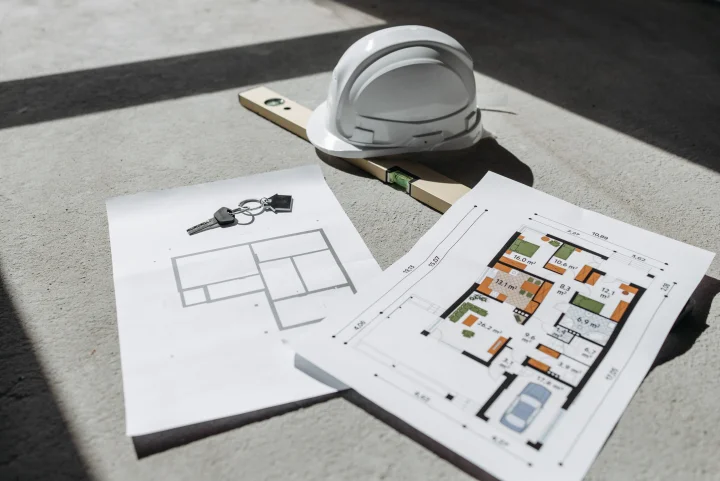
“How can I buy a house in Greece that is not built yet from abroad?”
That’s a very common question we receive from clients interested in buying an off-plan house.

Purchase Tips
25.10.2025
If you're selling a home in Greece from abroad, it's a fair thing to wonder, especially if you think in pounds or dollars day to day. The answer, though, is straightforward: you price in euros. It's the currency every buyer expects, it's what the contract and the deed are written in, and it's what keeps your property easy to compare and easy to take seriously. The more interesting question is what happens to your money afterwards, when you convert the proceeds back home. That's where a little planning genuinely helps. Here's the full picture.
Two reasons, and together they settle it. First, it's what buyers expect. Everyone in the Greek market, local buyers and international ones alike, works in euros. The portals, the agents, the notaries, all of it runs in euros. A price in another currency creates friction, makes your property harder to compare at a glance, and can quietly signal that you're not familiar with how things work here. Second, it's how the transaction actually works. Greek property deals are documented in euros: the sale contract, the notarial deed, and the tax paperwork all use euro amounts. Transfer tax and any capital gains are calculated in euros, and the value recorded at the land registry is in euros. Even if you marketed in another currency, it would be converted to euros for the deed anyway. So euro pricing isn't just the sensible choice. It's the only practical one.
You can still help buyers from your own market without changing the pricing. It's perfectly fine to show an approximate conversion alongside the euro price in your marketing, for example "€400,000 (about £340,000 at current rates)." That's a helpful courtesy for British or other non-euro buyers, as long as the euro figure stays the headline. It gives context without creating confusion about the actual price.
For most foreign sellers, the euro pricing is simple. What matters more is what you net once you move the proceeds into your own currency. Between accepting an offer and completing, several weeks or months may pass, and exchange rates can move in that time. For a higher-value sale, even a small shift in the rate can mean a meaningful difference in what you ultimately receive. There are ways people manage this, such as timing the conversion, using a specialist currency service, or fixing a rate in advance through a forward contract. Each has its own costs and trade-offs. We're not financial advisers, so the sensible step is to speak with a currency specialist or your own financial adviser about what suits your situation, rather than trying to second-guess the market.
A few practical points are worth knowing. Conversion costs vary between providers. Banks and specialist services can differ in their rates and fees, and on a property-sized sum the difference is worth checking rather than assuming. Large transfers need planning. So it's worth a word with a tax adviser in your own country to understand your overall position.
We've been guiding international property buyers to find their ideal house in Greece since 1991, and we help those same owners when it's time to sell. The sale itself runs in euros, and we make that side straightforward. With Elxis, you get:
Our in-house legal team handling the whole sale: contracts, the notarial deed, and a secure transaction, all properly documented in euros
Professional photography and marketing across our website, the major portals, and social media
Targeted promotion to international buyers, including our weekly newsletter to more than 16,000 recipients
Service in your own language: English, Dutch, German, French, or Greek
A trusted network we can point you to for the things outside our remit, including currency specialists
And if you originally bought through us and used our legal handling, our Loyalty Reward gives you free legal handling when you sell with us.
It's recommended to price your Greek property in euros. Put your energy instead into the part that really affects your return: planning how and when you convert the proceeds back home, with proper advice from a currency or financial specialist. Get that right, and you keep more of what your sale is worth.
Disclaimer: This content is for informational purposes only and does not constitute legal, tax, or financial advice. For any issues relating to specific cases, including currency and tax matters, we recommend consulting a lawyer, an accountant, a notary, or a qualified financial adviser depending on your needs.
03.09.2026
“How can I buy a house in Greece that is not built yet from abroad?”
That’s a very common question we receive from clients interested in buying an off-plan house.
28.08.2026
A power of attorney represents a crucial legal tool for international property buyers and sellers. This legal document grants another person the authority to act on your behalf in property transactions, eliminating the need for personal presence during the sale process. Whether you're a German retiree buying a holiday home in Crete or a Dutch family looking to sell your property in Corfu, a power of attorney allows you to complete a property sale whilst remaining in your home country.
10.08.2026
For many people, the idea of owning a home in Greece starts with a feeling. The sunny days, the sea, a slower pace of life. What often follows is a more practical question: “How does buying a house here actually work?”
For this very reason, we created the following guide so that you can have a clear overview of how the process of buying a house in Greece works.
07.08.2026
Buying a home in Greece from abroad raises a fair question. Can the paperwork be handled with a digital signature, so you never have to fly in to sign in person? For some documents, the answer is yes. For the ones that actually transfer ownership, it is not. A Greek purchase deed is signed before a notary, and that step cannot be done digitally. Therefore, digital signatures are accepted in Greece for private documents, such as certain agreements and declarations. They are not accepted for public documents. That includes the notarial purchase deed and the power of attorney. You cannot become the owner of a Greek property by signing a document digitally. The transfer is always completed before a notary, either with you present or through a power of attorney that was signed in person.
03.08.2026
If you plan to buy a home in Greece, you have probably given some thought to how you will pay for it. Depending on your home country, a mortgage may be one option. Getting a mortgage in Greece as a non-resident is not always straightforward, so it helps to understand how the process works before you begin. The general process is broadly similar from bank to bank, though the details differ and can change from year to year. Rates depend on the bank you approach and on your own profile. As a rule, non-resident buyers pay a little more than residents. The sections below walk through what to expect. You do not need to be a Greek resident to apply for a mortgage. Most Greek banks do apply stricter rules to people living abroad. For some banks, though not all, you will need to be a Greek taxpayer, meaning your tax residency must be in Greece to be eligible for a loan.
22.06.2026
Every home in Greece is now meant to have its own digital file. It is called the Electronic Building Identity, or E-ID (Ηλεκτρονική Ταυτότητα Κτιρίου). The Electronic Building Identity gathers the key facts about a property in one secure online record. It sets out the building's current condition, its permits and plans, and any changes made to it over the years. For anyone buying or selling a home in Greece, it has become one of the most important documents to understand. This guide explains what the E-ID is, what it contains, who prepares it, and why it matters at the moment a property changes hands.
10.06.2026
If you own a property in Greece and are thinking about selling, one of the first things on your mind is probably a practical one: what do I pay to the estate agent? It's a sensible question to ask early, and the answer shapes how you budget for the sale and what you can expect from the agency representing you.
10.06.2026
If you have bought or sold property in the Netherlands, Germany, the UK, or most other Western European countries, you are probably used to a clear setup: the seller has their agent, the buyer has theirs, and each represents their respective client. In Greece, things work differently, and it is very important to have a clear overview before you decide to move forward with a property transaction.

.jpg)