
03.09.2026
Buying an Off-Plan House in Greece from Abroad Explained
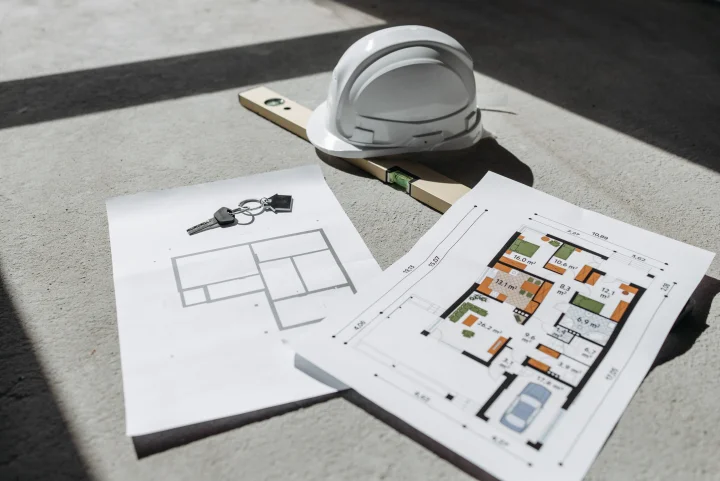
“How can I buy a house in Greece that is not built yet from abroad?”
That’s a very common question we receive from clients interested in buying an off-plan house.

Purchase Tips
05.11.2025
When selling a property in Greece, utilities need to be properly handled before and after the transfer of ownership. For foreign sellers in particular, understanding how the process works and starting early, helps avoid last-minute complications. This guide covers the main utilities involved and what to expect from each.
Public utilities and the associated bills can be transferred to the new owner's name as soon as the notary purchase deed is signed. This means the transfer happens at the point of legal ownership change, not before. Until that point, utilities remain in the seller's name and the seller is responsible for all associated bills.
This has a practical implication: keeping essential utilities active until completion makes sense. Properties with working electricity, water, and internet allow buyers to properly assess systems during inspections, and avoid the need for new connection applications which can add time and cost to the process.
Electricity in Greece is supplied through the national grid operator DEDDIE, with supply purchased from various private providers. The main provider is DEI, the Public Power Company, though alternatives include Watt + Volt, Heron, Elpedison, Volton, Zenith, and Protergia.
Once the notary purchase deed is signed, the buyer can transfer the electricity contract to their name. They will need their AFM, proof of identity, the purchase contract, and a recent electricity bill or the service number on the meter. In some cases, a certificate from a licensed electrical installer may be required if the previous certificate was submitted to DEI more than 14 years ago.
As the seller, ensure that all electricity bills are paid up to date before completion. Outstanding debts on utility accounts can create complications during the transfer process.
Water supply in Greece is managed by local municipal providers. The two largest are EYDAP for Athens and EYATH for Thessaloniki, though each municipality has its own office and procedures.
Water bills transfer to the new owner after the notary deed is signed, following the same process as electricity. The buyer will need their AFM, proof of identity, the purchase deed, and the water connection serial number. As with electricity, ensure there are no unpaid water bills before completion, buyers are advised to check for outstanding debts from previous owners when applying for a new connection.
In rural areas, properties may have separate connections for drinking water and irrigation water, which is worth clarifying for prospective buyers.
Internet and telephone services do not transfer automatically, they are personal contracts that need to be cancelled or transferred separately. Main providers in Greece include Cosmote, Vodafone, Nova, and Inalan. You will need to contact your provider directly to notify them of the ownership change and arrange either cancellation or transfer.
For properties in remote or island locations where standard landline or fibre connections are limited, Starlink satellite internet is now available in Greece, which may be relevant information to pass on to the incoming buyer.
Unlike utilities, property management and maintenance contracts, pool maintenance, gardening, cleaning, security, are personal service agreements that do not automatically transfer to the new owner. Review each contract for its termination or transfer terms and contact providers early in the selling process.
For sellers managing the process from outside Greece, coordinating utility transfers remotely can be challenging. Some utility companies, particularly water providers, may require an in-person visit or the involvement of an authorised representative. A lawyer or authorised representative can handle much of this process on your behalf, authorisation can be given via a notarial power of attorney or a simple authorisation with your signature validated through e-Gov services.
Keeping copies of all utility documents, final bills, and correspondence is strongly recommended. These records help resolve any disputes that may arise after completion.
Disclaimer: This content is for informational purposes only and does not constitute legal or tax advice. For matters specific to your situation, we recommend consulting a lawyer, accountant, or notary as appropriate.
03.09.2026
“How can I buy a house in Greece that is not built yet from abroad?”
That’s a very common question we receive from clients interested in buying an off-plan house.
28.08.2026
A power of attorney represents a crucial legal tool for international property buyers and sellers. This legal document grants another person the authority to act on your behalf in property transactions, eliminating the need for personal presence during the sale process. Whether you're a German retiree buying a holiday home in Crete or a Dutch family looking to sell your property in Corfu, a power of attorney allows you to complete a property sale whilst remaining in your home country.
10.08.2026
For many people, the idea of owning a home in Greece starts with a feeling. The sunny days, the sea, a slower pace of life. What often follows is a more practical question: “How does buying a house here actually work?”
For this very reason, we created the following guide so that you can have a clear overview of how the process of buying a house in Greece works.
07.08.2026
Buying a home in Greece from abroad raises a fair question. Can the paperwork be handled with a digital signature, so you never have to fly in to sign in person? For some documents, the answer is yes. For the ones that actually transfer ownership, it is not. A Greek purchase deed is signed before a notary, and that step cannot be done digitally. Therefore, digital signatures are accepted in Greece for private documents, such as certain agreements and declarations. They are not accepted for public documents. That includes the notarial purchase deed and the power of attorney. You cannot become the owner of a Greek property by signing a document digitally. The transfer is always completed before a notary, either with you present or through a power of attorney that was signed in person.
03.08.2026
If you plan to buy a home in Greece, you have probably given some thought to how you will pay for it. Depending on your home country, a mortgage may be one option. Getting a mortgage in Greece as a non-resident is not always straightforward, so it helps to understand how the process works before you begin. The general process is broadly similar from bank to bank, though the details differ and can change from year to year. Rates depend on the bank you approach and on your own profile. As a rule, non-resident buyers pay a little more than residents. The sections below walk through what to expect. You do not need to be a Greek resident to apply for a mortgage. Most Greek banks do apply stricter rules to people living abroad. For some banks, though not all, you will need to be a Greek taxpayer, meaning your tax residency must be in Greece to be eligible for a loan.
22.06.2026
Every home in Greece is now meant to have its own digital file. It is called the Electronic Building Identity, or E-ID (Ηλεκτρονική Ταυτότητα Κτιρίου). The Electronic Building Identity gathers the key facts about a property in one secure online record. It sets out the building's current condition, its permits and plans, and any changes made to it over the years. For anyone buying or selling a home in Greece, it has become one of the most important documents to understand. This guide explains what the E-ID is, what it contains, who prepares it, and why it matters at the moment a property changes hands.
10.06.2026
If you own a property in Greece and are thinking about selling, one of the first things on your mind is probably a practical one: what do I pay to the estate agent? It's a sensible question to ask early, and the answer shapes how you budget for the sale and what you can expect from the agency representing you.
10.06.2026
If you have bought or sold property in the Netherlands, Germany, the UK, or most other Western European countries, you are probably used to a clear setup: the seller has their agent, the buyer has theirs, and each represents their respective client. In Greece, things work differently, and it is very important to have a clear overview before you decide to move forward with a property transaction.

.jpg)