1. Limited Stops
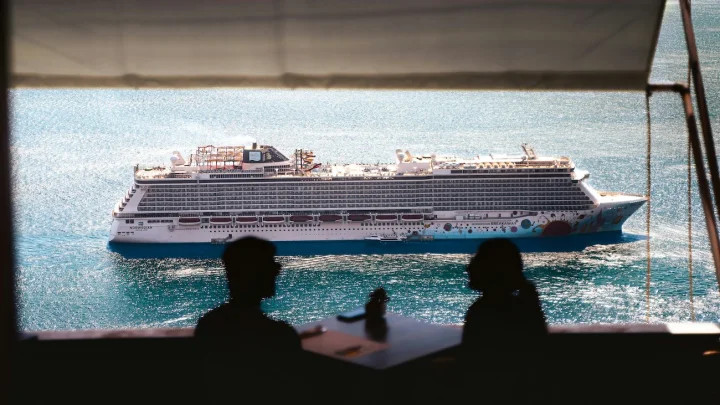
The largest cruise ships in Greece can only go into five ports in Greece that are deep enough - these are Mykonos, Patmos, Rhodes, Santorini, and Heraklion in Crete. That’s why the boats advertise being able to go to Mykonos and Santorini - because they literally can’t go anywhere else in the Cycladic islands.
2. Limited Time on Land
When traveling on a cruise ship, you only have a few hours on land. It’s not typically enough time to get a feel for the island and to meet the locals. A lot of the local charm cannot be experienced in this way.
3. Overcrowding
Because the largest cruise ships can only stop at certain islands, the local environment at these destinations gets impacted because of pollution and the large number of temporary visitors. To give you an idea of the large numbers of visitors, there were almost 686 cruise ships arriving in Santorini last year, and close to one million passengers in total. In Mykonos, 608 cruise ships visited, counting a grand total of 686,000 passengers. In order, the most popular ports for cruise ship arrivals are Santorini, Mykonos, Piraeus, Corfu, Rhodes, Heraklion, Patmos, and Katakolo.
4. Pollution
Last year, 218 cruise ships operated in Europe, and they emitted more than four times more sulfur oxides than all the continent’s cars combined, according to a study by the NGO Transport & Environment (T&E). A 2021 study of one big cruise ship found that the ship produced the same amount of nitrogen oxides (NOx) in one day as 30,000 trucks. Just look at the positive results in Venice, where cruise ships were banned. Because of a 2021 ban on large cruise ships, the city successfully reduced sulphur emissions by 80%.