In Greece, the holiday season does not end on New Year’s Day. Instead, it culminates in one of the most symbolic celebrations of the year: Epiphany, known in Greek as Theofania. More than a religious holiday, Epiphany in Greece represents the triumph of light over darkness, a spiritual “new beginning” for individuals and communities.
For anyone living in Greece, or dreaming of owning a home here, Epiphany offers one of the most authentic snapshots of local culture. From the blessing of the waters to ancient folk rituals, this day reveals the deep connection between the Greek people, nature, and tradition.
The Blessing of the Waters: A Dive for Good Luck
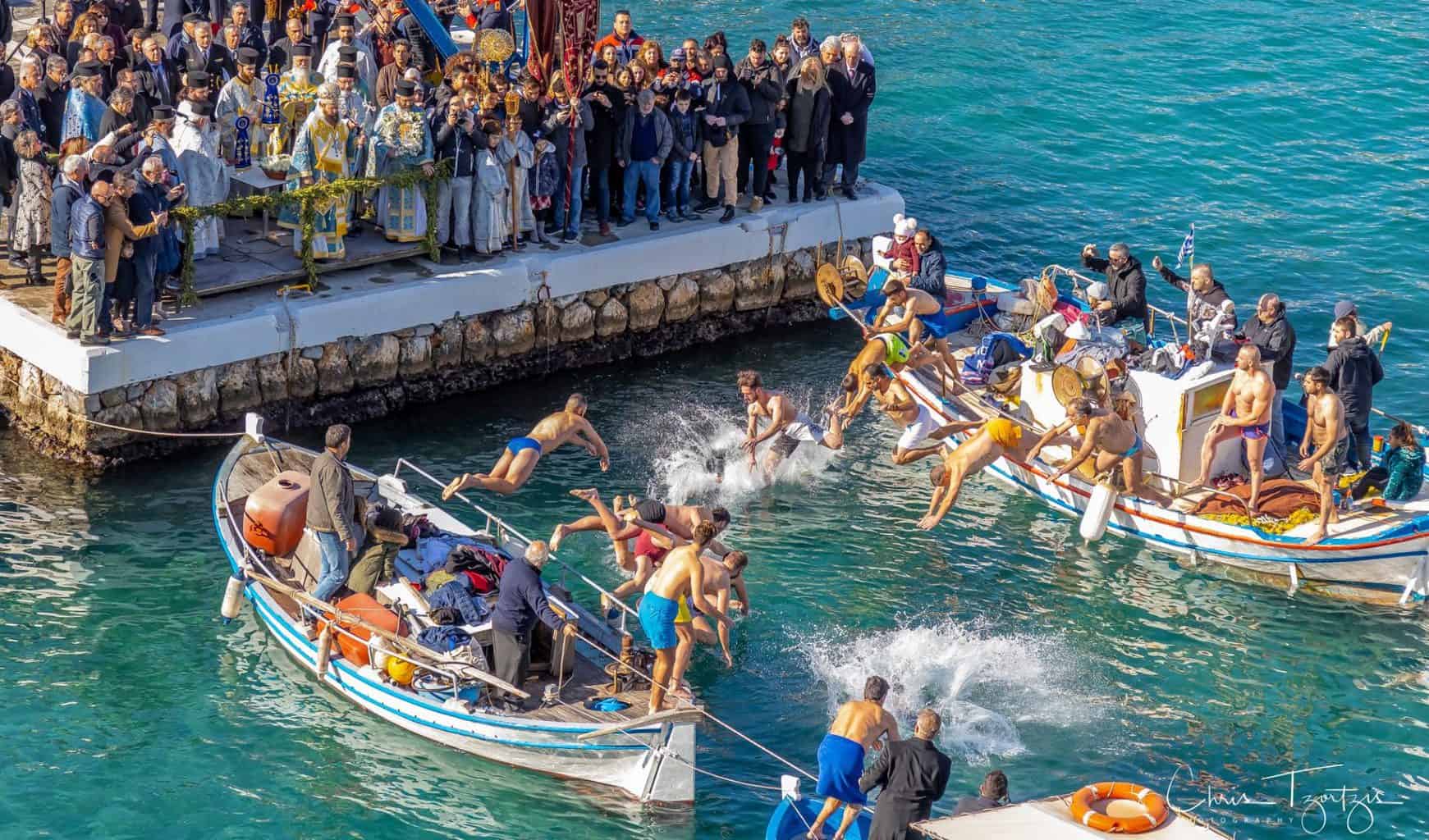
At the heart of Epiphany lies one of Greece’s most iconic customs: the Blessing of the Waters, followed by the dramatic cross dive.
Across seaside towns, lakeside villages, and rivers throughout the country, a priest throws a wooden cross into the water. Dozens of brave swimmers, typically young men, but today increasingly women as well, dive into the icy waters of January to retrieve it.
The one who emerges holding the cross is believed to receive health, protection, and good fortune for the entire year. Locals often say that the blessing extends not only to the diver but to their family, home, and community. This ritual takes place everywhere, from the harbours of the Greek islands to the rivers of mainland villages, creating a spectacle of unity and renewal. For newcomers and homeowners experiencing their first winter in Greece, watching the cross dive is unforgettable: a powerful reminder of the country’s strong traditions and community spirit.
This is the main event happening on the 6th of January every year. Now let’s dive into some of the more obscure Greek customs of the Epiphany.
Hermioni: “Yala–Yala” and the Festive Boats
In the coastal town of Hermioni, in the Peloponnese, Epiphany celebrations start the night before. Young men who are soon to join the army decorate boats with palm leaves. Visiting the homes of the village, they receive treats and blessings before gathering back on the boats to sing the traditional “Yala–Yala.”
On Epiphany morning, they dive from these same boats to retrieve the cross, blending naval tradition with local joy.
Northern Greece: Ancient Rituals, Drums and Masks
In Macedonia and Thrace, Epiphany is linked to Dionysian traditions that date back centuries. Some of the most famous include:
The “Arapides” of Drama
Men dress in heavy goat skins, tall horned masks, and ringing shepherd bells. Groups parade through villages, creating rhythmic noise meant to chase away evil spirits. Leaders simulate a ritual battle and resurrection, a symbolic victory of life over death.
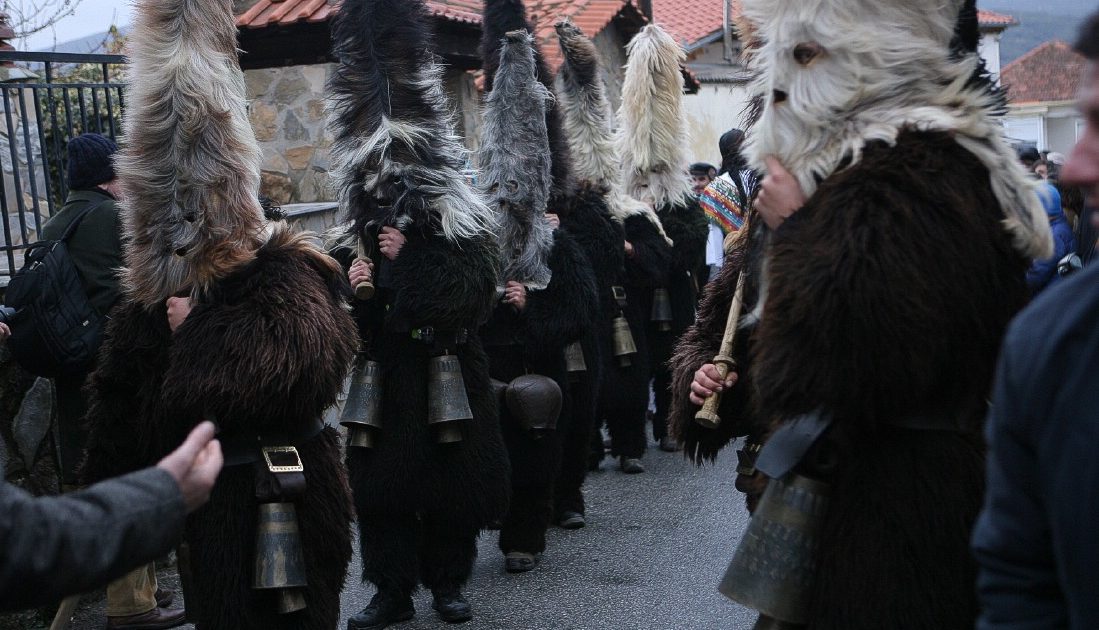
The “Bambougera” of Kali Vrysi
Goat-like figures with blackened faces dance through the streets, calling for fertility, renewal of the land, and good harvests.
The “Momogeroi”
A satirical folk drama performed in courtyards and village squares, featuring characters like the bride, the groom, and even the devil. These lively performances bring laughter and joy after the solemnity of winter.
Epiphany by the Sea: Symi, Kalymnos and the Islands
Island life gives Epiphany a special touch. In Symi and Kalymnos, two islands with deep maritime traditions, the cross dive is a major event. Divers not only race to retrieve the cross but also attempt to stay underwater as long as possible, while fishermen form a circle of boats around them for protection. The scene combines bravery, spirituality, and the islands’ inseparable connection to the sea.

Epiphany in Crete
Unique Local Customs Across Greece
Lefkada’s Sacred Oranges
Along with the cross, priests throw tied bundles of oranges into the sea. These blessed fruits are later hung near icons for protection.
Thessaly’s River Blessings
Villagers carry icons into the rivers, dipping them into the icy water for purification. Some even bless their fields with the holy water for an abundant harvest.
Kos and the “Marmarites”
Families bake thin pastries on heated marble slabs and serve them with honey and cinnamon, a sweet way to mark the end of the holiday season.
A Celebration of Light and Renewal
Epiphany in Greece blends Christian symbolism, ancient rituals, maritime traditions, and community gatherings. Whether in a mountain village or a seaside harbour, the holiday represents purification, hope and the promise of brighter days ahead.