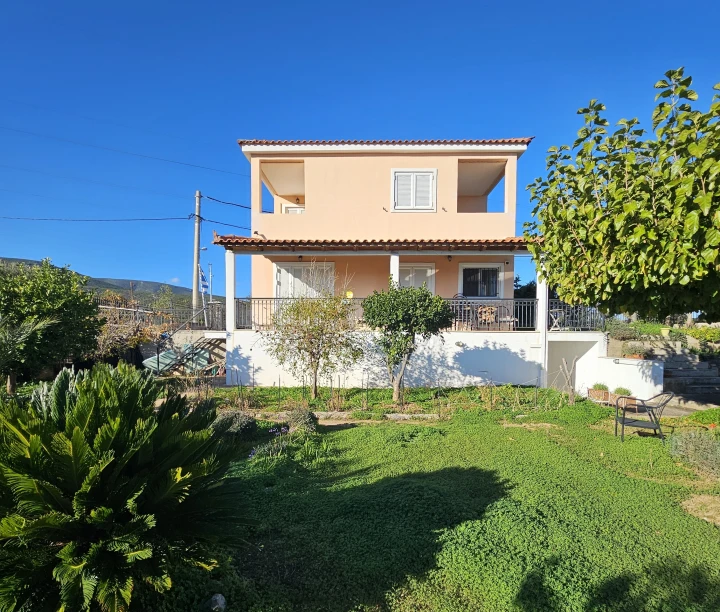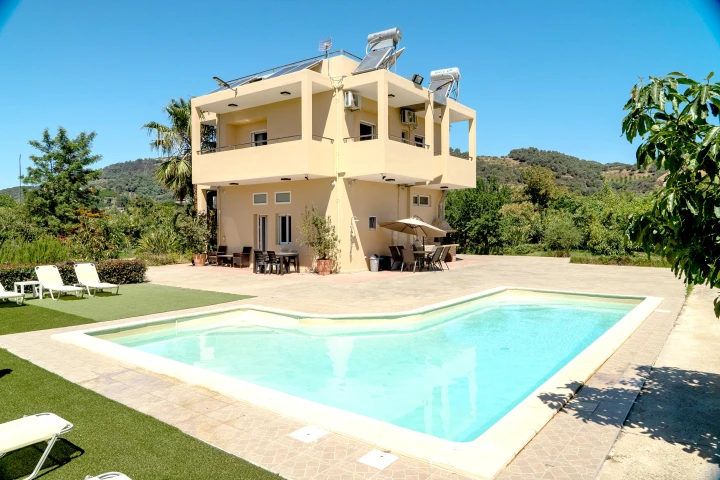
Seaview Villa in Kamilari
€ 850.000
Kamilari, Phaistos
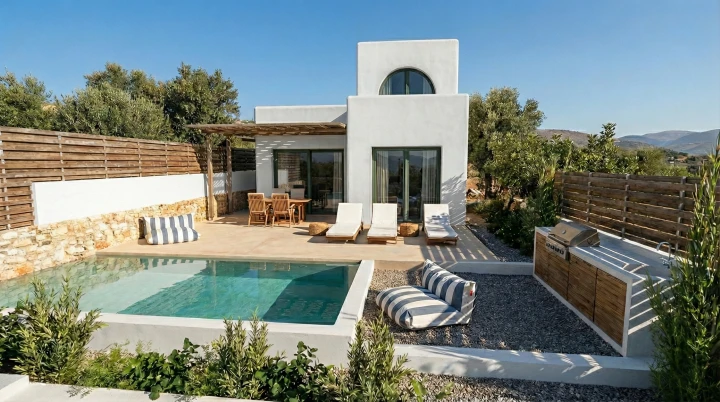
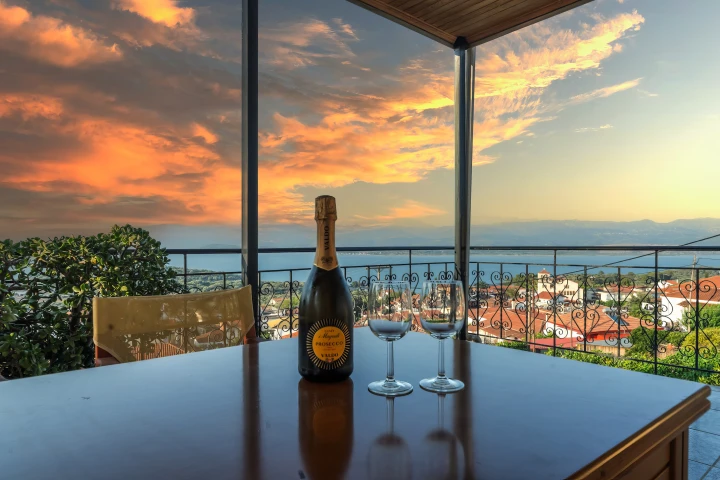
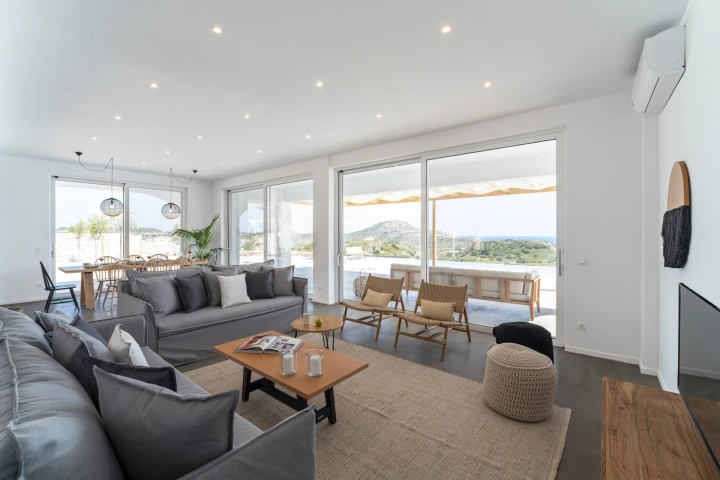
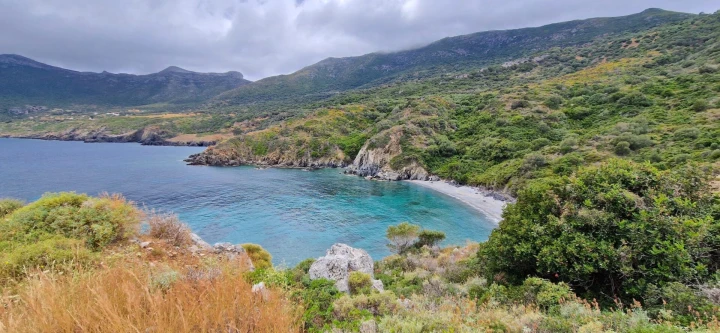
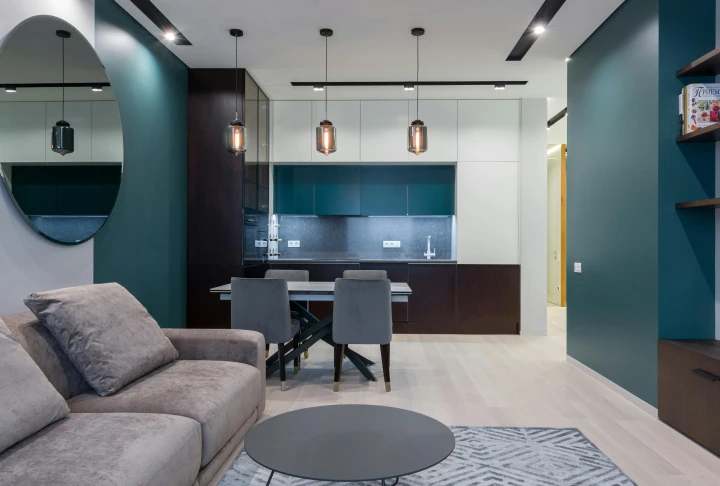
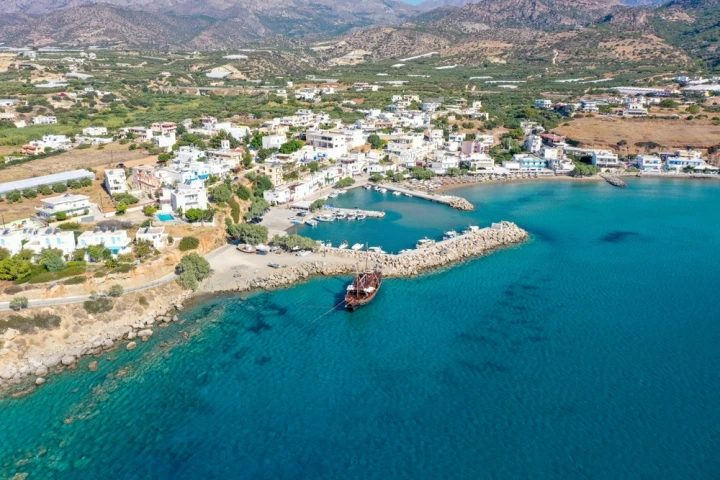
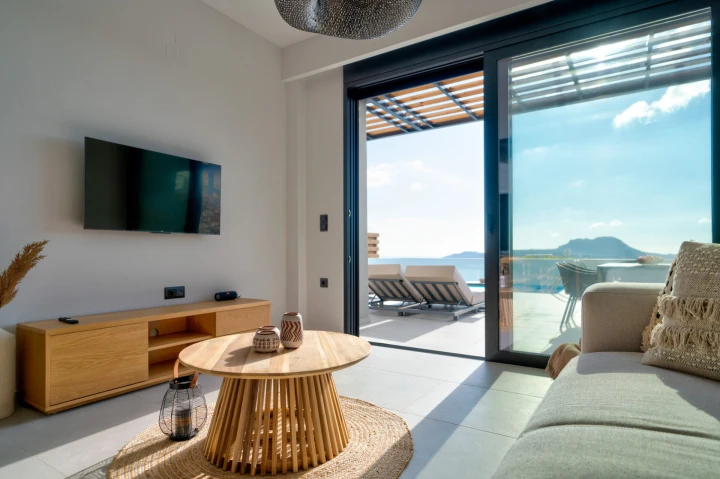
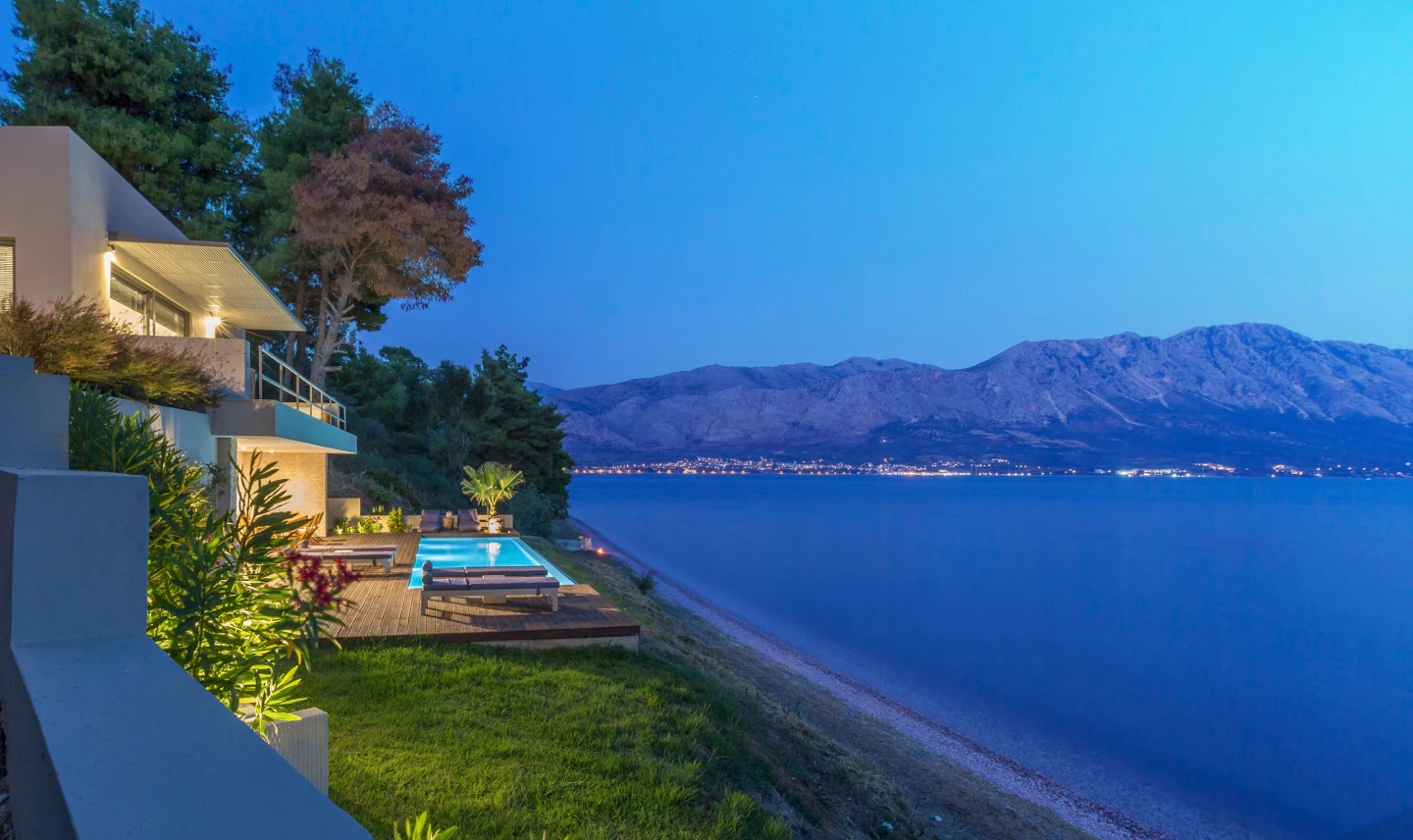
Modern 157 sqm villa in Kamilari with sea views, pool, and premium amenities. Offers strong rental potential near beaches and key attractions in South Crete.
2
2
157m2
 Sale
SaleElxis - At Home in Greece
35 Years Experience
Trusted by 5000+ Clients
In-House Legal Department
€ 850.000
Kamilari, Phaistos
2
2
157m2
€ 140.000
Asomatos, Rethymno
1
1
36.5m2
€ 950.000
Agios Gordios, Corfu
3
2
130m2
€ 460.000
Kyparissia, Messinia
5
3
193m2
€ 245.000
Sparto, Amfilochia
4
2
138m2
€ 230.000
Akti Nireos, Evia
2
2
127m2
€ 530.000
Agia, Chania
4
2
125m2
€ 590.000
Kato Chorafi, Alonnisos
3
2
127m2
Leading the market since 1991
Do you want to buy a home in Greece? At Elxis – At Home in Greece, we take you step by step through purchasing a house in Greece. Our team of experts can advise on your investment, helping you view properties, prepare the required documents, and negotiate the price. Do you want to buy a home in Greece? At Elxis – At Home in Greece, we take you step by step through purchasing a house in Greece.
31.03.2026
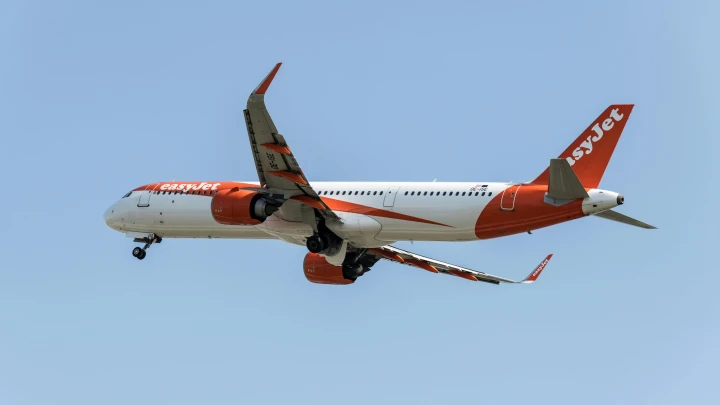
Thessaloniki’s airport is getting busier — in a good way — thanks to easyJet’s latest expansion, which adds two new international routes and strengthens the city’s growing role as a northern Greek travel hub.
On March 29, the first direct easyJet flight connecting Amsterdam and Thessaloniki touched down. Passengers arriving from the Dutch capital were greeted with a warm welcome from airport representatives and airline staff, a gesture that underscored the importance of this new connection for both tourism and business travel.
The Amsterdam–Thessaloniki route will operate twice weekly, every Wednesday and Sunday. It’s a schedule that seems tailor-made for long weekends — whether you’re a Dutch traveler craving Mediterranean sunshine or a Thessaloniki resident plotting a quick escape to canals, bicycles, and stroopwafels.
22.01.2026
Short-term rentals in Greece continue to show strong momentum, confirming the country’s position as one of Europe’s most dynamic accommodation markets. According to the latest Eurostat data, Greece recorded double-digit growth in guest overnight stays during 2025, outperforming most major EU tourism destinations.
Beyond national performance, regional data offers valuable insight into where demand is concentrated and where new opportunities are emerging.
19.03.2026
Spanning over 1700 km across the southern peninsula and connecting 12 major hiking routes, the Peloponnese Trails network is set to become the Largest Certified Hiking Trail Network in Greece, weaving together landscapes, heritage, and storytelling in a way that is both immersive and sustainable.
18.03.2026
Basements are a familiar feature of many homes across Greece. Traditionally used for storage, parking, or utility areas, these spaces are increasingly being reimagined—sometimes as guest rooms, independent apartments, or even stylish leisure areas. For anyone exploring property in Greece, it’s useful to understand how basements are defined and when they can legally function as living spaces. The rules are quite specific, but once explained clearly, they follow a logical structure.
16.03.2026
Crete and Syros have been named among the most worthwhile Greek island destinations for 2026, according to the international tourism platform Travel And Tour World, which recently published a list highlighting Greek islands that offer visitors a strong balance between quality and price.
The globally recognized tourism publication, widely read by travel professionals, tourism organizations, and travelers around the world, compiled the ranking based on research and travel data. The list focuses on destinations that combine authentic experiences, cultural richness, and natural beauty with relatively accessible prices.
13.03.2026
Greece is preparing to introduce a sweeping reform in the way property ownership and usage are recorded. Through the creation of the Μητρώο Ιδιοκτησίας και Διαχείρισης Ακινήτων (ΜΙΔΑ) — translated as the Property Ownership and Management Registry — authorities aim to create a comprehensive digital record of every property in the country.
The project is being developed by the Independent Authority for Public Revenue (Ανεξάρτητη Αρχή Δημοσίων Εσόδων - ΑΑΔΕ), in cooperation with the Ministry of National Economy and Finance. Its goal is to consolidate fragmented real estate information into a single platform and provide a clearer picture of property ownership and use across the country.
The new registry also featured prominently in discussions at the Property Owners’ Conference organised by the Panhellenic Federation of Property Owners (ΠΟΜΙΔΑ). The event brought together representatives of the government, local authorities, the Independent Authority for Public Revenue (ΑΑΔΕ), the Hellenic Cadastre, and property owners from across the country.
During the conference, the new registry was presented as one of the most significant reforms in the Greek real estate sector in recent years. Speaking at the event, Minister of National Economy and Finance, Kyriakos Pierrakakis, described the initiative as “the most systematic recording of the use of private real estate ever carried out in the country.” According to the minister, the registry will give the state a comprehensive digital overview of the country’s property stock and the way the real estate market actually functions.
03.03.2026
Kalamata is quietly stepping into a new chapter.
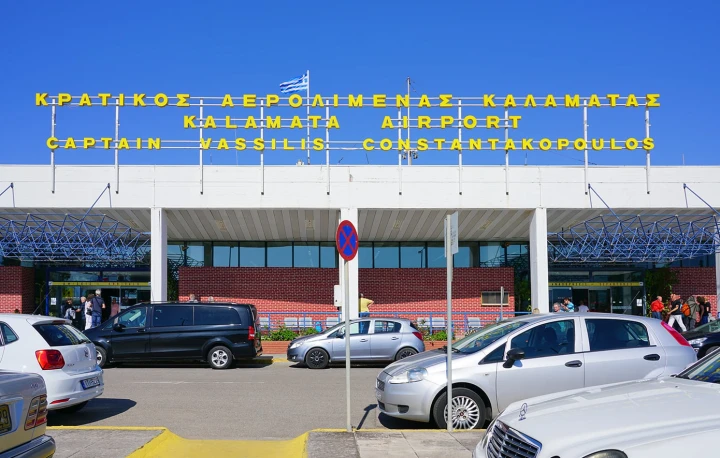
In 2026, Kalamata International Airport “Captain Vassilis Constantakopoulos” will connect the Peloponnese to 22 international destinations through 31 direct routes, significantly strengthening the region’s ties with key European markets. For a city long appreciated for its olive groves, relaxed pace, and coastal living, this expanded network signals something bigger: accessibility is no longer a seasonal privilege — it’s becoming a structural advantage.
The announcement follows a record year for inbound traffic. In 2025, the airport welcomed 169,730 international passengers, marking a 25.6 percent increase compared to 2023. This steady rise reflects consistent demand from core European source markets and growing confidence in Kalamata as a destination that delivers both lifestyle and substance.
27.02.2026
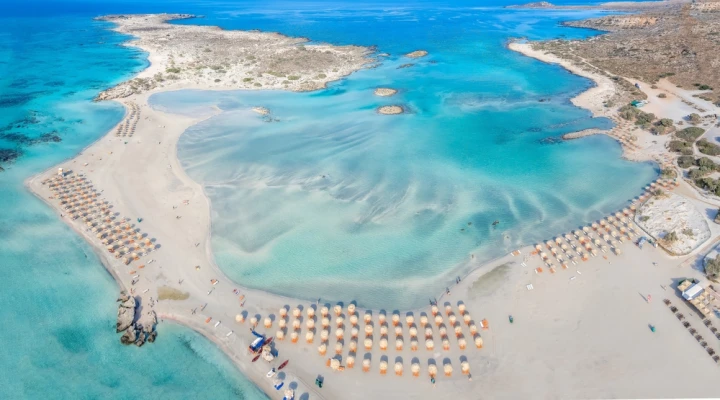
Five Greek beaches located in Crete, Corfu, and Rhodes have earned prestigious distinctions at the Tripadvisor 2026 Travellers’ Choice Awards, ranking among the best beaches in Europe and the world. Renowned for their crystal-clear waters, unique landscapes, and exceptional natural beauty, these destinations continue to strengthen Greece’s global reputation as a premier seaside escape.
The TripAdvisor Travellers’ Choice Awards are based on millions of reviews and ratings submitted by travelers worldwide over 12 months. The awards highlight travelers’ favorite destinations, hotels, restaurants, and experiences, offering valuable insights for those planning their next getaway.
In recent years there has been an increasing demand for real estate in Greece. There are many reasons that make Greece an ideal country for a second (or even first) home.
Climate
Greece has a typical Mediterranean climate, with mild winters and dry summers, and almost year-round sunshine (320 days a year). The warmest period is the end of July – beginning of August, with average temperatures between 29 and 35°C (84-95°F), but it is during this period that the annual north wind from the Aegean Sea causes pre-cooling.
Large variety in landscape
Greece has an enormous coastline, with 3000 islands, 138 of which are inhabited. They provide beautiful beaches, small bays, sun and sea. The Greek archipelago is a sailing paradise par excellence. A country full of history, myths and countless archaeological sites. But the great attraction of Greece remains of course the sun and the sea.
Good accessibility
Greece is the country with the most airports in Europe (more than 45). Every corner of the country can be reached daily, either directly with a charter flight or with a layover in Athens. By car, Greece is easily accessible via Italy; from several Italian harbours you can make the crossing by car with one of the many luxury ferries.
Juridical transparency
Greek law is partly based on German and French law. Property is sacred, as in the Netherlands and Belgium for example. The protection of property is seen as a fundamental right and is enshrined in the constitution. When legal procedures are completed with due care, the buyer is 100% owner, without restrictions, reservations or small print.
Small scale
Unlike countries such as Spain and Turkey, Greek law prohibits the construction of mega-projects. Thus, outside the village limits, a maximum of 200 sqm can be built on a plot of at least 4,000 sqm. The house to be built may then not be higher than 7.5 meters. These strict building regulations – in combination with the landscape – have ensured that no projects with hundreds of houses can be found in Greece.
The strongest selling point for Greece may not be directly measurable, but therefore no less perceptible. Ask the average visitor in Greece this question and you will always receive the same answer: the Greek hospitality. Together with all the above, more rational arguments, Greece is for many the ideal country to buy a second home, on the gorgeous mainland or one of the many beautiful islands, overlooking the infinite azure blue Greek sea.
For complete list of benefits to having a home in Greece, see our complete guide here.
Legal guidance from start to finish
Almost 30 years of experience in the field of Greek real estate: excellent knowledge
Your point of contact in English, Dutch or German
English (and Native Dutch)-speaking Greek lawyers at your service
We take care of the application for a Greek tax number, we help with the opening of a Greek bank account etc.
We take care of the entire settlement of the sale: cadastral survey, notarial transfer, registration in the land register
Advice on legal, fiscal and practical matters
As a foreigner without much insight into the local market, it is advisable to resort to the services of a real estate agent.
Various types of real estate agents are active in Greece.
The large brokerage firms mainly located in Athens and dealing with the upper part of the market.
The small ‘traditional’ Greek real estate agents, often very capable but not always service-oriented offices that sometimes want to get the deal done too quickly.
Brokerage offices in the more touristy areas working mainly with Western European clients. It is necessary to inquire locally about the reputation and service of the real estate agent.
The intermediary agencies in the buyer’s home country, specializing in Greece. Elxis has been doing this work since 1991, to the great satisfaction of dozens of customers each year. The advantage of this is that you have your point of contact and get answers to your questions in English and can discuss everything with our experienced brokers and legal experts.
You must sign a clear written agreement with an authorized broker, stating the agreed brokerage fee, in a language you understand. Never sign anything in Greek if you do not know exactly what it says.
The brokerage fee is freely negotiable; for most Greek real estate agents it varies between 2% and 4%.
When the seller and buyer have agreed on the purchase price, the seller must transfer the title (deed of purchase, deed of gift or inheritance etc.) of the property to the buyer. The buyer should hire a lawyer, preferably one with whom he can communicate in a language he understands, and hand him the title deeds so that he can check their authenticity with a competent mortgage register.
The examination of the title deeds is essential and must be carried out with due care. After all, it is the legal foundation of your home. The examination includes a check of the legitimacy of the titles and the existence of any liens on the property with the competent mortgage registry. This examination must cover a period of at least 20 years (due to prescription periods). Moreover any possible preexisting liens should also be checked and, finally, the search will also tell the buyer if there are any claims on the property by third parties.
After the title deeds have been checked and found to be in order, a notary is appointed by the buyer. Based on the existing title deed and the details of the contracting parties (for the buyer, the details of the proof of identity and a Greek tax number are sufficient), the notary draws up a draft deed of purchase and calculates the amount of taxes and other costs. The buyer (or his lawyer) pays the taxes before the deed is executed and submits a proof of payment to the notary, which is attached to the deed.
After signing the deed, the notary hands over a copy of the deed to the buyer’s lawyer. The latter then ensures that this copy is filed (‘transferred’) with the mortgage register. From this moment, i.e. as soon as the deed is entered in the public registers held by the local mortgage register, the purchaser is also formally the legal owner of the property.
Elxis has proven its value in this field for more than 30 years. The legal foundations of a house are just as important, if not more important than its actual foundations. We understand very well that our clients often entrust all their money to us to realize their dream home in Greece. And we don’t take that lightly. Should something even remotely suspicious crop up in our investigation of the ownership titles, we’d rather see this transaction fall through then opt for a ‘quick buck’. As a result the ties we build with the vast majority of our clients extends to more than a purely business relationship. Our clients are always welcome to consult us for any matter even years after they make their purchase. For them it might be a new matter, for us it’s daily practice.
Learn more about every step of the buying process in our complete guide.
Yes. The tax number (AFM) is mandatory for all (legal) persons who want to buy real estate in Greece, regardless of nationality.
The procedure for obtaining it is quite simple. A tax number is issued free of charge by the tax authorities on presentation of a valid identity document and after completing a special application form.
If you have given us a power of attorney we can apply for the tax number on your behalf.
Read more Greek Tax Numbers in our Complete Guide.
Property tax was introduced in Greece a few years ago and is calculated based on the size of the house and the plot.
For houses, this tax is calculated based on the size and location of the house and the plot the house stands on. For most (vacation) homes this tax is 3 to 4 euros per square meter built (for a house of about 100 sqm you thus pay 300 to 400 euros in annual property tax). The annual assessment for this tax (ENFIA is the Greek abbreviation) can be downloaded online from the website of the Greek tax authorities. You must have a username and password, which must be requested from the tax authorities. The representative who arranges your tax affairs in Greece (usually an accountant) will have these login details or can request them for you.
Find a complete guide to taxes on homes in Greece here.