
03.09.2026
Buying an Off-Plan House in Greece from Abroad Explained
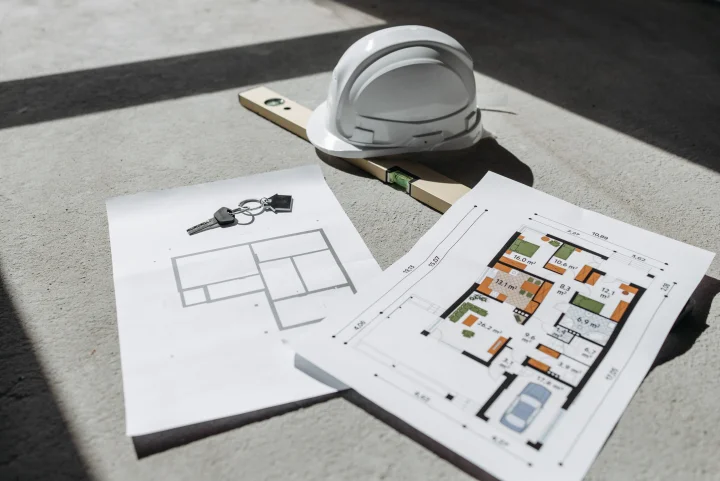
“How can I buy a house in Greece that is not built yet from abroad?”
That’s a very common question we receive from clients interested in buying an off-plan house.

Purchase Tips
09.11.2025
When the time comes to sell your holiday home in Greece, the first real task is working out what it is worth. Perhaps you are downsizing, simplifying life after retirement, or visiting the property less than you used to. Whatever the reason, an accurate valuation is what stands between a smooth, well-priced sale and months of uncertainty. The Greek market has its own character. Coastal and island prices move with the seasons, and tourism, the wider economy, and local development all play a part. A good valuation takes this into account, helps you price competitively, and gives you confidence through what is often a cross-border sale. This guide sets out eight ways to value a Greek holiday home, from a formal appraisal to a local agent's read on the market.
The right approach depends on why you need the figure: a sale, refinancing, or simply a market update for your records. Each has different requirements. Coastal properties, especially in popular spots like Crete, Corfu, and Lefkada, swing with the seasons in ways some methods do not fully capture. Getting the value right from the start matters, too. Overpricing leaves a property sitting on the market, while underpricing leaves money behind, and repeated price cuts can unsettle buyers.
A comparative market analysis looks at recently sold properties similar to yours. It focuses on location and the seasonal swings that matter for Greek coastal homes. Look for properties near yours that sold in the past six to twelve months. Pay attention to proximity to beaches, local amenities, and transport links, as these strongly affect holiday home values on the islands and coast. The difficulty is finding truly comparable properties, since many Greek holiday homes have unique features or locations. Some sales data is also not easy to find or fully transparent, so local market knowledge helps you read it correctly.
A licensed Greek valuer gives the most thorough and legally recognised valuation. These professionals know the local market and follow standard methods that meet bank and legal requirements. The process usually involves a physical inspection, an analysis of local conditions, and a detailed report. You will need to provide documents such as the property deeds, building permits, and any recent renovation records. Certified valuers have access to databases and market intelligence that owners do not. Their reports carry weight with banks, lawyers, and serious buyers, which makes this method important for formal transactions or when you need financing.
Online tools and automated models offer quick preliminary estimates, drawing on available market data, the property's characteristics, and its location. Their accuracy is limited, though, especially for unusual homes or properties in less populated areas. The models may miss features like sea views, private beach access, or recent high-end renovations. Use online tools as a starting point and a way to track the market over time, then confirm with a more detailed method before making decisions.
Location is the main driver. Direct beach access, panoramic sea views, or proximity to popular attractions all command a premium, and the specific island or region matters too, with established destinations tending to hold their value. Condition and recent renovations have a big effect. Modern kitchens, updated bathrooms, and contemporary fittings appeal to buyers who want a move-in-ready home. Outdoor space such as terraces, gardens, and a private pool is especially valuable in the Greek climate. Size and layout matter beyond floor area alone. Open-plan designs, several bedrooms for rental potential, and practical points like storage and parking all shape buyer appeal and the final figure.
The Greek tax authority (AADE) keeps an objective (tax-assessed) value for every property, used as the basis for property tax and transfer duties. These objective values tend to lag well behind actual market prices. This matters for a sale, because taxes and fees are charged on the higher of the objective value or the sale price. In desirable coastal areas, the market value usually sits well above the objective value, so it is the market price that drives the costs. Know both figures, budget on that basis, and report the sale correctly.
The income approach values a property on its rental potential, which suits holiday homes that earn seasonal income. It weighs occupancy, average nightly rates, and running costs to estimate the property's value as an investment. Seasonality means yields can vary a lot through the year. Peak summer in a popular spot may bring in strong income, while the off-season can be very quiet. Factor in running costs too, including management, maintenance, utilities, and local taxes. Different destinations offer different yields, with some islands earning more thanks to limited accommodation.
This method values the land plus the cost of rebuilding, which makes it useful for custom-built homes or properties with unusual features. It works well for recently renovated homes where the construction costs are known. It calls for an accurate read of both land values and current building costs in Greece. Unique features such as an infinity pool, custom stonework, or premium materials need valuing for both their cost and their appeal to buyers. It is less useful for older properties, where build costs may not reflect current tastes, or where the land is the larger part of the value.
Experienced Greek agents offer practical insight from dealing with buyers and sellers every day. Their networks and feel for current conditions add a perspective that formal methods can miss. Choose an agent with a track record in holiday home sales, as they understand this part of the market. They can advise on buyer preferences, seasonal timing, and pricing. Bear in mind that agents have an interest in winning listings, which can colour their valuation. Treat their view as one input among several, rather than the whole answer.
The best method depends on your situation, the property, and your timeline. For a formal sale or financing, a professional appraisal gives the credibility and documentation you need. If you are just exploring, a comparative market analysis alongside online tools may be enough to start. Think about what makes your property distinctive. A standard holiday home may suit a comparative analysis, while a unique or recently renovated property may call for a professional appraisal or the replacement cost method. How quickly you need to sell matters too. Getting the valuation right sets the foundation for a successful sale. Whether you use one method or combine several, the key is understanding what your property offers today and pricing it accordingly. We have been guiding international property buyers to find their ideal home in Greece since 1991, and we are happy to help you through the whole process, from valuation to final sale. Contact us to discuss your situation.
Disclaimer: This content is for informational purposes only and does not constitute legal or tax advice. For any issues relating to a specific case, we strongly recommend consulting a lawyer, accountant, or notary, depending on your needs.
03.09.2026
“How can I buy a house in Greece that is not built yet from abroad?”
That’s a very common question we receive from clients interested in buying an off-plan house.
28.08.2026
A power of attorney represents a crucial legal tool for international property buyers and sellers. This legal document grants another person the authority to act on your behalf in property transactions, eliminating the need for personal presence during the sale process. Whether you're a German retiree buying a holiday home in Crete or a Dutch family looking to sell your property in Corfu, a power of attorney allows you to complete a property sale whilst remaining in your home country.
10.08.2026
For many people, the idea of owning a home in Greece starts with a feeling. The sunny days, the sea, a slower pace of life. What often follows is a more practical question: “How does buying a house here actually work?”
For this very reason, we created the following guide so that you can have a clear overview of how the process of buying a house in Greece works.
07.08.2026
Buying a home in Greece from abroad raises a fair question. Can the paperwork be handled with a digital signature, so you never have to fly in to sign in person? For some documents, the answer is yes. For the ones that actually transfer ownership, it is not. A Greek purchase deed is signed before a notary, and that step cannot be done digitally. Therefore, digital signatures are accepted in Greece for private documents, such as certain agreements and declarations. They are not accepted for public documents. That includes the notarial purchase deed and the power of attorney. You cannot become the owner of a Greek property by signing a document digitally. The transfer is always completed before a notary, either with you present or through a power of attorney that was signed in person.
03.08.2026
If you plan to buy a home in Greece, you have probably given some thought to how you will pay for it. Depending on your home country, a mortgage may be one option. Getting a mortgage in Greece as a non-resident is not always straightforward, so it helps to understand how the process works before you begin. The general process is broadly similar from bank to bank, though the details differ and can change from year to year. Rates depend on the bank you approach and on your own profile. As a rule, non-resident buyers pay a little more than residents. The sections below walk through what to expect. You do not need to be a Greek resident to apply for a mortgage. Most Greek banks do apply stricter rules to people living abroad. For some banks, though not all, you will need to be a Greek taxpayer, meaning your tax residency must be in Greece to be eligible for a loan.
22.06.2026
Every home in Greece is now meant to have its own digital file. It is called the Electronic Building Identity, or E-ID (Ηλεκτρονική Ταυτότητα Κτιρίου). The Electronic Building Identity gathers the key facts about a property in one secure online record. It sets out the building's current condition, its permits and plans, and any changes made to it over the years. For anyone buying or selling a home in Greece, it has become one of the most important documents to understand. This guide explains what the E-ID is, what it contains, who prepares it, and why it matters at the moment a property changes hands.
10.06.2026
If you own a property in Greece and are thinking about selling, one of the first things on your mind is probably a practical one: what do I pay to the estate agent? It's a sensible question to ask early, and the answer shapes how you budget for the sale and what you can expect from the agency representing you.
10.06.2026
If you have bought or sold property in the Netherlands, Germany, the UK, or most other Western European countries, you are probably used to a clear setup: the seller has their agent, the buyer has theirs, and each represents their respective client. In Greece, things work differently, and it is very important to have a clear overview before you decide to move forward with a property transaction.

.jpg)