.jpg)
.jpg)
03.09.2026
Buying an Off-Plan House in Greece from Abroad Explained
“How can I buy a house in Greece that is not built yet from abroad?”
That’s a very common question we receive from clients interested in buying an off-plan house.

Purchase Tips
01.07.2025
Buying property in Greece as a foreign buyer involves a set of questions that go beyond what you might ask in your home country. The legal framework is different, the costs are structured differently, and there are specific programmes and compliance requirements that can significantly affect your decision. This guide covers the most important questions to ask, ones that will help you understand the full picture before making a commitment.
This is one of the most important questions to ask early. As a general rule, buyers should budget approximately 10% of the purchase price to cover one-off transaction costs. These include:
Transfer tax: 3.09%* of the purchase price or the government-determined objective value, whichever is higher
Notary fees: approximately 2% of the property value
Land registry fees: approximately 0.5%
Lawyer's fees: 1-2% plus VAT
Real estate agent commission: 2-4% plus VAT, if applicable
*Important update: The Greek Prime Minister, Kyriakos Mitsotakis, has announced that the property transfer tax for purchases by non-EU citizens is set to rise to 15%, with the change expected to apply from 1 January 2027. The implementing legislation has not yet been published, so the final scope, including how it may treat plots of land and commercial property, is not yet confirmed.
Beyond the purchase, ongoing costs include annual ENFIA property tax, utilities (electricity, gas, and water typically run €150-300 per month for an apartment of around 80 sqm), and maintenance. For properties with a pool and garden, monthly maintenance typically ranges from €150-350. Annual upkeep, painting, minor repairs, and care of exterior woodwork, can range from €1,000 to €4,000 per year depending on the size, age, and location of the property.
If residency is part of your motivation for buying, ask this question directly. Not all properties qualify, and the thresholds vary significantly by location.
The current minimum investment requirements are:
€800,000 for properties in Athens, Thessaloniki, Mykonos, Santorini, and islands with a population above 3,100
€400,000 for all other areas of Greece
€250,000 for special categories such as listed buildings or commercial-to-residential conversions
It is also important to know that Golden Visa properties cannot be used for short-term rentals. If rental income is part of your plan, this restriction is a significant consideration. Processing times depend on the workload of the relevant authorities and can vary accordingly.
Before any deposit is paid or preliminary agreement signed, ask what is known about the property's legal status. This covers several distinct areas:
Title and ownership: Is the title clear? Are there any mortgages, liens, debts, or third-party claims on the property? Has the ownership history been checked at the Land Registry?
Building permits and compliance: Does the property have a valid building permit, and does its current physical condition match the approved plans? Many Greek properties have accumulated modifications over the decades, enclosed balconies, extended floor areas, changes of use, that may not be reflected in the original permit. These need to be identified and assessed before purchase.
Regularisation status: Unauthorised constructions completed before July 27, 2011 may be eligible for regularisation under Greek law, with a current deadline of 31 March 2028. Constructions after that date are generally subject to demolition. Understanding which category applies to any irregularities on the property is essential.
Electronic Building Identity: Before any transfer can proceed, the seller must have a certified engineer prepare the Electronic Building Identity, a comprehensive digital file containing the property's legal, technical, and planning data. Ask whether this has been prepared, and if not, at what stage it will be.
If you plan to rent out the property, ask specifically about its rental history and realistic income potential. Key factors include proximity to the sea, sea views, number of bedrooms, outdoor amenities such as pools and terraces, accessibility from airports, and the quality of local tourist infrastructure.
All short-term rental properties in Greece must be registered and hold a Property Registration Number (AMA). New regulations effective from October 2025 require short-term rental properties to meet specific safety and quality standards, including liability insurance, fire safety measures, and electrical compliance. Non-compliance carries fines of €5,000 to €20,000.
Rental income is subject to progressive tax rates: up to €12,000 at 15%, €12,001 to €24,000 at 25% (from 2026), €24,001 to €36,000 at 35%, and above €36,000 at 45%.
Rental management companies typically charge commissions of 10-30% depending on the services included.
Ask specifically about utility connections, water, electricity, and internet, particularly for rural or island properties where these are not always guaranteed. Road quality and accessibility matter especially for mountain or coastal properties that may have seasonal access limitations.
Proximity to everyday services, shops, healthcare, restaurants, affects both liveability and rental appeal. Buyers who plan to spend extended time at the property rather than just holiday periods will find year-round service availability particularly relevant.
Disclaimer: This content is for informational purposes only and does not constitute legal or tax advice. For matters specific to your situation, we recommend consulting a lawyer, accountant, or notary as appropriate.
03.09.2026
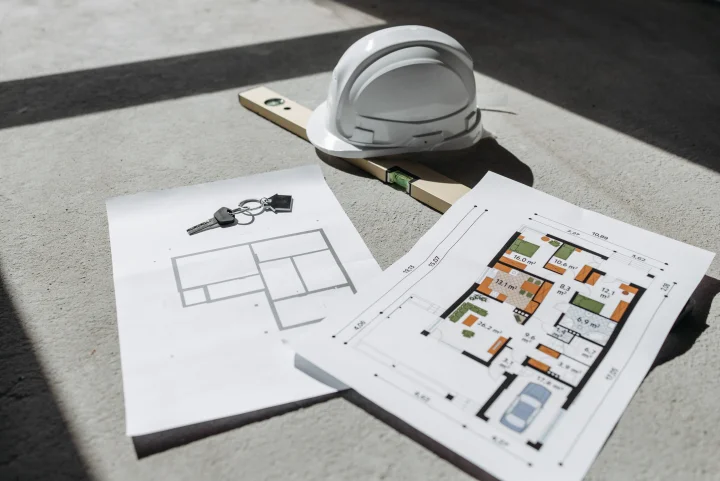
“How can I buy a house in Greece that is not built yet from abroad?”
That’s a very common question we receive from clients interested in buying an off-plan house.
28.08.2026
A power of attorney represents a crucial legal tool for international property buyers and sellers. This legal document grants another person the authority to act on your behalf in property transactions, eliminating the need for personal presence during the sale process. Whether you're a German retiree buying a holiday home in Crete or a Dutch family looking to sell your property in Corfu, a power of attorney allows you to complete a property sale whilst remaining in your home country.
10.08.2026
For many people, the idea of owning a home in Greece starts with a feeling. The sunny days, the sea, a slower pace of life. What often follows is a more practical question: “How does buying a house here actually work?”
For this very reason, we created the following guide so that you can have a clear overview of how the process of buying a house in Greece works.
07.08.2026
Buying a home in Greece from abroad raises a fair question. Can the paperwork be handled with a digital signature, so you never have to fly in to sign in person? For some documents, the answer is yes. For the ones that actually transfer ownership, it is not. A Greek purchase deed is signed before a notary, and that step cannot be done digitally. Therefore, digital signatures are accepted in Greece for private documents, such as certain agreements and declarations. They are not accepted for public documents. That includes the notarial purchase deed and the power of attorney. You cannot become the owner of a Greek property by signing a document digitally. The transfer is always completed before a notary, either with you present or through a power of attorney that was signed in person.
03.08.2026
If you plan to buy a home in Greece, you have probably given some thought to how you will pay for it. Depending on your home country, a mortgage may be one option. Getting a mortgage in Greece as a non-resident is not always straightforward, so it helps to understand how the process works before you begin. The general process is broadly similar from bank to bank, though the details differ and can change from year to year. Rates depend on the bank you approach and on your own profile. As a rule, non-resident buyers pay a little more than residents. The sections below walk through what to expect. You do not need to be a Greek resident to apply for a mortgage. Most Greek banks do apply stricter rules to people living abroad. For some banks, though not all, you will need to be a Greek taxpayer, meaning your tax residency must be in Greece to be eligible for a loan.
22.06.2026
Every home in Greece is now meant to have its own digital file. It is called the Electronic Building Identity, or E-ID (Ηλεκτρονική Ταυτότητα Κτιρίου). The Electronic Building Identity gathers the key facts about a property in one secure online record. It sets out the building's current condition, its permits and plans, and any changes made to it over the years. For anyone buying or selling a home in Greece, it has become one of the most important documents to understand. This guide explains what the E-ID is, what it contains, who prepares it, and why it matters at the moment a property changes hands.
10.06.2026
If you own a property in Greece and are thinking about selling, one of the first things on your mind is probably a practical one: what do I pay to the estate agent? It's a sensible question to ask early, and the answer shapes how you budget for the sale and what you can expect from the agency representing you.
10.06.2026
If you have bought or sold property in the Netherlands, Germany, the UK, or most other Western European countries, you are probably used to a clear setup: the seller has their agent, the buyer has theirs, and each represents their respective client. In Greece, things work differently, and it is very important to have a clear overview before you decide to move forward with a property transaction.

.jpg)