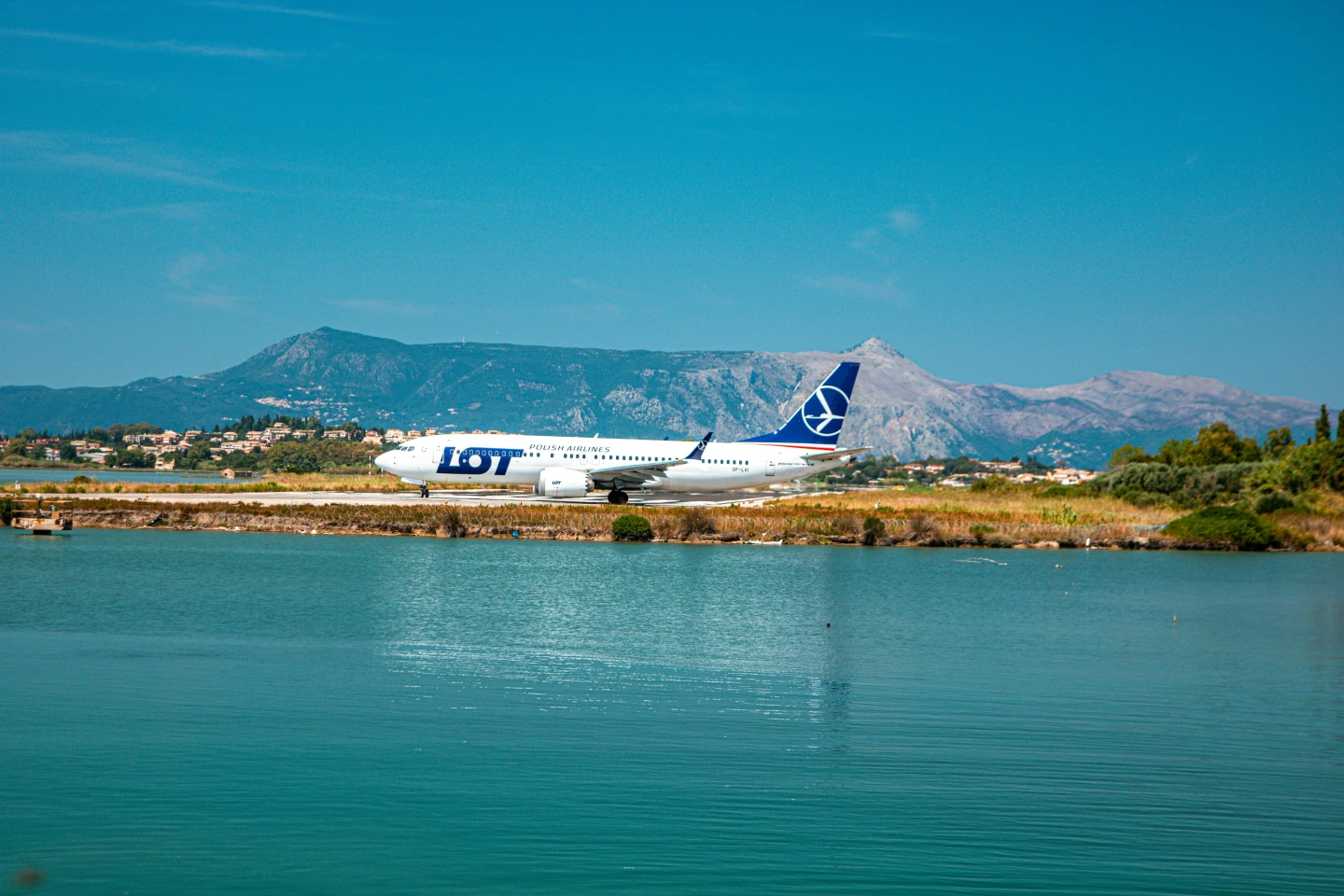
When people think about buying property in Greece, they usually focus on location, views, lifestyle, and price. One factor that often gets overlooked, until it suddenly matters, is air connectivity.
How easy is it to reach your home? How long does the season last? Can friends, family, or renters get there without complicated travel?
In 2025, Greece reached a major milestone that answers all these questions in a very positive way: air traffic fully recovered to pre-pandemic levels, placing the country among Europe’s strongest aviation and tourism markets. And the outlook for 2026 suggests that this momentum is not slowing down.
For property buyers, this is a clear signal of long-term demand, accessibility, and value. In a previous article, which you can find here, we highlighted the improvements in air connectivity across Greece.
2025: Greece Back at Full Strength
550 flights per day, including both arrivals and departures.
This represented:
– A 4% increase compared to 2024
– A 23% increase compared to 2019
Southern European countries benefited the most from tourism-driven demand, and Greece stood out as one of the strongest performers.
For property buyers, this confirms something important: demand for Greece is not seasonal hype, it’s structurally strong.
Athens Airport Enters Europe’s Top 10
One of the most significant developments in 2025 was Athens International Airport entering the list of Europe’s ten busiest airports for the first time.
In 2025, Athens Airport:
– Handled 34 million passengers, an all-time record
– Recorded 6.7% passenger growth year-on-year
– Managed nearly 284,000 flights
Strong Growth at Greece’s Regional Airports
Beyond Athens, Greece’s regional airports also saw strong performance in 2025.
Across the 14 regional airports operated by Fraport Greece:
– 37.1 million passengers travelled in 2025
– Passenger traffic increased by 3% compared to 2024
– Total flight activity rose by 2.5%
Several destinations stood out:
– Thessaloniki recorded over 8% growth, nearing 8 million passengers
– Rhodes surpassed 7 million passengers, continuing steady expansion
– Corfu, Kefalonia, Skiathos, Aktion and Kavala all welcomed more travellers
These trends highlight the growing appeal of destinations beyond the traditional hotspots, especially islands and regions offering strong infrastructure and accessibility.
A More Balanced Tourism Map
Not all destinations followed the same pattern.
In 2025:
– Mykonos saw a slight decline in passenger numbers
– Santorini recorded a more notable drop, influenced by overcrowding concerns and seismic activity early in the year
This reflects a broader trend: demand is spreading out, with travellers looking beyond the most saturated destinations.
International Markets Driving Demand
Greece’s strongest inbound markets in 2025 included:
– United Kingdom
– Germany
– Italy
– Poland
– The Netherlands
Interest also remained strong from France, Austria, Scandinavia, Israel, and Central Europe. This diversity is important as it reduces reliance on a single market and provide longer tourism seasons.
What’s Coming in 2026: Even Better Connectivity
Looking ahead, early indicators for 2026 are very positive. Early bookings from key markets such as Austria are already significantly higher, with airlines expanding seat capacity and adding new routes. Flight seasons are also extending beyond the traditional summer months, from late March through mid-November.
New and expanded connections will link major European cities with destinations such as:
– Corfu
– Kefalonia
– Skiathos
– Lesvos and Lemnos
– Crete and Rhodes
Record-Breaking Growth in US–Greece Air Connections
Air links between the United States and Greece are also set to reach new record levels in 2026, further strengthening Greece’s appeal to North American buyers. According to industry data, direct flights will connect eight major US cities and two Canadian hubs with Greece, supported by a growing number of airlines and extended seasonal schedules. New York continues to lead the market with at least one daily year-round connection, followed by cities such as Boston, Washington D.C., Atlanta, Chicago, Charlotte, Philadelphia, and — for the first time — Dallas, significantly expanding access from the southern United States.
Canadian connectivity is also increasing, with Toronto and Montreal offering frequent direct services from late March onward. This expanding network reflects sustained demand from North American travellers and makes travel to Greece easier, more flexible, and more predictable — an important factor for US-based property owners considering both lifestyle use and rental potential.
This continued expansion supports year-round accessibility, which is increasingly important for buyers looking to use their property more often, or generate income beyond peak season.
Strong and expanding air connectivity directly supports:
– Property liquidity
– Rental demand
– Lifestyle flexibility
– Long-term value
The data from 2025, combined with the outlook for 2026, confirms that Greece is no longer just a summer destination. It’s becoming a well-connected, year-round market, especially attractive for international buyers.