What Makes Pyrgi in Chios So Unique?
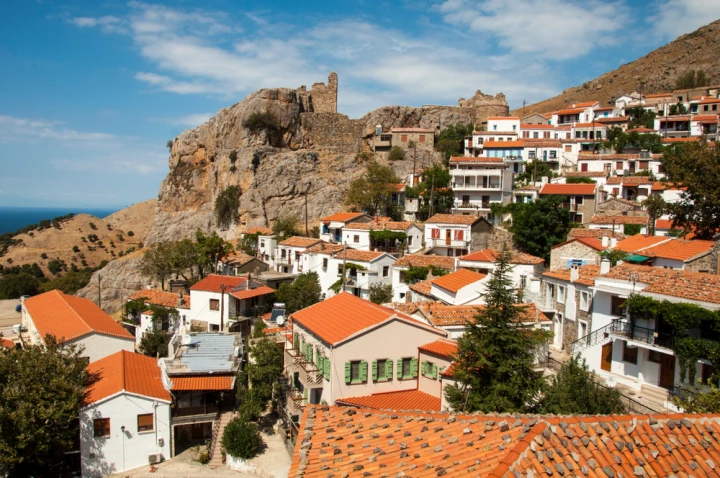
Pyrgi, a picturesque medieval village in southern Chios, stands out as a living museum of geometric art. Known for its “Xysta”, these intricate geometric patterns cover almost every building facade, creating a striking black-and-white visual spectacle. This unique artistic tradition has made Pyrgi a site of historic and cultural significance, earning it recognition as a preserved settlement. Recently, the BBC explored this artistic marvel in a short documentary titled “The Greek Island of Geometric Wonders”, bringing international attention to this rare cultural heritage.
What Are the Key Highlights of Pyrgi?
Architecture: Pyrgi's houses, many of which are three or four stories high, stand out for their spacious interiors and decorative balconies. Inside, families once gathered around central hearths to share meals and stories, a tradition that brought warmth and togetherness to their daily lives.
Churches: The village is home to several significant religious landmarks, including the Church of the Holy Apostles, a well-preserved 13th-century Byzantine monument modeled after the New Monastery’s katholikon. Other notable churches include Theotokos, Archangel Michael, and Saint George.
Fortifications: The village's medieval origins are reflected in its fortified layout and strong tower, which once protected from attacks.
What Are the "Xysta"?
The Xysta are geometric decorations etched onto the facades of buildings. Crafted by carefully scraping away layers of white lime plaster to reveal dark sand underneath, these designs include a variety of shapes—triangles, diamonds, semicircles, storks, and tree branches. This traditional technique is thought to draw from sgraffito, a decorative method with origins in either Italian or Eastern craftsmanship. Regardless of its roots, the Xysta have evolved into a distinct art form that is emblematic of Pyrgi.
Why Are the Xysta Only Found in Pyrgi?
One of the mysteries surrounding Pyrgi is why these intricate patterns exist solely in this village. Experts like architect Maria Xyda, artisan Michail Pantelakis, and researchers from the Chios Mastic Museum have tried to answer this question. The unique patterns, etched with precision using tools like forks, remain unparalleled elsewhere in the world. This singularity has turned Pyrgi into an invaluable cultural and historical treasure.