14.11.2025
Pure C Villa: The First Episode of the Elxis Documentary Series
 Architecture in Greece
12.06.2023
4 minutes
Hydra is an island close to Athens, only about an hour away by ferry. Like some of the neighboring islands in the Sporades (Skiathos, Skopelos, and Alonisos), it does not allow cars. Transportation is primarily by donkey. As a result, the island has retained its charm, and does not suffer from the noise pollution of nearby isles.
UNESCO has voted Hydra as the “BEST PRESERVED ISLAND OF THE MEDITERRANEAN” because of its efforts to preserve both its buildings, its heritage, and its nature.
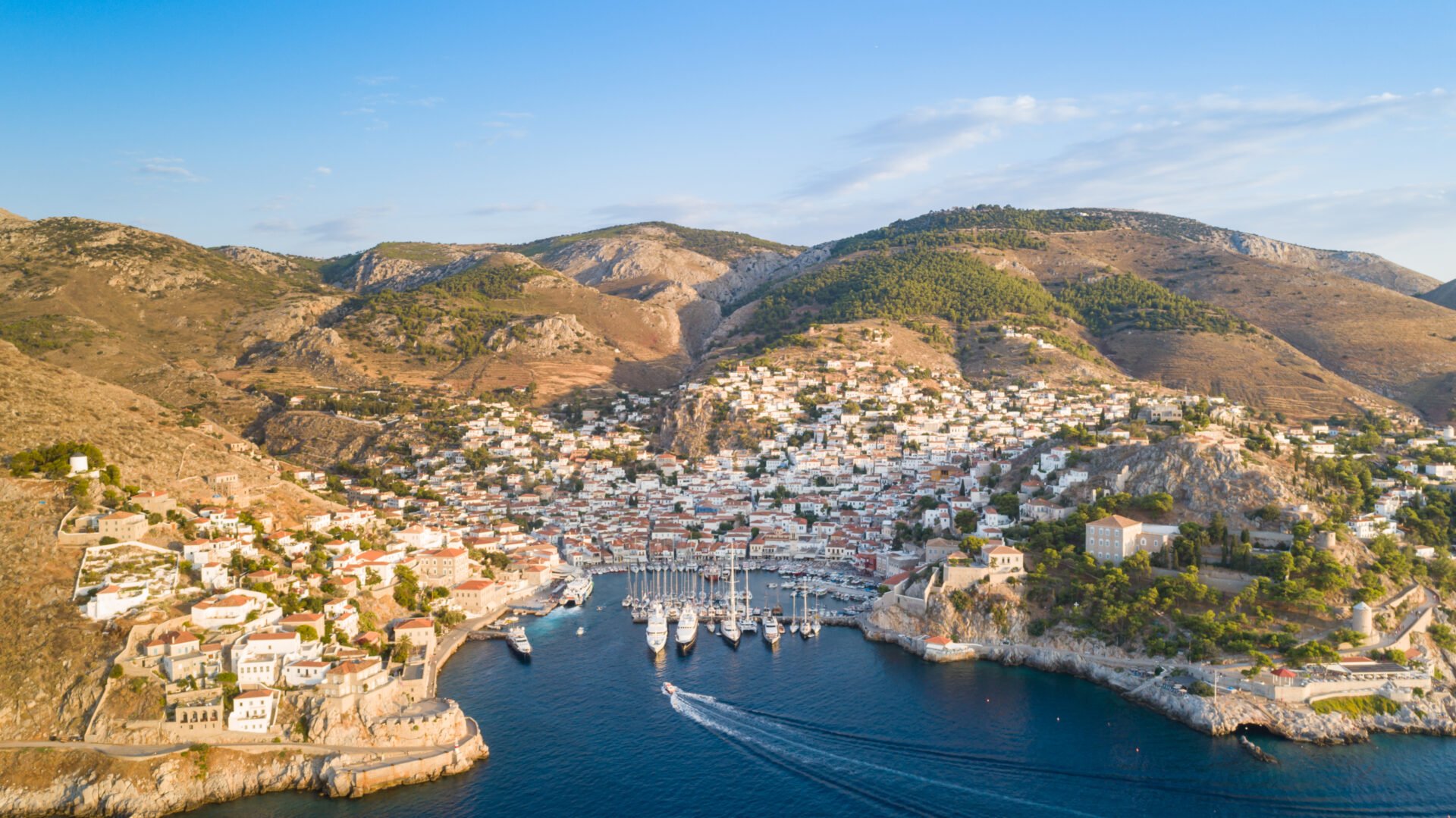
Hydra was first inhabited by the Mycaneaens, and it was named Hydra because of the springs of water that gushed forth from its quarries.
In the Persian War era, Hydra’s residents were known for taking part in the Battle of Salamis. It was known as a naval base for the city of Halieis. Later, the island was a part of the Byzantine Empire and eventually was under Venetian rule. Hydra was given to the Turks in 1460 and was later settled by Albanian refugees and Orthodox settlers from Epirus, Crete, and Kythnos.
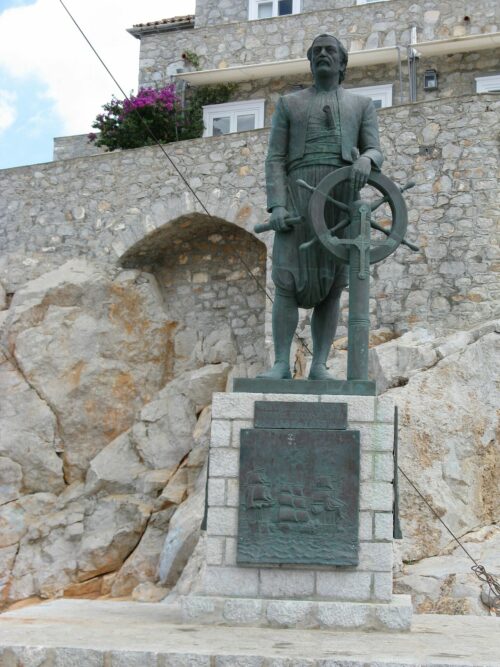
The town is built like an amphitheater. Immediately to the right and left of the port are the Parapets and the Canons, which protected the town in ages past. The famous statue of A. Miaoulis, the Hydrian warrior, is at the left side of the port.
In the middle of the port is the Cathedral, which was erected in 1648. It was initially the Church of the Dormition and is now the location of the headquarters of the Town Hall and Church Museum.
In 1950, the town was discovered by tourists, many who read about it in Henry Miller’s book “Collossus of Marousi.” The island has prospered since then from tourism, and has become popular among artists and creatives.
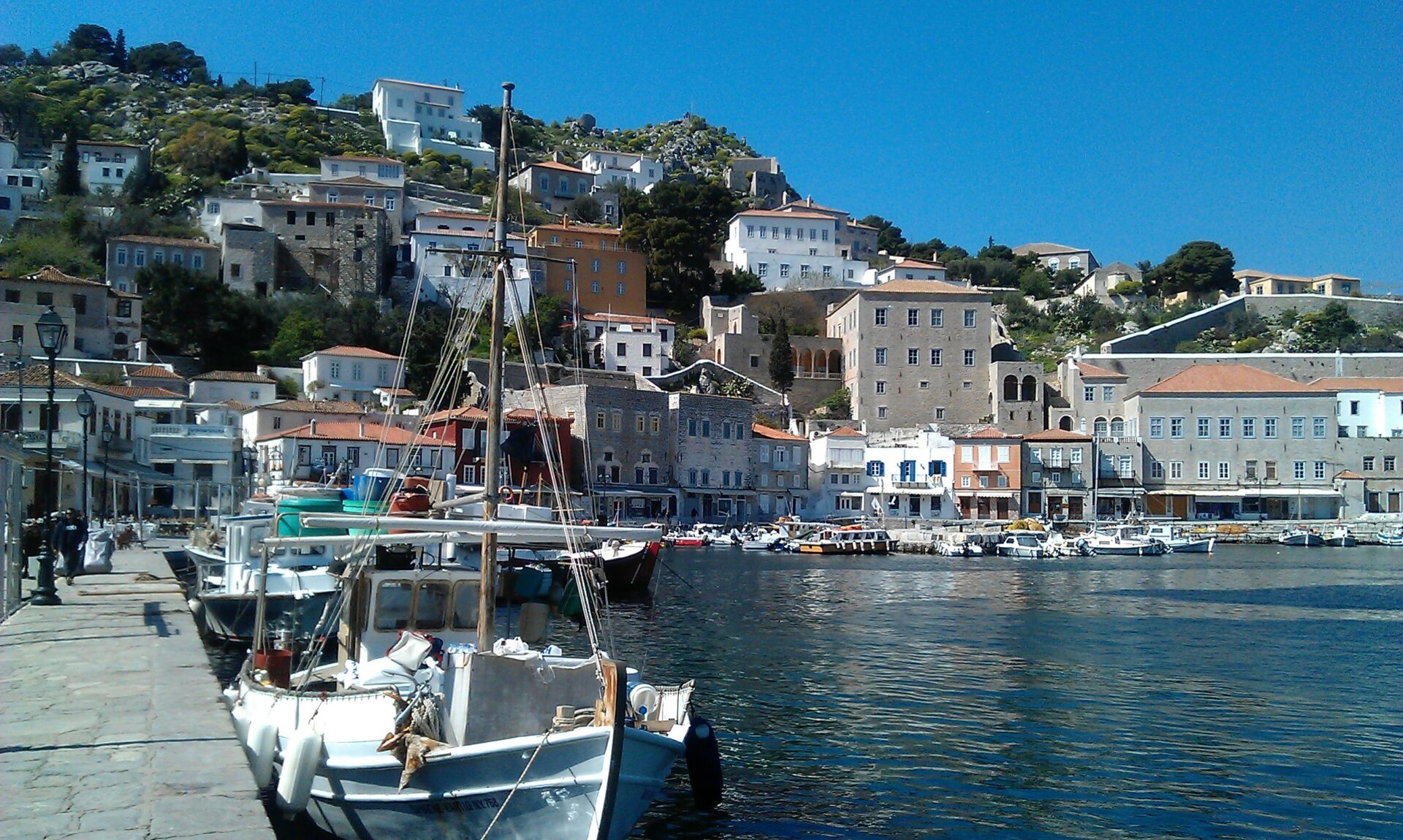
Historically, merchants and ship-owners dominated Hydrian society, and crafted the mansions we see on the island today. They called in builders and artisans from Venice to create attractive mansions, many of which were multiple stories tall. They have mostly all been preserved.
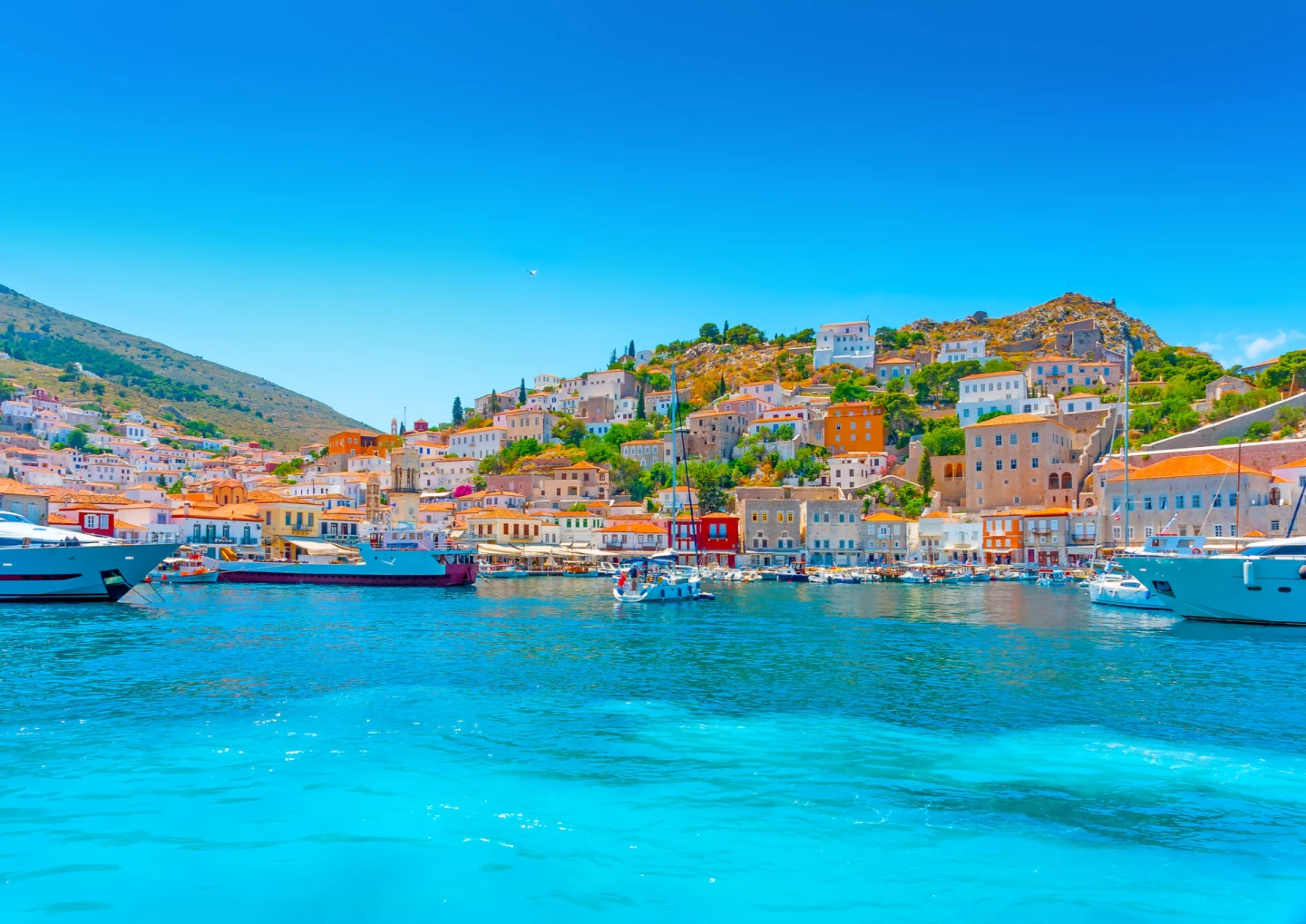
Hydra town looks like a painting when you approach by boat. The typical Hydrian mansions are a testament to the island’s prosperity from the 18th and 19th centuries. The mansions were built to be impressively large but with simple exteriors. The only exception to this rule is the white frames of the windows. The white hue is a result of the same process used in the Cyclades to “paint” house exteriors with lime.
Kountouriotis mansion, Voulgaris mansion, and Tombazis mansion are just a few of the best-known examples, and they are located on the waterfront.
The buildings are typically 3 or 4 stories tall and are usually made of natural stone.
Inside the mansions, you will find high ceilings, large, open rooms, frescoes, and marble floors. There are separate dwellings for men and women, an iconostasis, and a special smoking room.
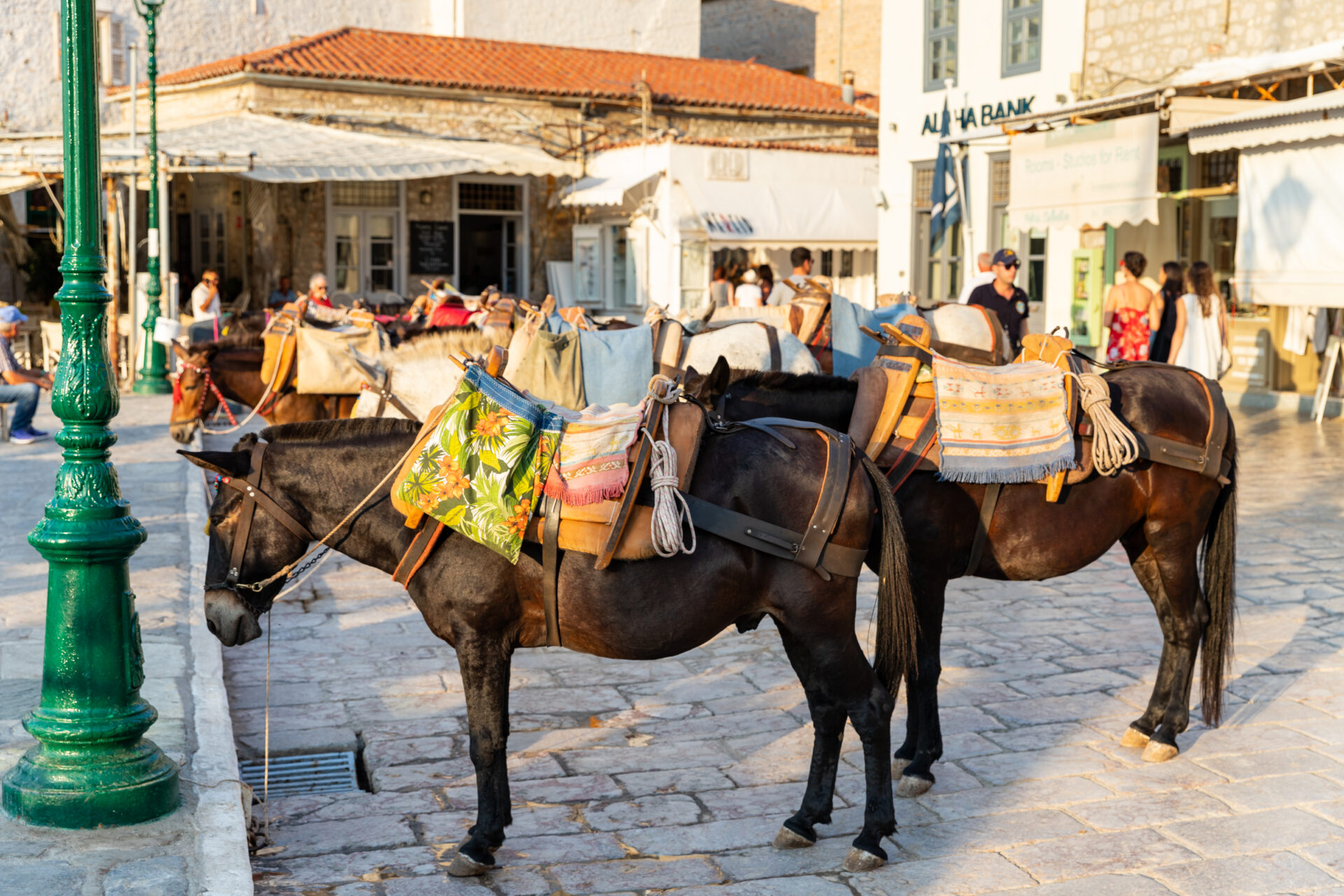
Cars are not allowed on the island because of its size and the steep grade, so mules are the preferred form of transit. After all, it’s better to see the city up close, as opposed to in a car! The mules are typically found in the eastern corner of the harbor.
A ride of about 15 minutes typically costs about 15 Euros. Specific prices are posted on a notice board in the port. Luggage transport is also available for an extra fee. Some sea taxis and boats are also available but can be more expensive. For more carless islands in Greece, read more here.
14.11.2025
14.08.2025
29.04.2025
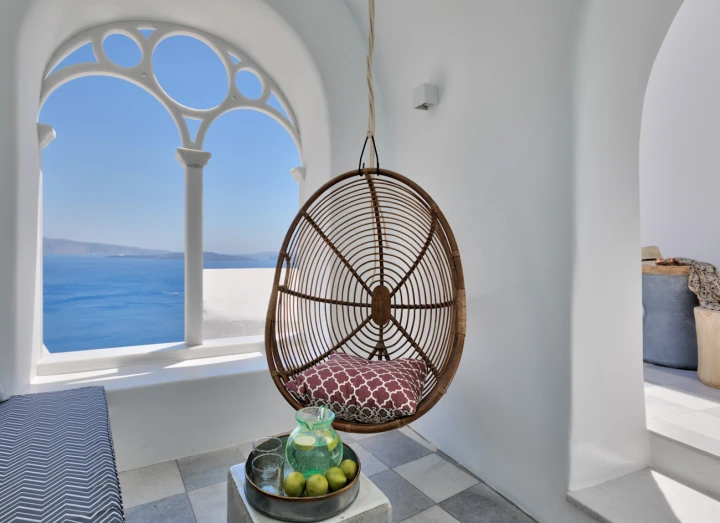
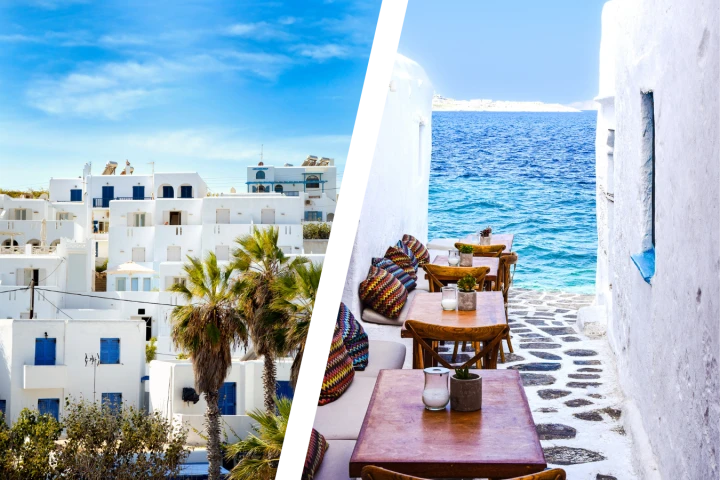
The Cycladic Islands are known for their characteristic blue and white architecture.
02.04.2025
29.12.2024
13.12.2024
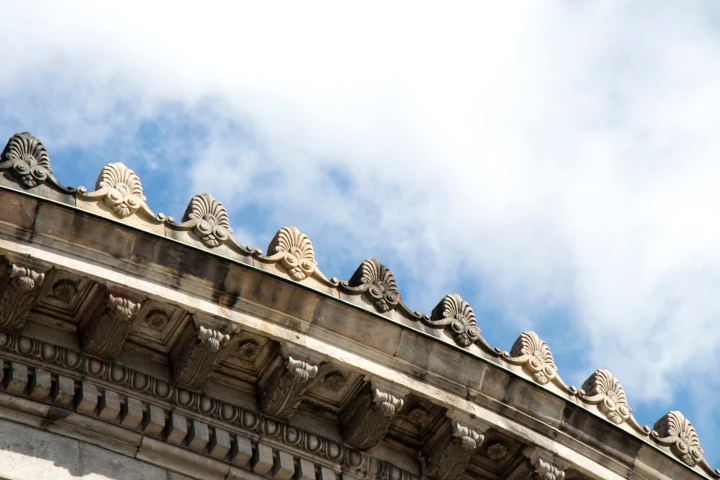
Imagine standing before a grand neoclassical building in 19th-century Athens, your eyes tracing its stately columns and pediments. At the roof’s edge, intricate tiles—akrokerama—capture your attention, adorned with motifs of anthemia, acanthus leaves, or even mythical creatures like the Gorgon Medusa. These are not mere decorations; they are heirs to an ancient tradition dating back to the temples of classical Greece. Functional yet exquisite, akrokerama protected rooftops from wind and rain while deterring birds and snakes, their beauty matched only by their ingenuity.
Today, these architectural jewels tell a story of continuity, artistry, and cultural pride, bridging the ancient and the modern in a uniquely Greek way.
26.11.2024
30.09.2024
Google “Greek islands” and the first pictures in the search results will likely be on Mykonos or Santorini. We’re all familiar with the white stucco walls and blue trim that characterize the architecture of these 2 world-famous islands. The two-tone style is popular more broadly in the Cyclades, a group of islands just east of Athens.