Skip to content

What's on The Map: Greek Island Groups Explained

Regional Guides

29.07.2026

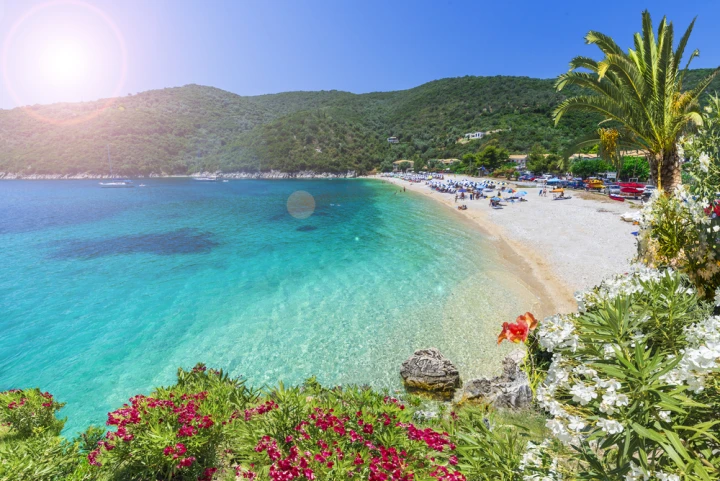
Porto Katsiki Beach, Lefkada

One of Greece's unparalleled advantages is the bounty of islands it offers, with countless places to explore, all set against the backdrop of the endless blue sea. However, figuring out where each of these islands is located can be tricky. The purpose of this guide, therefore, is to provide a simple and easy-to-understand overview of Greece's island groups.

Cyclades

The Islands

The Cyclades are a group of Greek islands in the Aegean Sea. In total, there are around 24 inhabited islands. The exact group consists of: Amorgos, Anafi, Andros, Antiparos, Donousa, Folegandros, Ios, Irakleia, Kea, Kimolos, Koufonisia, Kythnos, Milos, Mykonos, Naxos, Paros, Santorini, Serifos, Schinousa, Sifnos, Sikinos, Syros, Thirassia, and Tinos. This includes famous places like Santorini, Mykonos, and Paros, as well as larger islands like Naxos and quieter ones like Milos, Sifnos, and Folegandros. What makes them unique is their famous look: bright white houses, blue-domed churches, and dry, rocky hills next to clear blue water.

Facts & Accessibility

A fun fact for travellers and home buyers is that the name "Cyclades" comes from the Greek word for "circle." They got this name because the islands form a rough circle around Delos, a tiny island that was deeply protected and honoured in ancient history. Getting to and around the islands is very easy. You can take a boat or a fast ferry from the main ports near Athens, called Piraeus and Rafina. Santorini and Mykonos have big international airports with direct flights from many European cities, mostly during the warm tourist season from May to October. Meanwhile, Paros, Naxos, and Milos have smaller airports for short domestic flights from Athens.

Why Buy a House in Cyclades?

Buying a house here has good investment potential because millions of tourists visit every year, meaning you can easily rent out a home for attractive returns. Famous islands like Mykonos and Santorini are always popular, while islands like Paros and Naxos are growing fast and offer great value for buyers. If you want to try island hopping, it is best to group nearby islands together. For those who are into enjoying panoramic views and nightlife, you can visit Santorini, Ios, and Mykonos. If you prefer quiet beaches, delicious local dishes, and a more relaxing trip, a route through Paros, Naxos, and Milos is perfect. For a very quiet and traditional Greek experience, you can hop between smaller islands like Serifos, Sifnos, and Folegandros.

Dodecanese

The Islands

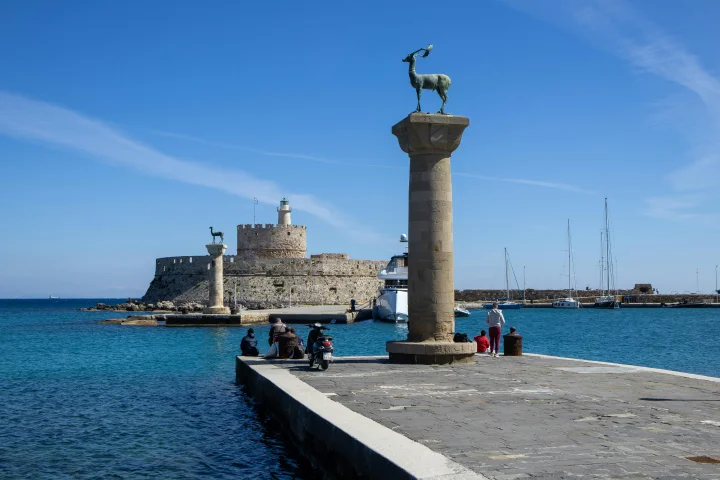
The Dodecanese are a group of Greek islands in the southeastern Aegean Sea. In total, there are over 15 inhabited islands, and the main group consists of: Astypalaia, Chalki, Kalymnos, Karpathos, Kasos, Kastellorizo, Kos, Lipsi, Leros, Nisyros, Patmos, Rhodes, Symi, Tilos, and Pserimos. This includes famous places like Rhodes and Kos, as well as culturally rich islands like Patmos and quieter, colourful ones like Symi and Karpathos. What makes them special is their mix of history: unlike the white cubic houses of other islands, the Dodecanese feature grand medieval castles, colourful Italian-style mansions, ancient ruins, and green, mountainous landscapes right next to deep blue waters.

Facts & Accessibility

An interesting fact is that the name "Dodecanese" comes from the Greek words for "twelve islands," because twelve main islands originally united to protect their special privileges in history, even though the group actually has many more islands today. Getting to and around the islands is very simple. You can take a ferry from the main port near Athens, called Piraeus, or use the great local boat networks that connect the islands. Rhodes and Kos have large international airports with direct flights from many European cities, mostly running during the warm tourist season from May to October. Meanwhile, Karpathos, Leros, Astypalaia, and Kalymnos have smaller airports for short domestic flights from Athens, which is where you must catch a connecting flight if you are travelling from outside Europe, such as from the USA or Australia.

Why Buy a House in Dodecanese?

Buying a house here has promising investment potential because the tourist season is often longer due to the warm southern weather, making it easy to rent out a home to holidaymakers. Famous islands like Rhodes and Kos are busy and highly popular with property buyers, while up-and-coming islands like Symi and Karpathos showcase rapid growth. If you are into island hopping, it is best to group nearby islands together. So, if you are going for massive medieval history, turquoise beaches, and lively nightlife, you should visit Rhodes, Kos, and Symi. If you prefer religious history, peace, and traditional culture, a route through Patmos, Leros, and Lipsi is the real deal. For a very quiet, rugged, and authentic Greek experience, you can hop between southern islands like Karpathos, Kasos, and Tilos.

Ionian Islands

The Islands

The Ionian Islands are a group of Greek islands located in the Ionian Sea, along the western coast of mainland Greece. In total, there are seven main inhabited islands, and the exact group consists of: Corfu (Kerkyra), Paxos (with nearby Antipaxos), Lefkada, Ithaca, Kefalonia, Zakynthos (Zante), and Kythira. This includes world-famous places like Corfu, Zakynthos, and Kefalonia, as well as legendary islands like Ithaca and smaller, peaceful escapes like Paxos. What differentiates them compared to the other Greek islands is their looks: instead of dry, rocky landscapes and white houses, the Ionian islands are covered in thick green pine forests and olive groves, and their towns feature colourful, elegant architecture influenced by centuries of Venetian and Italian rule.

Facts & Accessibility

What you probably don't know is that the word "Ionian" comes from ancient Greek mythology and is tied to Io, a priestess who crossed this sea while running away from the gods. Also, because these islands were ruled by Venice instead of the Ottoman Empire, they developed a unique Western-style culture, famous for its classical music, fine arts, and Italian-inspired food. Getting to and around the islands is highly convenient. You can easily drive to Lefkada via a floating mainland bridge, or take short domestic ferries from western mainland ports like Igoumenitsa, Patras, and Kyllini. Corfu, Kefalonia, and Zakynthos have large international airports with direct flights from many European cities during the tourist season from May to October. Meanwhile, Aktion Airport (near Lefkada) also handles international flights, and Kythira has a small airport for short domestic flights from Athens.

Why Buy a House in the Ionian?

For potential house buyers, these islands are highly popular, ensuring a steady demand for vacation rentals. When it comes to exploration, the islands are easily grouped into sailing or ferry routes. For a mix of grand historic towns, upscale beach clubs, and emerald waters, you can visit Corfu, Paxos, and Lefkada. If you prefer dramatic scenery, giant cliffs, and a more relaxed pace, a route through Kefalonia, Ithaca, and Zakynthos is perfect. If you are seeking an isolated and peaceful retreat away from the crowds, you can explore the independent southern island of Kythira.

Aerial view of Corfu's coastline with emerald hills, turquoise waters, Venetian fortress walls, and white sand beach

Sporades

The Islands

The Sporades are a group of Greek islands located in the northwest Aegean Sea, along the eastern coast of mainland Greece. In total, there are four main inhabited islands, and the exact group consists of Skiathos, Skopelos, Alonnisos, and Skyros. What makes them iconic is their lush, green landscape; it is not widely known that they are called the "green islands" exactly because dense pine forests grow right down to the edge of the sandy beaches and clear sea waters, creating a striking contrast to the dry, rocky scenery found in other parts of Greece.

Facts & Accessibility

A fun fact is that the name "Sporades" comes from the Greek word for "scattered," because the ancient Greeks viewed these islands as being randomly scattered across the sea, unlike the neatly organised circle of the Cyclades. Movie fans will also love knowing that Skiathos and Skopelos were the main filming locations for the hit musical movie "Mamma Mia!". Getting to and around the islands is very easy. You can take a boat or a fast ferry from mainland ports like Volos, Mantoudi, and Agios Konstantinos, or fly. Skiathos has a major international airport with direct flights from many European cities during the summer season.

Why Buy a House in Sporades?

These islands offer a high quality of life with a less crowded, more authentic feel, attracting families and retirees who want long-term rentals. Skiathos is highly popular and holds its property value exceptionally well, while Skopelos and Alonnisos are growing in popularity for buyers looking for private luxury villas hidden among the pine trees. If you want to try island hopping, the Sporades are perfectly lined up for a seamless boat trip. For a mix of lively nightlife, award-winning beaches, and classic picturesque towns, you can visit Skiathos and Skopelos. If you prefer untouched nature, hiking trails, and exploring Europe's largest marine park to spot rare seals, a route through Skopelos and Alonnisos is ideal.

Saronic Islands

The Islands

The Saronic Islands are a group of Greek islands located in the Saronic Gulf, right next to the historic city of Athens. In total, there are six main inhabited islands, and the exact group consists of: Salamina, Aegina, Agistri, Poros, Hydra, and Spetses. Dokos, also part of the group, is uninhabited. This includes highly popular and elegant places like Hydra and Spetses, as well as culturally rich and relaxing islands like Aegina and Poros. What makes them unique is their grand, aristocratic character; instead of simple whitewashed huts, the towns feature stately stone mansions, historic harbours, and pine-filled coastlines that have attracted artists, writers, and wealthy shipowners for generations.

Facts & Accessibility

A fact that you should be aware of is that some of these islands completely ban motor vehicles to protect their peaceful atmosphere. On Hydra, cars, motorbikes, and even bicycles are strictly forbidden, meaning everyone gets around on foot, by water taxi, or with the help of donkeys and horses. Getting to and around the islands is the easiest and fastest in all of Greece. Because they are so close to the capital, you can take a fast hydrofoil or ferry from Athens' main port, Piraeus, and reach islands like Aegina in just 40 minutes, or Hydra in under two hours. None of the Saronic Islands have their own commercial airports because they are so close to the mainland. Instead, travellers fly directly into Athens International Airport from all over the world.

Why Buy a House in the Saronic Islands?

Unlike other Greek islands that shut down completely in the winter, the Saronic Islands stay busy all year because wealthy Athenians use them for weekend getaways, ensuring constant rental demand outside the summer season. Islands like Spetses and Hydra are highly exclusive, while Aegina and Poros are a good option for buyers wanting a historic home close to a major city. If you want to try island hopping, the islands are perfectly lined up for a quick and easy route. If you are into vehicle-free peace, luxury boutiques, and elite history, you can visit Hydra and Spetses. If you prefer ancient temples, famous local pistachio orchards, and pine-fringed beaches, a route through Aegina, Agistri, and Poros is ideal. For a completely quiet and hidden retreat, you can explore the rugged shores of Dokos.

North Aegean Islands

The Islands

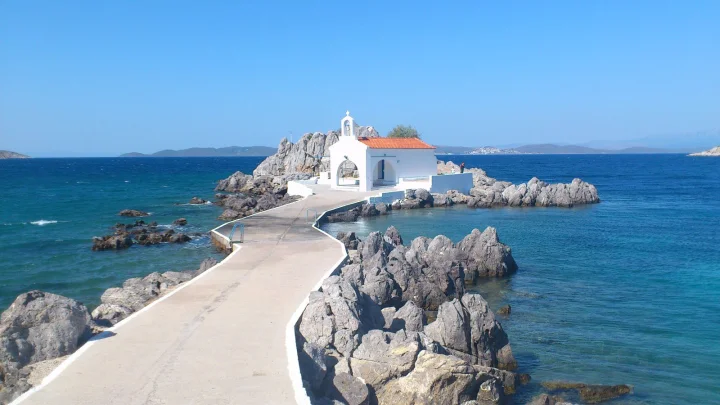
The North Aegean Islands are a group of Greek islands located in the northeastern part of the Aegean Sea. In total, there are nine main inhabited islands, and the exact group consists of: Lesbos (Mytilene), Chios, Samos, Ikaria, Lemnos, Agios Efstratios, Psara, Fournoi Korseon, and Oinousses. This includes culturally famous and large places like Lesbos, Chios, and Samos, as well as globally famous lifestyle spots like Ikaria and quieter, untouched escapes like Lemnos, Psara, and Fournoi. What makes them special is their massive size, incredible green forests, and deeply authentic Greek lifestyle; instead of the same repetitive look, you will find medieval stone villages decorated with geometric patterns, volcanic sand dunes, and dense woods growing right down to the sea.

Facts & Accessibility

Something that you probably don’t know, is that Ikaria stands as one of the world's rare "Blue Zones," meaning its residents regularly live past 100 years thanks to their relaxed pace of life, natural hot springs, and healthy diet. Getting to and around the islands is straightforward, though distances are longer because the islands are quite large. You can take large passenger ferries from the mainland ports of Piraeus, Rafina, or Thessaloniki. Samos and Lesbos feature international airports with direct flights from many European cities from May to October. Meanwhile, Chios, Ikaria, and Lemnos have mainly domestic airports, meaning you must catch a connecting flight through Athens or Thessaloniki.

Why Buy a House in the North Aegean Islands?

Buying a house here has exceptional investment potential because the North Aegean offers some of the most affordable property prices in the Greek islands. Investors can find traditional stone houses and vast sea-view plots at very good prices. Samos and Lesbos have well-established real estate markets, while Lemnos and Chios are growing fast with buyers looking for high-yield holiday rentals.

Crete

The Region

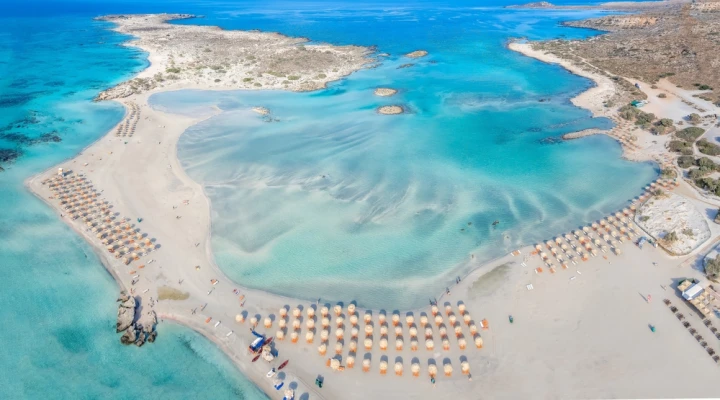
Unlike other Greek island groups, Crete stands completely on its own and is divided into four distinct regional areas: Chania, Rethymno, Heraklion, and Lasithi. It includes well-known historic cities like Chania and Heraklion, as well as stunning coastal towns like Agios Nikolaos and Elounda. What makes Crete unique is its massive size and diverse landscape; it feels like a small country rather than an island, featuring dramatic 2,000-metre-high mountain ranges, deep gorges, vast agricultural valleys, and unique beaches like Elafonissi, known for its pink sand.

Facts & Accessibility

Historically, Crete was the birthplace of the Minoans, Europe's oldest advanced civilisation, and myth says it is where Zeus, the king of the Greek gods, was born. Additionally, because the island is so far south, it has its own independent economy based heavily on farming, meaning it produces its own world-class olive oil, wine, and fresh produce without relying on the mainland. Getting to and around Crete is incredibly easy. You can take the ferry from Athens' main port, Piraeus. For air travel, Heraklion and Chania both have large international airports with direct flights from many European cities from May to October, while a new airport in Kastelli is under construction.

Why Buy a House in Crete?

Buying a house here has extraordinary investment potential because Crete boasts the longest tourist season in Greece, stretching comfortably from April all the way into November due to its warm southern climate. Because the island has major university cities, hospitals, and a large local population, the property market stays active all year round, making it safe for investors who want to rent out homes to locals or digital nomads in the winter.


If you wish to explore the island, it is so large that "island hopping" usually means driving across its different regions. From Chania and Rethymno to Heraklion and Elounda. For a completely quiet, rugged, and untouched experience, you can head to the wild beaches of Southern Crete and the quiet villages of Sitia.

Elafonisi Beach

Evia (Euboea)

The Region

The island of Evia (also known as Euboea) is the second-largest island in Greece, sitting right next to the eastern coast of the mainland. Unlike other island destinations, Evia stands entirely on its own as one massive, long landmass instead of a cluster of smaller islands. It is split into three main regions: North Evia, Central Evia, and South Evia, with the lively city of Chalkida serving as its capital and main gateway. What makes Evia completely unique is its double identity; because it sits so close to the mainland, it combines the wild, dense pine forests, rushing rivers, and massive mountain ranges of the Greek interior with around 680 kilometres of coastline and countless uncrowded beaches, on both the open Aegean and the calmer gulf side.

Facts & Accessibility

An interesting fact most people don’t know, is that you can watch a true natural mystery happen right in the center of the capital city. Under Chalkida's Old Bridge, the sea current changes direction roughly every six hours, a strange tidal phenomenon that even the ancient philosopher Aristotle famously tried and failed to explain. Additionally, the town of Edipsos in the north is famous for its natural thermal hot springs that pour directly into the sea, which have been used for relaxation since ancient Roman times. Getting to and around Evia is uniquely convenient because it is one of the only Greek islands you can drive to by car. Two major road bridges connect the island directly to the mainland. Evia does not have its own commercial airport, but it is incredibly accessible because it is only about a 90-minute drive from Athens International Airport.

Why Buy a House in Evia?

Investment-wise, Evia is considered Greece's "best-kept secret" for real estate, as property prices are significantly lower than in the Cyclades, allowing buyers to secure large houses with sea views or mountain plots for excellent value. Its proximity to Athens also gives it a year-round property and rental market, as locals flock here for weekend getaways in both winter and summer. For a mix of therapeutic hot springs, dense green forests, and quiet hiking trails, you can road-trip through North Evia and Edipsos. If you prefer a lively urban waterfront, historic castles, and great seafood tavernas, staying in Central Evia around Chalkida and Eretria is ideal. For wild, dramatic cliffs, wind-carved landscapes, and beautiful isolated beaches close to Athens, exploring South Evia around Karystos and Marmari is perfect.

You might also like