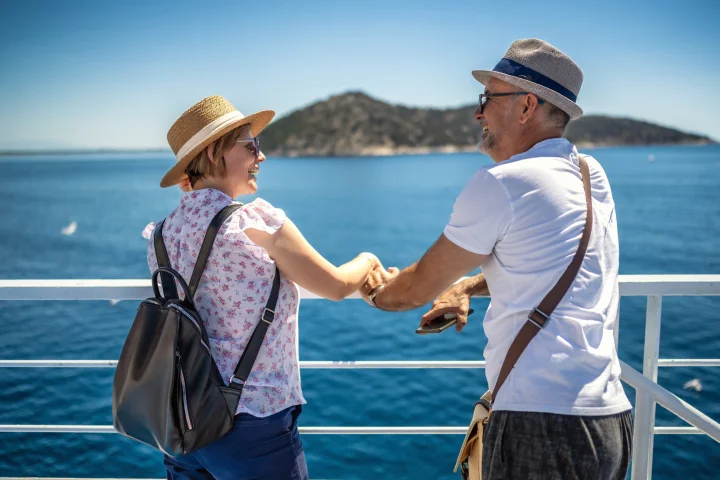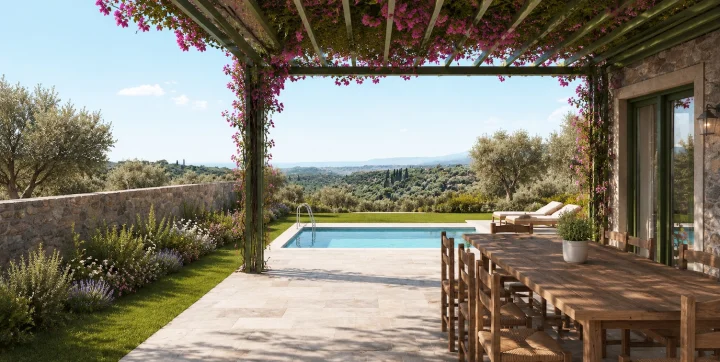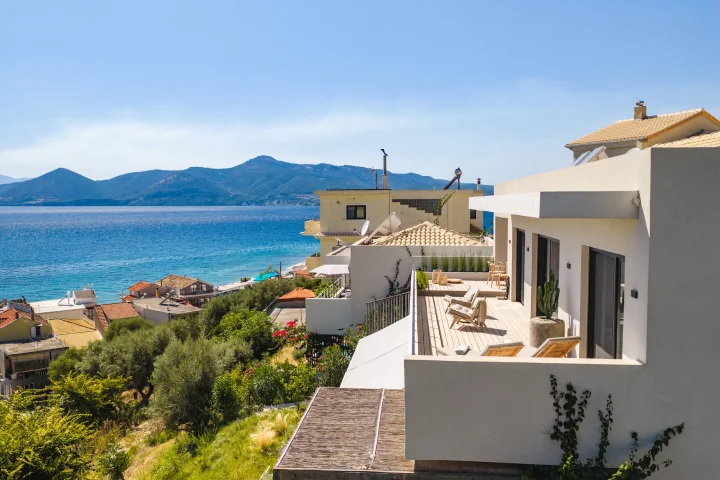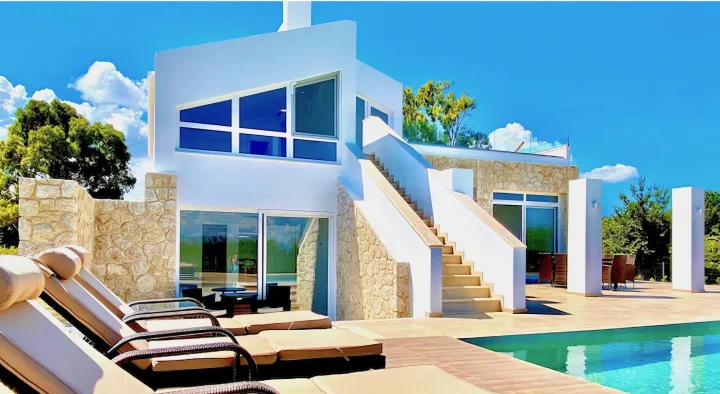
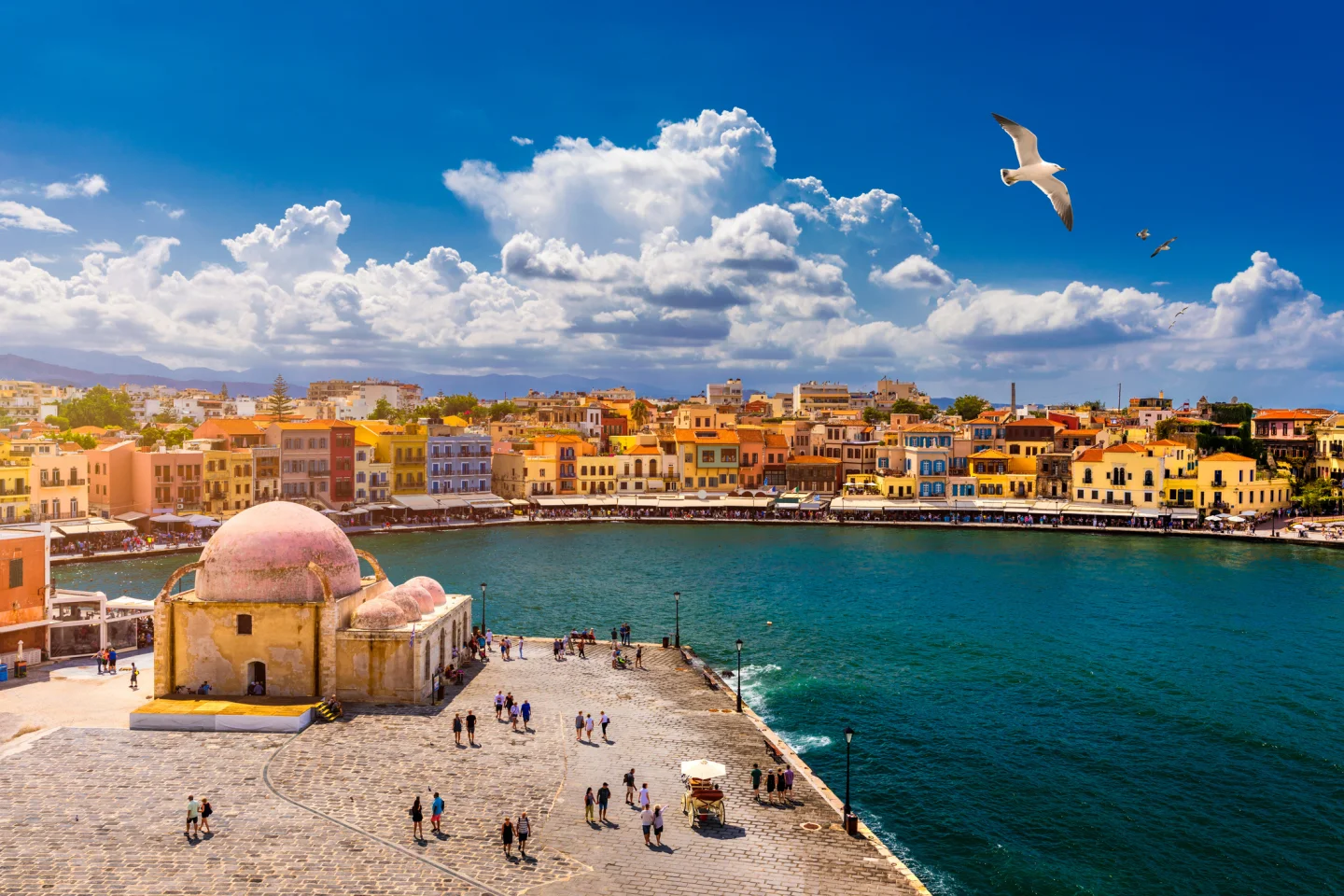
Crete, in general, has been particularly appealing when it comes to real estate, both for permanent living and for investment opportunities.
And the region of Chania is among the most preferred ones for international property buyers.
And there are really good reasons for that.
Why Consider Living in Chania?
Living in Chania offers more than a romantic Venetian harbour setting: for international buyers and future permanent residents, it combines historic character, a mild climate, accessible beaches, a strong sense of community, solid healthcare, and good international connections.
Chania is the capital of its regional unit, and while the municipality counted more than 111,000 inhabitants in 2021, that total includes nearby settlements such as Kounoupidiana, Mournies, Souda, Nerokouros, Daratsos, Perivolia, Galatas, and Aroni; Chania city itself has 55,616 residents.
This article looks at what daily life is actually like here, from the local rhythm and best residential areas to practical points such as language, healthcare, connectivity, and the property-buying process, so you can judge whether Chania fits your lifestyle and plans.
It's good to know that the regional unit is split into seven municipalities, meeting the borders of Rethymno to the east, and includes Gavdos, which is Europe's southernmost island.
Even though many people picture Chania in July, when the Venetian harbour is busy and the beaches are full of tourists and visitors, the reality is that the population fluctuates with seasonal tourism, becoming busy in summer and quieter in winter. But if you stay a little longer, you will be able to witness another side of it.
Chania is a working city with many permanent residents, while the Technical University of Crete on the Akrotiri Peninsula keeps the students and the teaching staff in the area all year. Moreover, if you are a history lover, the Archaeological Museum in Halepa provides around 3,500 finds from the Neolithic to Roman periods, and runs exhibitions and events throughout the year.
Chania During Every Season
Overall, the winters are mild, and the summers are warm in Chania, resulting in the nearby beaches being at their busiest. The weather varies across Crete depending on whether an area is northern or southern, coastal or inland, and mountainous or low-lying, but Chania's mild conditions support an outdoor culture for much of the year.
Each season brings something different: In spring, for example, it's when the Samaria Gorge reopens, and it usually welcomes hikers and walkers from the 1st of May. Of course, summer is the busiest season in every aspect, including culture; from July to September, the municipality runs an agenda of theatre, music, and dance in many places, such as the East Moat Theatre, alongside outdoor food festivals and concerts.
Next, we have the harvest time that takes place in Autumn, and it's the time when local producers may invite people to assist with picking the olives and tasting the freshly pressed olive oil.
Winter tends to be quieter, but there are still things to do in Chania. Alongside the authentic tavernas of the region and the impressive mountains, the Imbros Gorge near Sfakia is part of the E4 European long-distance path and can be walked at any time of the year, except after heavy rain.
Local hiking groups are also useful for meeting new friends, with one group gathering for Sunday walks and lunch.
Beaches, Amenities, and Connectivity
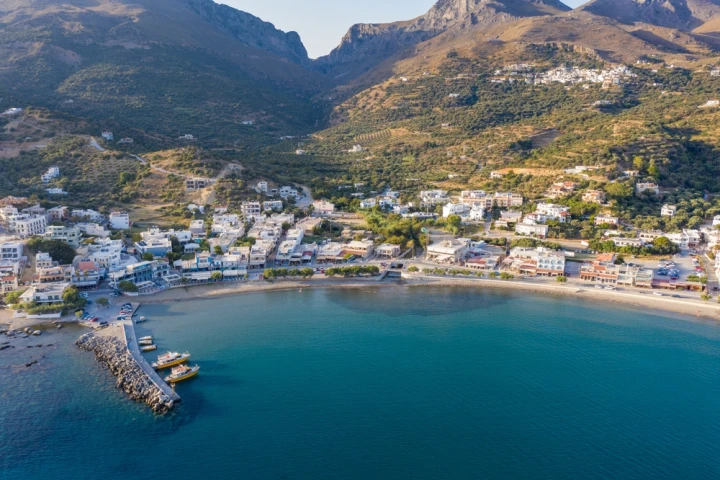
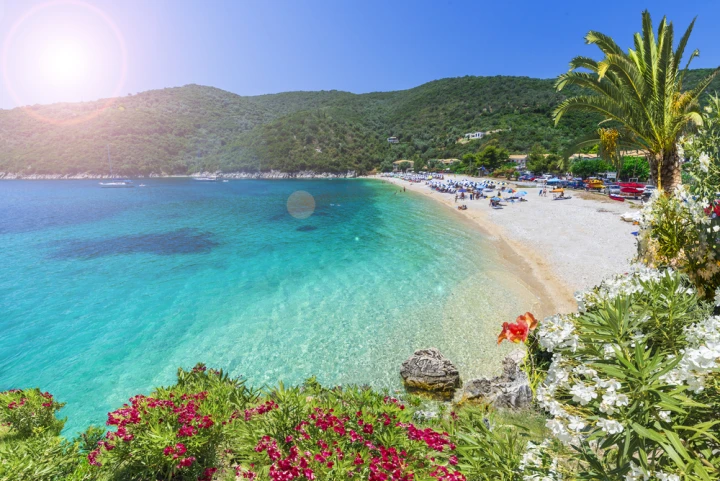
The sea is often within easy reach. For instance, Agia Marina lies about 10 km west of the city, on a continuous stretch of coast with Stalos and Platanias. To the north-east, the Akrotiri peninsula has the beaches of Kalathas and Stavros.
English is widely spoken in Chania and is absolutely enough for most daily interactions, from shops and restaurants to many service settings, so getting help in English is usually easy; for deeper integration, though, and for dealing with neighbours, local offices, and some basic utilities, Greek becomes more important.
In tourist areas and the city, many people understand English well, and the expat community makes social life and practical advice easier to access.
Several European countries keep honorary consuls in Chania, including the Netherlands and Germany. Additionally, for families who seek English-language schooling, the School of European Education in Heraklion is a good option. Before or after moving, Facebook can also help you connect and learn through expat groups.
In terms of healthcare, "Agios Georgios", the General Hospital of Chania, is located in Mournies, within the wider municipality, providing year-round services.
Connectivity is another major factor to consider when it comes to permanent living in a location. Chania has its own international airport, which is located on the Akrotiri peninsula, a short drive from the Old Town, offering direct flights to many European destinations, more frequently from spring to autumn.
In winter, when the flights to and from Chania Airport are fewer, many people travel through Athens, as there are regular flights between Athens and Chania.
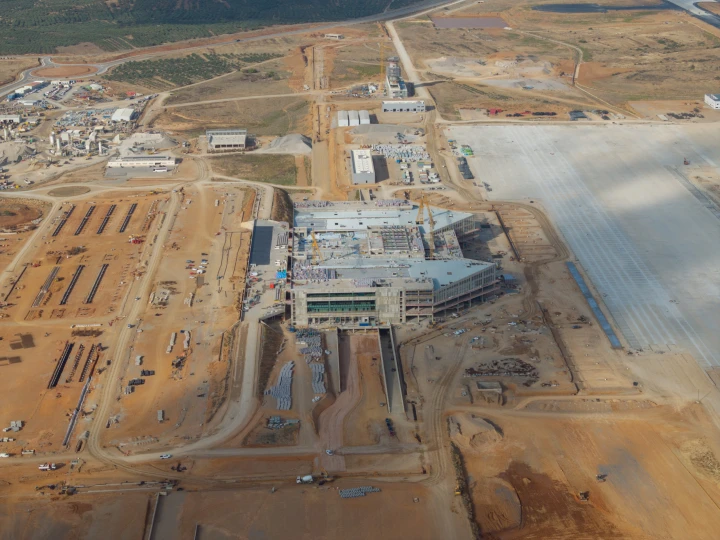
Apart from that, Crete has another airport in Heraklion, which is the second busiest in Greece, following the airport of Athens, while a new airport at Kastelli, near Heraklion, is under construction, and is expected to significantly improve the international connectivity of Crete in total.
Regarding transport and access around Chania, how you get around typically depends on where you live. In general, bus links serve most villages, and in many cases, you may feel more comfortable having your own car.
History and Local Culture
The rich history of Crete, in general, goes back thousands of years, as it was the centre of the Minoan civilisation on an island in the Mediterranean Sea, with that setting adding to Chania’s cultural appeal.
Later, the Venetians and the Ottomans took over, with the architectural influence of these periods being visible.
The Old Town of Chania was declared a historic preserved monument in 1965. The city stands on the site of the Minoan settlement of Kydonia, while the Kastelli hill, above the harbour, is the most important archaeological spot in Chania. Back in the time of Venetian rule, the fortifications were strengthened, forming Chania in the shape it still has today, alongside churches and museums that reflect its layered past.
Best Areas for Living in Chania
"Which location is suitable for me?"
That's a question we often receive from our clients, and a very reasonable one.
In the city, Halepa is the historic district east of the Old Town; people also often look at Chania Old Town and the city centre for everyday living. Along with Nea Chora and Dikastiria, these are considered to be the most expensive parts of the area for property purchase.
Moving a little away from the city, there are three locations that stand out: Number one, Apokoronas, which is in the east and has around 75 villages. Number two, the western coast, where Kato Stalos, Agia Marina, and Platanias form a resort strip. And number three, the Akrotiri peninsula, which is in the north-east, where Kounoupidiana is the largest town.
In these residential areas, Cretan philoxenia is part of daily life and shapes the warm welcome many residents experience.
If you pick one of the coastal villages, you can expect easy access to the beaches, and if you are interested in renting your property out, stronger summer rental demand. Some buyers also prioritise a sea view or wider panoramic outlook, while inland homes can offer more space.
Other property buyers choose to settle a little away from the sea, closer to the natural beauty of the White Mountains (Lefka Ori), and where house prices can be more competitive.
For year-round living in Apokoronas, the larger villages of Vamos, Armenoi, and Vryses are good suggestions, as they have municipal and utility offices, everyday businesses, and charming tavernas. Then, Kounoupidiana is close to the university, many beaches, and other amenities, so it can also be a decent choice.
Buying Property in Chania, Crete
Crete ranks first among the preferred destinations of foreign holiday home buyers this year. According to data collected from our client base, during 2026, one-third of buyers chose Crete for the purchase of a holiday home.
These buyers mainly come from Western European countries, such as the Netherlands, Germany, Belgium, France and the United Kingdom. It is also noteworthy that 76.6% of prospective buyers plan to proceed with the purchase of a holiday home within the next 12 months, while half of that percentage, or 38.3% of the total, intend to move forward within the next six months.
“We are seeing Crete evolve into an increasingly dynamic market, as 1 in 3 foreign investors is now looking for a home there. Based on our data, the percentage of buyers interested in properties in Crete rose this year to 35.15%, up from 29.42% in 2025,” notes Mr. Giorgos Gavriilidis, CEO of Elxis. According to him, areas on the southern side of Crete, mainly in the regions of Rethymno and Chania, with views of the Libyan Sea, remain among the most popular choices for foreign holiday home buyers.
According to our analysis, beyond its unmatched natural beauty, Crete offers significant investment benefits. First, its mild climate ensures a long tourist season, along with relatively attractive prices, forming a combination that favors investment in real estate and offers solid returns.
“Can I Buy a House in Chania?”
Let’s start with the question we receive most often in all our channels:
“Can I buy a house in Greece, or in a specific region, such as Chania? If yes, what are the steps?”.
Well, the short answer to that is: Anyone can buy a property in Greece in nine steps.
1. Search For Your Dream Home
Everything starts with the property. You decide on the region, the type of home, and your budget. From there, the search can go two ways. You can browse the properties on our website and see what appeals to you.
You can also share your criteria with us and let our team look on your behalf. Most buyers do a little of both. We then put forward the homes that match, so you are not working through it all on your own.
2. Viewings, Viewings, and Viewings
Once a few properties stand out, visit them in person. Seeing a home for yourself tells you what photos cannot: the feel of the area, the real condition, and what is nearby. This step matters. When you find the one that fits, the next stage is preparing for negotiation.
3. How Much?
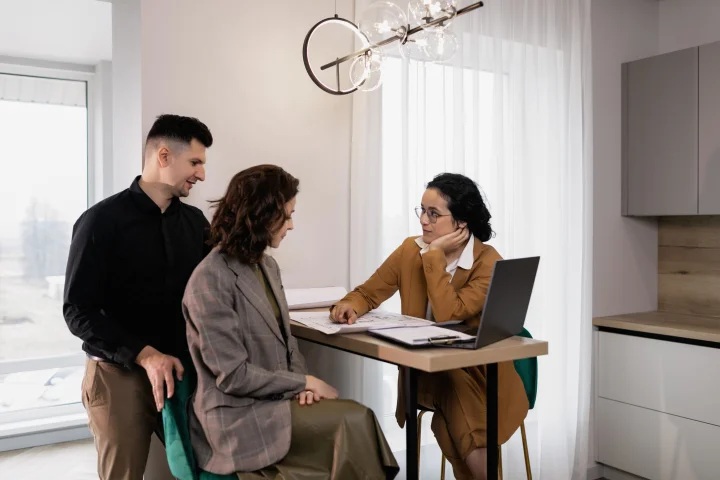
Negotiation can feel kind of unpleasant, but it is a normal part of the process, so try not to take it personally. At this phase, a good real estate agent may assist you a lot, as they can often read the market and each property’s value realistically.
4. Legal Due Diligence
This is where a Greek lawyer is needed, as they check the ownership titles and search the local Land Registry to confirm the property is in order and can be sold. Any mortgages, liens, or third-party claims come to light at this stage.
5. Private Purchase Agreement
A Private Purchase Agreement sets out the terms agreed between buyer and seller. Once signed, the property comes off the market, and the buyer pays a deposit to reserve it, typically between 5 and 10% of the price. Now, both parties can start preparing the paperwork for the notary purchase deed.
6. Power of Attorney (POA)
A Power of Attorney lets your lawyer act for you throughout the purchase, even when you are not in Greece. With it, your lawyer can represent you at the tax office for your tax number and sign the final contract, so the purchase process continues while you are abroad.
7. Get a Greek Tax Number (AFM)
You will need a Greek tax number, known as an AFM, to buy. It is issued free of charge on presentation of valid ID and an application form, and it gives you access to the Greek online tax system. Our legal team can fill in the necessary forms on your behalf.
8. Both Parties Sign the Final Deed
The seller provides a set of documents for the notary, including an energy certificate, a civil engineer’s certificate that the property has no building violations, a topographical plan, tax clearance, and municipal certificates.
The notary then prepares the transfer tax declaration. Once the buyer pays the transfer tax, the final deed can be signed. You can attend in person or have your lawyer sign for you under the Power of Attorney.
9. Complete the Payment
In most cases, the buyer pays on the day of signing. Where both banks are in the same country, the funds usually reach the seller the same day. Once payment is received, a discharge deed is signed as proof that the purchase price was paid in full. The exact timing can vary with the circumstances and any terms agreed between the parties. With that, the home is yours.
What Are the Additional Costs?
That’s another question we often receive from our prospects. And a fair one. As a rule of thumb, the additional costs are approximately 10% on top of the purchase price when it comes to buying a house in Greece. Let’s break these costs down:
Transfer Tax
It is paid by the buyer on existing homes; this is 3.09%* of the purchase price or the taxable value, whichever is higher. New-build properties would normally carry VAT instead, but VAT on new builds is currently suspended, so transfer tax applies in its place.
*Important update: The Greek Prime Minister, Kyriakos Mitsotakis, has announced that the property transfer tax for purchases by non-EU citizens is set to rise to 15%, with the change expected to apply from 2027. The implementing legislation has not yet been published, so the final scope, including how it may treat plots of land and commercial property, is not yet confirmed.
Notary Fees
The notary prepares and oversees the deed. Fees are tiered and work out at around 1-2% of the price, plus VAT.
Land Registry Fees
After signing, the deed is registered locally. These fees come to about 0.5% of the price.
Lawyer's Fees
A lawyer is not strictly required but is strongly recommended to check the legal status of the house you are buying and guide you through the purchase process. Fees typically range from 1 to 2% plus VAT.
Real Estate Agent Fees
This applies where a real estate agent is involved. Elxis charges 3% plus VAT, payable on completion of the purchase.
What Are the Costs of Owning a House
Annual Taxes
ENFIA
ENFIA is the main ongoing tax on your home. It is based on your tax zone, so it is higher in sought-after areas, such as Mykonos, Santorini, and central Athens, and lower in the countryside. For rural properties it is often around 3 to 4 euros per built square metre per year. A 100 square metre home might pay 300 to 400 euros a year, depending on location. For unbuilt plots, ENFIA is very low.
Rental Tax
If you do not plan to let your home, this section will not apply. If you do, you pay tax on the rental income. For individuals, progressive rates apply, calculated per owner on the gross rental income. Following the changes for 2026, the bands are:
Up to €12,000: 15%
€12,001 to €24,000: 25%
€24,001 to €36,000: 35%
Over €36,000: 45%
TAP (Telos Akinitis Periousias)
TAP is a municipal tax and the smallest of these. It is usually only a few euros and is charged through your electricity bill.
Home Insurance
Greek law does not require home insurance, so it is not mandatory, but it is well worth having. If you own a new development, note that the construction company's insurance has probably expired on the date of delivery. There are insurance agencies throughout Greece, with plans for every budget.
Maintenance of Your Home in Greece
Pool and Garden
Maintaining a pool and garden can cost between 150 and 350 euros a month. This varies with the type of pool and the size of the garden.
Annual Upkeep
Most homes need occasional work over the years, such as painting, polishing, and repairs. In Greece, it is worth repainting pergolas and wooden items exposed to the sun so they keep looking new. Annual upkeep for an average home can range from 1,000 to 4,000 euros a year, depending on the quality of the construction and furniture.
Conclusion
To sum up, life in Chania carries on well beyond the summer season, as it is a fully working city with a university, a general hospital, and an airport of its own, surrounded by villages where the pace of life is relaxed and slow.
To figure out if a region, a village or a neighbourhood matches your wishes and preferences, what you can do is plan a trip to visit the area.
Because, at the end of the day, you should feel at home before starting your next chapter.