




22.10.2026
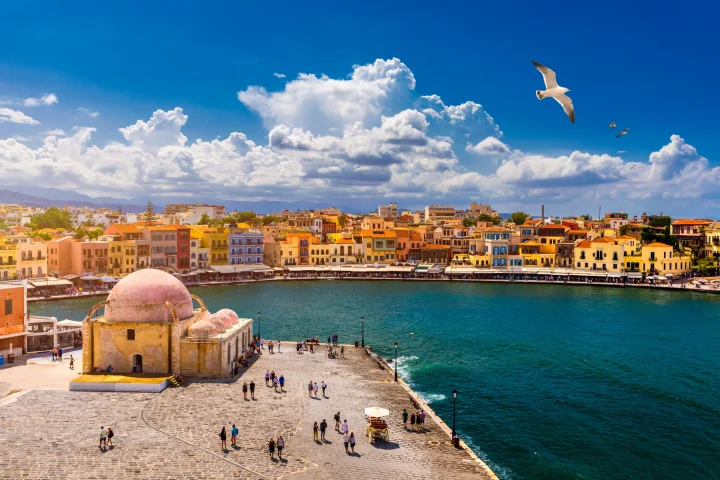
Exploring Crete: Living in Chania
Crete, in general, has been particularly appealing when it comes to real estate, both for permanent living and for investment opportunities.
Market Insights
28.01.2025
Starting October 1, 2025, Greece is introducing comprehensive regulations for short-term rental properties, transforming the landscape for platforms like Airbnb.
These new rules aim to ensure safety, quality, and compliance with local standards, mandating everything from natural lighting and ventilation to liability insurance and fire safety measures. Managers of short-term rental properties could face hefty fines ranging from €5,000 to €20,000 if they fail to comply with new minimum property standards required for rentals.
The new regulations will officially take effect on October 1, 2025. However, property managers must prepare in advance to make necessary adjustments to avoid penalties. Inspections will be conducted by joint teams from the Ministry of Tourism and the IAPR. In addition to assessing compliance with short-term rental standards, these teams will also perform on-site tax audits.
Starting October 1, 2025, short-term rental properties must meet the following minimum standards:
Properties must be classified as primary-use spaces with natural lighting, ventilation, and functional air conditioning.
Property managers are required to secure liability insurance to cover damages or accidents during a tenant’s stay.
Electrical compliance statements signed by licensed electricians.
Installation of fire extinguishers and smoke detectors.
Circuit breakers or ground fault interrupters to prevent electrical hazards.
Clearly marked emergency exits for safe evacuation.
Pest control and disinfection certificates, ensuring a hygienic environment.
First aid kits readily available for emergencies.
Display of emergency contact numbers for immediate assistance.
These measures aim to enhance the safety and quality of short-term rental properties, ensuring they meet comparable standards to other forms of accommodation like hotels.
To ensure compliance, inspections will be carried out by teams from the Ministry of Tourism and the IAPR. These inspections will involve:
Property managers will receive at least 10 days' notice before an inspection. During this time, they must prepare the necessary documentation to prove compliance with the new standards.
Inspectors will evaluate whether properties meet the required standards. Tax audits may also be conducted simultaneously to verify the accurate declaration of rental income.
Inspectors will carry official identification and written orders specifying the scope of the inspection. If required, police assistance can be sought to ensure access to the property.
If a property is found non-compliant during an initial inspection, follow-up inspections may be conducted. Repeat offenses will result in progressively higher fines.
The fines for non-compliance are as follows:
A fine of €5,000 is imposed if a property fails to meet the standards or if a manager obstructs the inspection process.
The fine doubles to €10,000 for a second offense detected during a follow-up inspection within 12 months.
Fines quadruple to €20,000, emphasizing the seriousness of repeated non-compliance.
All fines must be paid within 15 calendar days. Failure to pay may result in enforcement actions, including asset seizures by the authorities.
The primary objectives of the legislation are:
Establishing minimum safety and quality standards for short-term rental properties to ensure guest well-being.
Addressing concerns about unfair competition between unregulated short-term rentals and hotels. By imposing similar requirements, the government aims to level the playing field.
Encouraging practices that support local communities and align with European standards for sustainable tourism.
Tourism Minister Olga Kefalogianni has emphasized that these reforms are critical for improving Greece’s tourism infrastructure while preserving the integrity of local neighborhoods.
While the hospitality industry broadly supports the new measures, citing long-standing concerns about unfair competition, there are notable criticisms:
Konstantinos Kiamos, vice president of STAMA Greece, pointed out that certain safety requirements, such as fire exits, may not be feasible for all types of properties, especially older buildings in traditional neighborhoods.
Industry representatives have raised concerns about balancing these regulations with the broader housing needs of local communities. Stricter regulations might discourage landlords from participating in the short-term rental market, potentially affecting housing availability and prices.
The introduction of stricter standards for short-term rental properties in Greece represents a pivotal effort to ensure safety, quality, and fairness within the hospitality sector. These regulations aim to create a level playing field between short-term rentals and traditional accommodations, such as hotels, by enforcing clear guidelines for property managers, rigorous inspections, and penalties for non-compliance. While these measures address long-standing concerns around guest safety and tax evasion, they also raise challenges for older properties and the broader housing market. Importantly, these reforms reflect Greece’s commitment to sustainable tourism and community preservation, ensuring the benefits of tourism are shared equitably.
However, it is important to acknowledge that this law is still in its early stages, and its practical impact remains to be seen. The true effectiveness of these measures will depend on their implementation, enforcement, and how property owners, managers, and local communities adapt. Only time will reveal whether these reforms achieve their intended goals or require further adjustments to address unforeseen challenges.
22.10.2026
Crete, in general, has been particularly appealing when it comes to real estate, both for permanent living and for investment opportunities.
22.10.2026
Based on recent data of ours, almost one in three buyers (30.8%), mainly retirees, from abroad are looking for a property in Greece for a permanent residence.
01.10.2026
After several years of rapid price increases, Greece’s housing market is showing signs of a more moderate pace in 2026. But the slowdown is not appearing in all segments in the same way. Holiday homes and newly built properties continue to attract strong demand internationally, while in the broader residential property market price growth is beginning to slow.
17.09.2026
Property transactions in Greece involve specific legal and administrative requirements, including notarial formalities, seller paperwork, and detailed documentation, which may differ from those in other European markets. For international sellers, these rules, combined with language barriers and local bureaucracy, can create delays or legal risk if not handled correctly, which is why professional legal and real estate support is often essential. The process of selling a property in Greece can be pretty straightforward once you pick a team of experts to assist you. However, as there are differences between countries and cultures, owners from abroad need to have a clear overview of what to expect. That said, with this guide, we aim to respond clearly and plainly to all the questions we often receive.
04.09.2026
Selling property in Greece starts with understanding the market, preparing the right legal documents, setting a realistic asking price, and following the country’s notarial and tax procedures. Greek property continues to attract international buyers from Europe and the USA, especially in established coastal destinations such as Crete, the Ionian Islands, and the Peloponnese. For foreign owners selling a home, villa, or holiday property in Greece, understanding who is buying can be a practical first step when preparing a sale. Many international buyers are seeking holiday homes in Greece from countries such as the Netherlands, Belgium, Germany, France, and the United Kingdom, alongside non-EU nationals exploring residency opportunities through current Greek investment migration programs. There is also a share of demand that comes from Greek expatriates returning to buy in their home country.
01.09.2026
Crete is already one of the Mediterranean’s most loved island destinations, but its future looks even brighter. As construction of the new Kastelli Airport enters its final phase, the island is preparing for one of the most important infrastructure upgrades in its history.
13.07.2026
Moving your life to Crete is entirely achievable, and it's open to anyone in principle. What changes is the process: your nationality, how long you intend to stay, and your personal circumstances all play a part. Emigrating to Crete is possible, though it means navigating visa rules, residency permits, and legal obligations that differ significantly between EU and non-EU citizens. EU nationals benefit from freedom of movement, while non-EU citizens typically face more paperwork and longer processing times.
02.07.2026
International investors have been paying closer attention to Greece for a few years now. Keeping up this pace, new survey data shows just how far that attention has grown. Greece has moved into first place among institutional investors targeting hospitality assets in Europe. More specifically, it has overtaken Italy, Spain, and France, the countries that traditionally led this ranking.