Cretan Instruments
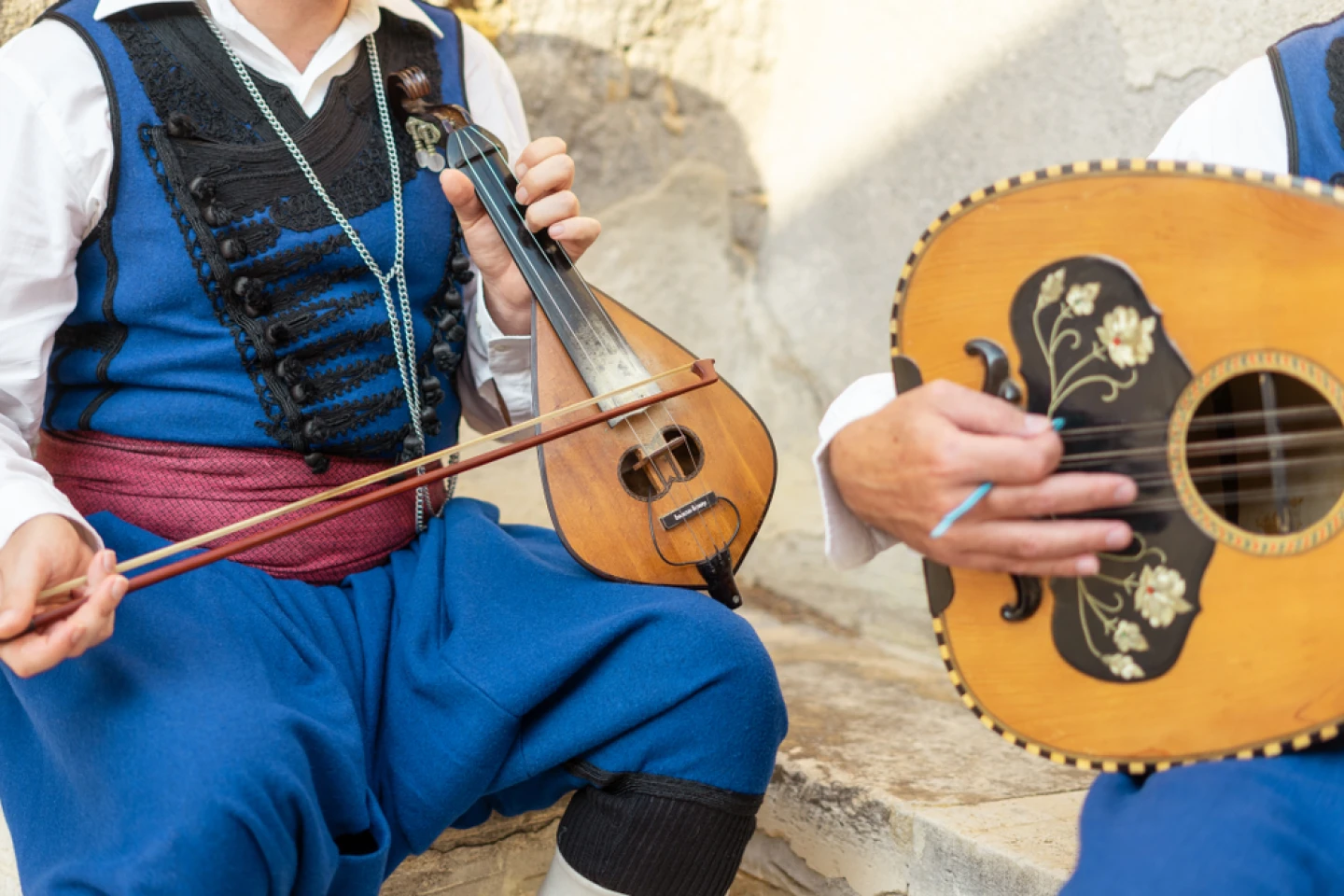
The main role is given to the lyra, which is a pear-shaped lute. It looks like a violin but has older roots and is less refined. Players often play with many embellishments. The lyra is accompanied by the laouto, a kind of lute, and also the mandolin. When singing, the Cretans put their soul into the music. The result is a poetic tradition called “Mantinades” where singers take turns dueling with poetic verses that are injected with humor and spontaneity. serve as accompanying instruments.
Nikos Xylouris (Xilouris)
One of the most famous voices of Crete is Nikos Xylouris. He is also known as Psaronikos. Xylouris is known all over the island, and his passionate voice inspired a generation of folk musicians. He was known for combining traditional songs with Western melodies and influences. Xylouris was a symbol of resistance against the military junta in 1967, and he was targeted by the government for this reason. However, this only made him a greater national hero. Since his death at the young age of 44, his home in Anogia, Crete has been converted into a museum.
Music Styles in Crete
Mantinades
Crete’s mantinades are songs with 15-syllable verses that are improvised and often rhyme. These songs are sung at weddings, baptisms, and panegiria of all types in Crete. The Mantinades represent the Cretan spirit of poetry, which is not only found in the music but also in the mountains’ sheep-herders and old men sitting in kafeneios.
Rizitika
Rizitika refers to rebel songs that are sung in western Crete, specifically in the White Mountains, in the area around Chania. The Rizitika are sung during marriages, feasts, and baptisms. The repertoire has songs for the wedding banquet, for the transfer of the dowry to the house of the groom, the welcome of the bride, the gift gathering ceremony, and more.
Erotokritos
Erotokritos is certainly one of the most impressive songs in Crete. It is a long, adventurous love poem with 10,010 lines, which was written 400 years ago during the Venetian rule. In English, it roughly translates to “tried by love.”
Dances of Crete
Cretan dances are high-energy, and some are danced only by men. They combine quick steps with acrobatic movements and are said to represent the nature in Crete - its mountains and wild sea. The slower dances usually include the women as well and focus on themes of love and marriage.