



22.10.2026
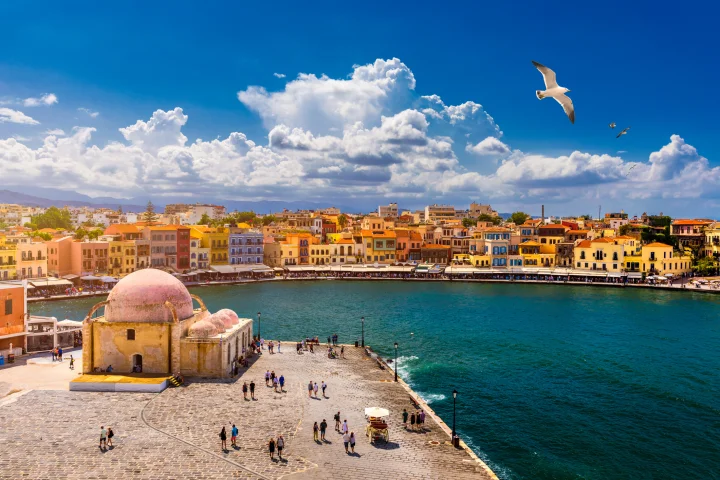
Exploring Crete: Living in Chania
Crete, in general, has been particularly appealing when it comes to real estate, both for permanent living and for investment opportunities.
Market Insights
29.01.2026
Do you own or look to buy a property in Greece? Then maybe you’ve thought of donating this to your children, grandchildren, or another relative or loved one. There are many reasons why property owners in Greece might decide to transfer ownership during their lifetime. Some wish to share their property with a new partner or family member, while others prefer to simplify matters for their heirs by avoiding future inheritance procedures and potential tax burdens.
In many cases, a parental gift (known in Greece as goniki parochi) or a donation can be an efficient and thoughtful way to plan, ensuring that your assets are passed on smoothly and according to your wishes. In this guide, we’ll walk you through what these terms actually mean and how the process works.
In Greek law, a donation (or “dorea” – δωρεά) is a transfer of property from one person to another without payment. It’s a common way for families to pass homes or land to children and relatives, but it’s also available to non-Greeks. There are two main types of such transfers:
Donation (Δωρεά): A gift from one person to another, related or not.
Parental gift (Γονική Παροχή): A special type of donation made specifically from parents to their children, often with lighter tax treatment.Both types require the same formal process as a sale; you’ll need a notarial deed, signed before a Greek notary public. The only difference is taxation, which is typically lower when the transfer happens within the family.
And yes, if you’re living abroad, you can even sign by proxy, meaning someone in Greece can represent you at the notary, making the process far easier for international owners. Keep in mind that the person(s) receiving the property must also sign in front of a Greek notary to accept the donation; if they can’t travel to Greece, this can also be done by proxy.
Before a donation or parental gift can be completed, it’s mandatory to involve a certified engineer (politikos michanikos). The engineer must inspect the property and issue an Electronic Property ID (ΗλεκτρονικήΤαυτότητα Κτιρίου), a digital file containing all property documents, plans, and certificates regarding the building’s legality. This step ensures that the property complies with building and zoning regulations.
If any building violations exist (for example, unregistered extensions or layout changes), they must first be legalised under Greek law before the donation can proceed. Otherwise, the notary cannot complete the transfer. In practice, this means that a donation or parental gift follows the same full legal and technical process as a standard sale, including the same due diligence and documentation. It’s therefore essential to allow enough time for this step, especially for older properties or homes with modifications. Let's take it step by step:
Have a certified engineer inspect the property and issue the Electronic Property ID
Request an objective value assessment through AADE.
Pay any applicable taxes through the tax authority’s online system (myProperty).
Obtain a property tax certificate (ENFIA clearance).
Prepare and sign a notarial deed of donation or parental gift.
Register the deed with the Land Registry/Cadastre.
You don’t need to be Greek to benefit from these laws. Foreign citizens can both give and receive donations and parental gifts in Greece, under the same legal framework as Greek nationals. It’s crucial to check whether your country of tax residence treats the transaction as taxable; for example, in the UK or the US, local gift tax rules might apply. Your Greek notary and accountant can guide you through both sides to ensure a smooth process. Here are some valuable things to know as a property owner in Greece:
Double Taxation Agreements: Check whether your country has a double taxation agreement with Greece to avoid double taxation on the same asset.
Professional advice: It is essential to consult a Greek lawyer or tax advisor to ensure the proper application of the procedures.
Now let’s talk about the part everyone wonders about: taxes. Transferring your property through a donation or a parental gift can save significant taxes and simplify the inheritance process later. Always remember to consult a Greek notary and tax advisor to tailor the process to your family’s needs. In Greece, all donations and parental gifts are subject to tax. The rate depends on two main factors:
1. The value of the property (based on its objective value (αντικειμενική αξία) as set by Greek tax authorities).
2. The relationship between the giver and the recipient.
Here’s the simple breakdown:
Parents → Children (Parental Gift): Tax-free up to €800,000 per parent. Anything above that is taxed at 10%. This is by far the most common and tax-efficient option for families.
Close Relatives (e.g. siblings, grandparents, grandchildren): Lower tax brackets apply, but not as generous as the parental gift exemption.
Unrelated Persons: Higher tax rates apply, generally making donations less attractive for non-family transfers.
For context, property sales in Greece are taxed at 3.09%* transfer tax, so parental gifts often result in far lower overall costs when transferring property between family members. In addition, the objective tax value of many properties, particularly in rural areas of Greece, is often significantly lower than their actual market value, which can further reduce the applicable taxes.
*Important update: The Greek Prime Minister, Kyriakos Mitsotakis, has announced that the property transfer tax for purchases by non-EU citizens is set to rise to 15%, with the change expected to apply from 1 January 2027. The implementing legislation has not yet been published, so the final scope, including how it may treat plots of land and commercial property, is not yet confirmed.
For more details, see the table below:
RELATIONSHIP – PROPERTY VALUE – TAX
a) The spouse or the person with whom the donor has entered into a civil partnership
b) The children
c) The grandchildren
d) The parents of the donor
Up to €800,000 objective value: 0%
Brothers, cousins, grandparents, great-grandparents, siblings (full or half-siblings), nephews and nieces, stepfathers and stepmothers, children from a spouse's previous marriage, sons-in-law and daughters-in-law, and fathers-in-law and mothers-in-law.
Up to €30,000: 0%
For the next €70,000: 5%
For the next €200,000: 10%
From €400,000 and above: 20%
All others (whether distant relatives or non-relatives)
Up to €6,000: 0%
For the next €66,000: 20%
For the next €195,000: 30%
From €267,000 and above: 40%
Please note that the above table refers to current tax rates, which are subject to change at any time. Before making any decision regarding a donation or parental gift, you must verify whether the above rates are still valid or have been updated. Also good to know: for exceptional legal reasons and in specific cases, donations and parental benefits may be revoked.
Parental gifts and donations between relatives in Greece increased by 11% in the first seven months of 2025. This increase is attributed to the favourable tax framework that applies to first-degree relatives, that is, transfers between parents and children, spouses, and grandchildren, where the tax-free threshold reaches €800,000, without any additional charges.
Another key reason for the rise in applications is the introduction of the digital platform akinita.gov.gr, which has streamlined certain administrative aspects of the process. While the platform helps centralise documentation and enables electronic submissions, the overall procedure remains complex and time-consuming in practice.
Engineer inspections, legal compliance checks, tax declarations, and notarial coordination are still required, and depending on the property’s condition and documentation, the process can take several weeks or even months to complete. Older properties, planning irregularities, and land registry issues often lead to delays, meaning that professional coordination and careful preparation remain essential.
Owning a home in Greece is more than an investment; it’s about connection. Whether it’s a summer house by the sea or a family home in the village, passing it on should be simple and fair. With donations and parental gifts, Greek law facilitates the smooth transfer of property, often with significant tax advantages. If you already own a home in Greece or plan to, you can always explore these options with your notary or legal advisor, so that your piece of Greece stays exactly where it belongs, with the people you love.
Disclaimer: This content is for informational purposes only and does NOT constitute legal advice. For any donation and parental gift issues, it is highly recommended to consult a lawyer or notary.
22.10.2026
Crete, in general, has been particularly appealing when it comes to real estate, both for permanent living and for investment opportunities.
22.10.2026
Based on recent data of ours, almost one in three buyers (30.8%), mainly retirees, from abroad are looking for a property in Greece for a permanent residence.
01.10.2026
After several years of rapid price increases, Greece’s housing market is showing signs of a more moderate pace in 2026. But the slowdown is not appearing in all segments in the same way. Holiday homes and newly built properties continue to attract strong demand internationally, while in the broader residential property market price growth is beginning to slow.
17.09.2026
Property transactions in Greece involve specific legal and administrative requirements, including notarial formalities, seller paperwork, and detailed documentation, which may differ from those in other European markets. For international sellers, these rules, combined with language barriers and local bureaucracy, can create delays or legal risk if not handled correctly, which is why professional legal and real estate support is often essential. The process of selling a property in Greece can be pretty straightforward once you pick a team of experts to assist you. However, as there are differences between countries and cultures, owners from abroad need to have a clear overview of what to expect. That said, with this guide, we aim to respond clearly and plainly to all the questions we often receive.
04.09.2026
Selling property in Greece starts with understanding the market, preparing the right legal documents, setting a realistic asking price, and following the country’s notarial and tax procedures. Greek property continues to attract international buyers from Europe and the USA, especially in established coastal destinations such as Crete, the Ionian Islands, and the Peloponnese. For foreign owners selling a home, villa, or holiday property in Greece, understanding who is buying can be a practical first step when preparing a sale. Many international buyers are seeking holiday homes in Greece from countries such as the Netherlands, Belgium, Germany, France, and the United Kingdom, alongside non-EU nationals exploring residency opportunities through current Greek investment migration programs. There is also a share of demand that comes from Greek expatriates returning to buy in their home country.
01.09.2026
Crete is already one of the Mediterranean’s most loved island destinations, but its future looks even brighter. As construction of the new Kastelli Airport enters its final phase, the island is preparing for one of the most important infrastructure upgrades in its history.
13.07.2026
Moving your life to Crete is entirely achievable, and it's open to anyone in principle. What changes is the process: your nationality, how long you intend to stay, and your personal circumstances all play a part. Emigrating to Crete is possible, though it means navigating visa rules, residency permits, and legal obligations that differ significantly between EU and non-EU citizens. EU nationals benefit from freedom of movement, while non-EU citizens typically face more paperwork and longer processing times.
02.07.2026
International investors have been paying closer attention to Greece for a few years now. Keeping up this pace, new survey data shows just how far that attention has grown. Greece has moved into first place among institutional investors targeting hospitality assets in Europe. More specifically, it has overtaken Italy, Spain, and France, the countries that traditionally led this ranking.