Digital Nomad Visa Requirements
To qualify for the Digital Nomad Visa, you need to meet these conditions:
You are a non-EU/EEA citizen.
You work remotely using telecommunications technology.
Your employer or clients are based outside Greece. Both employees of foreign companies and self-employed professionals with a business registered abroad qualify.
Your net monthly income is at least 3,500 euros. This increases by 20% if your spouse or partner joins you, and by 15% for each dependent child.
You hold private health insurance valid in Greece.
There is also a tax incentive worth knowing about: qualifying remote workers who transfer their tax residence to Greece can benefit from a 50% reduction in income tax for up to seven years.
Impact On Real Estate
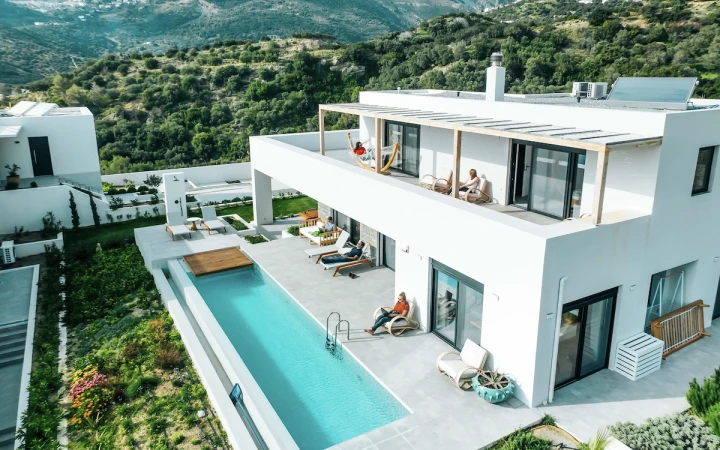
Digital nomads need somewhere to live and work, and that adds to the already strong demand for accommodation on the island. This is pushing up rents and keeping yields healthy. Hotels absorb part of the demand, and short-term rental homes cover much of the rest. For owners of a well-located villa near the coast, this can be a profitable combination: use the house yourself for as long as you like, then rent it out at daily rates that can exceed 500 euros per night in high season. It is worth distinguishing between digital nomads and remote workers, because their housing needs differ. Digital nomads typically stay in one place for one to two months before moving on, so they value flexibility, fast and reliable internet, quiet spaces for online meetings, and a community of like-minded professionals. Remote workers don't need to go into an office either, but they usually settle in one location for the longer term. Both groups are reshaping the real estate market in Crete, and demand from international buyers remains strong, which keeps the market's prospects positive.
Notos Real Estate Management
For owners who rent out their property, good management makes the difference. One example of a high-quality property management company is Notos Estate Management, known for its 5-star service. Notos offers full villa maintenance and rental management for private villa owners in the south of Crete. Working with a property management company like Notos can significantly improve the return on your property in Greece.
Where To Become A Digital Nomad In Crete
Rethymno
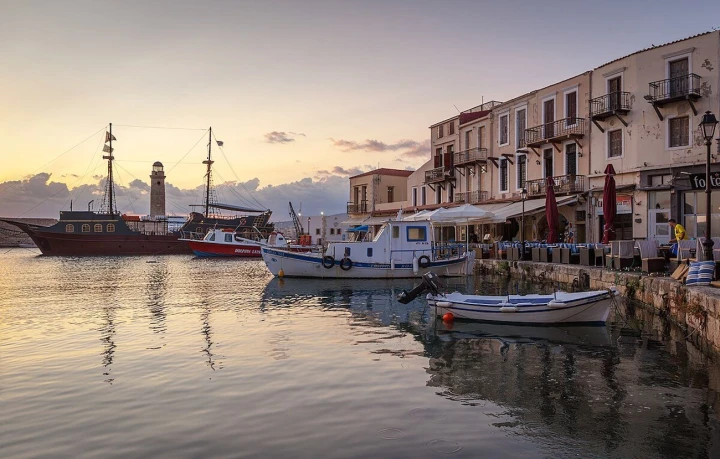
Crete's third largest city is a romantic place that combines the charm and history of its old town with a long sandy beach right next door. It is one of the best-preserved Venetian old towns on the island, built almost entirely under the Republic of Venice, with Ottoman touches visible here and there. The 16th-century buildings are striking, and the monolithic Fortezza reflects both European and Moorish influences.
Makrigialos
Tucked away in southeastern Crete, about 30 minutes east of Ierapetra, Makrigialos (meaning "long shore" in Greek) has a lot to offer. Its main beach holds a Blue Flag certification and has calm, shallow water, ideal for families. Nearby you'll find some of Crete's finest white sand beaches, including Diaskari and Langada. There is plenty of choice for a quiet spot in the shade by the water, water sports such as jet skiing and windsurfing are widely available, and the area takes pride in traditional Cretan food prepared with fresh, locally produced ingredients.
Plakias
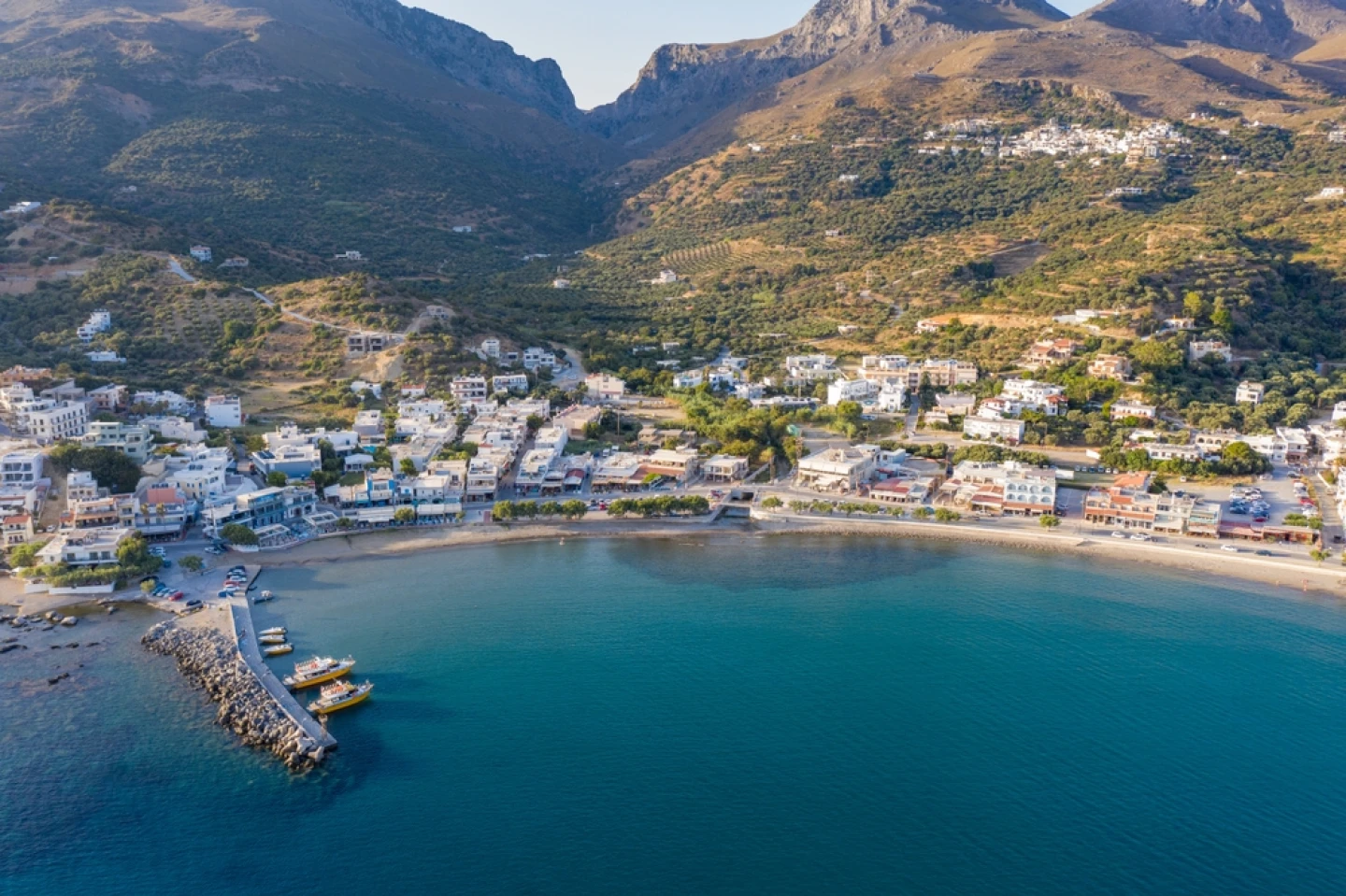
We admit we are biased here, because the Elxis Crete office is located in Plakias. The beaches along this stretch of the south coast offer swimming waters that even many Greeks don't know about, while the traditional villages in the surrounding hills combine picturesque scenery with tavernas serving some of the best food on the island. Plakias itself, a former fishing village, is the largest town in the area. Mountains shelter it to the north, and it faces the open sea to the south. Its Blue Flag sandy beach is one of the longest in Crete, and the town's tavernas and bars round off the summer experience.