If you’ve ever been to Greece, you know how stunning the beaches are on the Greek islands. Golden sands and pristine waters with the ever-present Greek sun. However, what if this scene were interrupted with protesters shouting through a loudspeaker and holding signs that say “Reclaim the Beach.” This is the scene in Paros, where protesters fought to remove beach chairs from the local sands, and read parts of the Greek constitution aloud.
Paros Harbor
"Save Paros Beaches" Movement
These protests started in Paros in May of 2023. Right now on Paros, you have to pay for a lounge chair in order to sit on the beach. To locals, the lounge chairs represent a government that is prioritizing tourists over locals. On Facebook, residents of Paros started a page called “Save Paros Beaches” and aimed for stronger restrictions on the sunbeds, many which are there illegally.
Some locals say that lounge chairs are taking up 10 times the space than is allowed. The movement gained support, and a unified demonstration on the 3rd of September happened in different areas of Greece on the same day.
Santa Maria Beach, Paros
Protests in Other Greek Islands
The neighboring island of Naxos and the island of Crete also held their own demonstrations. Rhodes, Aegina, and the Attica region also had their own protests.
Protests have also happened in Halkidiki peninsula in the north, as well as in the Ionian islands (Lefkada, Kefalonia, Corfu, etc), where some rental companies have put down chairs on beaches which should be free.

Summer in Paros
Paros is one of the most visited islands in the Cyclades, with a population that boosts 10 times its normal amount in the summer. Some business take advantage of the tourists, charging up to 120 euros for so-called “V.I.P” sun chairs. As a result, local authorities have denied licenses to lounge chairs on some beaches.
Giorgos Arkoulis, owner of the local Dixty restaurant, which has stood for 28 years on Paros, was denied a license for lounge chairs. He put the chairs out anyway, expecting there to be no problems. However, he was forced to take away the chairs, which caused some of his customers to complain.
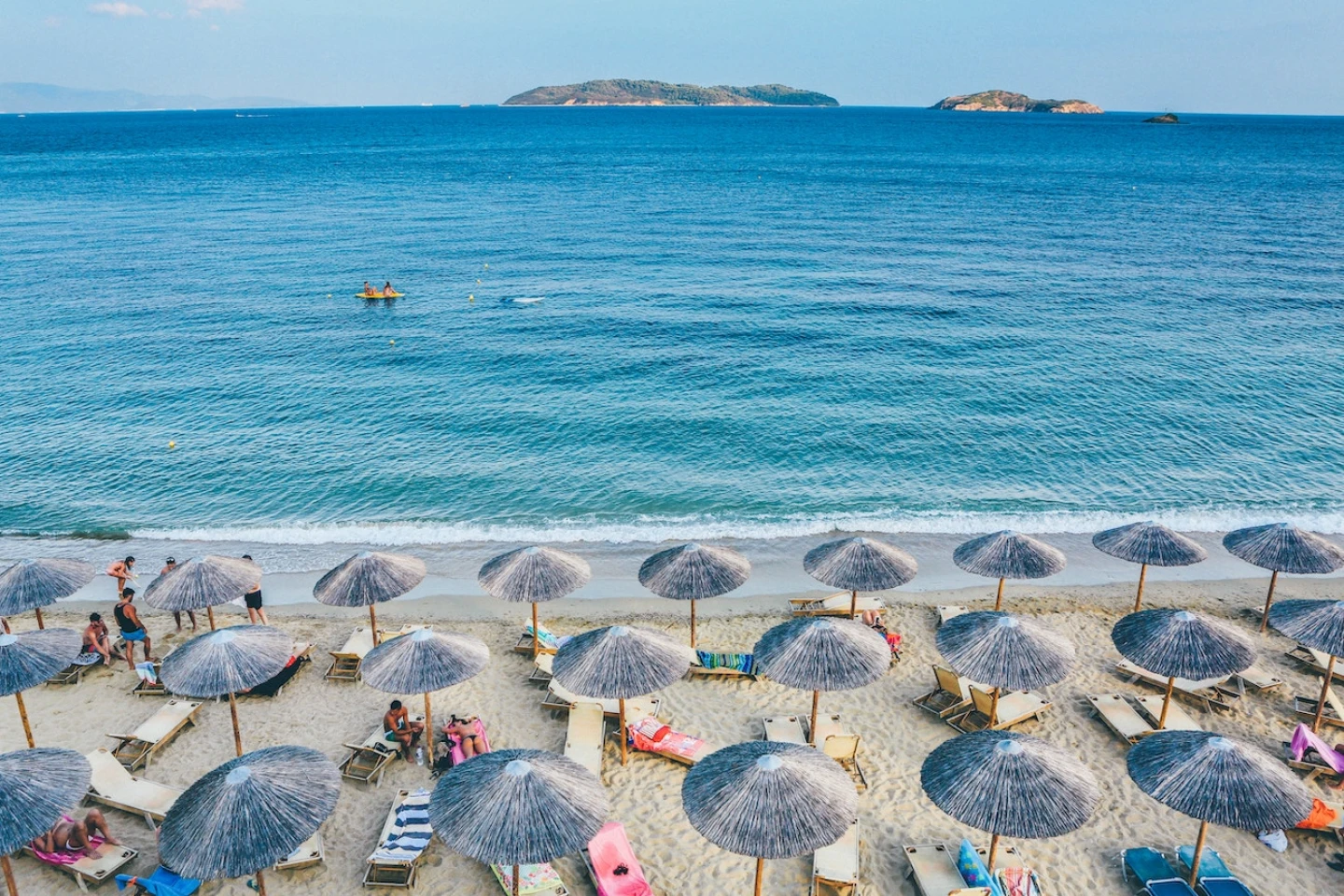
Beach in Greece with Lounge Chairs
More Than Just a Beach Chair
The anger against the placement of beach chairs on free beaches is partly because Greeks have a very personal relationship with the sea. The concept of “private” beaches goes against one of the basic freedoms of the Greek summer - access to the Mediterranean. At the same time, it symbolizes the development of a country that is focused only on tourists -- an outlook that Greeks hope to change in the future.
For many people who own, or plan to buy, a home in Greece, the journey is part of the experience. Some fly directly to Athens, Thessaloniki, Heraklion, or Chania. Others prefer slower travel, combining trains, ferries, buses, and regional routes across Europe. Until now, however, planning a cross-border trip by train has often required patience, several booking platforms, and a healthy tolerance for uncertainty. A new proposal from the European Commission aims to make that process much simpler. The plan introduces a more unified system for booking cross-border journeys across Europe, especially train journeys involving more than one operator. The goal is clear: travellers should be able to search, compare, and book a complete journey through one platform, even when different transport companies are involved. For international buyers, second-home owners, and regular visitors to Greece, this could become an important step towards easier, more flexible travel across Europe.
A third Cretan beach, Falassarna, also appears in the global top 20, ranking 11th. Alongside them, Paleokastritsa in Corfu takes 14th place, giving Greece one of the strongest national showings in the ranking. At the very top of the list is Isla Pasión in Mexico, praised for its tropical scenery and distinctive natural shape. But while Mexico may hold first place, Greece clearly dominates the podium, with Crete claiming two of the three highest positions.
Law 5293/2026 introduces a framework that redefines the role of the notary in property transfers in Greece. The notary is designated as a “one-stop shop” for the completion of transactions involving the transfer of property rights. The provisions apply to transfers arising from sale, donation, parental gift, or inheritance.