Skip to content

Is Chania a Party Town?

Regional Guides

29.09.2025

Chania Old Town

In a word: no, and for most people who fall in love with the city, that is precisely the point. Chania offers some of the most atmospheric evenings in Greece, built around a Venetian harbour, candlelit alleys and music drifting out of buildings that have stood for centuries. What it does not offer is the sunrise club culture of Mykonos or Ios. If you are weighing up Chania as a holiday destination, or considering a home in the area and wondering what your evenings would look like, here is an honest picture.

What Kind of Nightlife Does Chania Actually Have?

The scene is social rather than wild. Evenings revolve around long dinners, drinks by the water and conversation, with music as the backdrop rather than the main event. The setting does much of the work: many bars occupy restored Venetian and Ottoman buildings, with stone walls, courtyards and terraces that no purpose-built venue can imitate. There is a genuinely local layer to it as well. In the tavernas and music venues where Cretans go, the soundtrack is the island's own: the Cretan lyra and laouto, the instruments of Crete's musical tradition, often played live on weekend evenings. Hearing lyra in a packed kafeneio is a more authentically Cretan night out than any cocktail list, and it is open to anyone willing to stay past midnight. The modern end of the spectrum is well covered too. Cocktail bars work with local ingredients such as Cretan herbs and honey, there is a respectable craft beer scene, and a handful of venues host jazz and contemporary Greek acts through the year.

Where Do the Evenings Happen?

Three areas, each with its own character.

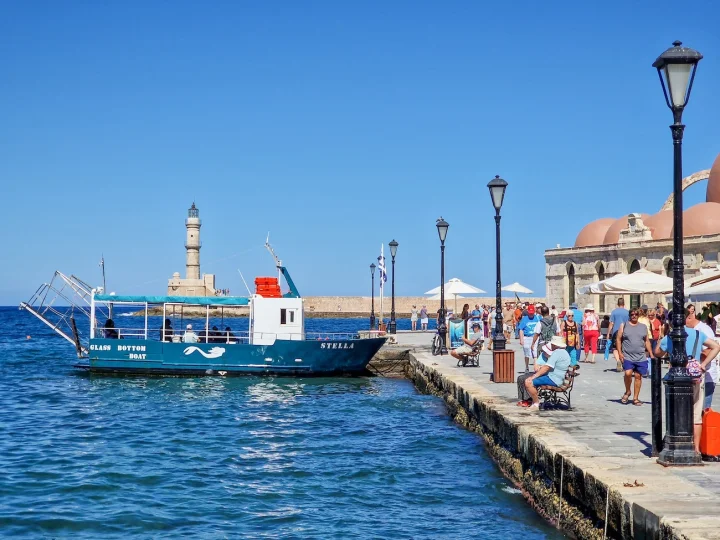
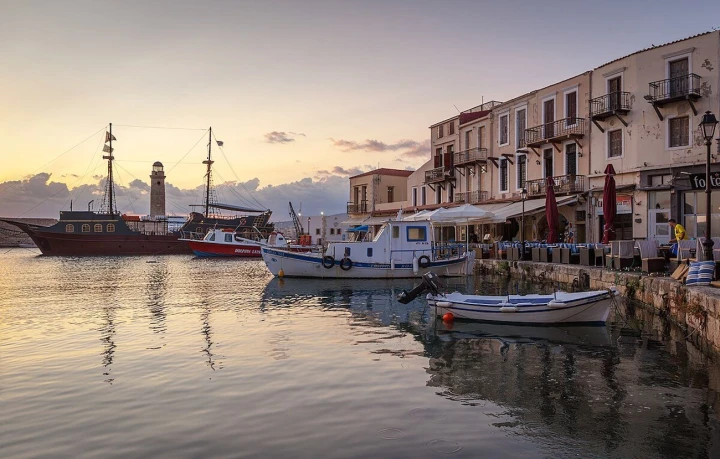
The Venetian Harbour is the postcard. The waterfront from the lighthouse around to the Neoria, the old Venetian shipyards, lines up bars and restaurants with the best sunset seats in the city. It is the most touristic of the three areas in summer, and even so the setting earns it: drinks beside sixteenth-century harbour walls are hard to argue with. Kalergon street, just behind the Neoria, hides a quieter row of bars away from the front-line crowds.

Splantzia and the old town alleys are where locals concentrate. The pedestrianised Daliani street and the lanes around Splantzia square hold the densest stretch of bars in the city, from alternative haunts with live concerts to relaxed all-day cafe bars. Deeper into the old town, Kondylaki street is home to one of Chania's most famous venues, an open-air bar set in the ruins of the old synagogue, and the streets around Angelou and Sifaka offer everything from jazz to Cretan beer in the shade of the Byzantine wall.

Koum Kapi, the seafront just east of the old town, is the year-round local promenade: a line of cafe bars facing the water that fills with Chaniots in the evening, in February as much as August. For anyone considering living in Chania rather than just visiting, Koum Kapi is the best indication of what off-season evenings feel like.

Larger clubs and resort-style nightlife sit outside the city, mainly in Platanias and Agia Marina along the coast to the west. These cater to the summer holiday crowd with bigger spaces and later hours, and they quieten considerably outside the season.

Chania, Crete

How Does Chania Compare to Other Greek Islands?

Somewhere in the comfortable middle. It has far more going on after dark than the quieter Cyclades, and none of the velvet ropes, beach club minimums or organised party strips of Mykonos and Ios. Prices reflect that: an evening out in Chania costs a fraction of the equivalent in Mykonos, where cocktails at the well-known beach clubs commonly run to twenty euros and beyond. The comparison that matters more for a prospective resident is seasonal depth. Pure party islands largely close in winter. Chania is a working city of some 50,000 people with a university nearby, so the cafes, bars and cultural life continue year-round, merely shifting from the harbour terraces to the indoor venues and Koum Kapi. That is a meaningful difference if you plan to spend spring or autumn months in a home here.

What Time Do Evenings Start and End?

On Greek time. Bars open from the early evening for sunset drinks, but the city does not get going until after 9 or 10 pm, once dinner is properly finished. Peak hours run from around 10 pm to 2 am, and in summer plenty of venues carry on until 3 or 4 am. Tavernas often shift character as the night progresses, starting as family restaurants and ending with music and the occasional impromptu dance. Seasonality is real but gentler than on smaller islands. Summer brings full terraces and extended hours; winter trims the opening times and closes some summer-only spots, while the year-round core keeps serving the local crowd.

Who Is It For?

Almost everyone, which is unusual. Families stroll the harbour with ice cream until late, because Greek children keep Greek hours. Couples get the romantic end of the spectrum, with quiet wine bars and waterfront tables. Younger visitors find lively, affordable bars in Splantzia and around the harbour, and the western coast clubs if they want to dance until morning. Older visitors tend to appreciate exactly what Chania is not: there are no aggressive promoters, no party strips, and conversation-volume venues are the rule rather than the exception. For property buyers, this profile has a practical side.


Chania's evening scene is lively enough to support strong holiday rental demand, yet contained enough that homes in and around the old town remain pleasant to live in. The usual trade-off applies: a property overlooking the harbour or near Splantzia offers the atmosphere at the price of summer night noise, while areas like Halepa or the suburbs east of Koum Kapi put the same evenings ten minutes' walk away instead of under the window.

Seeking a House in Crete?

Contact us!

You might also like