Glamping in Greece has officially entered a new era. With the publication of a national legal framework (FEK) at the end of 2025, Greece has introduced clear and binding rules for the operation, classification, and development of luxury camping accommodations. For the first time, glamping is formally recognized as a distinct category within the country’s hospitality sector.
The new framework, issued by the Ministry of Tourism, brings clarity to a segment that has grown steadily since 2012 but until now operated without dedicated national regulations. This development has important implications for hospitality operators, landowners, and investors interested in premium, nature-based accommodation.
A Clear Legal Definition for Glamping in Greece
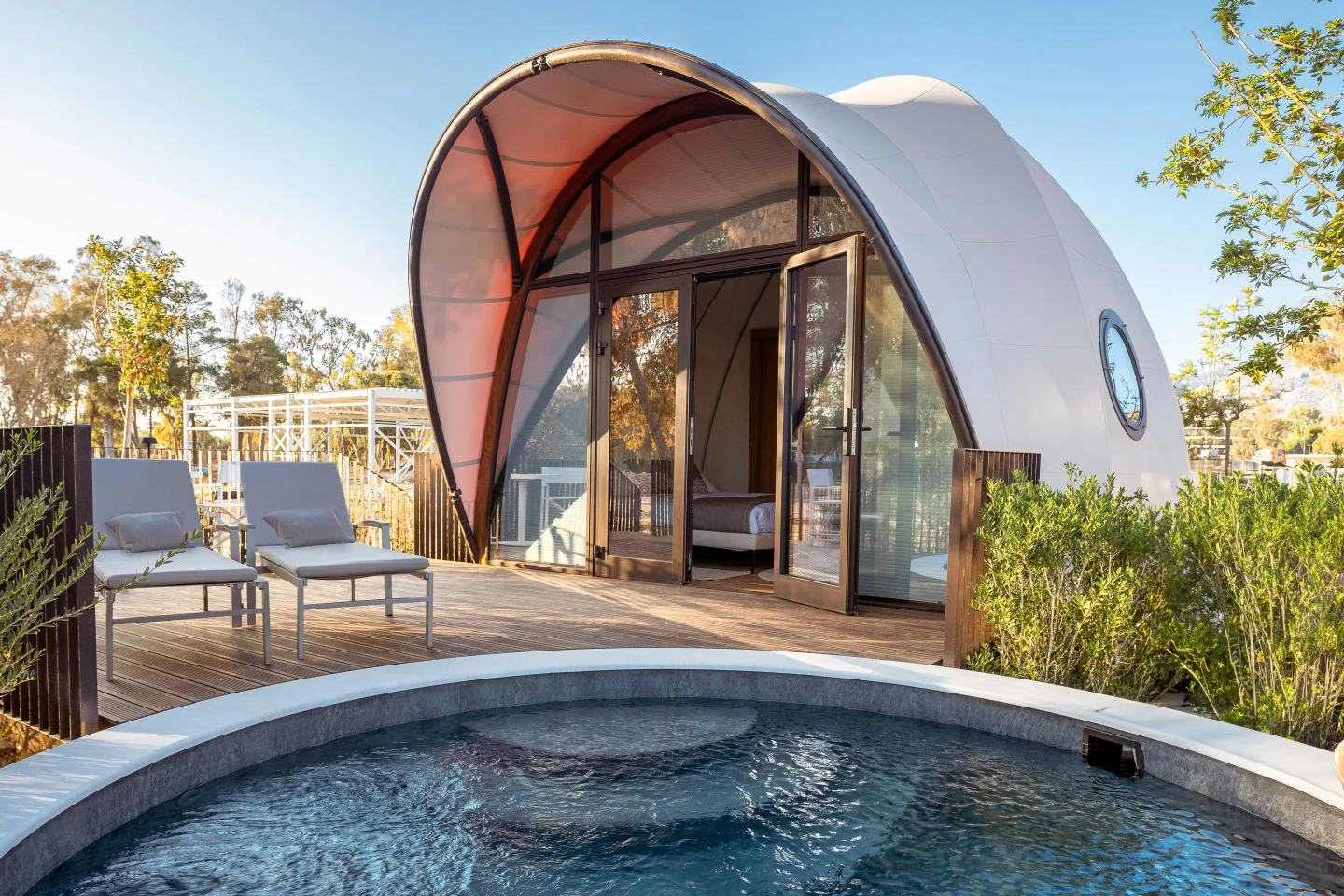
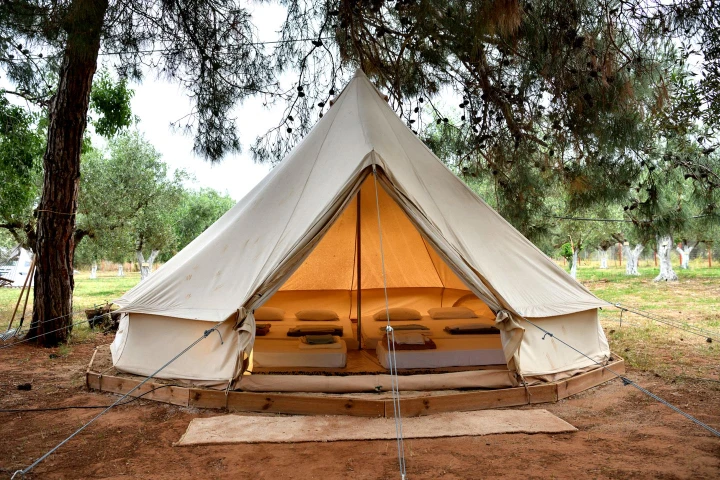
Under the new legislation, glamping sites are defined as organized luxury camping developments that combine outdoor settings with hotel-level comfort and services. Unlike traditional campsites, glamping is positioned firmly at the high end of the accommodation market.
One of the most significant aspects of the framework is that glamping properties may only be classified as four-star or five-star accommodations. Lower categories are excluded, reinforcing the premium positioning of glamping in Greece and setting a clear quality benchmark.
Classification follows the established hotel rating system, managed by the Hellenic Chamber of Hotels, but with criteria adapted specifically to nature-based accommodation.
Capacity, Layout, and Environmental Integration
To preserve the core characteristics of glamping—privacy, low density, and immersion in nature—the framework introduces strict spatial and capacity limits.
Each individual glamping unit is limited to:
– A maximum of four adult beds
– Up to two additional beds for children
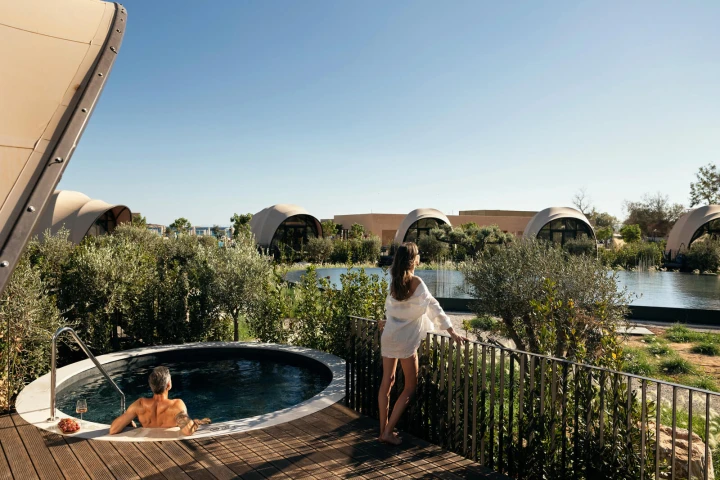
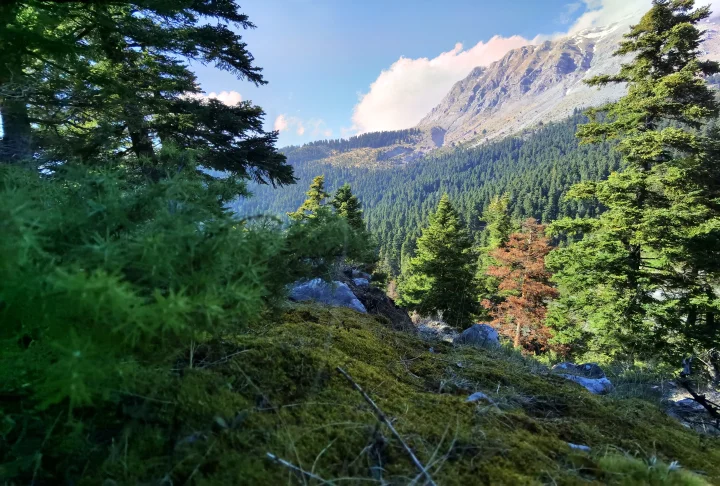
Units must be placed at a minimum distance of 10 metres from one another, ensuring visual separation and a sense of seclusion. In addition, at least 50% of the total site area must be covered by vegetation, emphasizing landscape integration and environmental balance.
Internal transport within glamping sites must rely on environmentally friendly methods, further aligning the sector with sustainability principles.
Accessibility as a Core Requirement
Accessibility plays a central role in the new framework for glamping in Greece. All developments must comply with national “Design for All” standards, ensuring safe and independent access for guests with disabilities or reduced mobility.
At least 5% of accommodation units must be specifically designed for accessible use, and all new glamping projects must include a formal accessibility study as part of the licensing process. This requirement raises design standards from the earliest planning stages and aligns Greek glamping with modern hospitality expectations.

Services and Infrastructure at Hotel Level
The framework sets detailed requirements for infrastructure and services, bringing glamping closer to high-end hotel operations. These include:
– Reception and guest services
– Daily housekeeping
– First-aid facilities
– Parking areas
– Catering and dining spaces
– Recreation and wellness facilities
– Security and site management
Accommodation units must meet hotel-level standards, including private bathrooms, climate control, quality furnishings, and modern technology. Higher-category developments may also include spas, gyms, and swimming pools.
Glamping in Greece: Sustainability and Long-Term Positioning
Beyond luxury, the legislation strongly encourages ecological management. Points toward star classification are awarded for energy efficiency, renewable energy use, recycling, composting, biological wastewater treatment, and recognized environmental certifications.
The framework came into force on 31 December 2025 and applies to both new and existing glamping developments, marking a decisive shift from informal operation to regulated, high-standard hospitality.
With this new legal framework, glamping in Greece moves from a loosely defined alternative accommodation model into a noteworthy and rising core of the country’s tourism offering. Clear rules, high standards, and a strong emphasis on sustainability and accessibility create a solid foundation for carefully planned, premium developments that align with Greece’s long-term tourism and land-use strategy.