21.04.2026
Greece to Exempt British Tourists from Biometric Entry Checks This Summer
Greece has announced that British travellers will be exempt from biometric checks when entering the country this summer.
In The News21.11.2024
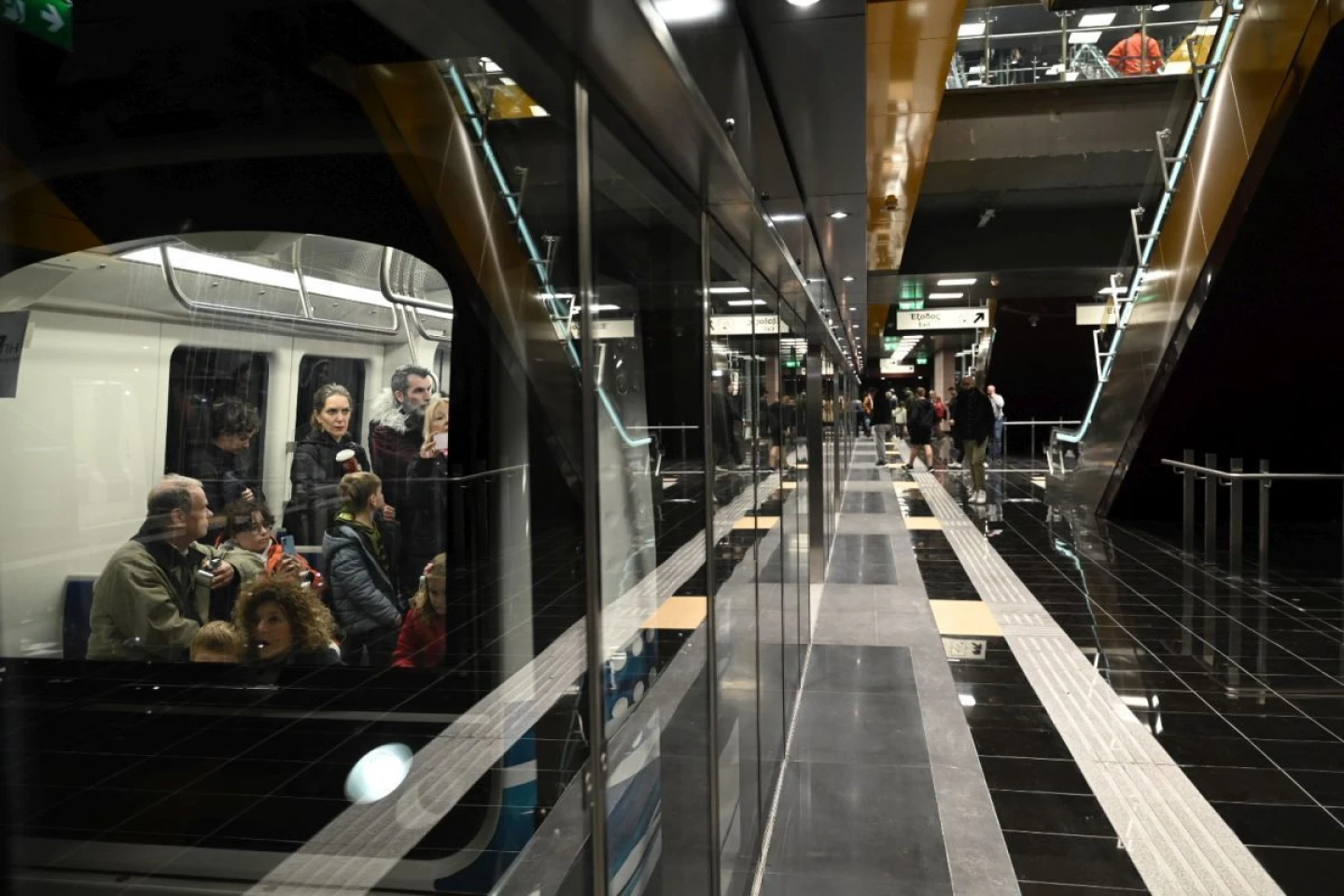
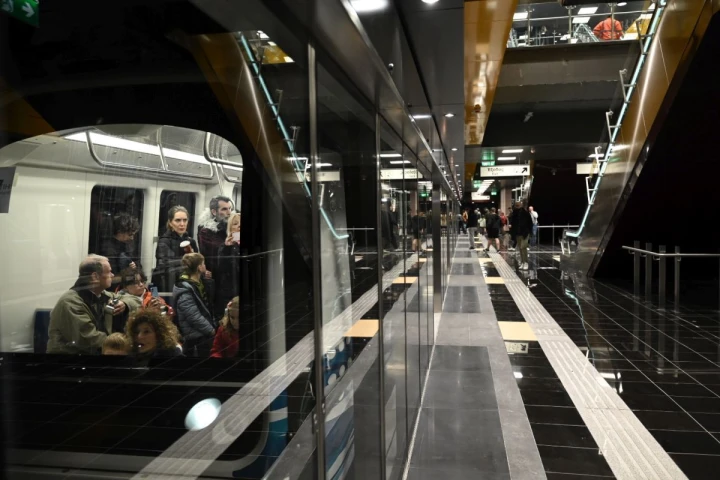
Thessaloniki’s Metro is finally set to launch on November 30, 2024, after decades of anticipation. This highly advanced and eco-friendly transit system is poised to transform how people move around Greece’s second-largest city. Whether you’re an expat living in Thessaloniki or planning to visit, this guide provides everything you need to know about the Metro, from its route, ticket prices, and stations to its historical and cultural significance.
The Thessaloniki Metro boasts state-of-the-art technology and an efficient design. It is poised to become one of Europe’s most advanced transit systems. Here are its most impressive aspects:
Length: 9.6 kilometers for the initial phase.
Stations: 13 operational stations in the first phase.
Travel Time: Full route covered in 17 minutes.
Capacity: Trains can carry up to 450 passengers each.
Frequency: Trains every 90 seconds during peak hours.
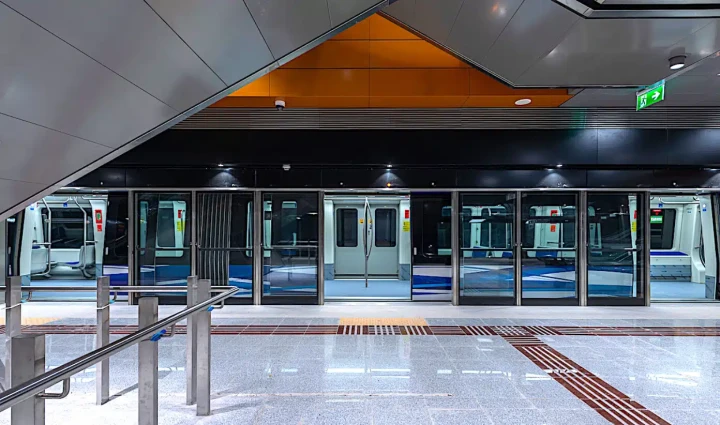
Safety: Platform screen doors (PSDs) installed at all stations.
Sustainability: 95% of construction materials recycled.
This Metro is not just a means of transport but also a green solution, designed to reduce traffic congestion and promote environmental sustainability.
1. New Railway Station: A major transport hub for national and international trains.
2. Dimokratias: Located near Vardari Square, this station connects cultural and commercial hubs.
3. Venizelou: Home to stunning archaeological displays, showcasing artifacts uncovered during Metro construction.
4. Agia Sofia: Situated near Thessaloniki’s iconic Agia Sofia church, a UNESCO World Heritage Site.
5. Panepistimio: Serves the Aristotle University of Thessaloniki, the largest university in Greece.
6. Sintrivani/Ekthesi: Ideal for visitors heading to the Thessaloniki International Fairgrounds.
7. Papafi: Named after a historic philanthropist, this station connects with quiet residential areas.
8. Efklidis: Located in a vibrant neighborhood, offering quick access to local shops and amenities.
9. Fleming: A gateway to suburban areas and quieter streets.
10. Analipsi: This station serves a mix of residential and commercial areas.
11. 25 Martiou: Named after a national holiday, it’s close to parks and recreational areas.
12. Voulgari: A bustling station surrounded by residential districts and shopping zones.
13. Nea Elvetia: The easternmost station, providing access to suburban neighborhoods and upcoming connections.
The Metro’s ticketing system is designed to be user-friendly and affordable:
Single Ticket: €0.60 for a 70-minute journey, with unlimited transfers within the Metro.
Discounted Ticket: €0.30 for students, seniors, and other eligible groups.
Monthly Passes: Unlimited travel options will soon be available for frequent riders.
Tickets can be purchased through vending machines, contactless cards, or the Metro’s dedicated mobile app.
For expats navigating Thessaloniki, the Metro is a game-changer:
Clear Signage: Multilingual signs in Greek, English, and other languages.
Accessibility: Elevators, escalators, and ramps at every station ensure ease of access for all passengers.
Fast Commutes: Skip traffic jams with 17-minute cross-city travel times.
The Thessaloniki Metro is designed with cutting-edge features to provide a seamless travel experience:
Fully automated trains operate without drivers, ensuring safety and precision through real-time monitoring.
These safety barriers prevent accidents by separating the platform from the tracks until the train arrives.
From energy-efficient trains to the recycling of over 95% of construction materials, the Metro is a green transportation solution.
The Thessaloniki Metro is not just a transportation project; it’s a bridge between the ancient and the modern. Over 300,000 archaeological artifacts were discovered during its construction, leading to the creation of permanent exhibitions at some stations.
During construction, workers discovered over 300,000 archaeological artifacts, offering unparalleled insight into Thessaloniki’s 2,300-year-old history. Many of these artifacts are now incorporated into the Metro stations, creating a seamless blend of history and modernity.
Venizelou Station: Features a reconstructed Byzantine road, complete with ancient shops and infrastructure.
Agia Sofia Station: Displays artifacts from the early Christian and Byzantine periods.
Future Museum: Plans are underway for a dedicated museum to house additional finds, making the Metro a living tribute to the city’s past.
The Thessaloniki Metro is just beginning its journey. Here’s what lies ahead:
A second phase is scheduled for 2025, adding five stations to the southeastern neighborhoods, including Kalamaria and Micra.
Planned routes to Stavroupoli, Evosmos, and other western suburbs aim to improve connectivity for these densely populated areas.
A future phase will connect the Metro directly to Macedonia International Airport, providing fast and seamless travel for international passengers. In one year, the extension of the Thessaloniki Metro toward Kalamaria is expected to be operational, marking the completion of the initial phase of metro construction in the city. However, this conclusion also heralds the beginning of a new development phase aimed at extending the network to additional areas.
The Ministry of Infrastructure and Transport, alongside Elliniko Metro, has outlined plans for expansions toward the northwestern suburbs, including areas with dense populations such as Nea Efkarpia, Evosmos, Toumba, Harilaou, the intercity bus terminal (KTEL), Macedonia Airport, Peraia, and Thermi. Ultimately, the Thessaloniki Metro network is projected to comprise 44 stations over 48 kilometers, serving approximately 680,000 passengers daily.
The Thessaloniki Metro is not just a transportation system—it’s a symbol of progress and modernity for the city. Combining fast, efficient travel with cultural preservation and environmental sustainability, it’s a must-know for any expat or visitor. Mark your calendar for November 30, 2024, and experience this transformative new chapter in Thessaloniki’s history firsthand!

21.04.2026
Greece has announced that British travellers will be exempt from biometric checks when entering the country this summer.
20.04.2026
Syros, in the central Aegean, is being highlighted by international media as a compelling alternative to the more crowded Greek islands. British outlets, in particular, are presenting it as a destination that combines culture, architecture, and nature without the intensity of mass tourism.
15.04.2026
HGTV’s new series World’s Bargain Dream Homes taps into a familiar idea: what if starting over somewhere new didn’t require an unlimited budget?
The show follows Americans searching for affordable homes overseas, typically working with a ceiling of around $150,000 — an amount that, depending on location, can stretch further than many expect. Premiered on April 14, the series spans a range of destinations across Central America and Europe, including Costa Rica, Panama, France, Italy, and Greece. Each episode pairs buyers with local real estate professionals, offering insights not only into the properties themselves but also into what everyday life might look like in each location. In the Crete episode, the property search is guided by Dion Gavriilidis, Managing Partner of Elxis.
14.04.2026
If you still think of Greece as a strictly summer fling — sunburn, sandals, and Santorini sunsets — it might be time to update your mental itinerary. According to a recent story by journalist Ilias Bellos in Kathimerini, the country is steadily, and rather cleverly, reshaping itself into a year-round destination.
Let’s start with the data. According to Visa, foreign visitors in Greece increased their card usage by 12% in 2025, while the number of tourists using Visa cards rose by 13%. These figures point to steady growth in both arrivals and spending, as well as a broader shift toward digital payments. Beyond convenience, this trend offers a clearer picture of how visitors engage with the Greek tourism economy throughout the year.
A notable shift is also taking place beyond the peak summer months. Growth is no longer concentrated in July and August, as spending during the off-season continues to rise. February 2025, in particular, recorded the highest percentage increase, highlighting a gradual reduction in seasonality. This trend suggests that Greece is steadily expanding its appeal as a year-round destination, rather than relying primarily on summer tourism.
08.04.2026
The Greek government is preparing to introduce a major reform in the way property values are calculated. A new automated system for determining “objective values”, the official property prices used for tax calculations, is expected to launch in early 2027.
31.03.2026
Thessaloniki’s airport is getting busier — in a good way — thanks to easyJet’s latest expansion, which adds two new international routes and strengthens the city’s growing role as a northern Greek travel hub.
On March 29, the first direct easyJet flight connecting Amsterdam and Thessaloniki touched down. Passengers arriving from the Dutch capital were greeted with a warm welcome from airport representatives and airline staff, a gesture that underscored the importance of this new connection for both tourism and business travel.
The Amsterdam–Thessaloniki route will operate twice weekly, every Wednesday and Sunday. It’s a schedule that seems tailor-made for long weekends — whether you’re a Dutch traveler craving Mediterranean sunshine or a Thessaloniki resident plotting a quick escape to canals, bicycles, and stroopwafels.
19.03.2026
Spanning over 1700 km across the southern peninsula and connecting 12 major hiking routes, the Peloponnese Trails network is set to become the Largest Certified Hiking Trail Network in Greece, weaving together landscapes, heritage, and storytelling in a way that is both immersive and sustainable.
18.03.2026
Basements are a familiar feature of many homes across Greece. Traditionally used for storage, parking, or utility areas, these spaces are increasingly being reimagined—sometimes as guest rooms, independent apartments, or even stylish leisure areas. For anyone exploring property in Greece, it’s useful to understand how basements are defined and when they can legally function as living spaces. The rules are quite specific, but once explained clearly, they follow a logical structure.


In The News
In The News
In The News
In The News
In The News
In The News
In The News