08.09.2026
Greece’s 2027 property changes: What buyers and owners need to know
Greek Prime Minister Kyriakos Mitsotakis has announced series of housing measures affecting property buyers and owners at the Thessaloniki International Fair.

In The News
30.09.2023
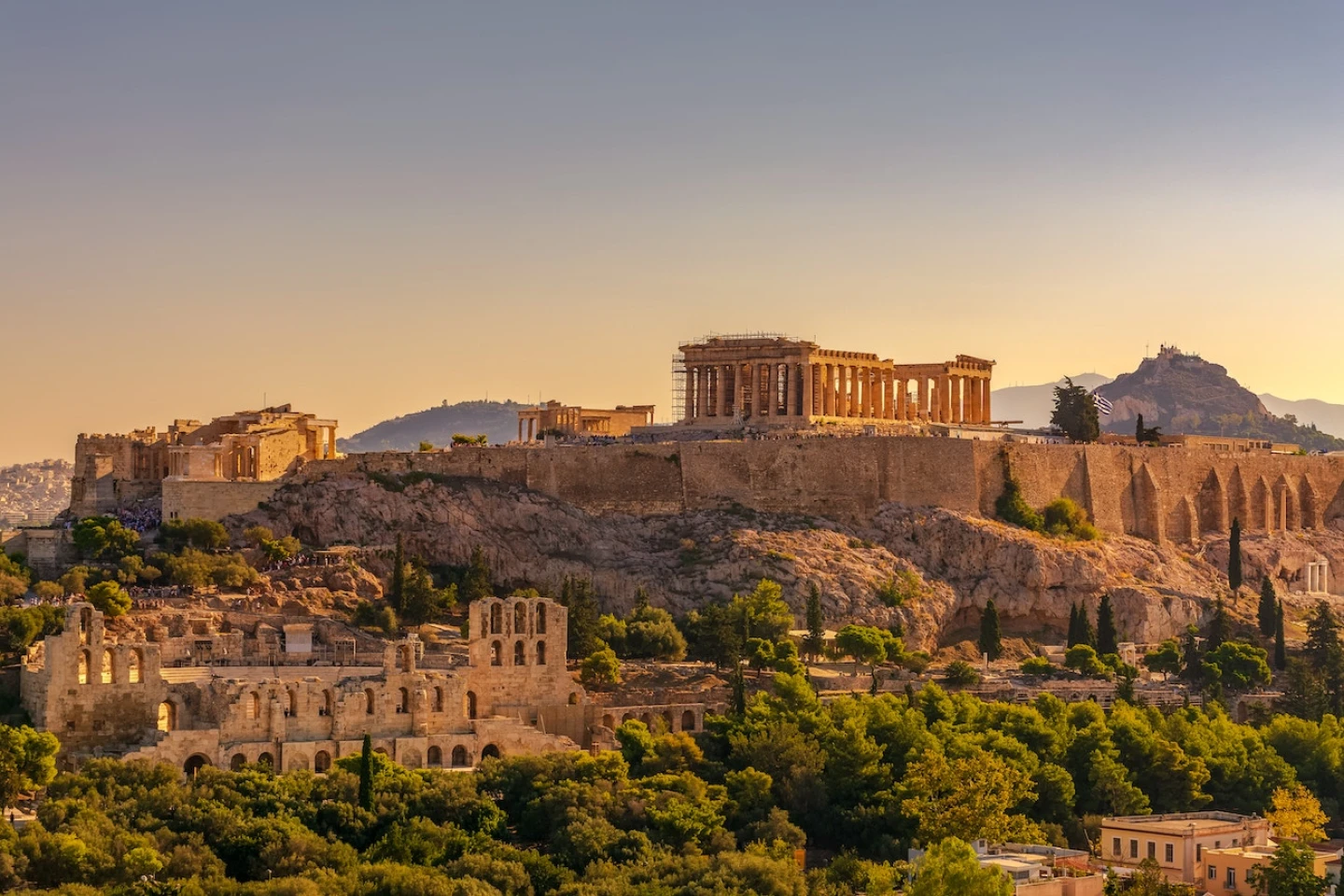
The Acropolis has a new ticketing system starting on the 4th of September. The new system is designed to reduce lines and waiting times, and is currently in the pilot phase until next April. In 2023, in the peak months of July and August, the Acropolis had 23,000 visitors per day. So, the need to control the crowds is obvious.
An official e-ticket platform lets you pick the exact time you want to visit (within a range of 30 minutes). The daily limit on visitors is 20,000 per day, with each time slot having a limited number of entrants. The morning slots will have the highest number of spaces, allowing around 3,000 visitors. Not only will the program reduce crowds, but it will also protect the monument. As a visitor said, “Thirty minutes is definitely better than waiting two hours for such a historic monument.” She went on, “If you have your ticket and you know when you’re going to enter, it’s easier to organize your day and plan your visit”. Other visitors are more skeptical: “The measure isn’t very practical. It makes sense because the antiquities need to be protected. But I think they could do better in terms of informing the public.” He related it to sporting events, where you know your seat well in advance and can plan accordingly.
Alessandra from Italy notes that “it would be better if there was a screen or a board that could inform visitors of the time slots and the number of tickets that are available”. The new ticketing platform was decided because of a study from the Hellenic Organization of Cultural Resources Development. This e-ticketing system is already in use at the Acropolis Museum to limit the number of visitors. It may also be implemented at other archaeological sites in Greece.
Ticket prices will remain the same as before: 20 euros for general admission and 10 euros for non-EU citizens under 25 years old. According to the website where you buy your tickets, you should arrive 30 minutes before your time slot, and you are allowed to enter up to 15 minutes before your scheduled time and up to 15 minutes after.
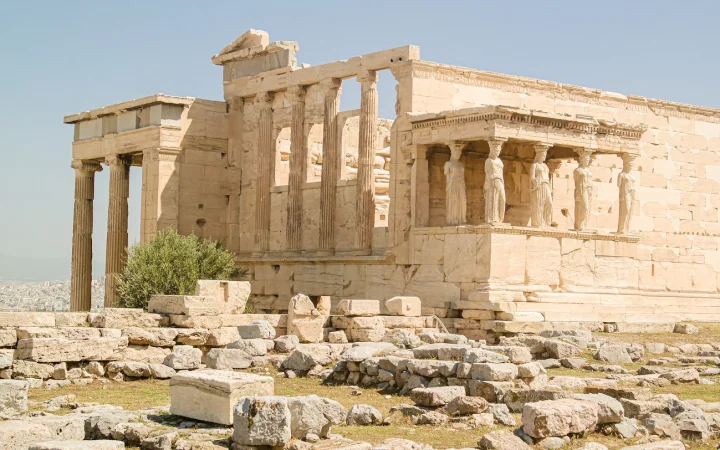
The Acropolis is one of the most famous sites in the world, and it was made in the 5th century BC to honor the goddess Athena. In the 5th century AD, it was used as a church and later as a mosque. The ancient site of the Acropolis is not just the Parthenon. It is also the Erechtheion, the Temple of Athena Nike, and the Propylaea. The Areopagus (rock of Ares) is on the northwest side of the site and was once a court used for criminal cases. Nowadays, it is an ideal place to enjoy the view of Athens. The Acropolis closed earlier this summer because of the high temperatures from heatwaves, but it has now returned to its usual operations.
08.09.2026
Greek Prime Minister Kyriakos Mitsotakis has announced series of housing measures affecting property buyers and owners at the Thessaloniki International Fair.
05.09.2026
Greece is entering a new era of property and inheritance regulation. For the first time in over 80 years, the government is preparing a comprehensive reform of the Inheritance Law, designed to simplify procedures, ensure fairness, and modernise how estates are managed.
07.08.2026
Greece is taking an important step in environmental protection, becoming the first country in the world to deploy a national satellite system for wildfire detection and monitoring. First launched in May and expected to become fully operational in September 2026, the new Hellenic Fire System brings advanced space technology to Greece's efforts against wildfires.
06.08.2026
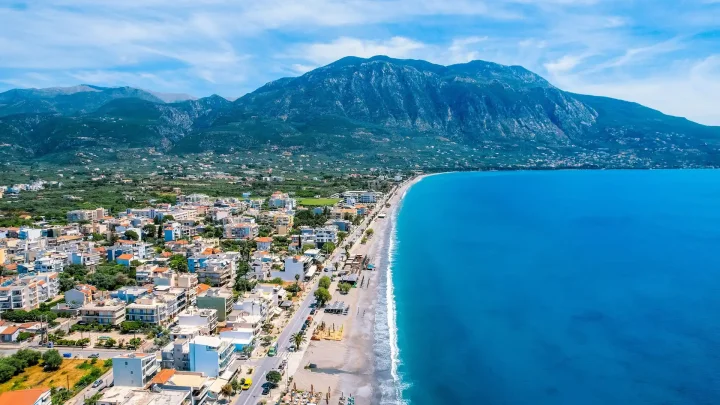
If you own a home in the Peloponnese or have been quietly thinking about buying one, there is some news you should be aware of: At the end of June, a 40-year concession for Kalamata International Airport "Kapetan Vasilis Konstantakopoulos" was signed by a consortium led by Fraport, together with the Kopelouzos Group's Delta Airport Investments and the Konstantakopoulos Group's PILEAS. According to the National Development Fund, which retains a 10% stake in the new company, the initial concession payment is 45 million euros, and the planned investment programme is expected to exceed 125 million euros over time.
In short: Kalamata's airport is set to roughly double its traffic by 2030, with a new terminal three times the size of the current one. For anyone with a house in the region, or an eye on one, that matters.
03.08.2026
A new regulation regarding the calculation of ENFIA (Eniaios Phoros Idioktisias Akiniton/annual property tax) was announced by the Greek Ministry of National Economy and Finance. The purpose of this regulation appears to be to address cases where property owners were previously taxed on more square meters than their property actually has. The new regulation, which is expected to take effect in the 2027 tax year, introduces the Electronic Building ID as a key factor in determining taxable floor area.
28.07.2026
As UNESCO recently announced, Mount Olympus – also known as the Home of Ancient Greek Gods, or Greece’s highest mountain – has been added to the list of World Heritage Sites. Of course, Greece welcomed the news with a wave of euphoria, as Mount Olympus is widely recognized for its cultural and natural significance.
23.06.2026
Moving your life to a new country brings enough to think about, including the costs. For those settling permanently in Greece, there is some welcome news on that front. Bringing your household belongings and even your car can come with relief from customs duty, VAT and vehicle registration tax. The Independent Authority for Public Revenue (AADE) has recently set out clearer rules on how this works. It's important to clarify that this relief is not exactly new, but what has changed is a significant detail: a recent AADE circular (reference E.2027/2026) spells out the eligibility, the supporting documents and the procedure, with the aim of handling applications more consistently across customs offices.
14.05.2026
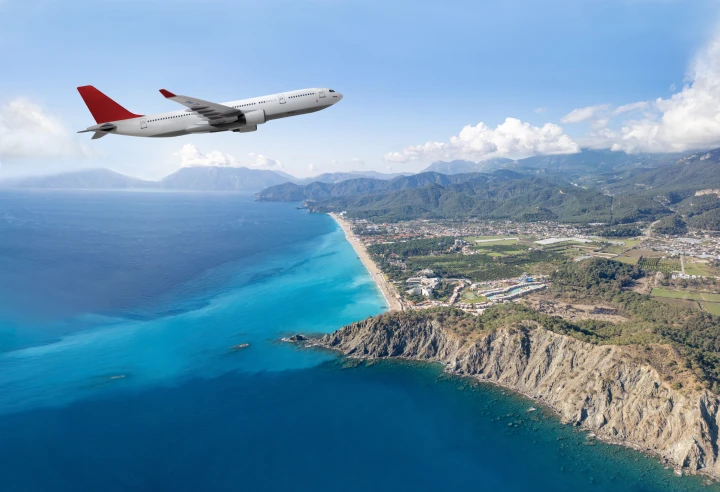
For many people who own, or plan to buy, a home in Greece, the journey is part of the experience. Some fly directly to Athens, Thessaloniki, Heraklion, or Chania. Others prefer slower travel, combining trains, ferries, buses, and regional routes across Europe. Until now, however, planning a cross-border trip by train has often required patience, several booking platforms, and a healthy tolerance for uncertainty. A new proposal from the European Commission aims to make that process much simpler. The plan introduces a more unified system for booking cross-border journeys across Europe, especially train journeys involving more than one operator. The goal is clear: travellers should be able to search, compare, and book a complete journey through one platform, even when different transport companies are involved. For international buyers, second-home owners, and regular visitors to Greece, this could become an important step towards easier, more flexible travel across Europe.