23.10.2026
Life on Lefkada: What You Should Know Before Buying a House
For international property buyers and future permanent residents, Lefkada can be a very smart option.
Regional Guides
23.07.2025
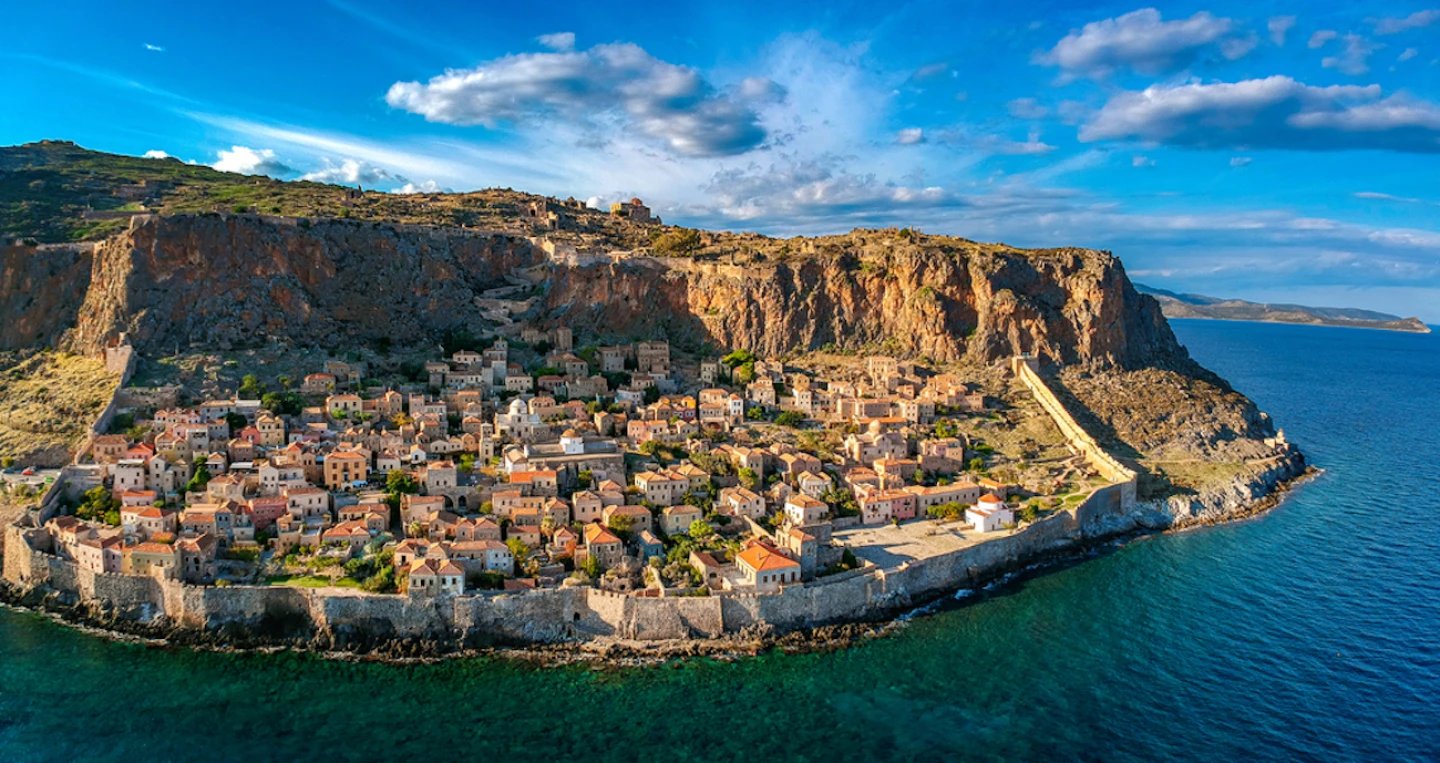
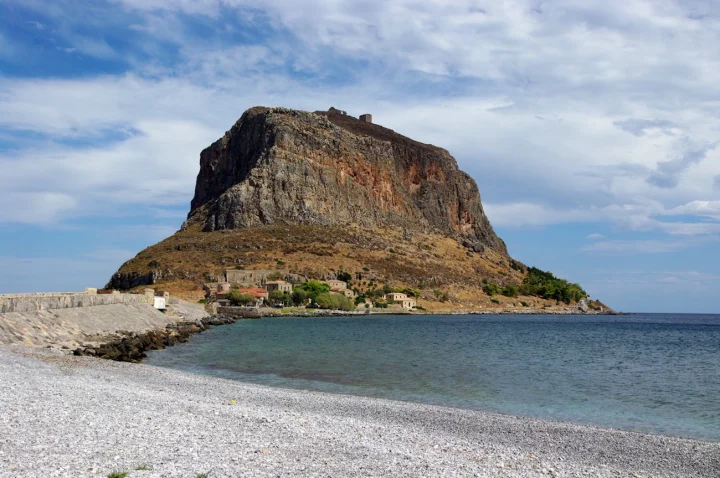
Rising majestically from the Aegean Sea, a fortress city perched on a rocky island captures the imagination of every visitor to the Peloponnese. This remarkable walled settlement, connected to the mainland by a narrow causeway, represents one of Greece’s most extraordinary examples of medieval architecture and strategic urban planning.
There are places in Greece that stop you in your tracks, and Monemvasia is one of them. A walled medieval city built on a limestone rock jutting into the Aegean, connected to the mainland by a single narrow causeway. It is unlike anything else on the peninsula, and most visitors feel that immediately.
Monemvasia stands as the most famous walled city in the Peloponnese, earning its nickname as the 'Gibraltar of the East' through its commanding position on a massive rock formation jutting into the sea. This extraordinary settlement occupies a limestone monolith that rises 100 metres above sea level, connected to the mainland by a single narrow causeway that gives the city its name (Monemvasia literally means 'single entrance').The city's unique geographical position made it virtually impregnable throughout history. Surrounded by sheer cliffs on three sides and accessible only through one heavily fortified entrance, Monemvasia became a natural fortress that controlled vital sea routes between Constantinople and the West.
The rock itself spans approximately 1.8 kilometres in length and 300 metres in width, providing enough space for a complete medieval settlement whilst maintaining absolute defensive security.This strategic location attracted successive civilisations who recognised its military and commercial value. The settlement's position allowed it to monitor and control maritime traffic whilst remaining virtually immune to land-based attacks, making it one of the most secure urban centres in the medieval Mediterranean world.
Monemvasia was founded around 583 AD, during the reign of the Byzantine Emperor Maurice, when populations from the Peloponnese mainland sought refuge from Slavic incursions. It grew into a major commercial hub, trading with Venice, Genoa, and the wider Mediterranean, and remained an important Byzantine stronghold for centuries. The defensive walls that still define the city were built from local limestone and follow the natural contours of the rock so closely that they appear to grow out of it. Successive rulers, Byzantine, Venetian, and Ottoman, each added to and modified the fortifications, leaving a layered architectural record that is still legible today.
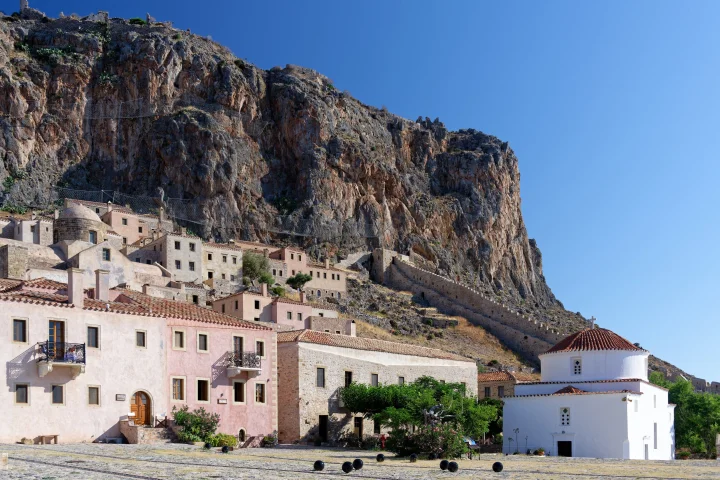
Inside the walls, the medieval layout survives largely intact. Stone-paved streets run between traditional houses, Byzantine churches, and Venetian mansions. The upper town, known as the Kastro, contains the ruins of the original fortress and looks out across the Aegean. The lower town is where people actually live and where visitors stay.
The growing interest in heritage real estate across the Peloponnese has created notable opportunities for buyers seeking properties with historical character and architectural significance. Areas such as Monemvasia and its surrounding region are particularly appealing due to their combination of preserved medieval architecture, strong tourism appeal, and relatively accessible location from major European markets.
Within the fortified town of Monemvasia itself, available properties are limited, and those that do come to market are often subject to strict preservation rules. Renovation work typically needs to respect the historical fabric of the settlement while carefully integrating modern living standards. As a result, restoration projects in the old town can be complex, but they are often highly distinctive and sought after when completed. In contrast, the surrounding mainland areas offer a broader range of opportunities, including traditional stone houses, rural estates, and historic structures that still benefit from proximity to this major cultural and tourist destination.
More broadly, the Peloponnese offers a diverse property landscape that includes coastal villas, village homes, and mountain retreats, many of which are set within regions rich in cultural and historical heritage. This combination of landscape diversity and historical depth continues to attract interest from both domestic and international buyers.
The investment appeal of the region is not limited to potential property appreciation alone. Greece’s strong emphasis on cultural heritage protection, alongside ongoing improvements in infrastructure and tourism services, supports long-term interest in historic properties. In addition, the growing cultural tourism sector creates opportunities for owners to generate rental income from visitors who are specifically drawn to authentic and historically significant accommodation experiences.
Monemvasia attracts visitors across a longer season than many Peloponnese destinations. Spring and autumn are particularly popular, as the weather is good, the fortress is quieter, and the landscape around it is at its best. Summer brings more visitors but the old town absorbs them reasonably well given its scale.
Monemvasia has been on Greece's tentative list for UNESCO World Heritage inscription for some years. Formal inscription has not yet been granted, but the site's significance is well established and it is already one of the most visited destinations in the southern Peloponnese.
Kalamata airport, around 90 kilometres to the west, handles international flights and is the most practical entry point for visitors arriving from abroad. Journey time from Athens by car is approximately three and a half hours.
Monemvasia is one of the places people first look at when exploring the southern Peloponnese, and for good reason. The fortress, the history, and the setting make it an immediate draw. But spending time here tends to open up the wider area: The Mani peninsula, Sparta, Mystras, and the coastline around Gytheio are all within reach, and each has its own character worth exploring before making any decisions.
For buyers considering the region, taking in several areas rather than focusing on one destination gives a more complete picture of what is available and what suits.
If you would like to talk through what the Peloponnese property market looks like in practice, including the southern areas around Monemvasia, our team is happy to help.
Disclaimer: This content is for informational purposes only and does not constitute legal or tax advice. For guidance on your specific situation, we recommend consulting a lawyer, accountant, or notary as appropriate.
Disclaimer: This content is for informational purposes only and does not constitute legal or tax advice. For guidance on your specific situation, we recommend consulting a lawyer, accountant, or notary as appropriate.
23.10.2026
For international property buyers and future permanent residents, Lefkada can be a very smart option.
22.09.2026
The Peloponnese gets far less international attention than Santorini or Mykonos, and for buyers, that is part of the appeal. The peninsula has a long and varied coastline, mountain villages that stay lived-in through winter, and some of the country's best-known ancient sites, Mycenae, Olympia, and Epidaurus among them. Prices here have stayed closer to reality than on the popular islands, mostly because foreign demand arrived later. If you are willing to look past the obvious destinations, the Peloponnese gives you more for your money and a region that does not shut down in October.
29.07.2026
One of Greece's unparalleled advantages is the bounty of islands it offers, with countless places to explore, all set against the backdrop of the endless blue sea. However, figuring out where each of these islands is located can be tricky. The purpose of this guide, therefore, is to provide a simple and easy-to-understand overview of Greece's island groups.
04.06.2026
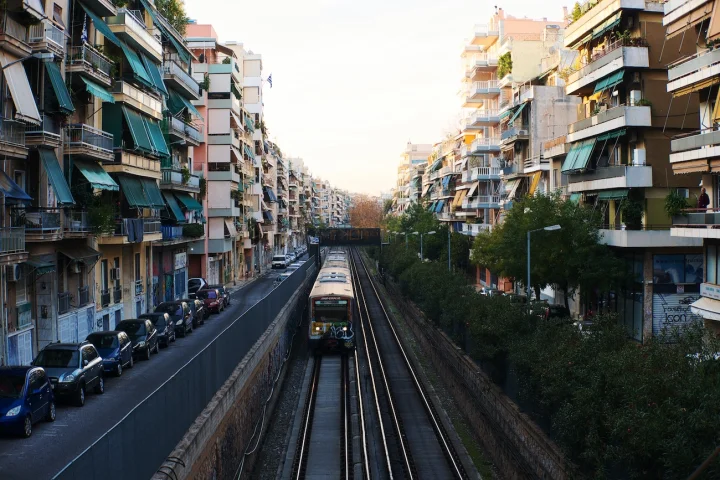
It's a sensible thing to check before you start house-hunting, and the answer is a qualified yes. There is a train, but it only reaches the northern edge of the Peloponnese. Athens connects by rail to Kiato, and on towards Aigio, with a bus completing the run to Patras while the line is being finished. Beyond that, the peninsula has very little passenger rail, so the popular spots like Nafplio, Kalamata, and the Mani are reached by road. For most buyers, that makes the bus or the car the practical choice. Here's the full picture, and what it means if you're thinking of a home here.
24.05.2026
Crete is referred to with the nickname “island of the gods.” The famous Greek island is known for its history, its welcoming people, its picturesque landscapes, and its high quality of life. It seems like everyone is always in a good mood, even when there is a disagreement. What's not to like? In this article, we break down why Crete is the ideal place to buy a second home.
22.05.2026
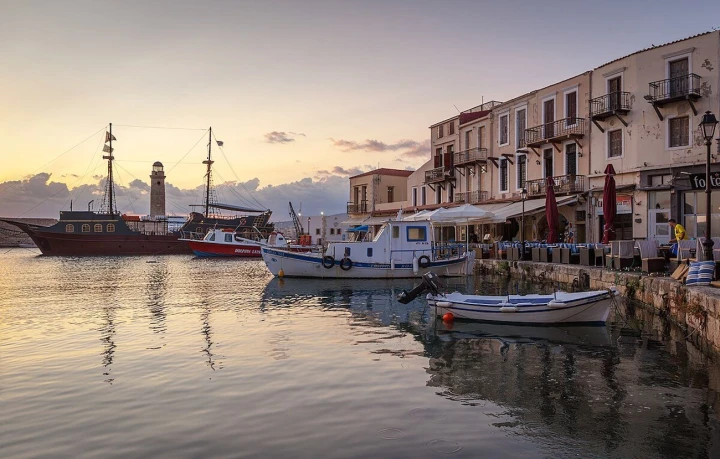
If you're weighing up where to buy in Crete, Rethymno makes a strong case, and for many international buyers the answer is a clear yes. Sitting between Chania and Heraklion, it offers easy access to two major cities while keeping its own relaxed rhythm, historic charm, and a close connection to the sea. From restored village homes to modern villas near the coast, it draws buyers who want more than a summer base: a balanced life with beaches, mountain villages, restaurants, shops, and year-round services all within reach. It's often seen as Crete's smart middle ground, less busy than Chania, more intimate than Heraklion, and still well connected. Here's why it appeals, what makes it stand out, and who it suits best.
18.05.2026
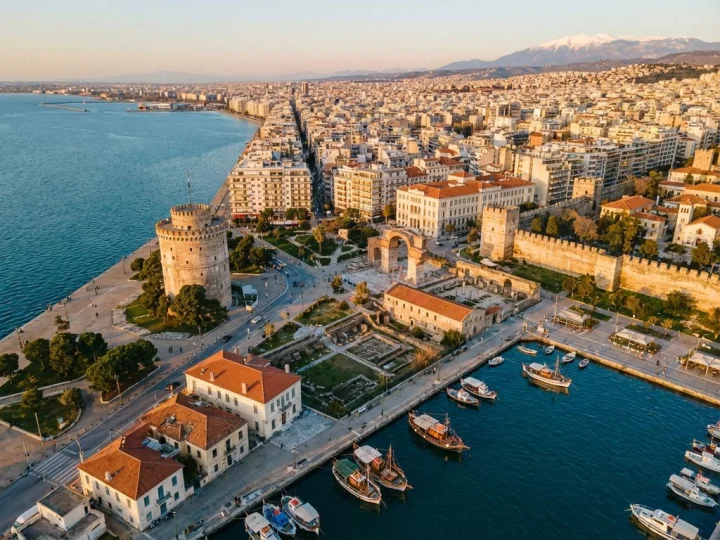
Yes, and a growing number of international professionals are proving it: they are choosing Thessaloniki as their European base, drawn by its rare combination of cultural richness, affordability, and Mediterranean lifestyle. As Greece's second-largest city, Thessaloniki offers significantly lower living costs compared to many major European cities, while still providing a high quality of life, strong urban character, and easy access to the sea.
14.05.2026
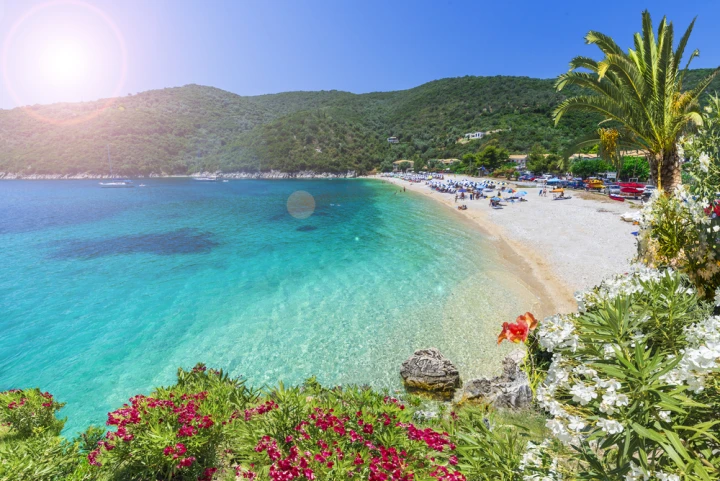
Lefkada is connected to mainland Greece by a floating bridge near Lefkada Town, at the narrow Lefkada Canal. This road connection is one of the island’s most practical advantages, as visitors and property owners can reach Lefkada by car without taking a ferry. The bridge opens at scheduled times to allow boats to pass through the canal. For drivers, this can occasionally mean a short wait, especially during the summer season, so it is wise to allow a little extra time when arriving on or leaving the island. This connection makes Lefkada different from many other Greek island destinations. While islands such as Mykonos, Santorini, Corfu, and Crete require either a ferry or a flight, Lefkada can be reached directly by road from mainland Greece.