20.10.2026
The Most Famous Homes in Greece
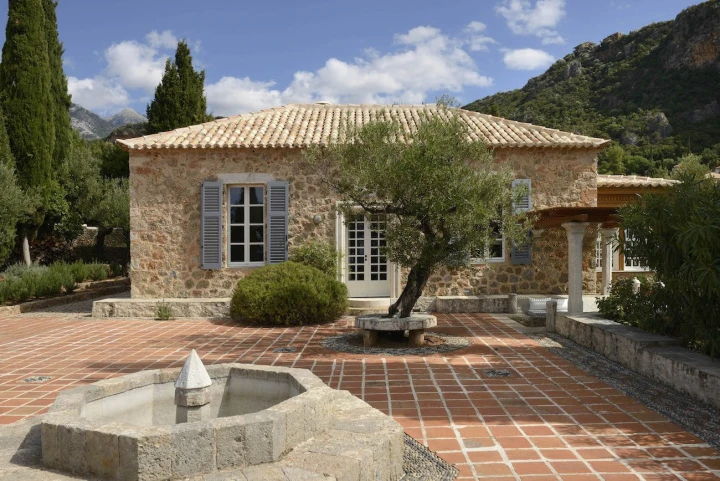
There are some houses in Greece that gain fame because of the people who lived in them, such as writers and musicians, or even... a king!
History & Culture
09.07.2024
Does Greece have a “national” music? What’s that music I hear in Greek tavernas? What kind of music is played on the bouzouki? The answer to all of these questions (depending on who you ask) is a music genre in Greece called “rebetiko.” We answer all of your questions about rebetiko in this article.
There are few things more Greek than rebetiko music. Rebetiko is the urban popular song of the Greeks, especially the poorest, starting in the early 20th century. It is a basis for many other types of popular Greek music which you hear today in Greece.
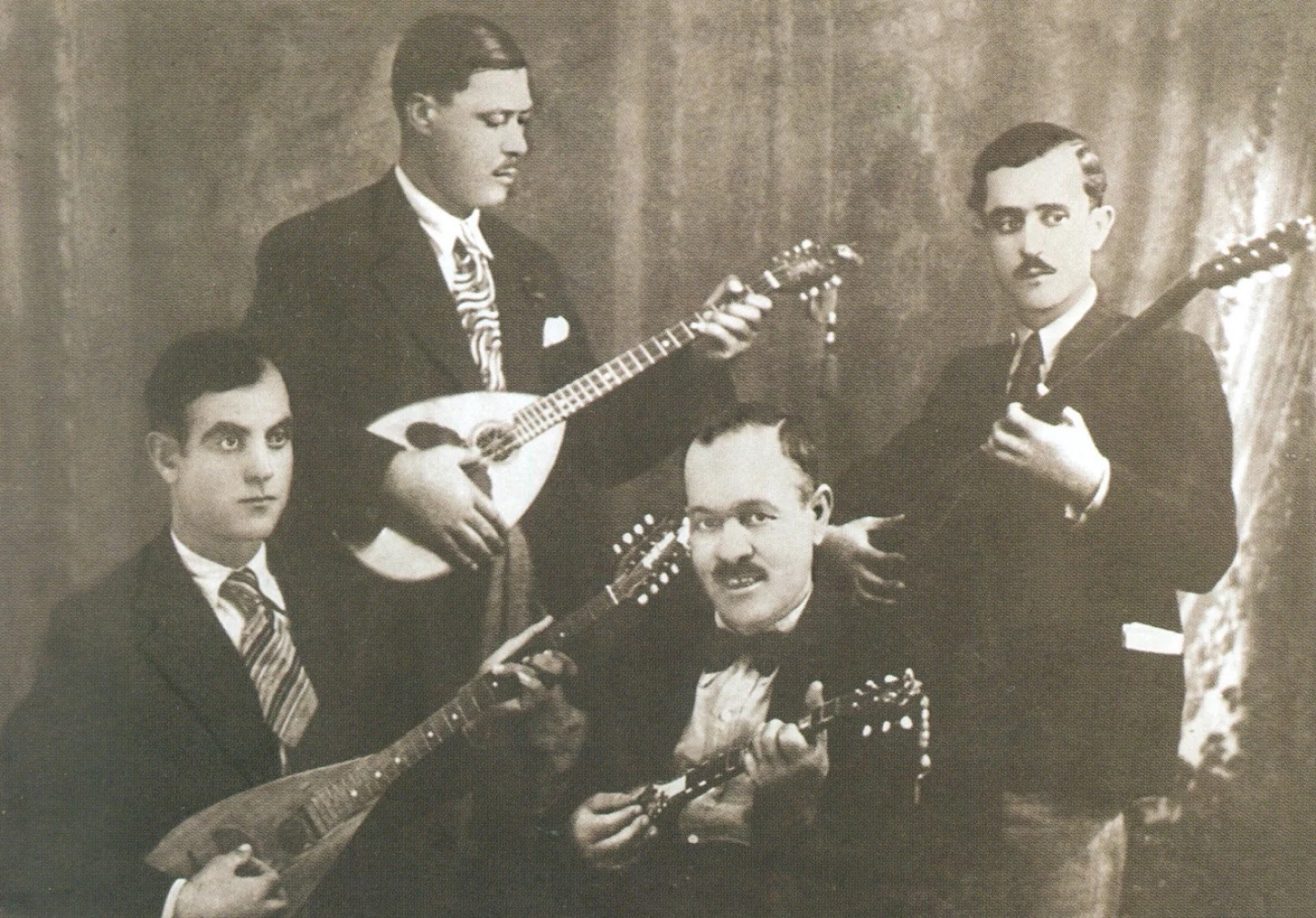
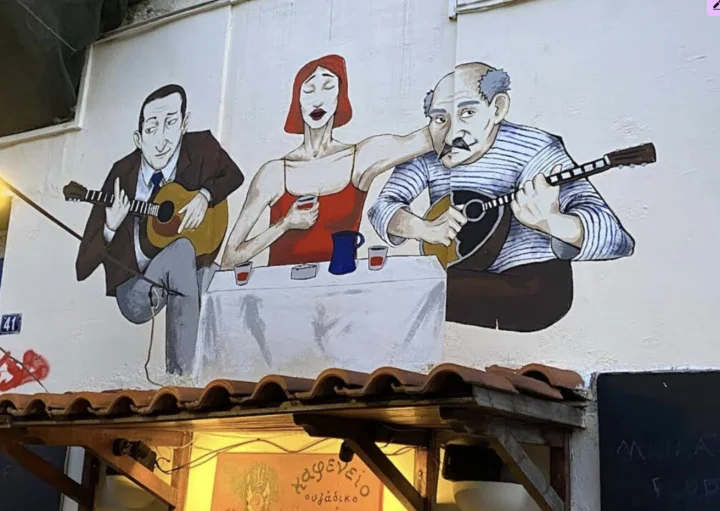
The main instruments of rebetiko are the bouzouki, the baglamas (a small version of the bouzouki), and the guitar. The bouzouki is the most recognizable and emblematic rebetiko instrument.
The bouzouki is shaped a bit like a guitar, but the shape of the body is round. The bouzouki typically has three or four sets of strings, and most rebetiko songs follow one or more scales called “dromoi”. In Greek, “dromoi” translates to “roads” or “routes”. The dromoi are derived from the “makam” – melody types which have roots in Byzantium. This is why the bouzouki has a distinctly “Eastern” sound. However, westernized music can also be played on the bouzouki. This is especially true for the bouzouki with four sets of strings, which is more popular today, and was designed to mimic the playing style of the western guitar. Other instruments in rebetiko include the clarinet, kanonaki, oud, santur, violin, and finger-cymbals.
The rebetiko movement in Greece started in the 1920s when Greek refugees came from Turkey after fleeing the catastrophes in Smyrna and Asia Minor (modern-day Izmir and Istanbul). This was a time of hardship, poverty, and pain for the newcomers in Greece, who lost family members, homes, and possessions. Their only refuge was in music and dance. It provided an outlet to express their anguish.
In the beginning of the rebetiko movement, rebetiko was mainly played in underground bars called “tekedes”, which were found mainly in Piraeus in the 1930’s. Greek refugees gathered together with other “manges” (young, virtuous, manly men from this time), got drunk or stoned, and undertook the ultimate outing of expressing their sorrow, sadness, love, and other intense emotions through dancing the zebekiko dance.
This is probably one of the Greek dances you’ve seen in the movies or at a Greek wedding. During the zebekiko dance, one man alone, turning slowly, drunk, is the center of the universe for a few minutes, talking slowly through his movements. For him, it is his psychological cleansing — a therapy which he found nowhere else. To interrupt him or stand up and interfere with his dance was the ultimate insult. At the end of the dance, after this intense expression of emotion, the world is too small. It is unable to give the dancer or his best friend who is watching a solution to their many pains. To release this tension, a nearby plate was smashed. Sometimes a glass, cutlery, a chair, or even the whole table were thrown.
Some of the most important rebetiko musicians of the early 1900s include Markos Vamvakaris and Giannis Papayioannou. Vamvakaris is perhaps the most famous and is known as the “patriarch of rebetiko,” because many of the most well-known rebetiko players were inspired by Vamvakaris.
In 1936, the Regime of Ioannis Metaxas came into power, and censored rebetiko music because it was considered disreputable and featured lyrics about drugs and criminal activities. Rebetiko composers were forced to change the lyrics of their own songs in some cases. Also, all the tekedes, where rebetes traditionally gathered to play music, were closed. This is one reason for the rise in popularity of the “baglamas” – a smaller, more portable version of the bouzouki which could be hidden from the police and was small enough to hide under a coat.
In 1948, the rebetiko world would change forever. Manos Hatzidakis shook the musical world by giving a famous lecture on rebetiko. He himself was not a rebetiko composer, but he was captured by the emotion in rebetiko. Until Hatzidakis, the genre was associated with the underworld, criminality, and hashish-smoking. However, in his lecture, Hatzidakis focused on the deep musical expression and traditional roots of rebetiko music, praising the works of Markos Vamvakaris and Vasillis Tsitsanis (another famous rebetika player who recorded about 100 of his own songs in the 1930s). Hatzidakis adapted classic rebetiko tunes into his own piano compositions.
In the 1950s, a new form of rebetiko called “Archondorebetika” (“noble rebetika”) was born. This more refined style of rebetiko was accepted by the middle and upper class, allowing composers to evolve the music genre into something distinctly unique from its “underground” past. For example, Manolis Chiotis famously added a fourth pair of strings to the bouzouki in 1953, which allowed it to be played like a guitar. As a result, rebetiko began to be westernized. He also added Latin and South American rhythms from flamenco and rumba, which gave his music a lighter feeling compared to the rebetiko songs of Vamvakaris. Other archondorebetiko composers of the time chose to add piano, drums, and the accordion to their tunes.
Parallel to the rise of archodorebetiko was the so-called “entechno” or “artistic folk music” movement in Greece. It was characterized by the combination of Greek folk rhythms, orchestral music, as well as the lyrics of poetry. Mikis Theodorakis, one of the most important contemporary Greek composers, was one of the most famous writers of entechno music. Theodorakis was also known for his connection with the Communist Party of Greece and his active role in the Greek resistance (both in WWII and during the Greek military junta). Theodorakis famously blended folk elements with Greek poetry, and his style was noticeably more dramatic and epic than that of Manos Hadzidakis, whose style was softer and more lyrical. When poet Giannis Ritsos sent a copy of his famous book “Epitaph” to Theodorakis in 1958, Theodorakis adapted it to a performance, with Grigoris Bithikotsis as singer. As the story goes, Theodorakis wrote the first edition of the composition while reading the 20 poems in Epitaph in the parking lot of a supermarket while waiting for his wife to complete the shopping. Epitaph follows the story of a mother who mourns painfully over the loss of her son during the labor protest in Thessaloniki in 1936. Epitaph was a massive hit, and it was one of the first appearances of “entechno” music in Greece.
By the early 1960s, Manos Hadzidakis introduced the bouzouki to a famous film called “Never on Sunday,” which was watched by millions around the world. Mikis Theodorakis wrote soundtracks to Zorba the Greek, which became possibly the most well-known Greek film of all time – notably for its scene of Zorba dancing to the tune of the bouzouki. These innovations allowed the widely loved genre in Greece -- “Laiko” – to reach new heights. The laiko genre is also called "folk song" or "urban folk music". Laiko already existed in the 1940s and 1950s thanks to the early hits of Tsitsanis, but it gained popularity quickly in the 1960s. The growth of Laiko came from two distinct forces. Firstly: from the entechno genre, which grew thanks to the refined and poetic compositions of Hadzidakis and Theodorakis. Secondly: from the deep, moving voices of Grigoris Bithikotsis and Stelios Kazantzidis, whose songs were characterized by passionate emotions and often featured themes of heartbreak, unrequited love, and joy.
Somewhere between the epic music of Theodorakis and the esoteric, lyrical sounds of Hadzidakis emerged a brilliant composer with a sound all its own: Stavros Xarchakos. Often known as the “Sound of Greece,” Xarchakos captured the essential sound of the nation. At the beginning of his career, Stavros Xarchakos wrote mainly for theater and cinema. Xarchakos’s first major successes were the songs “Aponi Zoi” (Cruel Life) and “Ftochologia” (Poor Working Class), which were interpreted by Grigoris Bithikotsis. Perhaps his most famous album was called The Rebetiko, which was released in 1983 along with a movie of the same name.
It is possible to find rebetiko music in many coffee shops and tavernas in Greece, both on the mainland and on the islands. The area of Greece with the highest density of rebetiko venues is the big cities of Athens and Thessaloniki. While other music genres are now more popular among young Greeks, rebetiko is still played live in traditional Greek tavernas, often accompanying a meal. We recommend adding a rebetiko experience to your time in Greece, because you can learn a lot about Greek culture through rebetiko music.
20.10.2026
There are some houses in Greece that gain fame because of the people who lived in them, such as writers and musicians, or even... a king!
05.10.2026
In his poem, "Days of Kindness", from 1985, Leonard Cohen describes Greece as being a good place to read by moonlight on the terrace. He knew this from experience. Hydra was his home for much of the 1960s. He arrived in the spring of 1960, aged 25, and later bought a house on the island, where he wrote much of his early work. Many places on Hydra still carry traces of him, even now that Hydra has become far better known.
16.04.2026
Greece is often associated with ancient history, island landscapes, and carefully preserved traditions. Less discussed, however, is another layer of its identity: its place names. Across the mainland and the islands, thousands of villages carry names that can sound unexpectedly funny or strikingly literal to a modern Greek speaker. These are not recent inventions or deliberate attempts at humor. Most date back centuries, shaped by geography, daily life, local dialects, and historical circumstances. What makes them stand out today is the shift in language over time. Words that once served as straightforward descriptions of land, resources, or communities can now feel unusually direct or unexpectedly humorous. Looking at these names more closely offers insight into how earlier generations observed their surroundings and chose to define them.
20.03.2026
Greece has long been more than a travel destination. For centuries, writers have been drawn to its history, natural beauty, and authenticity, finding in Greece not just a setting, but a source of inspiration that shapes narratives, characters, and perspectives.
19.02.2026
02.01.2026
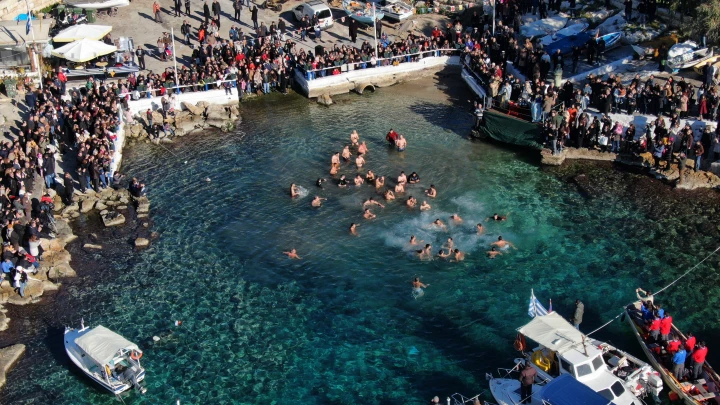
In Greece, the holiday season does not end on New Year’s Day. Instead, it culminates in one of the most symbolic celebrations of the year: Epiphany, known in Greek as Theofania. More than a religious holiday, Epiphany in Greece represents the triumph of light over darkness, a spiritual “new beginning” for individuals and communities. For anyone living in Greece, or dreaming of owning a home here, Epiphany offers one of the most authentic snapshots of local culture. From the blessing of the waters to ancient folk rituals, this day reveals the deep connection between the Greek people, nature, and tradition.
30.12.2025
Crete is stepping into the global spotlight once again. According to Airbnb’s latest travel trend insights based on worldwide search data from Q3 2025, the island — and especially the iconic Samaria Gorge National Park — ranks among the most sought-after nature destinations for 2026. This surge reflects a broader shift in how people choose where to travel, live, and invest. Travellers are no longer looking only for beaches or city breaks. Instead, they are drawn to authentic natural environments, outdoor experiences, and destinations that offer both beauty and balance, qualities that Crete delivers effortlessly.
19.12.2025
Greece is known mostly for its pristine beaches and its endless summers. Also, Greek cuisine, with its unique Mediterranean dishes, is widely sought after. What might feel surprising is the magical beauty during Christmas in Greece. The country has a long festive season that runs from Christmas to Epiphany (the “Φώτα” on 6 January), full of local customs, food traditions, and small village rituals that still matter to people today. Winter destinations are also famous in Greece, as according to the latest Monitoring Sentiment for Intra-European Travel report (Wave 23) by the European Travel Commission (ETC), Greece ranks among the top 10 most desired European destinations for travel between October 2025 and March 2026, holding a solid 7th place.