Skip to content

The Most Famous Homes in Greece

History & Culture

20.10.2026

There are some houses in Greece that gain fame because of the people who lived in them, such as writers and musicians, or even... a king!

In some cases, houses become famous before even anyone moved in, due to their bold design.


Let's take a look at some of the best-known homes in Greece and the stories behind them.

Patrick Leigh Fermor's House in Mani

This is the home of Patrick Leigh Fermor, the famous British travel writer, and his partner, Joan Eyres Monsell, a photographer from a noble family.


If you take a look at the map of Greece, in the south of the Peloponnese, there are three rocky peninsulas that reach into the Mediterranean Sea. The middle one, and the most remote one, is Mani. In the '60s, when Fermor was about fifty years old, he settled in Mani with his partner, Joan. The couple designed a house with their friend and architect, Nikos Hadjimichalis, in the Kalamitsi area of Kardamyli.


The construction of their house started in 1964 and was completed in 1967. During that period, Patrick and Joan used to stay for short periods in a tent next to the construction site, so that they could keep an eye on the progress.


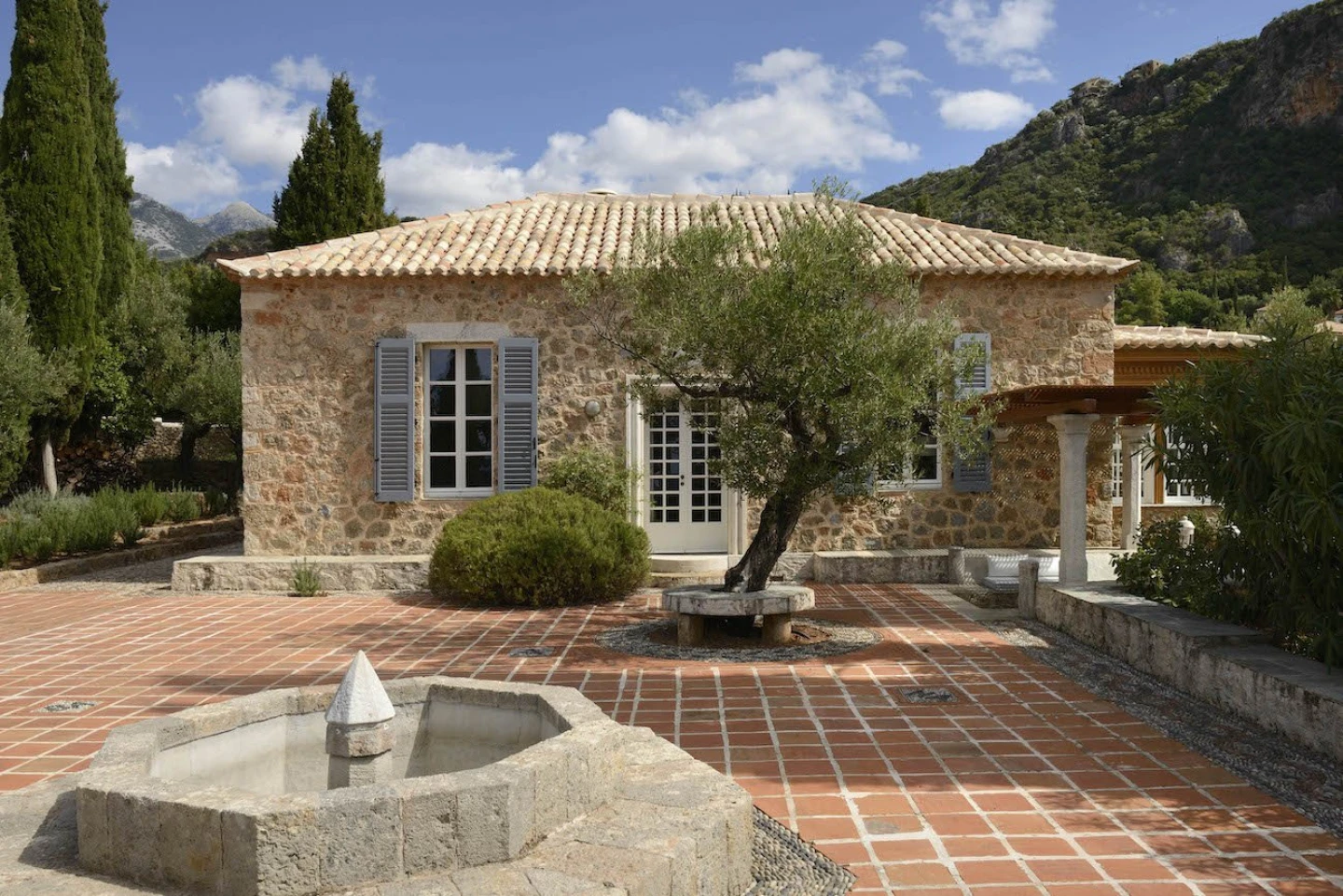
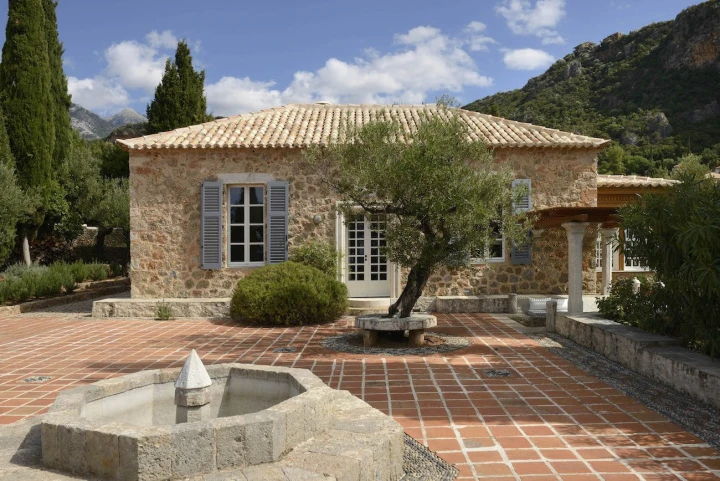
This house is widely regarded as one of the most beautiful properties in Greece. More specifically, the property is made up of four stone buildings, set in a Mediterranean garden above the sea. Guests can stay in three of them. The largest is the Main House, which has three suites. The other two are smaller: the Traditional House and the Guest House.


In 1996, Patrick and Joan signed a deed, donating their house to the Benaki Museum, as they wanted scholars and artists to work there in an inspiring setting. Additionally, it was their wish for the house to stay open to the public.


Following their deaths (Joan passed away in 2003 and Patrick in 2011), the museum took ownership of their property. With funding from the Stavros Niarchos Foundation (SNF), the museum restored the house and reopened it in 2019.


The house of Patrick and Joan is open to the public for guided visits by appointment, and the Benaki Museum looks after the house and its contents. What is more, under the 1996 donation, the museum has the right to rent the house out and, therefore, since 2020, Aria Hotels has run guest stays during the summer season.

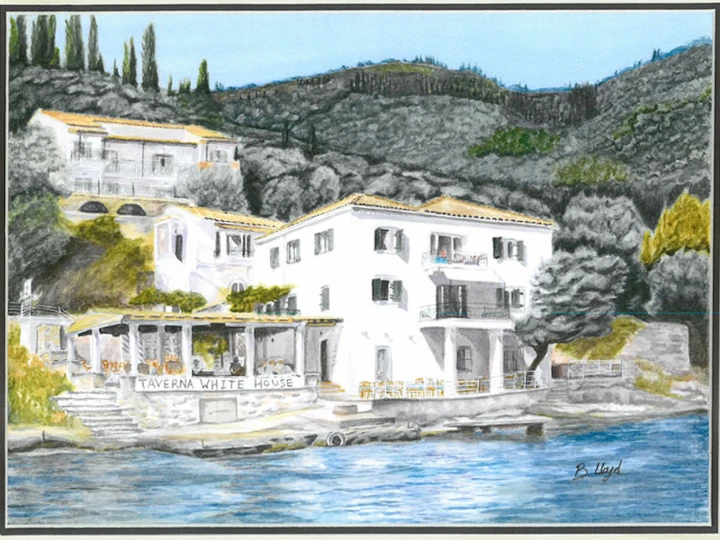
The White House in Corfu

This house stands at the water's edge in Kalami, a small bay on the north-east coast of Corfu. Back in 1936, when Kalami was still a small fishing village, the writer Lawrence Durrell moved there with his wife, Nancy.


Originally, this property was a single-storey fisherman's house, owned by Anastasios Atheneos, the grandfather of the current owner, Tassos. A second floor was added for Lawrence and Nancy, while the writer would later refer to Corfu Island and this period of his life in his book, "Prospero's Cell".


It's important to note that the house still belongs to the family. More specifically, the ground floor is the family home, while the basement and an old fisherman's hut are now the White House Restaurant. Additionally, the upper floor, where the Durrells used to live and write, can be rented during the summer season.

Villa Posillipo in Corfu

A Venetian villa from the 18th century on the seafront at Kontokali, about six kilometres north of Corfu Town, it stands in large gardens with pine trees and its own stretch of shoreline. It is owned by the very same family for more than a century, and today it is rented out to guests.


Regarding the location, Corfu Town, only a short drive away from the villa, is a UNESCO World Heritage Site. As for the beaches locals prefer, Kontokali, Gouvia, Spiaggia Bianca, Dassia, and Ipsos stand out.


Furthermore, Villa Posillipo became particularly famous as the Durrell family home in the ITV series "The Durrells", that ran for four seasons from 2016 to 2019, and was based on Gerald Durrell's books about his family's life on the island. In the series this property was supposed to be the family's second house in Corfu, the Daffodil-Yellow Villa.

The King of the Netherlands' Home in the Peloponnese

In 2012, Willem-Alexander and Maxima bought a holiday villa near Kranidi in the Peloponnese, and a year later they became King and Queen of the Netherlands. This estate of 4,000 squre metres costed 4.5 million euros and has a swimming pool, a private beach, and a private jetty was added later as part of the security measures.


Their connection with the area began in 2010, when they attended the wedding of Prince Nikolaos of Greece on the nearby island of Spetses.


Last but not least, they still spend their summers there.

About Kranidi

Kranidi is a small town in the region of Argolida, in the municipality of Ermionida, and it lies close to the seaside resort of Porto Heli and the island of Spetses.

Leonard Cohen's Home in Hydra

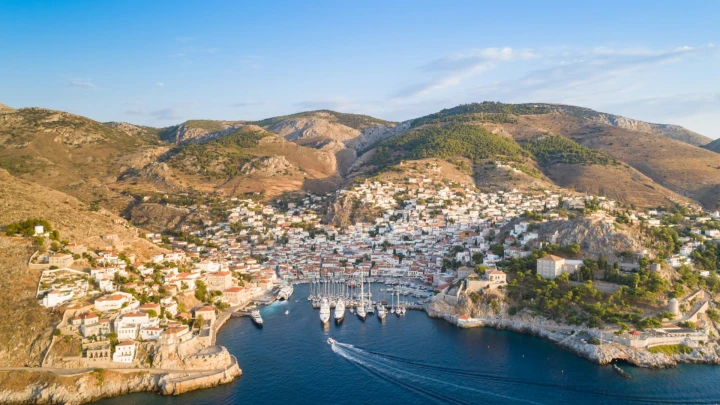
Cohen grew up in Montreal, Canada. A Canadian arts grant took him to London in 1959, and he spent that time writing in Hampstead. In the rainy spring of 1960, tired of the grey weather, he stepped into a bank and got talking to a teller with a deep tan, who had just come back from Greece. Within weeks, Cohen was on his way to Hydra, an island that had drawn writers and artists such as Henry Miller and Patrick Leigh Fermor, as well as the Greek painter Nikos Ghika, who had a family house there.


Cohen describes buying the house in Hydra as the smartest decision he ever made, as he bought it in 1960 for $1,500. It was an old three-storey whitewashed building with no electricity or plumbing. But for him, it was very important to have a private space to work. Over the years, Cohen gradually worked on the house and it is still owned by his family today.


On Hydra, Cohen met the love of his life, the Norwegian woman Marianne Ihlen. She was the woman he wrote about in one of his first masterpieces, “So Long, Marianne.” As he told it, Cohen was inspired to write "Bird on the Wire" by the birds that lined up on Hydra's first telephone wires in the 1960s.

Homes on the Drawing Board

Not every famous home in Greece has been built yet. These three designs by Greek architects have drawn international attention as concepts.

Crete: Cave House

Zeropixel Architects designed Cave House for a plot just outside Heraklion. The stone-built house is set into the ground, with a swimming pool and underground spaces. From the road, you see an olive grove on a gentle slope and an artificial lake that ends at a cliff.


The house is hidden at the edge of that cliff.


It has three wings, each with its own view: the east wing faces Heraklion and the sea, the central wing looks over the valley, and the west wing faces Mount Psiloritis. Natural ventilation, a green roof, solar panels, and heat pumps are designed to keep the house cool in summer and make it energy self-sufficient.


In 2023, ArchDaily included Cave House in its “Best Unbuilt Architecture” selection of eight villas submitted by its community.

Corfu: Villa V

Aristides Dallas Architects designed Villa V as a holiday house on a steep, rocky slope in north-west Corfu. It follows the hillside over three levels, with the shared living spaces in the middle and open views of the Ionian Sea. Stone retaining walls anchor the house to the slope, while parts of it rise from the ground like converging tectonic plates.


The design received a Merit at the GRAIL Awards 2024.

Crete: Casa Katana

On the south coast of Crete, Konstantinos Stathopoulos of KRAK Architects designed Casa Katana, a house set into the rocks above the Libyan Sea. Its angular form follows a single crooked line across the plot, like the cut of a katana sword, which gave the house its name.


The concrete house sits high enough above the rocks for open views and privacy, and it has an infinity pool.

You might also like