
20.10.2026
The Most Famous Homes in Greece
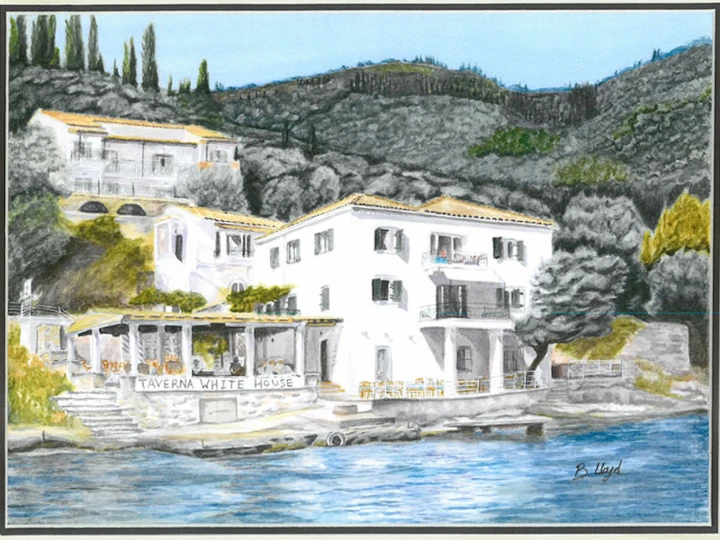
There are some houses in Greece that gain fame because of the people who lived in them, such as writers and musicians, or even... a king!
History & Culture
16.07.2024
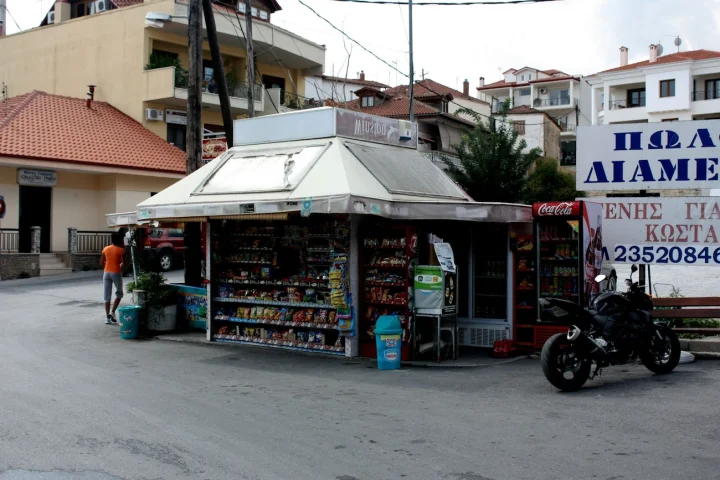
The humble periptero (or plural, "periptera") is a must-visit during your time in Greece. Usually, visitors to Greece think about major tourism sites like the Acropolis and Delphi. However, if you want a truly authentic experience, you need to visit the nearest periptero.
Imagine a tiny supermarket, selling everything from magazines to yoghurt to tissues to beer, planted on the street corner of the main boulevard of every town and city in Greece. These miniature kiosks are stocked with a wide variety of Greek products, and most stay open late into the night.
When did the first periptero open in Greece? The humble kiosk in Greece emerged in the early 20th century with a government program giving kiosk licenses to war veterans and the disabled. Licenses usually could be passed to children or family members. The first periptera just sold newspapers. The very first periptero in Greece was in Athens on Panepistimiou Street.
After the First World War, Greece’s periptera started to sell cigarettes, candies, and a few other essential goods. There was a limited size of 70x70cm. Just imagine standing inside a half-meter box for most of the day.
The most successful periptero is called “Minion”. It was first opened in 1934 on the corner of Stadiou and Patission Street in Athens. The store was unique because it had an expanded stock of merchandise, including pens, sunglasses, and grooming equipment. 20 years later, the business grew to a department store with 1000 employees.
The "periptero" in Classical architecture was an ancient Greek or Roman temple surrounded by portico columns. “Peri” means to surround, and “ptero” is a wing. All periptera start with a small cabin with dimensions 1.3 x 1.5 meters. From these basic dimensions, you "surround" the central cabin with newspaper racks, fridges, and extra snack shelving. The best periptera always have a freezer with ice cream.
Much like the kafeneion or the central square in Greece, the periptero is an important meeting place in Greek society. For a long time, these kiosks were the only place to buy cigarettes and tobacco. Naturally, it also became a place to share a smoke, a conversation, and the local gossip. This is especially true in rural areas. For many years, periptera were one of the only places in Greece to find a phone (unless you lived in a very wealthy household). In the 1950s and 1960s, most homes didn’t have a landline, so periptera were a common place to make a call. Fifty years ago, it was probably the first thing you expected to hear on the other end of a phone call: “I’m calling from a periptero”.
The periptero also functions as a center for information. Periptero owners often know the local area very well, and have an advisory role for those who live nearby. For example, university students come to leave their contact cards for tutoring. Buyers or rentors might ask the periptero around the corner about real estate in the local area. Or, if you are unemployed, you might ask the owner about job opportunities. The periptero owner is a humble advisor, and they often know things about their customer, like what cigarettes they spoke, their newspapers, and their favorite time to shop. It’s an unwritten tradition that if a regular needs something, the periptero owner will order for them.
Some periptero owners claim they know what a customer wants just by the way they walk up to the booth or with what tone of voice they use. One owner shares: “What’s fascinating about those who buy newspapers is the way they address you depending on which paper they will buy.” Other periptero owners have developed methods to catch thieves, who may ask for help finding a “particular magazine”. They could be baiting the owner to step out of the kiosk to examine the racks, exactly when they would steal something valuable.
The periptero is becoming an engangered species in Greece. Athens used to have 1080 periptera, and more than half have been closed. In Greece all together, 18,000 periptera were around in 2005, and today there are 5000.
Slowly, new government laws are making it harder to own and keep a kiosk. Restrictions during the COVID outbreak limited their hours, and new laws allowed other stores to sell cigarettes. At the same time, competition from corner stores with larger stocks made it harder to make a profit. With the periptero becoming an increasingly rare sight in Greece, the country is at risk of losing an important cultural phenomenon. Take a trip to your local periptero, while you still can!
At a periptero today, you can buy Greek chocolates, Greek cigarettes, drinks, sweets and snacks, ice cream, toothpaste and toiletry items, telephone cards, pens, and newspapers, among other items.
Yes, it is possible to search for periptera in your area. You can search by city or town in this periptero search tool.
20.10.2026
There are some houses in Greece that gain fame because of the people who lived in them, such as writers and musicians, or even... a king!
05.10.2026
In his poem, "Days of Kindness", from 1985, Leonard Cohen describes Greece as being a good place to read by moonlight on the terrace. He knew this from experience. Hydra was his home for much of the 1960s. He arrived in the spring of 1960, aged 25, and later bought a house on the island, where he wrote much of his early work. Many places on Hydra still carry traces of him, even now that Hydra has become far better known.
16.04.2026
Greece is often associated with ancient history, island landscapes, and carefully preserved traditions. Less discussed, however, is another layer of its identity: its place names. Across the mainland and the islands, thousands of villages carry names that can sound unexpectedly funny or strikingly literal to a modern Greek speaker. These are not recent inventions or deliberate attempts at humor. Most date back centuries, shaped by geography, daily life, local dialects, and historical circumstances. What makes them stand out today is the shift in language over time. Words that once served as straightforward descriptions of land, resources, or communities can now feel unusually direct or unexpectedly humorous. Looking at these names more closely offers insight into how earlier generations observed their surroundings and chose to define them.
20.03.2026
Greece has long been more than a travel destination. For centuries, writers have been drawn to its history, natural beauty, and authenticity, finding in Greece not just a setting, but a source of inspiration that shapes narratives, characters, and perspectives.
19.02.2026
02.01.2026
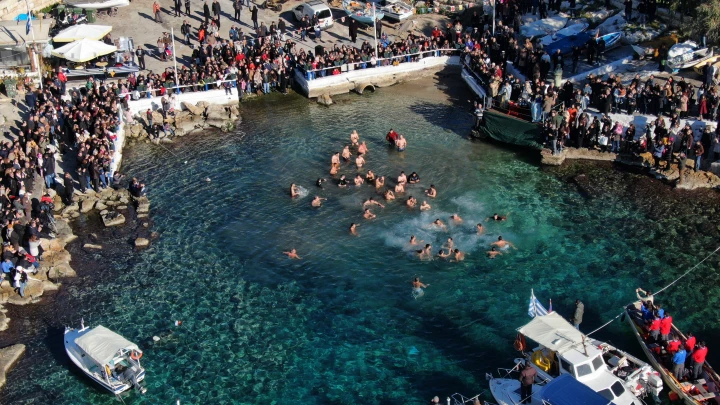
In Greece, the holiday season does not end on New Year’s Day. Instead, it culminates in one of the most symbolic celebrations of the year: Epiphany, known in Greek as Theofania. More than a religious holiday, Epiphany in Greece represents the triumph of light over darkness, a spiritual “new beginning” for individuals and communities. For anyone living in Greece, or dreaming of owning a home here, Epiphany offers one of the most authentic snapshots of local culture. From the blessing of the waters to ancient folk rituals, this day reveals the deep connection between the Greek people, nature, and tradition.
30.12.2025
Crete is stepping into the global spotlight once again. According to Airbnb’s latest travel trend insights based on worldwide search data from Q3 2025, the island — and especially the iconic Samaria Gorge National Park — ranks among the most sought-after nature destinations for 2026. This surge reflects a broader shift in how people choose where to travel, live, and invest. Travellers are no longer looking only for beaches or city breaks. Instead, they are drawn to authentic natural environments, outdoor experiences, and destinations that offer both beauty and balance, qualities that Crete delivers effortlessly.
19.12.2025
Greece is known mostly for its pristine beaches and its endless summers. Also, Greek cuisine, with its unique Mediterranean dishes, is widely sought after. What might feel surprising is the magical beauty during Christmas in Greece. The country has a long festive season that runs from Christmas to Epiphany (the “Φώτα” on 6 January), full of local customs, food traditions, and small village rituals that still matter to people today. Winter destinations are also famous in Greece, as according to the latest Monitoring Sentiment for Intra-European Travel report (Wave 23) by the European Travel Commission (ETC), Greece ranks among the top 10 most desired European destinations for travel between October 2025 and March 2026, holding a solid 7th place.