20.10.2026
The Most Famous Homes in Greece
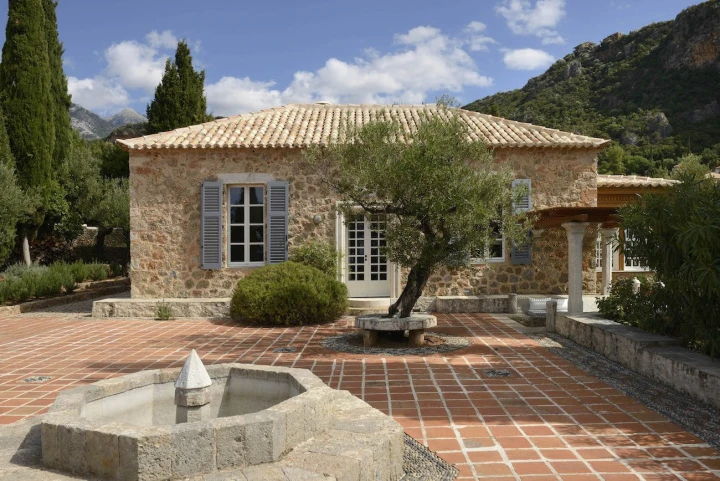
There are some houses in Greece that gain fame because of the people who lived in them, such as writers and musicians, or even... a king!
History & Culture
26.07.2023
Greece is a haven for World Heritage sites - archaeological monuments, places of historical interest, and ancient sites are scattered on the mainland and in the islands. In this article, we highlight the most well-known UNESCO Heritage Sites in Greece, by the date they were added.
The Temple of Apollo Epicurius in Bassae of the Peloponnese was the first site to be added to the UNESCO list. The Temple of Apollo was created between 450 and 400 BC by Iktinos, the same architect who constructed the Parthenon in Athens. It is found 1,100 meters above sea level, and is under restoration today. Some of the features of this site are featured in the British Museum of London today.
Perhaps the most iconic site in Greece, the Acropolis is found on top of a rock above Athens and includes many buildings. Of them, the Parthenon, the Propylaea, and the Temple of Athena are the most popular to visit. The Acropolis was built in the Golden Era of Athens, in the 5th century BC. Over the years, the Acropolis has been through many wars and invasions and has survived many natural disasters, including several significant earthquakes. When visiting the Acropolis, it’s best to plan ahead because of the crowds. Getting there early in the morning is the best way to avoid the heat during the summer.
Delphi is found in the center of Greece’s mainland. It was the most important oracle of the ancient Greeks. Pilgrims used to come here from all over the Mediterranean to ask for a prophecy, and the location is connected to the cult of the god Apollo. Uniquely, this site also played a political role in ancient Greece because it united the city-states of the area.
The Sanctuary of Asklepius is found in Epidaurus in the eastern Peloponnese. This was a place of healing during times of antiquity because Epidaurus was thought to be the birthplace of the god Asklepius. Pilgrims came to Epidaurus to ask for a cure for their illnesses, and the answer was given to them in their dreams. The next day, they told their dream to the priest, who would tell them the best way to be healed. A large theater with excellent acoustics is located nearby, which was used to honor the god and is today called the Ancient Theater of Epidaurus. Today, concerts and festivals are held here.
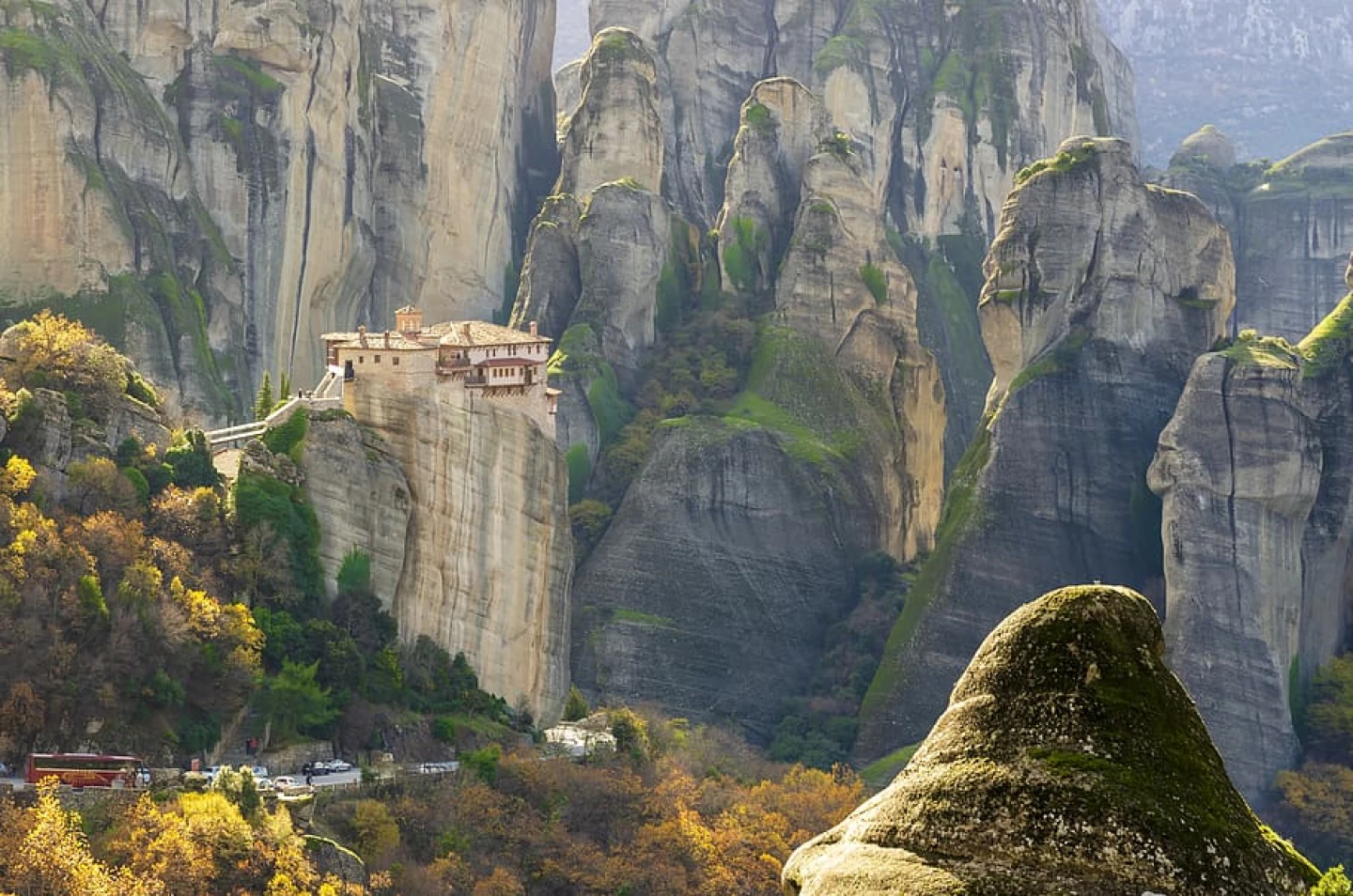
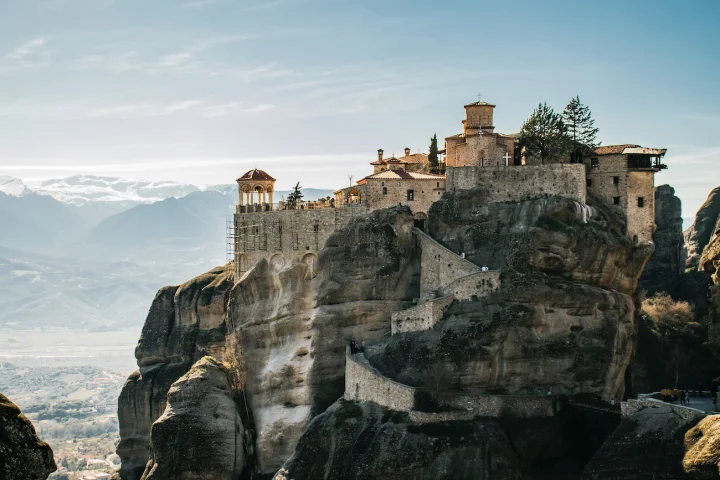
Meteora is found in the north of mainland Greece and is one of the most visited tourist sites in Greece. It is a group of monasteries that sit on top of impressive rock formations. These rocks were formed 60 million years ago. In the 13th century AD, monks built monasteries here. There used to be 24 monasteries, but today only 6 are left and open to the public. The view from the top of the rocks is beautiful. Meteora today is not just a haven for monks and nuns who live there - it is also a favorite stop for hikers who travel through the area on the scenic trails. Most visitors stay in the nearby town of Kastraki.
The monastic community of Mount Athos is a self-governing monastic state that is found on the top leg of the Halkidiki peninsula to the east of Thessaloniki. Since 1054, Mount Athos has operated in the same way, preserving Byzantine traditions. Only men are allowed to enter what is known as the “Holy Mountain.” The area is also known for its wine production.
Delos is a famous spot from Greek mythology where the god Apollo was born. The island was dedicated to the god, and pilgrims from all over the Mediterranean used to come pay homage to Apollo. Delos was not just a religious site but also a political power center. Today, the island of Delos does not have permanent residents and is an open archaeological site with monuments and a museum. It is one reason why Mykonos, the closest neighboring island, became so popular after Delos was discovered in the early 1900s.
The village of Chora in Patmos, the Monastery of Saint John the Theologian and the Cave of Apocalypse are all included on the UNESCO List. It is said that Saint John was inspired here to write the Book of Revelation. The monastery was built in the 10th century and still stands today as a place of pilgrimage. Visitors come not just from Greece to make this pilgrimage, but also internationally.
The following is a complete list of UNESCO Heritage Sites in Greece:
Acropolis, Athens (1987)
Meteora (1988)
Archaeological Site of Mystras (1989)
Mount Athos (1988)
Medieval City of Rhodes (1988)
Archaeological Site of Philippi (2016)
Paleochristian and Byzantine Monuments of Thessalonika (1988)
Old Town of Corfu (2007)
Archaeological Site of Delphi (1987)
Temple of Apollo Epicurius at Bassae (1986)
Sanctuary of Asklepios at Epidaurus (1988)
Archaeological Site of Olympia (1989)
Monasteries of Daphni, Hosios Loukas and Nea Moni of Chios (1990)
Archaeological Site of Aigai (modern name Vergina) (1996)
Archaeological Sites of Mycenae and Tiryns (1999)
Delos (1990)
The Historic Centre (Chorá) with the Monastery of Saint-John the Theologian and the Cave of the Apocalypse on the Island of Pátmos (1999)
Pythagoreion and Heraion of Samos (1992)
20.10.2026
There are some houses in Greece that gain fame because of the people who lived in them, such as writers and musicians, or even... a king!
05.10.2026
In his poem, "Days of Kindness", from 1985, Leonard Cohen describes Greece as being a good place to read by moonlight on the terrace. He knew this from experience. Hydra was his home for much of the 1960s. He arrived in the spring of 1960, aged 25, and later bought a house on the island, where he wrote much of his early work. Many places on Hydra still carry traces of him, even now that Hydra has become far better known.
16.04.2026
Greece is often associated with ancient history, island landscapes, and carefully preserved traditions. Less discussed, however, is another layer of its identity: its place names. Across the mainland and the islands, thousands of villages carry names that can sound unexpectedly funny or strikingly literal to a modern Greek speaker. These are not recent inventions or deliberate attempts at humor. Most date back centuries, shaped by geography, daily life, local dialects, and historical circumstances. What makes them stand out today is the shift in language over time. Words that once served as straightforward descriptions of land, resources, or communities can now feel unusually direct or unexpectedly humorous. Looking at these names more closely offers insight into how earlier generations observed their surroundings and chose to define them.
20.03.2026
Greece has long been more than a travel destination. For centuries, writers have been drawn to its history, natural beauty, and authenticity, finding in Greece not just a setting, but a source of inspiration that shapes narratives, characters, and perspectives.
19.02.2026
02.01.2026
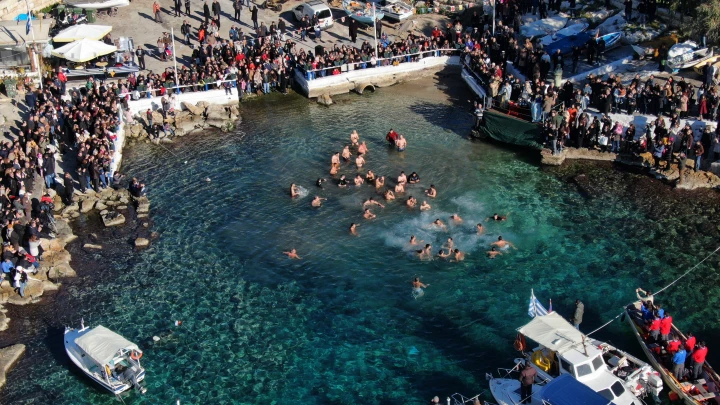
In Greece, the holiday season does not end on New Year’s Day. Instead, it culminates in one of the most symbolic celebrations of the year: Epiphany, known in Greek as Theofania. More than a religious holiday, Epiphany in Greece represents the triumph of light over darkness, a spiritual “new beginning” for individuals and communities. For anyone living in Greece, or dreaming of owning a home here, Epiphany offers one of the most authentic snapshots of local culture. From the blessing of the waters to ancient folk rituals, this day reveals the deep connection between the Greek people, nature, and tradition.
30.12.2025
Crete is stepping into the global spotlight once again. According to Airbnb’s latest travel trend insights based on worldwide search data from Q3 2025, the island — and especially the iconic Samaria Gorge National Park — ranks among the most sought-after nature destinations for 2026. This surge reflects a broader shift in how people choose where to travel, live, and invest. Travellers are no longer looking only for beaches or city breaks. Instead, they are drawn to authentic natural environments, outdoor experiences, and destinations that offer both beauty and balance, qualities that Crete delivers effortlessly.
19.12.2025
Greece is known mostly for its pristine beaches and its endless summers. Also, Greek cuisine, with its unique Mediterranean dishes, is widely sought after. What might feel surprising is the magical beauty during Christmas in Greece. The country has a long festive season that runs from Christmas to Epiphany (the “Φώτα” on 6 January), full of local customs, food traditions, and small village rituals that still matter to people today. Winter destinations are also famous in Greece, as according to the latest Monitoring Sentiment for Intra-European Travel report (Wave 23) by the European Travel Commission (ETC), Greece ranks among the top 10 most desired European destinations for travel between October 2025 and March 2026, holding a solid 7th place.