20.10.2026
The Most Famous Homes in Greece
There are some houses in Greece that gain fame because of the people who lived in them, such as writers and musicians, or even... a king!
History & Culture
12.09.2024
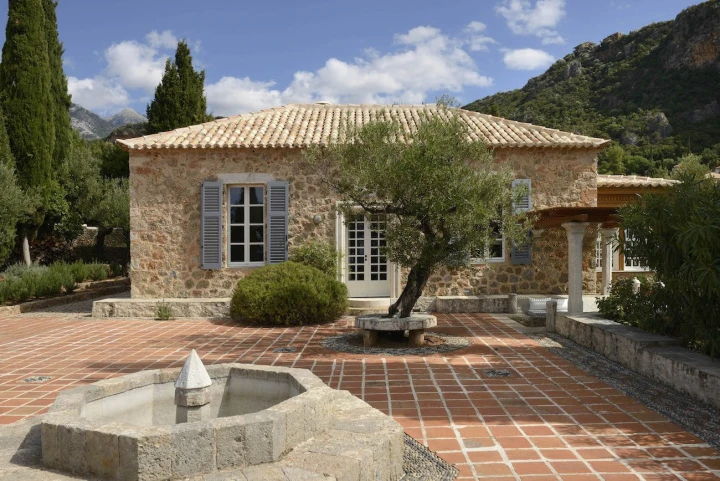
When we think of ancient Greece, images of grand temples and opulent theaters often come to mind. However, the homes of everyday Greeks were far more modest, practical, and vastly different from the magnificent public monuments that have withstood the test of time. Unlike these stone masterpieces, the ancient Greek home (oikos) was built for function, made from simple materials, and designed to meet the daily needs of families.
Most homes in ancient Greece were made of mud bricks and wood, materials that were easy to come by but not particularly durable. As a result, homes needed frequent repairs, often requiring yearly maintenance as the walls deteriorated.
In wealthier regions, or where materials like stone were readily available, houses might have been more robust, but even these were a far cry from the monumental stone structures we associate with Greek civilization.
Windows in these homes were small and set high on the walls, often without glass. Instead, they were covered with wooden shutters to protect the inhabitants from the elements.
A defining feature of many ancient Greek homes was the central courtyard (aule), which acted as the heart of the household. This open space served multiple purposes – from a place for cooking to rearing animals and even as a site for religious shrines. Mostly to hang out, though.
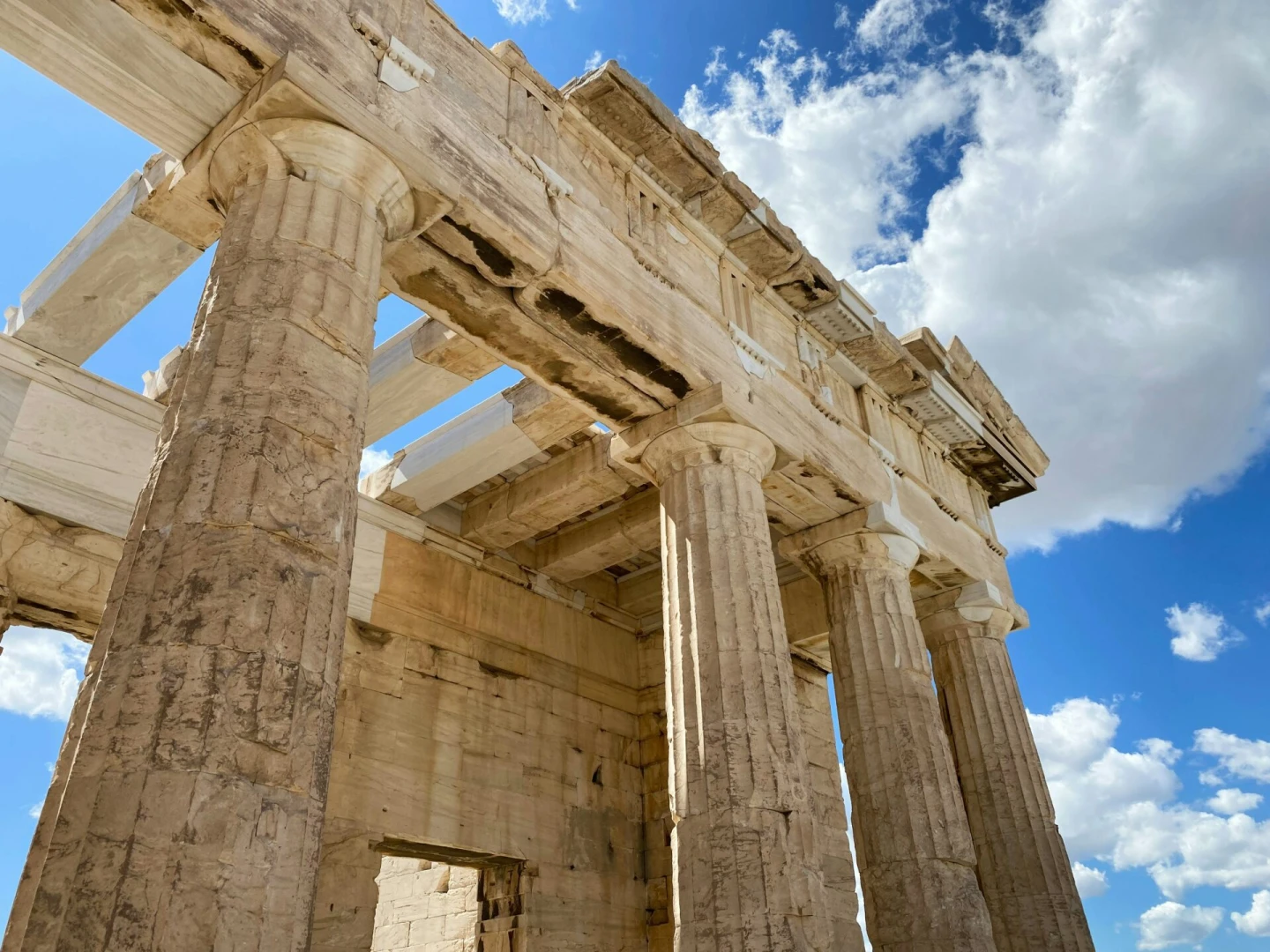
In ancient Greek houses, the "peristyle" was not just a structural feature but a key functional and aesthetic element. This columned walkway surrounding the atrium (aule) connected the interior rooms to the open courtyard, improving natural light and ventilation throughout the home.
Around the courtyard, rooms were arranged according to the family’s needs and wealth, typically ranging from two to twelve rooms. Larger homes, especially in wealthier families, could have a second story, where women, children, and sometimes slaves would live.
Despite the variation in size, homes in urban areas were generally quite small due to the limited availability of land, and even the wealthy did not live in vast mansions. The biggest difference between rich and poor homes was often that while a wealthy family occupied a house alone, poorer families might share a house with one or two other families, along with their livestock.
Greek homes often had specific spaces designated for men and women. The "andron," or men's room, was a key area where men would host guests, socialize, and hold "symposia," which were dinner parties that included discussion and entertainment. Women were usually excluded from these gatherings and would remain in the "gynaeceum," the women's quarters, which were typically located at the back of the house or upstairs, away from public view.
Men and women also generally ate separately, reflecting the distinct social roles of the time. While the wealthy enjoyed a more varied diet that could include meat and fish, the poorer population often subsisted on simpler meals like porridge and bread.
Homes in ancient Greece were not just places to live but also spaces to work. Many families had areas reserved for their trade, whether that was weaving, cheese-making, or sandal-repairing. These activities would often take place in the courtyard, on the flat roof, or even within the home itself. Wealthier families might have attached workshops or stores, but for most people, work and life blended together in the same space.
While ancient Greece is reknown for its elaborate temples and impressive public spaces, everyday homes were far more utilitarian. These houses were built to serve the needs of their inhabitants, often with little in the way of luxury or decoration. Despite the humble materials and simple layouts, these homes were the center of Greek family life, reflecting a culture that valued practicality and resourcefulness over opulence within the private sphere.
One of the most surprising aspects of ancient Greek homes for modern readers might be the lack of bathrooms and running water. Most homes did not have a direct water supply, so women would fetch water from public wells. Public latrines were the norm, and chamber pots were often emptied directly onto the street.
Only the wealthiest citizens could afford to bathe at home, and even then, it required a great deal of labor, as slaves would need to fetch water and prepare the baths. For most people, bathing took place at public baths or in natural water sources like rivers and streams.
Ancient Greek homes were sparsely furnished. Reeds or straw mats were commonly used to cover floors, and the rooms might contain simple wooden stools, tables, and beds made from grass or animal products like wool or feathers.
Wealthier families might have mosaics or paintings to adorn their homes, but generally, the Greeks preferred to showcase their wealth through jewelry, elaborate clothing, and lavish gatherings rather than interior design.
Ancient Greek homes were practical, modest, and often shared spaces where families lived, worked, and carried out their daily routines. Their true beauty lay not in grandeur, but in their adaptability and functionality.
20.10.2026
There are some houses in Greece that gain fame because of the people who lived in them, such as writers and musicians, or even... a king!
05.10.2026
In his poem, "Days of Kindness", from 1985, Leonard Cohen describes Greece as being a good place to read by moonlight on the terrace. He knew this from experience. Hydra was his home for much of the 1960s. He arrived in the spring of 1960, aged 25, and later bought a house on the island, where he wrote much of his early work. Many places on Hydra still carry traces of him, even now that Hydra has become far better known.
16.04.2026
Greece is often associated with ancient history, island landscapes, and carefully preserved traditions. Less discussed, however, is another layer of its identity: its place names. Across the mainland and the islands, thousands of villages carry names that can sound unexpectedly funny or strikingly literal to a modern Greek speaker. These are not recent inventions or deliberate attempts at humor. Most date back centuries, shaped by geography, daily life, local dialects, and historical circumstances. What makes them stand out today is the shift in language over time. Words that once served as straightforward descriptions of land, resources, or communities can now feel unusually direct or unexpectedly humorous. Looking at these names more closely offers insight into how earlier generations observed their surroundings and chose to define them.
20.03.2026
Greece has long been more than a travel destination. For centuries, writers have been drawn to its history, natural beauty, and authenticity, finding in Greece not just a setting, but a source of inspiration that shapes narratives, characters, and perspectives.
19.02.2026
02.01.2026
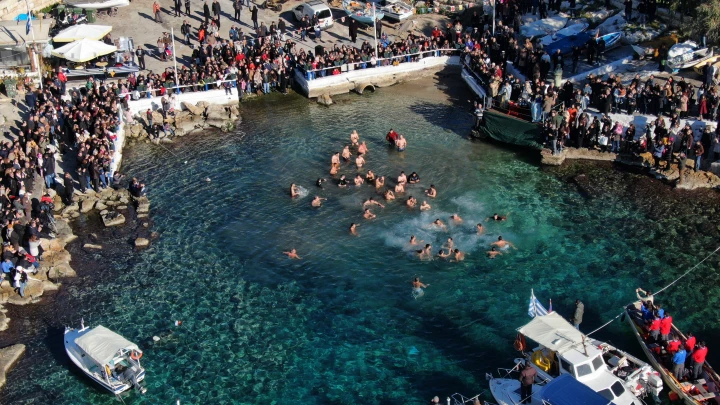
In Greece, the holiday season does not end on New Year’s Day. Instead, it culminates in one of the most symbolic celebrations of the year: Epiphany, known in Greek as Theofania. More than a religious holiday, Epiphany in Greece represents the triumph of light over darkness, a spiritual “new beginning” for individuals and communities. For anyone living in Greece, or dreaming of owning a home here, Epiphany offers one of the most authentic snapshots of local culture. From the blessing of the waters to ancient folk rituals, this day reveals the deep connection between the Greek people, nature, and tradition.
30.12.2025
Crete is stepping into the global spotlight once again. According to Airbnb’s latest travel trend insights based on worldwide search data from Q3 2025, the island — and especially the iconic Samaria Gorge National Park — ranks among the most sought-after nature destinations for 2026. This surge reflects a broader shift in how people choose where to travel, live, and invest. Travellers are no longer looking only for beaches or city breaks. Instead, they are drawn to authentic natural environments, outdoor experiences, and destinations that offer both beauty and balance, qualities that Crete delivers effortlessly.
19.12.2025
Greece is known mostly for its pristine beaches and its endless summers. Also, Greek cuisine, with its unique Mediterranean dishes, is widely sought after. What might feel surprising is the magical beauty during Christmas in Greece. The country has a long festive season that runs from Christmas to Epiphany (the “Φώτα” on 6 January), full of local customs, food traditions, and small village rituals that still matter to people today. Winter destinations are also famous in Greece, as according to the latest Monitoring Sentiment for Intra-European Travel report (Wave 23) by the European Travel Commission (ETC), Greece ranks among the top 10 most desired European destinations for travel between October 2025 and March 2026, holding a solid 7th place.