20.10.2026
The Most Famous Homes in Greece
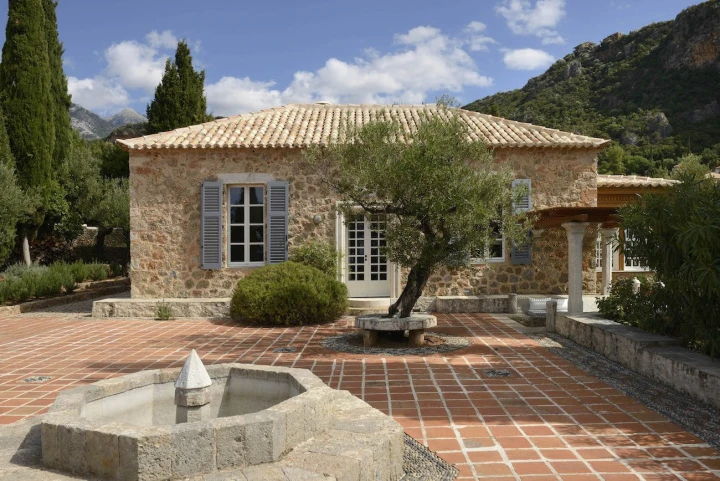
There are some houses in Greece that gain fame because of the people who lived in them, such as writers and musicians, or even... a king!
History & Culture
30.03.2024
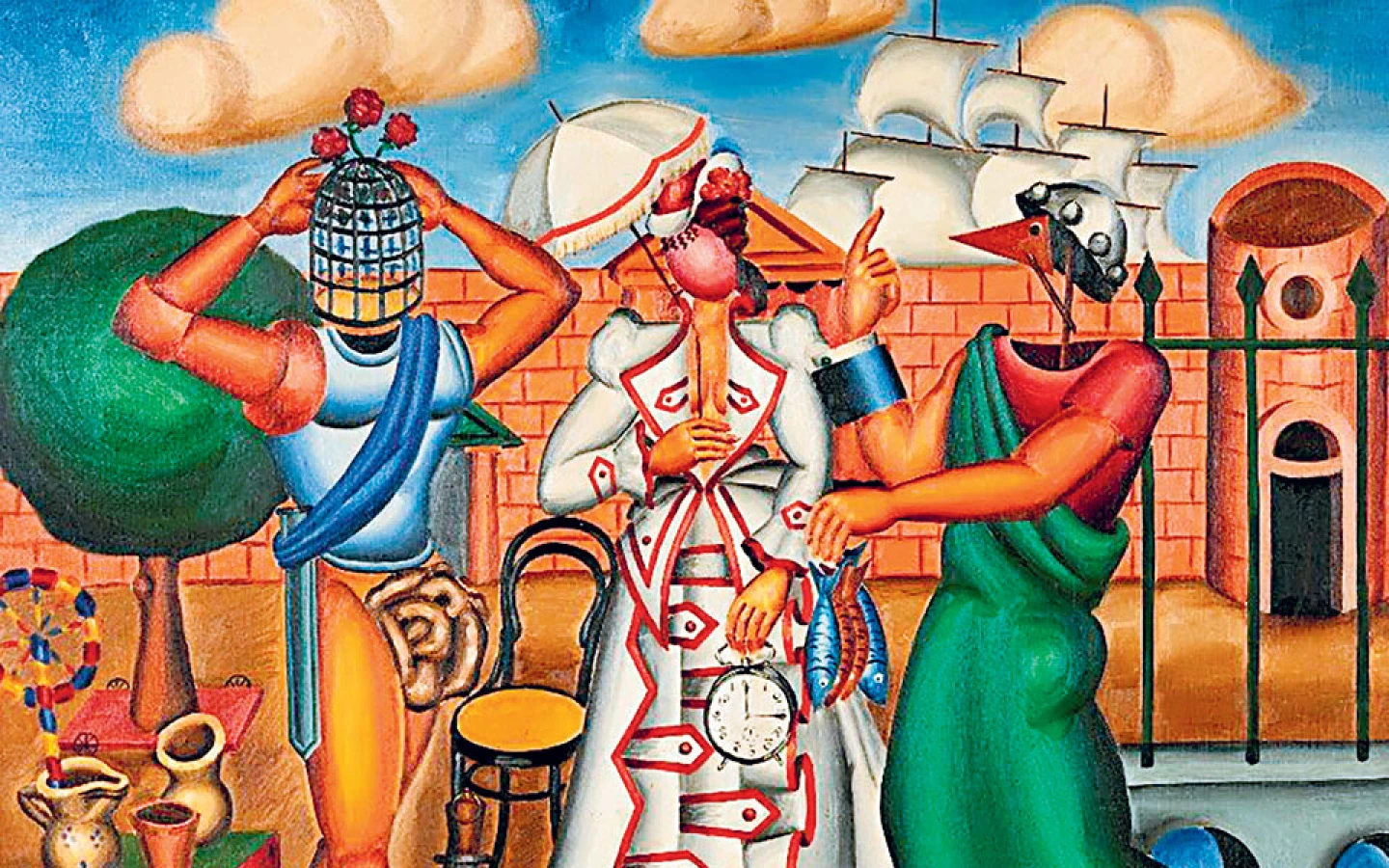
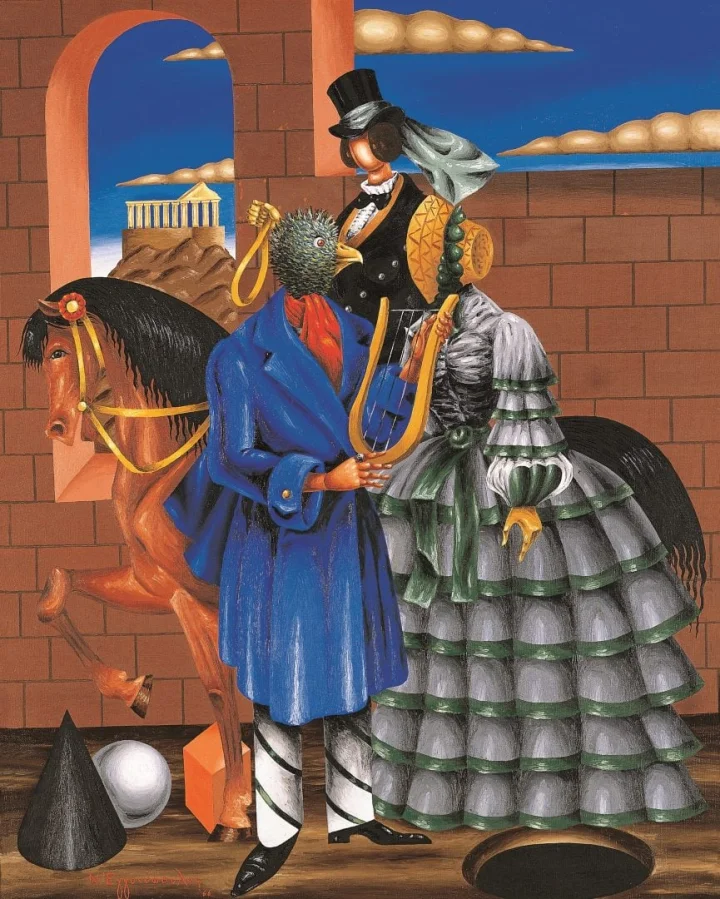
Greek surrealist painter and renowned poet Nikos Engonopoulos is one of the most well-known modern Greek artists and ranks among the great intellectual figures of post-War Greece.
Fascinated by De Chirico and a fan of Dalí, he largely focused on Greek mythology, the Byzantine tradition, and the country’s modern history. Despite being criticized, and even ridiculed back then, Engonopoulos remained true to his style that set him apart as one of Greece’s most famous painters. His world was a universe of painting with imaginary heroes from mythology and literature, history and poetry, with references to Hermes, Io, Hercules, Eurydice, Orpheus, Odysseus and Calypso. By uniting the past with the present, he showcased the power of surrealist expression through painting, using pure colours and strong drawing skills. Engonopoulos was a deeply spiritual person who tried to express the universality of Hellenism through his work. “With art we can face the incoherence of life. Art can alleviate our life, the path to death,” he was often quoted as saying.
Born on October 21, 1907, in Athens, he attended school in Paris and spent much of his childhood there. When he returned to Athens, Engonopoulos worked a number of jobs, including being a translator, bank teller, and secretary at the University of Athens. In 1930, he began working as a designer in the Urban Planning Department of the Greek Ministry of Public Works. Unsatisfied with his career and hoping to pursue art, Engonopoulos enrolled at the Athens School of Fine Arts in 1932, which was a vibrant period for the school, when many great Greek artists were studying and teaching there.
He was a member of the Generation of the 30s, a group of Greek writers, poets, artists, intellectuals, critics, and scholars who made their debut in the 1930s and introduced modernism to Greek art and literature. The previous Medieval and post-Byzantine Greek eras, which glorified religion, Jesus, and the certainty of Enlightenment thinking, were rejected by modernism. The most notable member among the Generation of the ‘30s is Giorgos Seferis, a Greek poet who instigated the turning point into modernity with surrealism in his poetry. During this time, Engolopoulos met important artists, poet Andreas Embirikos, and painters, such as Yannis Tsarouchis, Giorgo de Chirico, and Yannis Moralis.
His first paintings, mostly temperas paper depicting old houses, were presented at an Art of Modern Greek Tradition exhibition, organised in January 1938. Soon after the exhibition, he published translations of poems by Tristan Tzara, which were published in February. A few months later, his first collection of poems (Do Not Distract the Driver) was published, followed by a second one (The Clavicembalos of Silence) the following year. Thanks to his apprenticeship, after his graduation in 1938, under Fotis Kontoglou and professor Alexandros Xyngopoulos, Engonopoulos was exposed to the tradition and the spirit of the Byzantine and post-Byzantine art. In 1941, Engenopoulos fought in WWII at the Albanian front and was captured by Germans. He was taken to a labor camp, from where he escaped and returned to Athens on foot. Three years later, he finished his most popular long poem Bolivar, a Greek Poem, inspired by the revolutionary leader Simón Bolívar and published in 1944. In 1967, he was appointed professor of painting at the School of Architecture, National Technical University of Athens. Sotiris Sorogas, his close collaborator and successor at the School of Architecture, National Technical University of Athens, said that Engonopoulos’ “subject matter was far from the theocratic point of view portrayed in icons, which was considered in itself a huge aberration.”
“Thus, the faces in Engonopoulos’ paintings do not bear the element of the divine. Instead, they are Dionysian or Apollonian heroes, often depicting the artist himself in a cryptical manner, in a dreamy atmosphere, extravagantly tragic. His paintings narrate myths, historical facts or everyday life incidents, in which unconventional time, the paradox of the forms, and the pending symbolization transform them into places of allure and mystery. It is here that his references to Greek mythology lie,” said Sorogas. Engonopoulos was chosen to represent Greece at the 27th Venice Biennale in 1954, where he displayed 72 of his paintings. Engonopoulos has been honored in Greece and internationally for both his paintings and his poetry.
20.10.2026
There are some houses in Greece that gain fame because of the people who lived in them, such as writers and musicians, or even... a king!
05.10.2026
In his poem, "Days of Kindness", from 1985, Leonard Cohen describes Greece as being a good place to read by moonlight on the terrace. He knew this from experience. Hydra was his home for much of the 1960s. He arrived in the spring of 1960, aged 25, and later bought a house on the island, where he wrote much of his early work. Many places on Hydra still carry traces of him, even now that Hydra has become far better known.
16.04.2026
Greece is often associated with ancient history, island landscapes, and carefully preserved traditions. Less discussed, however, is another layer of its identity: its place names. Across the mainland and the islands, thousands of villages carry names that can sound unexpectedly funny or strikingly literal to a modern Greek speaker. These are not recent inventions or deliberate attempts at humor. Most date back centuries, shaped by geography, daily life, local dialects, and historical circumstances. What makes them stand out today is the shift in language over time. Words that once served as straightforward descriptions of land, resources, or communities can now feel unusually direct or unexpectedly humorous. Looking at these names more closely offers insight into how earlier generations observed their surroundings and chose to define them.
20.03.2026
Greece has long been more than a travel destination. For centuries, writers have been drawn to its history, natural beauty, and authenticity, finding in Greece not just a setting, but a source of inspiration that shapes narratives, characters, and perspectives.
19.02.2026
02.01.2026
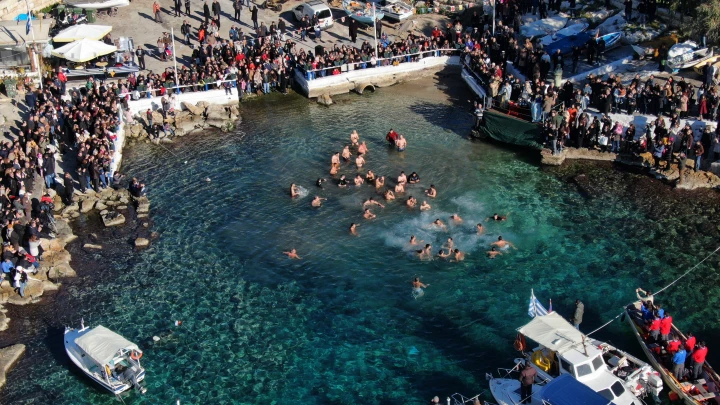
In Greece, the holiday season does not end on New Year’s Day. Instead, it culminates in one of the most symbolic celebrations of the year: Epiphany, known in Greek as Theofania. More than a religious holiday, Epiphany in Greece represents the triumph of light over darkness, a spiritual “new beginning” for individuals and communities. For anyone living in Greece, or dreaming of owning a home here, Epiphany offers one of the most authentic snapshots of local culture. From the blessing of the waters to ancient folk rituals, this day reveals the deep connection between the Greek people, nature, and tradition.
30.12.2025
Crete is stepping into the global spotlight once again. According to Airbnb’s latest travel trend insights based on worldwide search data from Q3 2025, the island — and especially the iconic Samaria Gorge National Park — ranks among the most sought-after nature destinations for 2026. This surge reflects a broader shift in how people choose where to travel, live, and invest. Travellers are no longer looking only for beaches or city breaks. Instead, they are drawn to authentic natural environments, outdoor experiences, and destinations that offer both beauty and balance, qualities that Crete delivers effortlessly.
19.12.2025
Greece is known mostly for its pristine beaches and its endless summers. Also, Greek cuisine, with its unique Mediterranean dishes, is widely sought after. What might feel surprising is the magical beauty during Christmas in Greece. The country has a long festive season that runs from Christmas to Epiphany (the “Φώτα” on 6 January), full of local customs, food traditions, and small village rituals that still matter to people today. Winter destinations are also famous in Greece, as according to the latest Monitoring Sentiment for Intra-European Travel report (Wave 23) by the European Travel Commission (ETC), Greece ranks among the top 10 most desired European destinations for travel between October 2025 and March 2026, holding a solid 7th place.