20.10.2026
The Most Famous Homes in Greece
There are some houses in Greece that gain fame because of the people who lived in them, such as writers and musicians, or even... a king!
History & Culture
19.11.2024
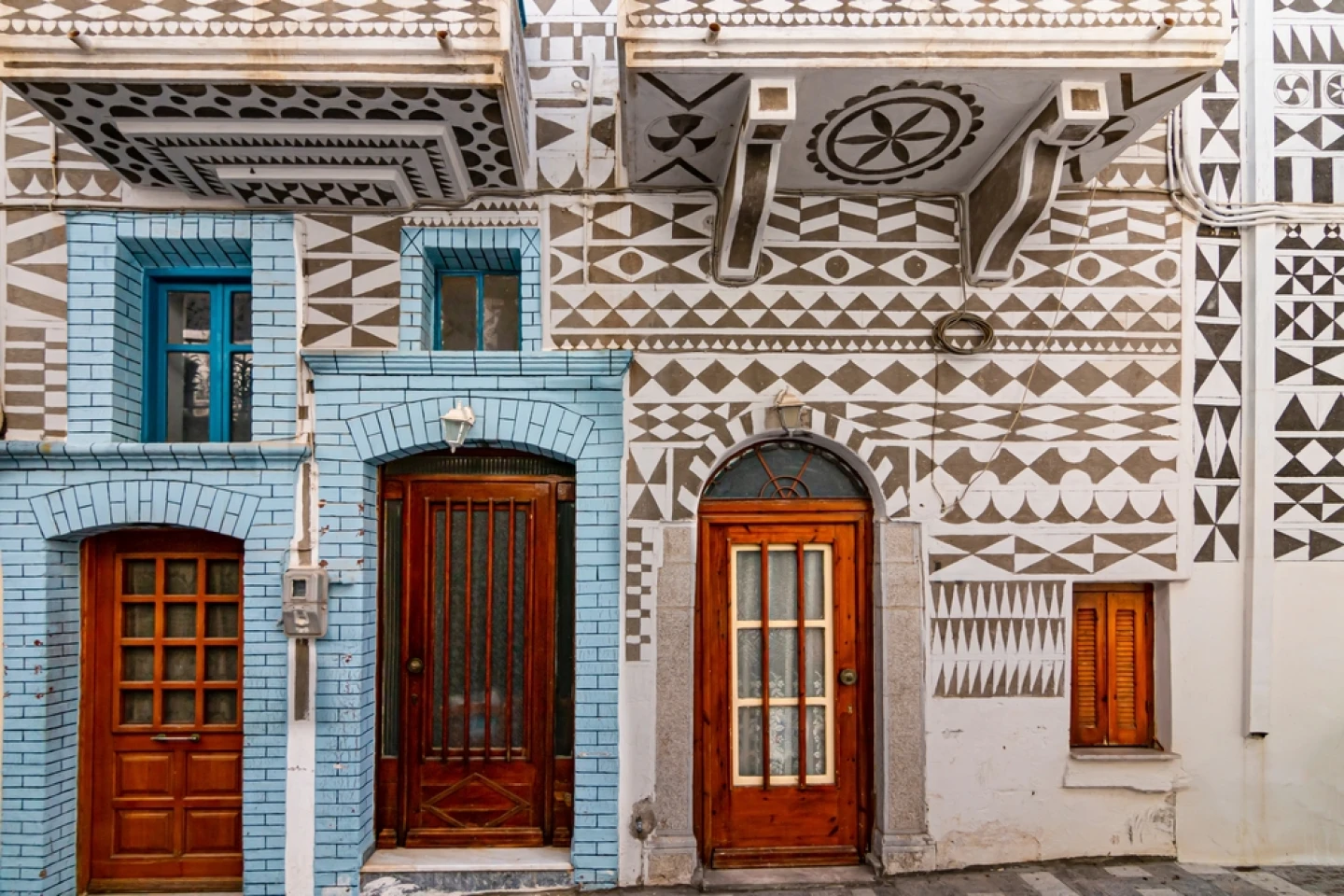
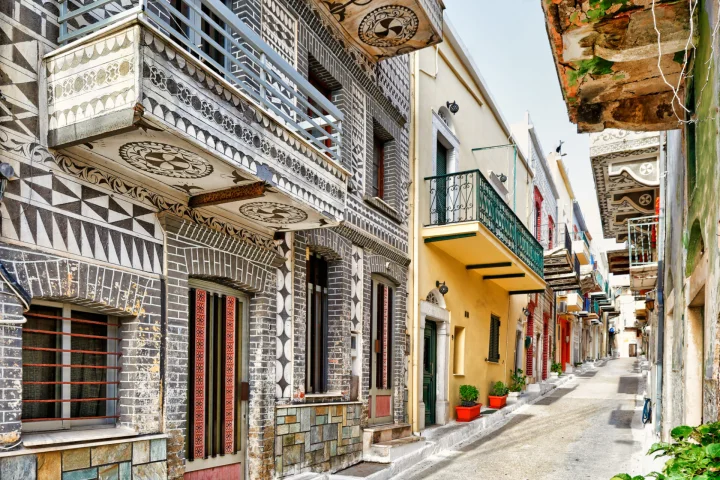
Pyrgi, a medieval village on the island of Chios, is a living canvas of geometric art. Its iconic “Xysta”—intricate black-and-white patterns covering nearly every building—have transformed the village into an open-air museum. This rare artistic tradition, rooted in history, has earned Pyrgi recognition as a preserved settlement and global attention, most recently in a BBC documentary titled “The Greek Island of Geometric Wonders.”
Pyrgi, a picturesque medieval village in southern Chios, stands out as a living museum of geometric art. Known for its “Xysta”, these intricate geometric patterns cover almost every building facade, creating a striking black-and-white visual spectacle. This unique artistic tradition has made Pyrgi a site of historic and cultural significance, earning it recognition as a preserved settlement. Recently, the BBC explored this artistic marvel in a short documentary titled “The Greek Island of Geometric Wonders”, bringing international attention to this rare cultural heritage.
Architecture: Pyrgi's houses, many of which are three or four stories high, stand out for their spacious interiors and decorative balconies. Inside, families once gathered around central hearths to share meals and stories, a tradition that brought warmth and togetherness to their daily lives.
Churches: The village is home to several significant religious landmarks, including the Church of the Holy Apostles, a well-preserved 13th-century Byzantine monument modeled after the New Monastery’s katholikon. Other notable churches include Theotokos, Archangel Michael, and Saint George.
Fortifications: The village's medieval origins are reflected in its fortified layout and strong tower, which once protected from attacks.
The Xysta are geometric decorations etched onto the facades of buildings. Crafted by carefully scraping away layers of white lime plaster to reveal dark sand underneath, these designs include a variety of shapes—triangles, diamonds, semicircles, storks, and tree branches. This traditional technique is thought to draw from sgraffito, a decorative method with origins in either Italian or Eastern craftsmanship. Regardless of its roots, the Xysta have evolved into a distinct art form that is emblematic of Pyrgi.
One of the mysteries surrounding Pyrgi is why these intricate patterns exist solely in this village. Experts like architect Maria Xyda, artisan Michail Pantelakis, and researchers from the Chios Mastic Museum have tried to answer this question. The unique patterns, etched with precision using tools like forks, remain unparalleled elsewhere in the world. This singularity has turned Pyrgi into an invaluable cultural and historical treasure.
The history of the Xysta spans three main periods:
Early Period (before the mid-19th century): The initial development of the Xysta technique.
Middle Period (up to 1950): A flourishing of the tradition with enhanced patterns.
Modern Period (20th century): Continued refinement and preservation of this art form.
Today, nearly every structure in Pyrgi—homes, public buildings, and churches—is adorned with Xysta. This enduring tradition showcases the community's commitment to preserving its heritage.
More than just a decorative art, the Xysta represent a living tradition that connects the past and present of Pyrgi. This technique not only beautifies the village but also reflects the local culture, creativity, and craftsmanship that have been passed down through generations. The BBC aptly described Pyrgi as a "three-dimensional wonderland," capturing its streets filled with geometric patterns that enchant visitors and scholars alike.
Through documentaries like the BBC's and the ongoing study of ethnomathematics, Pyrgi serves as a source of inspiration for architects, mathematicians, and cultural enthusiasts worldwide. The village's timeless beauty and artistic ingenuity offer a glimpse into how tradition and creativity can create something truly extraordinary. Pyrgi’s Xysta remind us that art, culture, and history are deeply intertwined, offering lessons not just about the past but also about the value of preserving heritage for future generations.
20.10.2026
There are some houses in Greece that gain fame because of the people who lived in them, such as writers and musicians, or even... a king!
05.10.2026
In his poem, "Days of Kindness", from 1985, Leonard Cohen describes Greece as being a good place to read by moonlight on the terrace. He knew this from experience. Hydra was his home for much of the 1960s. He arrived in the spring of 1960, aged 25, and later bought a house on the island, where he wrote much of his early work. Many places on Hydra still carry traces of him, even now that Hydra has become far better known.
16.04.2026
Greece is often associated with ancient history, island landscapes, and carefully preserved traditions. Less discussed, however, is another layer of its identity: its place names. Across the mainland and the islands, thousands of villages carry names that can sound unexpectedly funny or strikingly literal to a modern Greek speaker. These are not recent inventions or deliberate attempts at humor. Most date back centuries, shaped by geography, daily life, local dialects, and historical circumstances. What makes them stand out today is the shift in language over time. Words that once served as straightforward descriptions of land, resources, or communities can now feel unusually direct or unexpectedly humorous. Looking at these names more closely offers insight into how earlier generations observed their surroundings and chose to define them.
20.03.2026
Greece has long been more than a travel destination. For centuries, writers have been drawn to its history, natural beauty, and authenticity, finding in Greece not just a setting, but a source of inspiration that shapes narratives, characters, and perspectives.
19.02.2026
02.01.2026
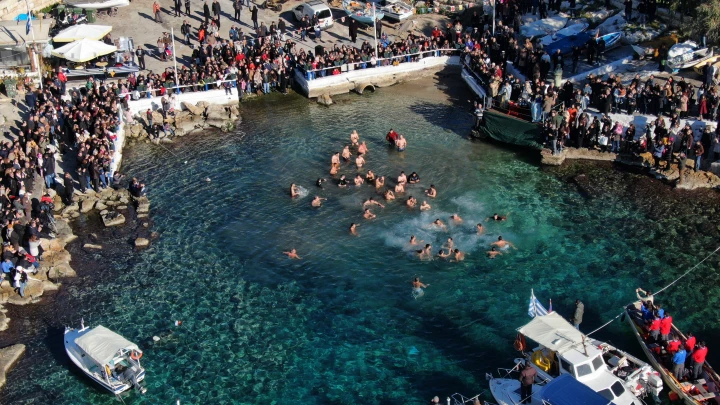
In Greece, the holiday season does not end on New Year’s Day. Instead, it culminates in one of the most symbolic celebrations of the year: Epiphany, known in Greek as Theofania. More than a religious holiday, Epiphany in Greece represents the triumph of light over darkness, a spiritual “new beginning” for individuals and communities. For anyone living in Greece, or dreaming of owning a home here, Epiphany offers one of the most authentic snapshots of local culture. From the blessing of the waters to ancient folk rituals, this day reveals the deep connection between the Greek people, nature, and tradition.
30.12.2025
Crete is stepping into the global spotlight once again. According to Airbnb’s latest travel trend insights based on worldwide search data from Q3 2025, the island — and especially the iconic Samaria Gorge National Park — ranks among the most sought-after nature destinations for 2026. This surge reflects a broader shift in how people choose where to travel, live, and invest. Travellers are no longer looking only for beaches or city breaks. Instead, they are drawn to authentic natural environments, outdoor experiences, and destinations that offer both beauty and balance, qualities that Crete delivers effortlessly.
19.12.2025
Greece is known mostly for its pristine beaches and its endless summers. Also, Greek cuisine, with its unique Mediterranean dishes, is widely sought after. What might feel surprising is the magical beauty during Christmas in Greece. The country has a long festive season that runs from Christmas to Epiphany (the “Φώτα” on 6 January), full of local customs, food traditions, and small village rituals that still matter to people today. Winter destinations are also famous in Greece, as according to the latest Monitoring Sentiment for Intra-European Travel report (Wave 23) by the European Travel Commission (ETC), Greece ranks among the top 10 most desired European destinations for travel between October 2025 and March 2026, holding a solid 7th place.