
20.10.2026
The Most Famous Homes in Greece
There are some houses in Greece that gain fame because of the people who lived in them, such as writers and musicians, or even... a king!
History & Culture
12.08.2024
Did the Ancient Greeks take summer vacation like we do? Did they have a “vacation home” by the sea where they could relax before returning to work? Did they enjoy a taverna meal by the Mediterranean while watching the sunset, like we do today?
To answer this question, we first need to define: what is a vacation? By formal definition, it is a “specific trip or journey for the purpose of recreation or tourism.” The essential idea is to take a break from work and to leave town. In its current form, the vacation is a fairly new idea. In the days of Ancient Greece, the average family didn’t take vacations. Why would you leave the safety of your city-state to travel into a dangerous territory, potentially risking your life? There was not much disposable income, and often other factors got in the way. Poor weather, pirates, and the possibility of shipwreck meant that death was a real possibility if you wanted to go on vacation.
The Ancient Olympics were one of the most important events in the ancient Greek world for over one thousand years, from 776 BC to 390 AD. They originally featured only a few events: Running, jumping, throwing, boxing, wrestling, pankration, and chariot racing. The Ancient Olympics were a huge deal. Citizens from all over the Greek empire came, which sometimes meant traveling from modern-day Germany, France, Libya, and Spain. One of the reasons for the popularity was not just the sporting events, but also the food. Usually, meat was on the menu for the viewers, which was rare for the common Greek citizen of the time. In the case that city-states were at war (which was often true), temporary access was allowed for travelers to pass through to the Olympics. For many Greeks (up to 50,000 at the height of the event’s popularity), the travel was worth it.
In Greece during the rise of the Roman Empire, traveling became more popular because of how large the Roman Empire was. You could travel a long distance always while feeling you were in a “safe” land. Travel was also easier in Roman times because of the extensive road network the Romans built. At its height, the road covered the distance from Portugal to Turkey. Still, vacations during this period weren’t exactly like they were today, likely covering shorter distances. In Ancient Rome, travel for leisure was more common for the rich.
This August, a remarkable discovery was made on the island of Evia in Central Greece. What did they find? They unearthed a floor mosaic from a house of the Late Classical period, from the middle of the 4th century. The pebbled flooring depicts two Satyrs, characters from ancient Greece. One is young and plays a double flute, and the other has a beard, is older, and likely was dancing to the music. Given that a joyful scene was depicted on the mosaic, it’s possible that this was an ancient Greek holiday home.
“Summer vacations” became more popular in the time of the Roman Empire. In 2000, archaeologists found the remains of a luxury hotel in Pompeii. It was in fact the equivalent of a modern-day five-star hotel, with a spa complex attached. Some of the popular areas for Roman “tourists” to visit were the Lighthouse of Alexandria, the Pyramids of Giza, and the tomb of Alexander the Great, when they were all a part of the Roman Empire. The last recorded visit to the Pyramids of Giza was in 215 AD, when a Roman tourist left an inscription on one of the pyramids: “I visited, and I did not like anything but the sarcophagus!” The ancient town of Baia was also a popular luxury getaway. It was 30 kilometers from Naples, and it was known as the “Las Vegas” of the Roman Empire. The wealthy and powerful came here for weekend trips.
The modern summer holiday likely looks a lot different than it did in Ancient Greece. Our travel has a lot less danger involved. Plus, the growth of railways and the creation of air travel meant that in the 1900s, the average person could travel a lot more often. At the same time, today it is common to have a five-day workweek, instead of the historic six-day workweek. The five-day workweek was first introduced in the U.S. by Henry Ford to increase productivity, and other countries soon followed. So, the average worker today has two days off over the weekend, which makes day trips and other excursions possible. The hardest decision when going on a summer holiday today is "where should we travel next?"
20.10.2026
There are some houses in Greece that gain fame because of the people who lived in them, such as writers and musicians, or even... a king!
05.10.2026
In his poem, "Days of Kindness", from 1985, Leonard Cohen describes Greece as being a good place to read by moonlight on the terrace. He knew this from experience. Hydra was his home for much of the 1960s. He arrived in the spring of 1960, aged 25, and later bought a house on the island, where he wrote much of his early work. Many places on Hydra still carry traces of him, even now that Hydra has become far better known.
16.04.2026
Greece is often associated with ancient history, island landscapes, and carefully preserved traditions. Less discussed, however, is another layer of its identity: its place names. Across the mainland and the islands, thousands of villages carry names that can sound unexpectedly funny or strikingly literal to a modern Greek speaker. These are not recent inventions or deliberate attempts at humor. Most date back centuries, shaped by geography, daily life, local dialects, and historical circumstances. What makes them stand out today is the shift in language over time. Words that once served as straightforward descriptions of land, resources, or communities can now feel unusually direct or unexpectedly humorous. Looking at these names more closely offers insight into how earlier generations observed their surroundings and chose to define them.
20.03.2026
Greece has long been more than a travel destination. For centuries, writers have been drawn to its history, natural beauty, and authenticity, finding in Greece not just a setting, but a source of inspiration that shapes narratives, characters, and perspectives.
19.02.2026
02.01.2026
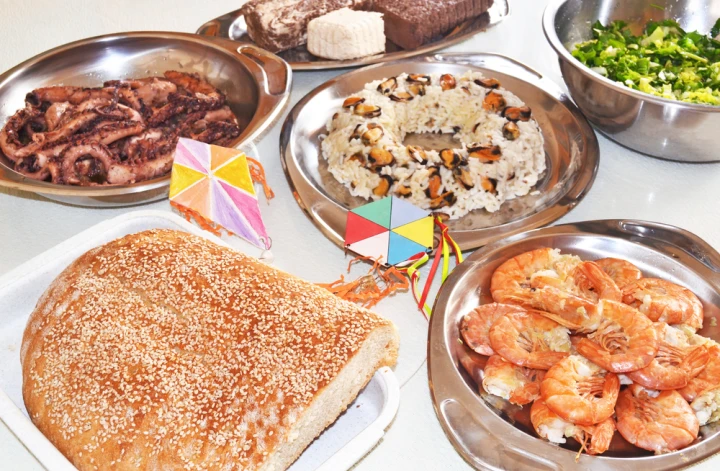
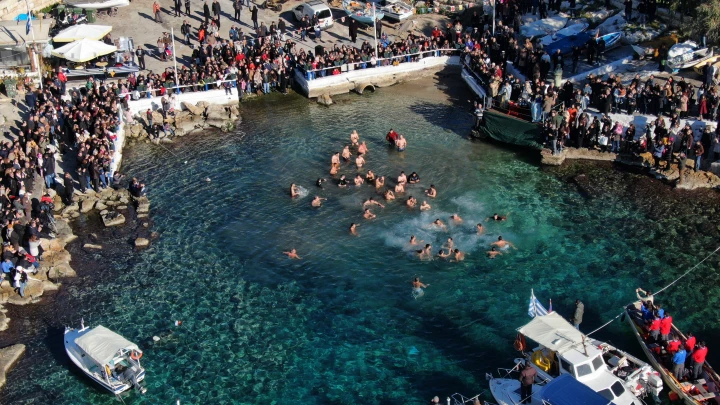
In Greece, the holiday season does not end on New Year’s Day. Instead, it culminates in one of the most symbolic celebrations of the year: Epiphany, known in Greek as Theofania. More than a religious holiday, Epiphany in Greece represents the triumph of light over darkness, a spiritual “new beginning” for individuals and communities. For anyone living in Greece, or dreaming of owning a home here, Epiphany offers one of the most authentic snapshots of local culture. From the blessing of the waters to ancient folk rituals, this day reveals the deep connection between the Greek people, nature, and tradition.
30.12.2025
Crete is stepping into the global spotlight once again. According to Airbnb’s latest travel trend insights based on worldwide search data from Q3 2025, the island — and especially the iconic Samaria Gorge National Park — ranks among the most sought-after nature destinations for 2026. This surge reflects a broader shift in how people choose where to travel, live, and invest. Travellers are no longer looking only for beaches or city breaks. Instead, they are drawn to authentic natural environments, outdoor experiences, and destinations that offer both beauty and balance, qualities that Crete delivers effortlessly.
19.12.2025
Greece is known mostly for its pristine beaches and its endless summers. Also, Greek cuisine, with its unique Mediterranean dishes, is widely sought after. What might feel surprising is the magical beauty during Christmas in Greece. The country has a long festive season that runs from Christmas to Epiphany (the “Φώτα” on 6 January), full of local customs, food traditions, and small village rituals that still matter to people today. Winter destinations are also famous in Greece, as according to the latest Monitoring Sentiment for Intra-European Travel report (Wave 23) by the European Travel Commission (ETC), Greece ranks among the top 10 most desired European destinations for travel between October 2025 and March 2026, holding a solid 7th place.