29.10.2026
Living in Corfu Year-Round: The Basics Before Buying a House
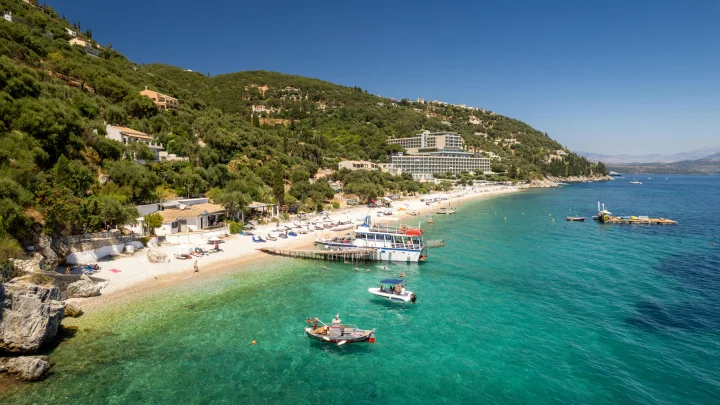
Corfu is a well-known island in Greece, particularly popular as a vacation destination, but it’s much more than that.
Regional Guides
13.10.2025
Yes, by almost any measure that matters. Violent crime against visitors is rare to the point of being newsworthy; children roam village squares at midnight, and the culture of philoxenia means a lost tourist is more likely to be walked to their hotel than left to a map. Crete absorbs millions of visitors a year with remarkably little trouble. An honest safety briefing, though, is not the same as a reassurance exercise. The risks on Crete are real but specific: the roads, the sea and the sun, roughly in that order, with crime a distant fourth. And since this blog is read by people considering a longer relationship with the island than a fortnight, we will also address the one risk most travel articles get wrong: earthquakes. Crete has them, and pretending otherwise serves nobody.
Driving comes first. Greece's road fatality rates remain among the higher in Western Europe, and Crete's contribution comes from mountain roads with sharp bends and sheer drops, scooters and quad bikes rented to inexperienced riders, and a local driving style that treats the hard shoulder as a slow lane. None of this is unmanageable: drive unhurried, skip the quad bike, avoid mountain routes in the dark or in rain, and check the rental car before leaving the lot. The main north coast highway has been improving in stages, but the village and gorge roads reward patience. The sea comes second. The south coast faces the open Libyan Sea, and beaches there can carry currents and waves that the sheltered northern bays do not. Lifeguards cover organised beaches in season; remote coves are unsupervised by definition. Respect the warning flags where they exist, and where they don't, watch what the locals do.
The sun comes third. July and August regularly push past 35 degrees, and heat exhaustion sends more visitors to Cretan health centres than crime ever has. Water, shade in the early afternoon and restraint on the first days do most of the work. Crime, by contrast, is largely a matter of beach bags and parked rental cars. Pickpocketing exists in crowded spots in Heraklion and around major attractions, and the standard precautions apply, but the violent crime that shapes safety decisions elsewhere in Europe is essentially absent from the calculation here.
This deserves a straight answer, because some articles claim Crete has no significant seismic activity, and that is simply wrong. Crete sits on the Hellenic arc, one of the most seismically active zones in Europe. In September 2021 a magnitude 6.0 earthquake struck near Arkalochori in central Crete, killing one person and damaging over 5,000 buildings. The detail behind that number is the part worth understanding. The serious damage was overwhelmingly concentrated in old unreinforced masonry buildings; structures built to the modern Greek anti-seismic codes came through with largely cosmetic damage. Greece has had strict seismic building standards for decades, precisely because it lives with this geology, and they demonstrably work. For a visitor, the practical risk on any given holiday is negligible. For a buyer, the lesson is concrete: the age, construction type and structural condition of a building matter on Crete in a way they do not in the Netherlands or Germany, which is exactly what the engineer's report and technical due diligence in a Greek purchase exist to verify.
The European emergency number 112 works island-wide and in English. Greece also runs a dedicated tourist police line, 1571, for the non-emergency problems visitors actually have: disputes, lost documents, overcharging. Heraklion has a university hospital, Chania, Rethymno, Agios Nikolaos and Sitia have general hospitals, and tourist areas are dense with private clinics and well-stocked pharmacies. EU visitors are covered in the public system through the European Health Insurance Card; travel insurance is sensible regardless, not least because it covers the rental-car excess that is statistically your likeliest claim. Mobile coverage is good along the coasts and main roads, thinner in the gorges and high villages, which is worth knowing before a solo hike. Telling someone your route before walking Samaria or Imbros is the kind of precaution that costs nothing.
Not in the way the question usually means. Crete has no neighbourhoods a visitor needs to avoid, no resort with a crime problem, no after-dark zones. The variations are practical rather than criminal: the party strips of Malia and Hersonissos generate the island's alcohol-related incidents, almost entirely among the revellers themselves; remote southern beaches trade facilities and phone signal for solitude; and city-centre pickpockets work the same crowded streets they do everywhere. Evening streets in Chania, Rethymno and the villages are about as unthreatening as Europe offers.
For property buyers, safety translates into three practical questions, and they are worth asking in this order. Structural safety first: given the seismic picture above, the technical inspection is not a formality. Our legal team's due diligence covers the legal standing of a property, and the engineer's report covers its physical condition; on Crete, both halves earn their keep. A well-built modern home, or an older one that has been properly assessed and renovated, is a sound place to be in an earthquake, and the 2021 event demonstrated that distinction in the clearest possible terms. Personal security second, and here the news is good: rural and village Crete operates on a level of trust that surprises Northern European owners. Burglary of holiday homes exists, as it does anywhere homes stand empty for months, and sensible measures (shutters, a neighbour with a key, or a management arrangement) cover it.
Continuity third: an empty house's biggest enemies on Crete are not thieves but winter damp, summer wildfires in vegetated areas, and small problems left unattended. Clearing dry brush around a rural plot is both prudent and, in many areas, a legal obligation for owners.
Emergency arrangements, road conditions and local regulations change over time; treat specifics as indicative and verify current details when planning. Nothing here constitutes legal advice; for a specific property or case, our legal team or your own advisors should review the particulars.
29.10.2026
Corfu is a well-known island in Greece, particularly popular as a vacation destination, but it’s much more than that.
27.10.2026
The first thing that probably comes to your mind when you hear the words “Ionian Sea” is its islands. On the mainland side, though, there are a few regions that can be considered a practical and smart choice for international property buyers.
23.10.2026
For international property buyers and future permanent residents, Lefkada can be a very smart option.
22.10.2026
Crete, in general, has been particularly appealing when it comes to real estate, both for permanent living and for investment opportunities.
22.09.2026
The Peloponnese gets far less international attention than Santorini or Mykonos, and for buyers, that is part of the appeal. The peninsula has a long and varied coastline, mountain villages that stay lived-in through winter, and some of the country's best-known ancient sites, Mycenae, Olympia, and Epidaurus among them. Prices here have stayed closer to reality than on the popular islands, mostly because foreign demand arrived later. If you are willing to look past the obvious destinations, the Peloponnese gives you more for your money and a region that does not shut down in October.
29.07.2026
One of Greece's unparalleled advantages is the bounty of islands it offers, with countless places to explore, all set against the backdrop of the endless blue sea. However, figuring out where each of these islands is located can be tricky. The purpose of this guide, therefore, is to provide a simple and easy-to-understand overview of Greece's island groups.
04.06.2026
It's a sensible thing to check before you start house-hunting, and the answer is a qualified yes. There is a train, but it only reaches the northern edge of the Peloponnese. Athens connects by rail to Kiato, and on towards Aigio, with a bus completing the run to Patras while the line is being finished. Beyond that, the peninsula has very little passenger rail, so the popular spots like Nafplio, Kalamata, and the Mani are reached by road. For most buyers, that makes the bus or the car the practical choice. Here's the full picture, and what it means if you're thinking of a home here.
24.05.2026
Crete is referred to with the nickname “island of the gods.” The famous Greek island is known for its history, its welcoming people, its picturesque landscapes, and its high quality of life. It seems like everyone is always in a good mood, even when there is a disagreement. What's not to like? In this article, we break down why Crete is the ideal place to buy a second home.