

29.10.2026
Living in Corfu Year-Round: The Basics Before Buying a House
Corfu is a well-known island in Greece, particularly popular as a vacation destination, but it’s much more than that.
Regional Guides
29.07.2025
Athens is the natural starting point for exploring the Greek islands. The city has three ferry ports serving different island groups, an international airport with connections worldwide, and a metro system that links directly to the main port. This guide covers how to plan an island-hopping trip from Athens, which port to use, how to get there, and how to think about routes and timing.
Athens is served by three ports, each with its own strengths.
Piraeus is the largest port in Greece and the closest to the city centre, around 10 kilometres away. It serves the widest range of destinations, the Saronic Gulf islands, the Cyclades, the Dodecanese, the northeastern Aegean islands, and Crete. Ferries to the Saronic Gulf islands and the Dodecanese depart exclusively from Piraeus. It is also the easiest port to reach, connected directly to central Athens by metro.
Rafina sits on the northeast coast of Attica, around 30 kilometres from the city centre but closer to the airport. It offers fast connections to Andros, Tinos, and Mykonos year-round, with additional Cyclades routes such as Paros, Naxos, Ios, and Santorini in summer. Some destinations are quicker to reach from Rafina than from Piraeus.
Lavrio is the furthest from Athens, around 60 kilometres to the southeast, but the closest of the three to certain less-visited islands. It serves Kea, Kythnos, and a range of other Cyclades. Kea is accessible only from Lavrio.
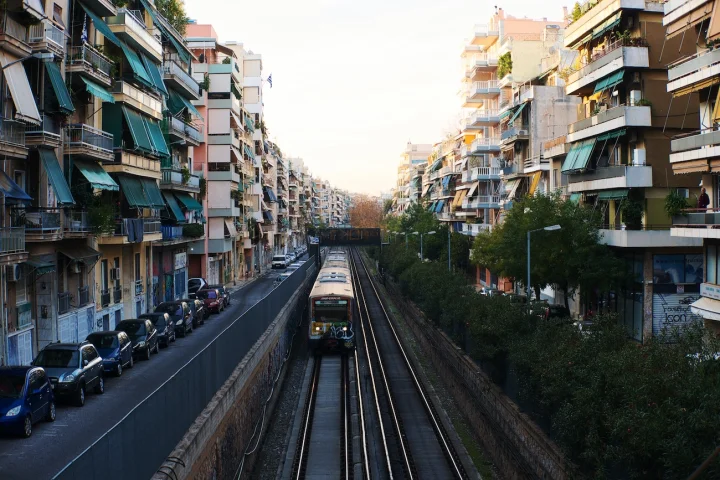
To Piraeus: Piraeus port is connected to central Athens by metro, both Line 1 (green) and Line 3 (blue), at the standard fare of €1.20. Line 3 also runs directly from Athens International Airport to Piraeus.
To Rafina: KTEL regional buses depart from Pedion tou Areos in central Athens, near Victoria metro station, taking approximately 70 minutes and costing a little under €3.
To Lavrio: Regional buses depart from Nomismatokopio metro station on the blue line, a short distance from Syntagma. The journey takes approximately two hours and costs around €5.30.
Allow plenty of time for port transfers, especially in summer when traffic and crowds can cause delays.
The most important principle is to group islands by geographical proximity rather than by popularity. The Cyclades, for example, allow efficient hopping between neighbouring islands, while combining distant island groups creates unnecessary travel time and cost.
Seasonal timing matters. Peak summer months offer the most frequent ferry connections but also the highest prices and the largest crowds. Spring and autumn, roughly April to May and September to October, tend to offer pleasant weather, fewer crowds, and more moderate pricing. Winter services run on reduced schedules, and some routes are suspended entirely.
Weather can affect ferry operations, particularly the summer meltemi winds that can cause delays or occasional cancellations. Building some flexibility into your schedule, and avoiding very tight connections, helps absorb any disruption.
Greek ferries come in two main types. High-speed ferries cut journey times significantly but cost more and are more likely to be cancelled in adverse weather. Conventional ferries are slower but more stable, generally cheaper, and offer more onboard facilities, restaurants, shops, and deck space, which makes a difference on longer journeys. Some overnight ferries on longer routes offer cabin accommodation.
Booking online through ferry company websites or aggregator platforms lets you compare schedules, prices, and vessel types. During the summer, popular routes sell out, so booking in advance is advisable.
For a short trip of three to four days, the Saronic Gulf islands are an excellent introduction. A route from Athens to Aegina and on to Hydra offers easy logistics and short crossings, all accessible from Piraeus.
For five to seven days, a classic Cyclades route from Athens to Paros, then Naxos, then Santorini gives a good balance of traditional villages, beaches, and iconic scenery, with frequent connections between the islands.
For ten days or more, a wider route taking in Crete, Santorini, Mykonos, and Tinos offers greater diversity, though it involves longer crossings and more time spent travelling.
Pack light. Frequent moves between islands are much easier with versatile clothing and a single manageable bag. At the port, arrive at least 30 minutes before departure to allow time for boarding. Luggage handling is your own responsibility, so keep essential documents accessible.
On the islands themselves, local transport varies. Larger islands have bus networks, but on smaller ones a rented car or scooter is often necessary for proper exploration. It is worth researching local transport before you arrive.
Boarding announcements are usually made in both Greek and English, but ferries can be busy and chaotic, so stay alert to calls for your departure.
29.10.2026
Corfu is a well-known island in Greece, particularly popular as a vacation destination, but it’s much more than that.
27.10.2026
The first thing that probably comes to your mind when you hear the words “Ionian Sea” is its islands. On the mainland side, though, there are a few regions that can be considered a practical and smart choice for international property buyers.
23.10.2026
For international property buyers and future permanent residents, Lefkada can be a very smart option.
22.10.2026
Crete, in general, has been particularly appealing when it comes to real estate, both for permanent living and for investment opportunities.
22.09.2026
The Peloponnese gets far less international attention than Santorini or Mykonos, and for buyers, that is part of the appeal. The peninsula has a long and varied coastline, mountain villages that stay lived-in through winter, and some of the country's best-known ancient sites, Mycenae, Olympia, and Epidaurus among them. Prices here have stayed closer to reality than on the popular islands, mostly because foreign demand arrived later. If you are willing to look past the obvious destinations, the Peloponnese gives you more for your money and a region that does not shut down in October.
29.07.2026
One of Greece's unparalleled advantages is the bounty of islands it offers, with countless places to explore, all set against the backdrop of the endless blue sea. However, figuring out where each of these islands is located can be tricky. The purpose of this guide, therefore, is to provide a simple and easy-to-understand overview of Greece's island groups.
04.06.2026
It's a sensible thing to check before you start house-hunting, and the answer is a qualified yes. There is a train, but it only reaches the northern edge of the Peloponnese. Athens connects by rail to Kiato, and on towards Aigio, with a bus completing the run to Patras while the line is being finished. Beyond that, the peninsula has very little passenger rail, so the popular spots like Nafplio, Kalamata, and the Mani are reached by road. For most buyers, that makes the bus or the car the practical choice. Here's the full picture, and what it means if you're thinking of a home here.
24.05.2026
Crete is referred to with the nickname “island of the gods.” The famous Greek island is known for its history, its welcoming people, its picturesque landscapes, and its high quality of life. It seems like everyone is always in a good mood, even when there is a disagreement. What's not to like? In this article, we break down why Crete is the ideal place to buy a second home.